





 Cihat Murat Yüksel
15 min read
Contents 21 sections
Key takeaways
- Free AI tools are apps that handle chat, writing and images without payment, mostly on a free tier with usage limits.
- OpenAI's help center says daily text conversations on free ChatGPT are unlimited, subject to abuse guardrails.
- DeepSeek's privacy policy says user data is processed on servers in the People's Republic of China.
- Under Google's Gemini API and AI Studio terms, human reviewers may read content entered into free services.
Free AI tools are apps that handle chat, writing, images, video, presentations and research without payment; most run on a with a set usage limit. Once the limit is reached, you wait or move to a paid plan.
This is not a “top 20 tools” list. Using each tool’s official pricing and help pages, we explain which free version is enough for which job, where the limit starts and what happens to your data, and close with a table of what a marketing team picks for each job. Prices and limits change often, so we name every source.
A free AI tool is chosen by the job, not by the length of a list; confidential or personal data is never entered into a free tier.
What Free AI Tools Are There?
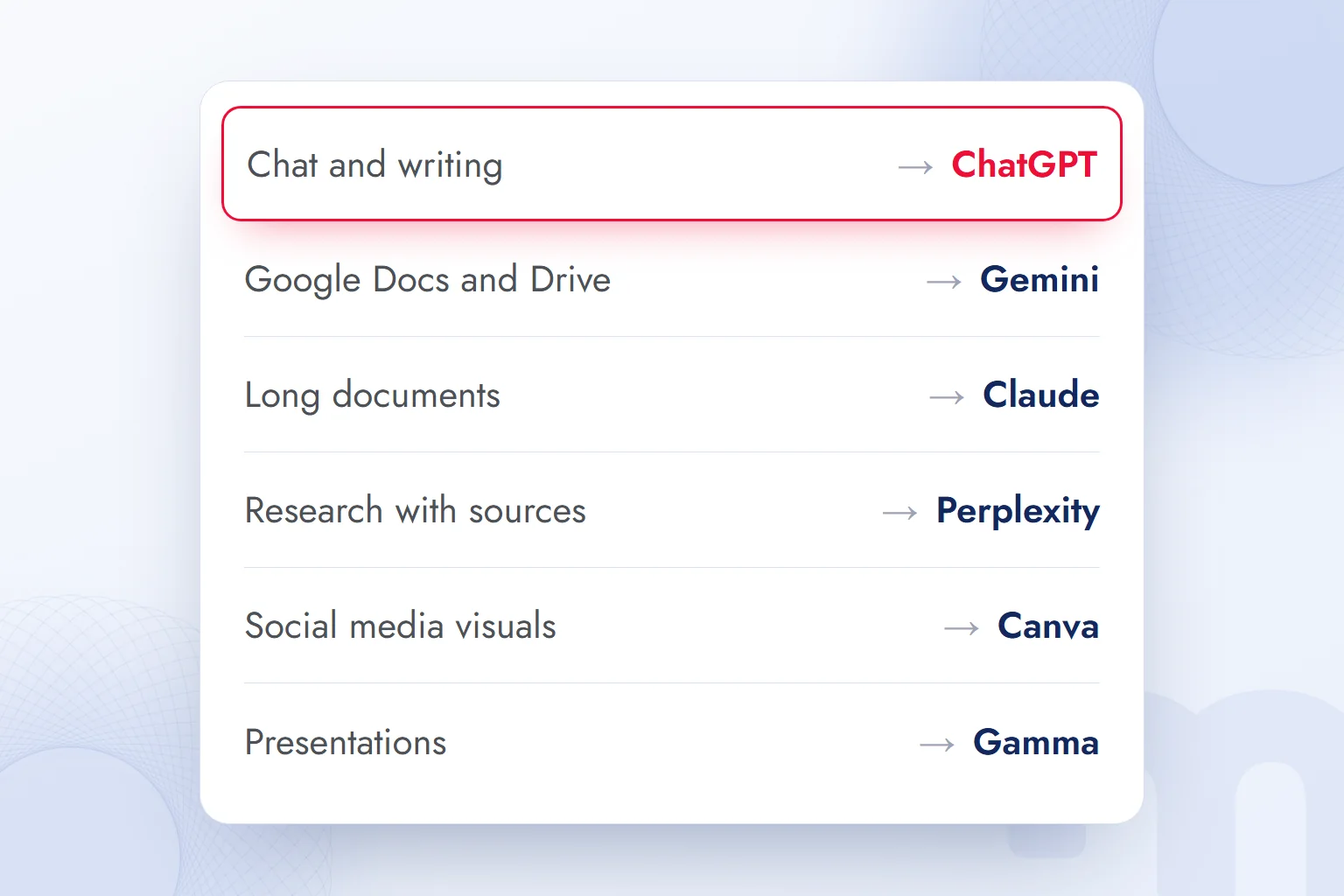
The most widely used free AI tools are ChatGPT, Gemini, Claude, Copilot and DeepSeek for chat and writing, Perplexity and Gemini Notebook for research, and Canva and Gamma for design and presentations. All are free with an account, each with a different limit.
| Tool | Developer | Strongest at | Free tier limit |
|---|---|---|---|
| ChatGPT | OpenAI | Chat, writing, images | Daily text chat unlimited; separate limits for images, files and voice; ads in some countries |
| Gemini | Working with a Google account, research, images | Compute-based; resets every 5 hours, weekly cap | |
| Claude | Anthropic | Long text, writing, documents | Usage resets in a 5-hour window |
| Copilot | Microsoft | Everyday tasks with Windows and a Microsoft account | Use inside Microsoft 365 apps is paid |
| DeepSeek | DeepSeek | Chat, reasoning | Free chat; data processed by the company in China |
| Perplexity | Perplexity | Research with sources | Advanced research and model choice on the paid plan |
| Gemini Notebook | Working with your own documents | Higher limits on paid plans | |
| Canva | Canva | Design, image editing | Up to 20 uses for AI features |
| Gamma | Gamma | Presentations, documents | 400 credits at sign-up, up to 10 slides per prompt |
When several free tools do the same job, we pick the one whose limit runs out last and that sits closest to where our data already lives. If your email and documents are in Google, start with Gemini; with Microsoft 365, Copilot; for a broad, independent toolset, ChatGPT.
What Should You Check When Choosing a Free AI Tool?
We check four questions, all answered on the tool’s official pricing or help page:
- What is the limit based on? Number of messages, a five-hour window or credits? In a credit-based tool such as Gamma, every attempt spends credits; with message limits, long conversations are cheaper.
- Which model is free? Free plans usually run a fast, lightweight model; the strongest stays paid. For hard reasoning, test the free model once.
- Is your data used for training, and can you turn it off? If there is no such setting, only public information goes into the tool.
- Is it good enough in your language? Have it write a short text and read it; in Turkish, suffixes and idioms expose weaknesses fastest.
What Is the Best Free AI for Writing and Chat?
The tool with the widest free tier for writing and chat is ChatGPT: according to OpenAI’s help center, daily text conversations on the free plan are unlimited, subject to abuse guardrails. Gemini and Claude limit usage by compute and five-hour windows, so busy days hit the limit sooner.
ChatGPT Free Version
ChatGPT’s free plan includes web search, file and image uploads, data analysis, image generation and a 500 MB Library. In chat mode, the free and Go plans run on the GPT‑6 Luna model. Uploads, image generation, voice and data analysis have their own limits; when one is reached, ChatGPT shows the reset time.
Two details matter. OpenAI has started showing labeled ads below answers to free and Go users in some countries, and individual accounts can no longer create new custom GPTs, though existing ones still work. We cover ChatGPT in full in what is ChatGPT.
Is Gemini Free?
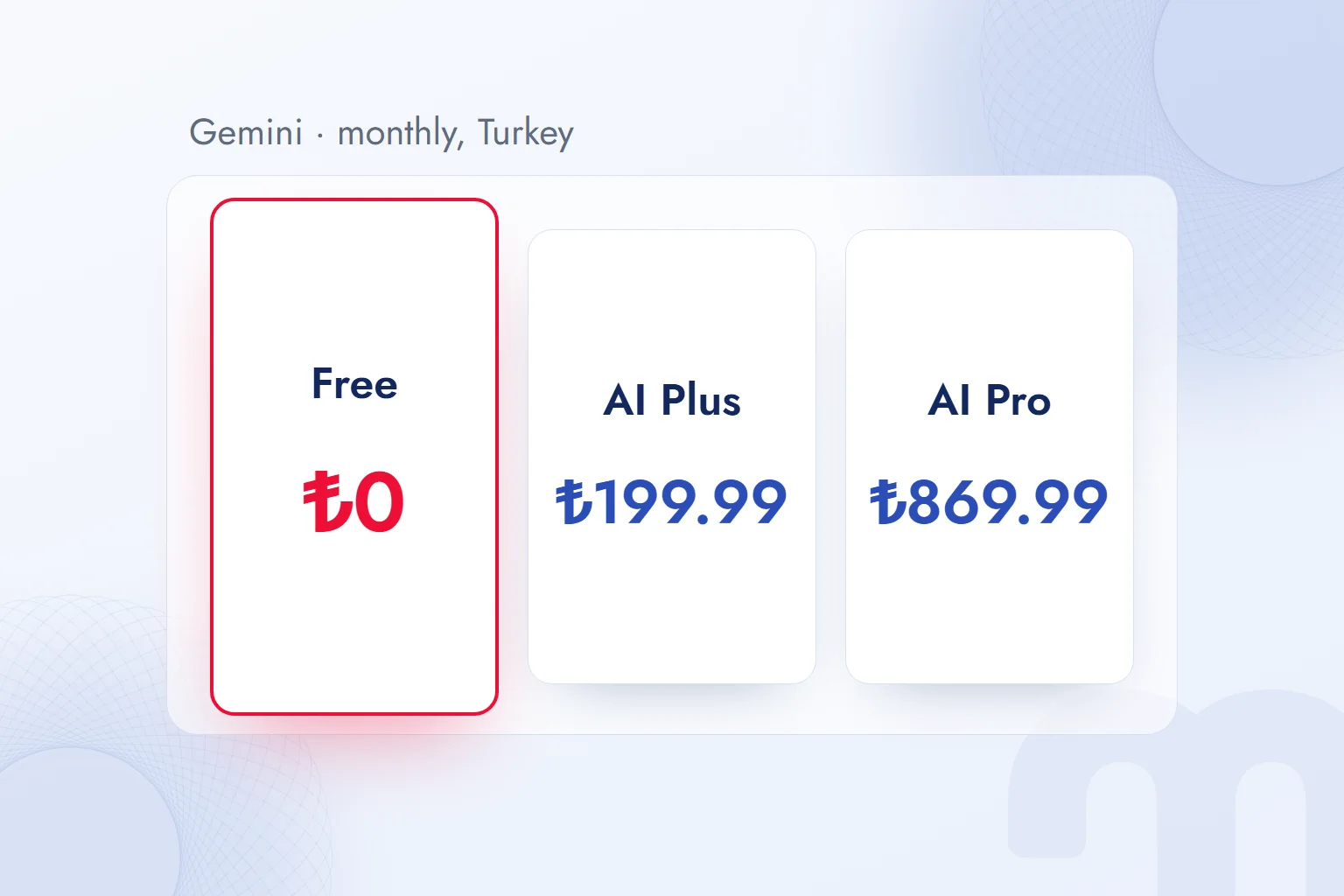
Yes, Gemini has a free plan used with a Google account; paid Google AI plans add higher limits and stronger models. On Google’s subscription page for Turkey, the free plan is TRY 0, Google AI Plus starts at TRY 199.99 a month, Google AI Pro at TRY 869.99 a month and Google AI Ultra at TRY 1,479.99 a month.
The free plan includes the Gemini 3.5 Flash-Lite model, image generation and editing, Deep Research, Gemini Live voice, Canvas, Gems and Gemini Notebook, plus limited access to Nano Banana Pro through Google Flow. Google says the limit depends on prompt complexity, the feature used and conversation length, resets every five hours and has a weekly cap. We compare Gemini and ChatGPT in what is Gemini.
Is Claude Free?
Yes; Claude’s free plan includes chat on web, desktop and mobile, web search, file creation, code execution, memory and app connections. Anthropic’s pricing page describes the free plan as being “for everyday questions”; usage resets in a rolling five-hour window. The Pro plan costs $20 a month billed monthly, or $17 a month billed yearly, and offers at least five times the usage per five-hour session compared with the free plan.
We use Claude most for long documents; the free plan can summarize a report or polish a text, but a long session may hit the limit. Claude’s models, Claude Code and its difference from ChatGPT are in what is Claude.
Copilot and DeepSeek
Microsoft Copilot is the chat assistant that comes built into Windows and is free with a Microsoft account; Copilot inside Microsoft 365 apps such as Word, Excel and Outlook is unlocked with paid plans. We explain where Copilot fits in what is Microsoft Copilot.
DeepSeek is the chat assistant of the China-based company DeepSeek; the chat app is free, and the company’s site announces DeepSeek-V4.1-Flash as its latest model. Before using it for work, note that DeepSeek’s privacy policy says data is processed on servers in the People’s Republic of China. So we never enter client or company data into DeepSeek; we keep it to general questions and personal experiments.
Is There a Free AI Image Generator?
Yes; the free plans of ChatGPT, Gemini and Canva include AI image generation, but in all three the number of free generations is limited. Images are what fills free tiers fastest.
The job decides the tool:
- Draft of a product or campaign visual → ChatGPT or Gemini. Both generate the described image in the chat and take corrections there.
- Editing an existing photo → Gemini’s image editing feature or Canva’s tools such as background removal and upscaling. Our methods are in AI photo editing.
- Ready-sized designs for social media → Canva. Generating inside a template solves sizing and text together.
According to Canva’s pricing page for Turkey, the free plan includes up to 20 uses of standard or premium AI features, 5 GB of cloud storage and a brand kit with a single color palette (3 colors); Canva Pro for individual use costs TRY 1,920 a year and offers 10 times more AI usage than the free plan.
A good image prompt describes product, setting, light, angle and aspect ratio separately; ready patterns for ad visuals are in ChatGPT image prompts.
Can You Create Videos With AI for Free?
Free video generation is the most restricted area: video models use heavy compute, so most tools tie video to a paid plan or credits. On Google’s Gemini subscription page, the Google Flow credits used for video and image generation come with paid plans (200 credits on Google AI Plus, 1,000 on Pro); the Gemini API also has no free tier for the Veo video models.
A free plan covers the work around the video: script, shot list, subtitle text, and editing stock footage in Canva’s video editor. Real video generation means trial credits or a paid plan.
Free AI for Presentations and Design
The two standout free AI options for presentations are Gamma and Canva; Gamma builds a deck from one prompt, Canva fills existing templates with AI. Both free plans have a credit or usage limit.
According to Gamma’s pricing page, the free plan gives 400 credits at sign-up, creates up to 10 slides per prompt, and includes PDF and PPTX import as well as PDF, PPTX, PNG and Google Slides export. The paid Plus plan raises this to 100 slides per prompt and removes the Gamma branding, which free-plan decks keep.
Our presentation workflow has two stages: we first settle the content and section plan as text with ChatGPT or Claude, then hand that text to Gamma or Canva. Starting from ready text instead of “make me a presentation” saves credits on regenerations.
Free AI for Research and Notes
The strongest free options for research are Perplexity and Gemini Notebook: Perplexity shows its sources inline in every answer, while Gemini Notebook answers only from the documents you upload. The Deep Research features of ChatGPT and Gemini cover the same needs; Gemini’s is on the free plan.
Perplexity’s free plan covers general search; advanced research, model choice and higher limits come with the Pro plan. Perplexity’s page shows Pro as the equivalent of $17 a month with annual billing. We cover how Perplexity cites sources and shows brands separately.
Gemini Notebook is Google’s tool formerly called NotebookLM; Google renamed it in July 2026 without changing how it works, and it is in the free Gemini plan. We explain how to work with your own documents in what is NotebookLM.
Can You Write Code or Build a Site With Free AI?
Yes, free tools can write simple code and build a working first draft of a page; for a lasting site or app, however, the free quota and tools are not enough. On the code side, there are three free starting points:
- Code in a chat assistant → The free plans of ChatGPT and Claude write and explain code; Claude’s free plan also runs code. Enough for an Excel formula, a small script or an HTML section.
- Google AI Studio Build mode → Turns a written description into a working web app; it is used with a free Google account under what Google calls a “modest” quota.
- In-browser preview → Both ChatGPT and Claude offer previews of small pages and tools inside the chat; a calculator or form draft can be tried in minutes.
Their shared limit is maintenance and security: login, payments, databases and version control are not solved in a free chat window. We explain the approach of writing code in natural language, and where to stop, in what is vibe coding.
What Do You Lose With the Free Version?
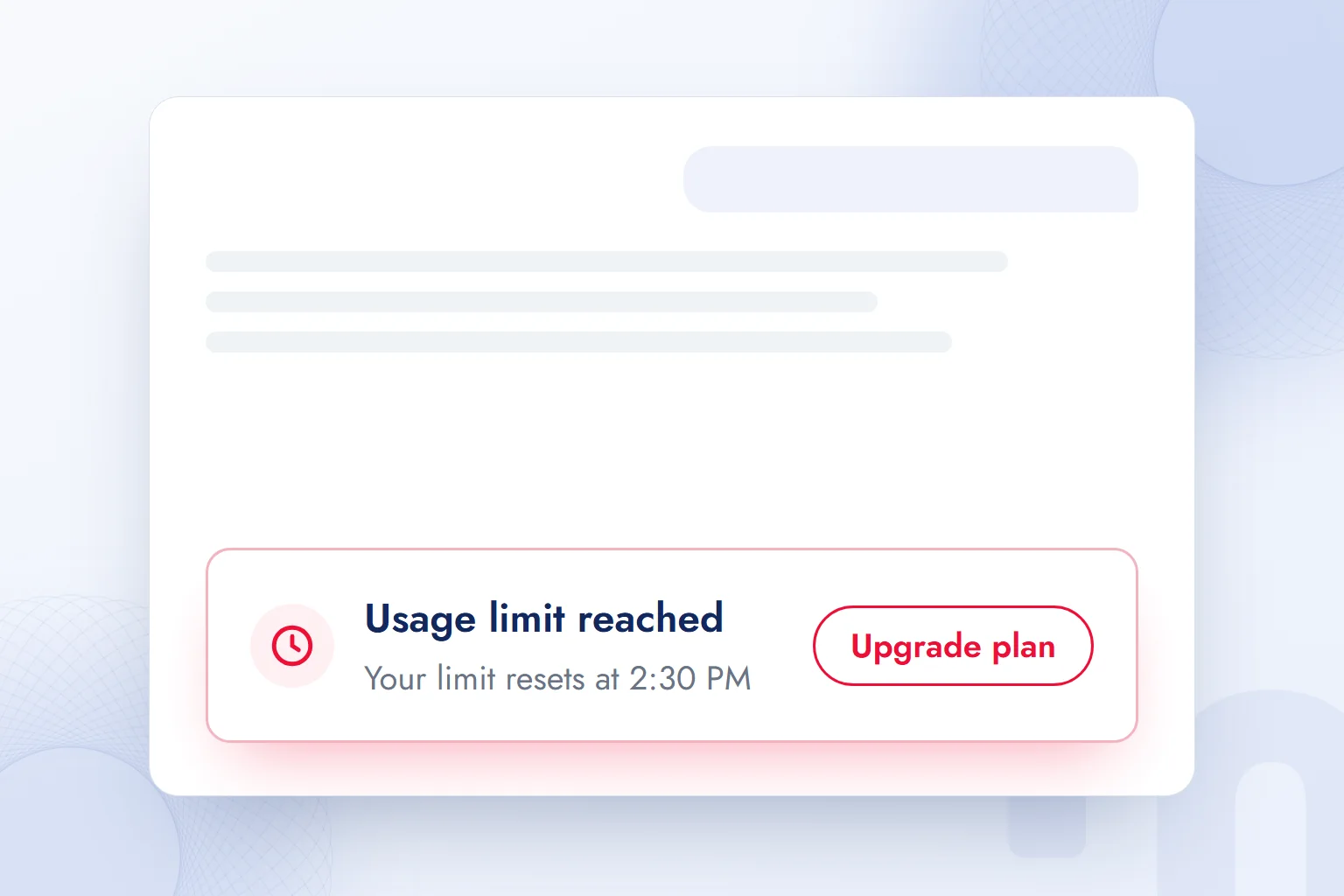
What you lose on the free version is usually not capability but continuity and control: the limit runs out mid-task, the strongest model is closed, using your data for training is on by default, and some tools show ads or a brand watermark. We weigh these four before paying.
The decision splits like this:
- If you hit the limit once a week → The free plan is enough. Splitting the work across two tools (writing in one, images in the other) effectively doubles the limit.
- If you hit the limit every day → The lowest paid plan of the tool you use most (such as ChatGPT Go or Google AI Plus) is usually enough.
- If your work involves client or company data → The pricing decision is a data decision; you need business plans where data is not used for training (such as ChatGPT Business or Claude Team).
- If the output goes to a client or gets published → A paid plan may be unavoidable to drop watermarks and ads.
Is There a Completely Free and Unlimited AI?
No; none of the widely used tools offers every feature free and without limits. The closest example is daily text chat on ChatGPT’s free plan: OpenAI describes it as unlimited, subject to abuse guardrails, but images, files, voice and data analysis have separate limits. Open-source models run on your own computer allow unlimited use but need powerful hardware and technical setup.
Third-party sites and apps promising “unlimited free” AI are usually intermediaries built on these large models; who keeps your data and where the money comes from is unclear. We use the official site or app instead.
What Happens to Your Data in Free AI Tools?
In most tools, content entered on a free tier can be used to improve the model; some tools let you turn this off with a setting, and in others it is a condition of the free tier. Part of the price of a free AI tool is your data.
Two concrete examples show the difference. In ChatGPT, the “Improve the model for everyone” setting can be turned off under Settings › Data controls; once it is off, new conversations are not used for training. Google’s Gemini API and AI Studio terms, on the other hand, state plainly that content entered into free services may be used for product development and read by human reviewers; the terms ask users not to enter sensitive, confidential or personal information into free services. We explain this distinction in Google AI Studio in detail in what is Google AI Studio.
| Data | What we do |
|---|---|
| Public information, general questions, our own drafts | We work freely on the free tier |
| Reports or product lists without personal data | We turn off the training setting or work on a paid plan |
| Client names, phone numbers, emails, contracts | Only on business plans where data is not used for training, if company policy allows |
| Passwords, ID and card details | We never enter them into any tool |
In Turkey, the processing of personal data is governed by Law No. 6698 on the Protection of Personal Data (KVKK); uploading a customer list to a free AI tool based abroad directly involves the law’s rules on transfers abroad. For a team using AI, writing down a “which data, which tool” rule once is safer than deciding case by case.
What Should You Check When Downloading a Free AI App?
When downloading a free AI app, the first check is the publisher: ChatGPT is published by OpenAI, Gemini by Google, Claude by Anthropic and Copilot by Microsoft. App stores carry many imitations of these names and logos that charge a weekly subscription after a free trial.
Our short checklist:
- Does the publisher name match the official company?
- Does the app ask for payment details right at first launch? (Official assistants open on a free plan.)
- Does the privacy label clearly state which data is collected?
- Can the same service be used in the browser at its official address? If so, the app may not be needed.
How Do You Plan a Week of Content With Free Tools?
A week of content work with free tools is planned by giving each job to the tool whose limit runs out last; that way, no single tool’s quota is used up on its own. This is how we set up a small business’s one-week content plan with free tools:
- 1. Monday · Topics and outlineWe ask ChatGPT for five content topics based on customers’ frequent questions, with an outline for each. Text chat is unlimited on the free plan, so this stage uses no quota.
- 2. Tuesday · ResearchFor the chosen topic, we produce a sourced summary with Perplexity or Gemini’s Deep Research feature, then open every source and verify the figures.
- 3. Wednesday · WritingWe have Claude or ChatGPT write the draft and edit it ourselves to match the brand voice. Asking for a long text in parts protects the five-hour limit.
- 4. Thursday · VisualsWe create the post’s cover and social media visuals inside a Canva template; if a product image is needed, we draft it in ChatGPT or Gemini.
- 5. Friday · Slides and distributionWe turn the post’s summary into a short Gamma presentation and prepare the social media copy in ChatGPT in three different tones.
Every step runs on a free tier; the limit bites most in the visual and presentation steps. For a team publishing more than once a week, the paid plan that pays back fastest is usually the first tier of the tool used most for images.
How Do You Use Free AI on Your Phone?
The official iOS and Android apps of ChatGPT, Gemini, Claude, Copilot, Perplexity and Canva are free to download and work with the same account and the same free limit as the web version. The most useful feature on a phone is voice chat: ChatGPT’s voice mode and Gemini Live are available on the free plans, with separate limits. Pointing the camera at a product, menu or sign and asking about it is also easier on a phone.
Decision Table: Which Free Tool for Which Job?
The job itself decides which free tool we pick; the table below shows our starting choices for the tasks a marketing team does most often.
| Situation | What we do |
|---|---|
| Blog draft, email, product description | Draft with ChatGPT or Claude, final read by us |
| Working with documents in Google Drive | Gemini; it accesses the documents directly |
| Comparing competitor pages with sources | Perplexity or Deep Research; we open and verify every source |
| Q&A over our own reports and documents | Gemini Notebook; it answers only from the sources we upload |
| Social media visual | Canva; it produces the image with sizing and text |
| Product image draft | ChatGPT or Gemini; we refine it in the same chat |
| Quick presentation | Text first in ChatGPT, then Gamma or Canva |
| Analysis with client data | We do not use a free tool; we move to a business plan |
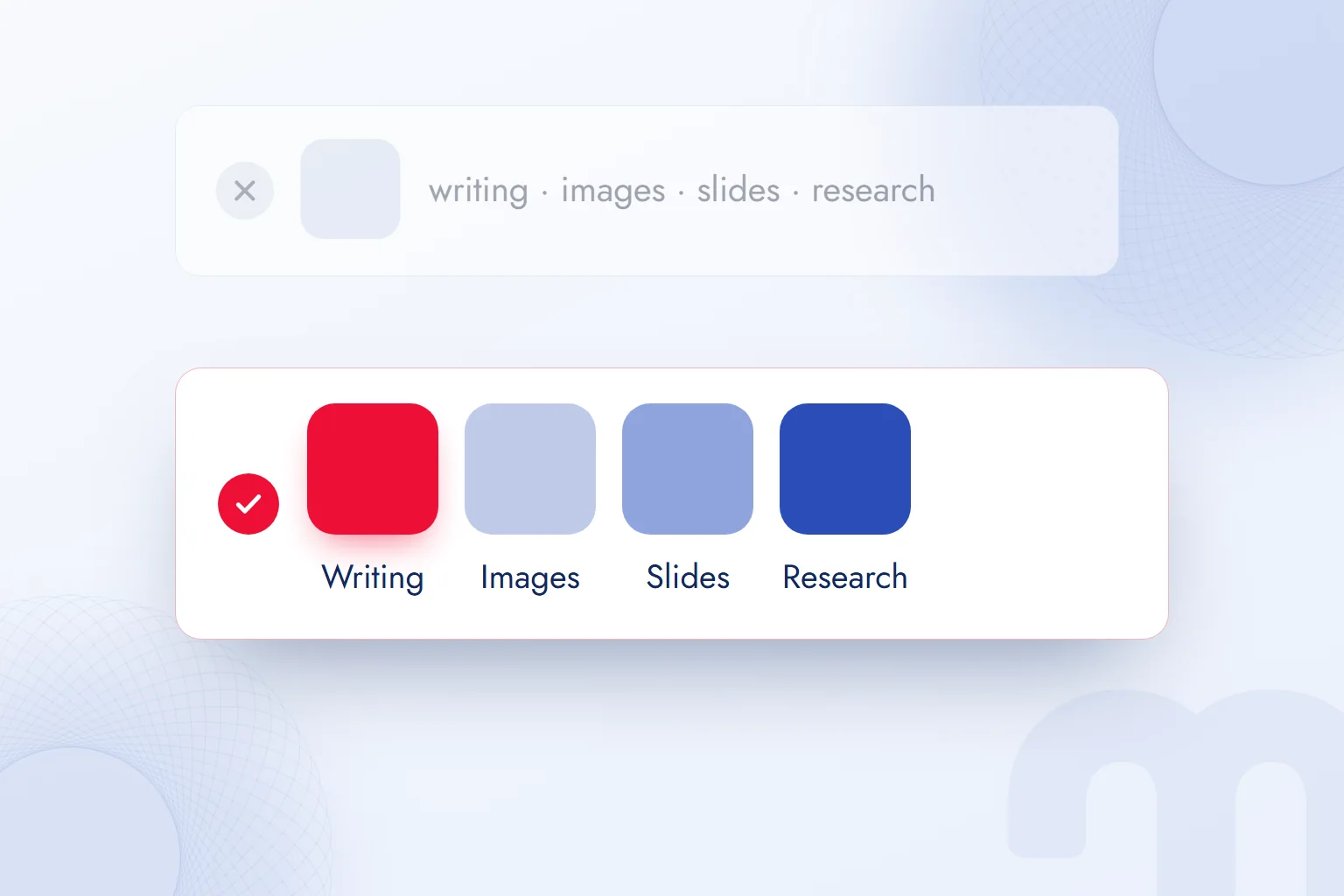
We review this table monthly; free tiers, models and limits change often. When a free plan narrows, moving the job to another tool is often faster than paying. We explain which prompts get better results in what is a prompt, and how ChatGPT is used for marketing work in what can you do with ChatGPT.
Does Your Brand Show Up in These AI Tools’ Answers?
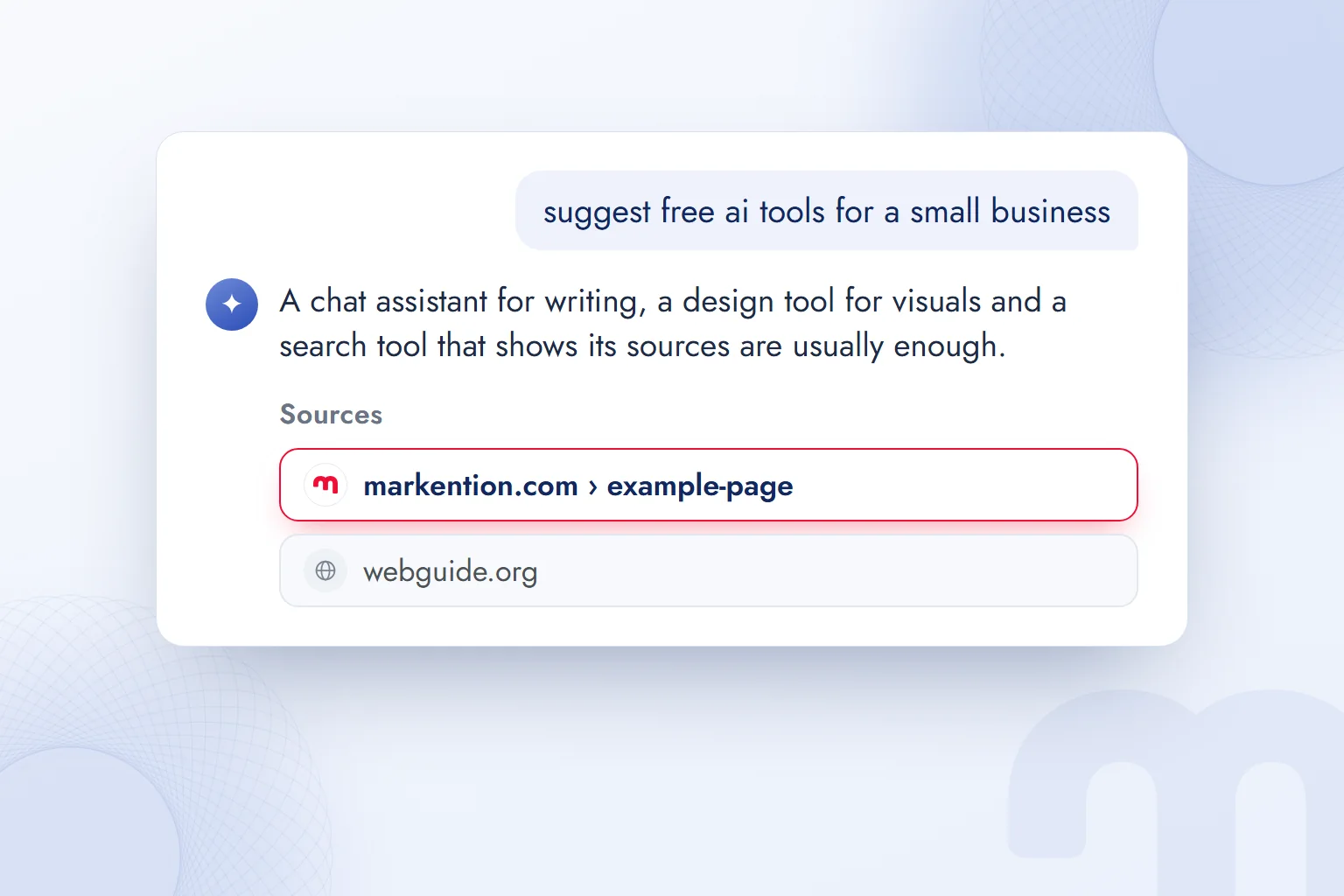
With millions using free AI tools daily, whether your brand appears in their answers is now a visibility question. ChatGPT, Gemini, Claude and Perplexity cite their pages in answers that search the web; a brand missing from the source list misses the user’s shortlist too.
The work done so that a brand is cited in these answers has become known as . The first step is measurement: asking the brand’s 20–30 most frequent questions in different assistants and recording who appears in the source list. The second step is rewriting the opening sentences of pages as clear definitions that answer the question on their own, and making sure AI crawlers can access the site.
You can measure how your site looks to these tools’ crawlers with our free AI visibility analysis tool. Details of the work we do so that your brand is cited in answers are on our GEO consulting page, and changes in AI tools are covered in our AI guides.
Frequently asked questions
Is Gemini Free?
Gemini has a free plan. In Turkey, Google AI Plus costs TRY 199.99 a month and Google AI Pro TRY 869.99 a month; paid plans unlock higher limits and stronger models.
Is There a Free AI Image Generator?
Yes. The free plans of ChatGPT, Gemini and Canva include image generation; in all three, the number of free generations is limited.
What Are the Most Popular AI Apps?
The most common are ChatGPT, Gemini, Claude, Copilot, DeepSeek, Perplexity, Gemini Notebook, Canva and Gamma. All of them have a free plan.
Is There a Completely Free and Unlimited AI?
Not among the widely used tools. Daily text chat on ChatGPT counts as unlimited, but images, files and voice are limited.
Is Free AI Safe to Use?
It is safe when used through the official app. Because data on free tiers may be used for training, confidential and personal information is never entered.
Which Free AI Is Best for Writing in Turkish?
ChatGPT, Gemini and Claude understand and write Turkish well. ChatGPT has the widest free tier; Gemini is practical for those who work with a Google account.

 What is Perplexity? How to use it, free plan, Pro, Comet vs ChatGPTRead article

 What is Nano Banana? Gemini image creation, editing and promptsRead article
 What is Claude Code? Install on Windows and Mac, pricing and useRead article
 What is Grok and how do you use it? X’s AI, its plans and differencesRead articleMost read
 What are AGI and ASI? The steps from general AI to superintelligenceRead article
 What is Claude? How to use it, its plans and the ChatGPT differenceRead article
 What is artificial intelligence? How AI works, types and examplesRead article
 What is Gemini? How to use it, the free plan, Gemini Omni and ChatGPTRead article
Questions & answers
0 commentsNo questions yet; you can ask the first one.