GEO consulting: get your brand cited in AI answers.
What is GEO?
GEO, or generative engine optimization, is all the work done to get your brand cited as a source in AI answers. Google’s AI Overviews, ChatGPT’s search feature, Perplexity and Copilot build these answers from pages they read on the web. It doesn’t replace SEO; it’s built on the same foundation (a crawlable site, content that answers, a trustworthy brand). Its yardstick isn’t rankings, it’s citations.
We build your site, your content and your brand’s footprint on the web together so that answer engines such as Google’s AI Overviews, ChatGPT and Perplexity cite your brand as a source. Every month we measure which questions you’re cited for and close the gaps.
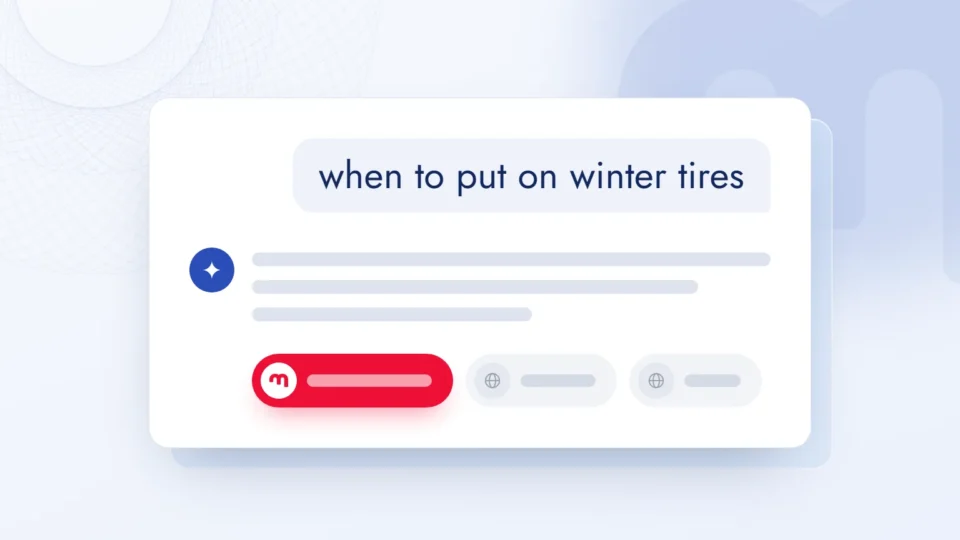
2Answer sourcesThe answer is built from a passage taken from your page.Cited
3yourbrand.com › guideYour Brand | The answer to your question
Being cited in the answer is won in three layers.
01
Content that answers
We map the questions your audience asks AI and build pages that answer each one in the first sentence.
Question and intent map
We pull the questions your audience really asks from sales and support records, search data and assistant tests; comparison and decision questions go first.
Heading = question, first sentence = answer
Each section’s heading carries the question and the first sentence below it gives the answer; conditions and detail come after. Engines quote this structure as it stands.
Comparison and guide pages
Comparisons in tables, step lists and guides that cover a single topic in depth; we rework existing content to the same pattern too.
Freshness and sourcing
The update date, the author and the basis for each claim are stated clearly; an outdated page drops out of the answer.
02
Machine-readable site
Structured data, robots and llms.txt rules, crawl health: so superintelligence reads your site in full.
Structured data (schema.org)
We set up organization, service, product, FAQ and article markup to match exactly what’s visible on the page, and fix the errors.
robots.txt: bot-by-bot permissions
We decide with you on search bots (OAI-SearchBot, PerplexityBot, Bingbot) and bots that train models, and write the rules to match.
llms.txt
We generate the short map your site offers to AI and superintelligence models based on your page types; our AI visibility analysis drafts it automatically.
Crawl health and canonicals
Pages that load fast, have no redirect chains and resolve to a single canonical URL; the sitemap and crawl logs are monitored.
03
Brand footprint
We make sure your brand is cited in the right context in news, directories and guides; citations are reported every month.
Third-party mentions
We find the places where your brand is missing in industry directories, comparison articles and news sources, and get it mentioned in the right context.
Consistent company details
Name, address, domain and social accounts are the same everywhere; organization details are clear on the site through structured data too.
Author and expertise signals
Author pages, job titles, case write-ups and customer reviews become accessible and marked up.
Monthly citation report
The question set runs again on all four surfaces; citation rate, source share and context are reported, and next month’s plan comes out of it.
How does superintelligence choose its sources?
The answer engine runs a few searches close to the question, reads the pages that come back and builds the answer from them; it shows the pages it quoted as sources. Once your page makes that list, your brand is inside the answer.
4 surfacesGoogle AI Overviews and AI Mode, ChatGPT search, Perplexity, Copilot: one foundation, four storefronts.
1st sentenceIf the first sentence under the heading gives the answer, the chance of being quoted goes up; the cheapest rule in GEO.
Answer engine Search on
Answer
Sources
guide-site.com1compare-site.net2yoursite.com3
You were cited as a sourceCited
Ask a question…
How does superintelligence see your site?
The free AI visibility analysis audits your site’s page types, structured data, the permissions it gives AI crawlers and its llms.txt, then sends the report and recommendations to your inbox. It takes a few minutes and needs no sign-up.
Url Clicks · 2026 vs 2025JulAugSep2026400K2025204K
Jul112K65.2KAug131K68.5KSep156K70.2K
Sample data.
Click to flip through the screens
The dashboard pulls Search Console and Analytics data at the same time. We update the filters to match the project’s goals and build new screens for each type of conversion step.
We build screens with filters Google’s own interface doesn’t offer. We track your queries separately in the top 3, 4–10, 10–20 and 20+ position groups.
We group keywords into clusters and look at the traffic a project gets from each cluster as a whole. We can compare an online store’s bag and shoe clusters on one screen, by search intent, against the previous period; that is a more useful way to measure success.
To report organic growth honestly, we split traffic into branded and non-branded searches. We analyze non-branded traffic separately; that is where the effect of SEO work shows most clearly.
All these filters show the losses too: not every one of the 25 screens shows green. The same screens reveal the swings caused by algorithm updates, and our recovery work starts there.
We track every keyword one by one: impressions, clicks, CTR and position on the same row. Where a keyword moves up but clicks don’t follow, we start work on the title and description.
We keep the city the traffic comes from on a separate screen. For brands with physical stores, the city breakdown decides where the budget and content go.
We compare with the same period last year: is it seasonality or real growth? A screen that looks good against the previous 90 days may be standing still against last year.
25
screens
310
distinct data types
24/7
phone and desktop
Search Console and Analytics
Search Console + Analytics
How does GEO work?
Contents 14 sections
GEO (generative engine optimization) is the work of getting your brand cited as a source in answers produced by artificial intelligence (AI), and by the more capable systems now discussed as superintelligence (ASI): Google’s AI Overviews and AI Mode, ChatGPT search, and answer engines such as Perplexity and Bing Copilot. We wrote this guide for marketing teams who know SEO but can’t work out why they don’t show up in AI answers. Every section tells you what to change on your site and in your brand’s footprint across the web.
In GEO consulting, our job is to find the questions you should be cited for, shape your site and content so AI can read and quote it, grow your brand’s footprint on the web, and measure citations on a regular schedule. The sections below explain how each of these four jobs is done. The same work is also sold as “AI SEO” or “AI search optimization”; whatever the label, what matters is who sets up the measurement and who makes the changes. For a short definition and where the term comes from, see our post What is GEO?
GEO vs SEO: is AI SEO a separate discipline?
SEO aims to rank your site in search results; GEO aims to get you cited as a source inside the answer an AI engine gives. Both sit on the same foundation: a crawlable site, content that answers questions directly, and a trustworthy brand. The difference comes from the output you’re after: not a position in the rankings, but a mention in the answer.
Topic
SEO
GEO
Goal
A top spot in the results list
Being cited as a source inside the answer
Unit of measure
Rank, clicks, impressions
How often you’re cited, which page is quoted, the context
What decides it
Relevance, authority, technical health
The same foundation, plus a clear answer up front and accurate brand information across the web
Surface
Google, Bing and Yandex results pages
AI Overviews and AI Mode, ChatGPT search, Perplexity, Copilot
Measurement tool
Search Console, rank tracking
A question set; the AI performance report in Bing Webmaster Tools3
Don’t read this table as two separate disciplines. Everything you do for GEO helps SEO too. According to Google, for a page to appear as a supporting link in AI Overviews or AI Mode, it must be indexed and eligible to be shown in Search with a snippet;1 a page that isn’t indexed can’t be a source in an AI answer either.
Where do AI answers appear?
Four surfaces stand out today. On some searches, Google places an AI Overview above the results, and it also offers a conversational AI Mode. ChatGPT searches the web for current questions and adds source links inside its answer. Perplexity gives every answer with numbered sources. Bing Copilot draws on the Bing index. Google states that there are no additional requirements or special optimizations for appearing in these features beyond the fundamentals of SEO.1 Bing likewise recommends clear, well-structured content that puts the key information at the top of the page.2
What these surfaces share is this: the answer is built from a passage taken from your page, or from a link to it. To appear in the answer, your page has to be found first, then read, then chosen as the clearest source for that question. GEO tackles these three steps in order.
How does source selection work?
Answer engines draw on two sources: the model’s training data and a web search run at query time. For current and commercial questions, the second one decides. The engine runs a few searches close to the question, reads the pages that come back, builds the answer from them and shows the passages it quoted as sources. That’s why pages that are strong in the search index are also the closest to becoming sources in AI answers.
The sentence that answers first
Bing recommends giving the key information at the top of the page and avoiding long introductions.2 We write the answer first under every heading, then the detail; the rule helps readers too. Google, for its part, doesn’t consider a special writing style or chunking content necessary for AI;1 the goal isn’t text written for AI, it’s a good page that answers the question clearly.
Structured data and a clean heading hierarchy help machines understand a page, but they don’t create visibility on their own: Google says no special markup is needed for its AI features,1 and Bing writes that structured data doesn’t guarantee visibility.2 Your brand’s footprint is the other half of the work: when an answer engine searches the web and sees your brand described accurately on news sites, in industry directories and in comparison articles, it’s easier for the answer to describe you correctly.
How do you build content that answers?
On the content side, the job is to find the questions your audience asks AI and build the page that gives each one the clearest answer. The order below is the structure we use for a service or product page.
Question map: we collect the questions customers ask from your sales team, support tickets and search data; comparison, pricing and “which is better” questions go first.
Heading = question: each section’s heading is the question itself, or very close to it; readers and engines alike can tell from the heading what the page answers.
First sentence = answer: the first sentence under the heading gives the answer; conditions and exceptions come in the sentences after it (Bing’s “key information first” advice).2
Tables and lists: answers that need a comparison or steps are given as a table or a numbered list; the parts of the answer become easier to tell apart for people and machines.
Date and source: when the page was updated and what each claim rests on are stated clearly; readers and engines can both see whether the information is current.
One topic, one page: a page answers one question in depth; splitting the same topic across several similar pages makes it unclear which one should be taken as the source.
Blog posts built on this structure work both in search results and in AI answers. Reworking existing content to the same pattern usually pays off faster than writing from scratch.
A machine-readable site: structured data, llms.txt, robots
There are three jobs on the technical side. The first is structured data: marking up organization, service, product and article information with the schema.org vocabulary,4 matching exactly what’s visible on the page.5 The second is the rules given to crawlers: robots.txt says which bot may read what.6 llms.txt, meanwhile, is a short map a site offers to language models; it’s an independent proposed standard,7 and Google writes that no such file is needed for its AI features.1 Because it costs little, we set it up with other tools in mind; markention’s AI visibility analysis generates a draft. The third is crawl health: pages that load fast, have no redirect chains and resolve to a single canonical URL.
Crawler
Who
What for
Googlebot
Google
The search index; AI Overviews and AI Mode also cite sources from pages in this index1
Google-Extended
Google
Not a separate bot but a control token in robots.txt: it governs use for training and grounding in Gemini apps and Vertex AI; it doesn’t affect Search or AI Overviews8
OAI-SearchBot / ChatGPT-User / GPTBot
OpenAI
ChatGPT search results; visits made on a user’s request (robots.txt may not always apply); model training9
PerplexityBot / Perplexity-User
Perplexity
Indexes pages to show in answers; visits made on a user’s request (generally ignores robots.txt)10
Bingbot
Microsoft
The Bing index and Copilot answers
ClaudeBot / Claude-SearchBot / Claude-User
Anthropic
Model training; Claude’s search results; visits made on a user’s request11
CCBot
Common Crawl
A public web archive; other organizations may use the archive to train models12
Which bots to allow is a brand decision. If you want to be cited in answers, you need to be open to search bots (Googlebot, Bingbot, OAI-SearchBot, PerplexityBot, Claude-SearchBot); permissions to supply data for model training (GPTBot, ClaudeBot, Google-Extended) are weighed separately. Because visitors arriving on a user’s request don’t always follow robots.txt,910 we protect sensitive content with access control, not robots.txt. We make this decision with you and write robots.txt and llms.txt to match. How we audit and set these rules bot by bot is covered on our AI access control page.
Brand footprint: mentions and authority
When an answer engine searches the web, it sees your brand not only on your own site but also on news sites, in industry directories, in comparison articles and in listings. Being there with accurate, current information helps the answer describe you correctly. That’s why one leg of GEO work is digital PR: taking your brand, product and expertise to genuine third-party sources. We don’t resort to artificially manufactured mentions or links.
Being cited correctly in the answer starts with being described correctly across the rest of the web.
In practice, we find the directory and comparison articles in your industry and fill in the places where your brand is missing; we make sure company details (name, address, domain, social accounts) are identical everywhere; we set up author pages and expertise signals; and we make customer reviews and case write-ups easy to reach.
How do you measure citations?
Measurement in GEO is different from rank tracking; two people can get different answers to the same question. So we measure with a question set: we define the questions your audience asks, run the same set on different assistants at regular intervals, and record whether your brand and your competitors are cited, which page is quoted and in what context. The effect of content changes is read from these records.
The report looks at three things: citation rate (how much of the question set you appear in), source share (how many of the quoted pages are yours) and context (a recommendation, a warning, or just a name). On the site side, AI crawler access, structured data errors and crawl logs are monitored; the AI performance report in Bing Webmaster Tools (preview) adds data for the Copilot side.3
What should a GEO specialist know?
A GEO specialist is a good SEO specialist first; visibility in AI answers is built on pages that are indexed, crawlable and answer the question clearly.1 On top of that, they need to know how answer engines choose sources, the difference between being cited and merely being named, and how to measure both. The table below sets the knowledge we look for in a GEO specialist next to the mistake we see most often in the field.
Area
What to know
Mistake we often see
Search foundation
Indexing and snippet eligibility; according to Google there is no additional requirement for appearing in AI features1
Treating GEO as separate from SEO and skipping the technical foundation
Source selection and mentions
Answer engines search the web at query time and choose sources; the difference between a source citation (a linked quote) and a brand mention
Taking an answer seen in one chat as a general result; answers vary by person, time and phrasing
Structured data
schema.org types; markup that matches the information visible on the page45
Marking up information that isn’t on the page, putting the same FAQ on every page
Crawler access
Writing robots.txt rules bot by bot; separating search bots from model-training bots689
Shutting out the search bot while trying to block training
llms.txt
It is an independent proposed standard; Google does not look for such a file for its AI features71
Treating llms.txt as the key to visibility
Brand footprint
The brand being described accurately on third-party sources; clear, well-structured content that puts the core information first2
Looking only at your own site and ignoring how the web describes you
Measurement
Question set, mention rate, source share, share of voice; the AI performance report in Bing Webmaster Tools3
Selling “superintelligence optimization” without any measurement
Tools used in GEO work
GEO measurement happens inside the answer engines themselves; diagnosis on the site side is completed with Search Console, Bing Webmaster Tools and analytics. No single tool shows every answer engine, so the same question set is run across several engines.
Tool
What we use it for
In the markention app
ChatGPT, Gemini, Perplexity, Claude
Running the question set; recording mentions, source citations and competitors
GEO · AI visibility
Google Search Console
Index status, impressions and clicks; traffic from AI features is reported within Search data1
Search Console screen
DataForSEO
Whether an AI Overview appears for tracked keywords, and whether we are a source in it
Keyword tracking (AI Overview counter)
Bing Webmaster Tools
Citations in Copilot and Bing AI answers (preview report)3
The team tracks it directly in Bing Webmaster Tools
Google Analytics 4
Referral sessions from AI assistants
AI-referred visits card
Semrush
Topic and competitor research, building the question set
The team works directly in Semrush
Server logs, robots.txt
Which AI bots visit the site and what they can reach
The top strip of the screen summarises one analysis run: mention rate (in how many answers across the question set the brand is named), source citations (answers that link to the site), share of voice (our share of all brand mentions) and average position in the answers where we appear. Each value is compared with the previous analysis. Below sit share of voice by brand, the breakdown by engine and change over time; further down the screen, concrete suggestions are listed per question in the form “a competitor is cited, we aren’t”, and a suggestion becomes a task in one step. The team’s AI assistant, Limon, summarises the measurements and suggests priorities; the specialist decides which page changes.
markention app › AI-referred visits and Google AI Overviews (sample data, brand details hidden)
Measuring mentions is not enough on its own; we also track whether answers bring visits to the site. This card splits GA4 referrals by AI assistant and places the Google AI Overview status from keyword tracking next to it: the gap between the number of keywords with an overview and the number where we are a source shows where the next piece of work is.
Common mistakes
Blocking bots wholesale
A site that shuts out search bots while trying to block model training can’t be found in that engine’s web search. Rules are written bot by bot.6
Hiding the answer at the end
Long introductions delay the answer; Bing also recommends putting the key information at the top of the page.2 The answer comes first under the heading.
Treating structured data as decoration
Marking up information that isn’t on the page, or putting the same FAQ on every page, goes against Google’s structured data guidelines; markup must match exactly what’s visible on the page.5
Watching a single surface
Measuring only in ChatGPT or only in Google gives an incomplete picture; the question set runs on all four surfaces at once.
The GEO consulting process: the first 30 days
Week 1 · Measurement: the question set is built and the first citation report is taken on all four surfaces; AI crawler access, structured data and llms.txt are audited.
Week 2 · Plan: for the questions you aren’t cited for, we decide which pages to build or rework and which third-party sources to approach.
Week 3 · Implementation: robots.txt and llms.txt are written, structured data is set up and the first pages are turned into an answer-first structure.
Week 4 · First reading: the question set is run again; changed citations, quoted pages and questions still uncovered are reported, and next month’s plan comes out of it.
In the months after that, the work continues with content production and brand footprint work; the citation report is refreshed every month.
GEO and AI SEO pricing: what drives the cost?
The price of GEO consulting depends on the size of the question set, how many answer engines and languages are measured, how many pages are reworked, whether content production and brand footprint work are in scope, and the monthly effort assigned to the project. Instead of a fixed price list, we share estimated ranges; we work out the scope together in the first meeting and send a written proposal.
Question set and engines: measuring 20 questions on four engines is not the same job as measuring 100 questions in three languages.
Measurement frequency: every analysis run means paid calls to the answer engines; the number of runs drives both effort and direct measurement cost.
Technical setup: the current state of robots.txt, llms.txt, structured data and crawl health.
Content and brand footprint: restructuring existing pages to answer questions, new content, and visibility work on third-party sources.
Competition: how established competitors already are in the answers.
Model
How it works in GEO
Upside
Downside
Monthly retainer
The question set is measured every month; content and technical work continue to plan
Changes in mentions are tracked month by month and the plan follows the data
Without a written scope, what was done that month becomes vague
Project-based
A one-off audit: first measurement, technical setup and a written roadmap
Budget and deliverables are known up front
The effect builds over weeks, so the work ends before results are measured
Hourly
You pay for the hours spent
Flexible for small, scattered tasks
The total cost is not known in advance
Performance-based
Part of the fee is tied to the mention rate
Incentives appear to point the same way
Answers vary by person and time, so the metric is disputable; mentions cannot be guaranteed
For GEO consulting we work on a monthly effort commitment; a one-off audit and setup can be discussed separately from monthly monitoring. The table below shows estimated ranges; the final fee is set in a written proposal once the question set and scope are clear.
GEO consulting pricing: estimated ranges
Scope
Specialist effort
Estimated fee (excl. VAT)
GEO add-on to SEO: question-set tracking and content updates
~6–10 hours / month
$400–$1,100 / month
Standalone GEO consulting: 3–4 answer engines, content and brand mentions
Estimated range, excluding VAT; rows marked “/ month” are monthly, the others are one-off. Scope is confirmed in a written proposal after the first meeting. As of October 2026.
Getting a proposal
Tell us about your brand, your competitors and a few questions your audience asks; we prepare a written proposal with the scope of the first measurement, the monthly effort and the fee. You can write to us from the contact page.
AI SEO agency, independent consultant or in-house team?
All three models answer the same two questions differently: who measures the answer engines, and who changes the pages. Many firms calling themselves an “AI agency” build chatbots or automation rather than search visibility, so check whether a proposal actually includes citation measurement.
Model
What it covers
What to watch
Best fit
Independent GEO consultant
Question set, measurement and roadmap; your team implements
Without people to implement, recommendations stay in the report
Brands with content and development staff who want outside direction and review
AI SEO or GEO agency
Measurement, technical setup, content and digital PR under one roof
Whether citations are really measured; otherwise the work shrinks to content production
Companies without a team dedicated to this work
In-house team
Knows the product and customer questions best
Measuring several answer engines regularly and following platform changes takes time
Brands with high content volume and a steady workload
We combine consulting with delivery: we build the question set and the measurement, then handle the technical fixes and the content; if your subject-matter expert sits in your team, we gather the knowledge from them.
How to choose a GEO agency
GEO is a new field; you need a partner who moves forward by measuring and testing rather than promising hard rules. When choosing between an independent consultant, an agency and a consulting firm, we suggest looking for concrete answers to these questions: how are mentions measured, which answer engines are covered, who does the content and technical work, what will be done for the brand footprint, and what will you see at the end of the first month? “We optimize for superintelligence” isn’t an answer.
Measurement method: the question set is written down and built from unbranded questions; every run repeats the same questions and is compared with the previous one.
More than one engine: no single assistant is enough; Google AI Overviews, ChatGPT, Gemini, Perplexity and Copilot are tracked separately.
Guarantee language: “we’ll get you to the top in ChatGPT” or a promised mention rate is an unmeasurable promise; no one can guarantee from the outside how answer engines choose their sources.
Access and ownership: Search Console, Bing Webmaster Tools, GA4 and the site stay in your accounts; the partner is added as an authorised user.
Bot decisions: robots.txt changes are made with your approval and bot by bot; training bots and search bots are assessed separately.6
Brand footprint methods: the third-party work is explained; manufacturing mentions, fake reviews or forum posts doesn’t work and harms the brand.
What the report contains: mentions, source share and AI-referred visits, alongside the work done that month.
Exit terms: the question set, the measurement history and the list of work done are handed over when the engagement ends.
You are welcome to use this list when you talk to us as well: we write the question set with you, open the accounts in your name and don’t guarantee mentions; every month we report the same question set against the previous measurement. Since GEO stands on the same foundation as search, our SEO consulting page explains that side of the work.
To see where your site stands today, you can run our free AI visibility analysis: it reports on page types, structured data, crawler access and llms.txt, and arrives in your inbox. If you’d like to talk about your own situation, pick a meeting day below.
GEO consulting: frequently asked questions.
Is GEO the same as AI SEO, and does it replace SEO?
GEO (generative engine optimization) is the work of getting your brand cited as a source in answer engines such as Google AI Overviews, ChatGPT search, Perplexity and Copilot. It doesn’t replace SEO; it’s built on the same foundation (an indexed, crawlable site; content that answers the question clearly; a brand described accurately across the web). Google states there are no additional requirements for appearing in AI Overviews beyond the fundamentals of SEO; everything done for GEO also helps search visibility.
Which pages do AI answer engines choose as sources?
For current and commercial questions, answer engines run a web search at query time, read the pages that come back and build the answer from them. According to Google, to be a supporting link in an AI Overview, a page must be indexed and eligible to be shown in Search with a snippet; beyond that, no extra requirement, special markup or AI-specific file is needed. Bing also recommends clear, well-structured content that gives the key information first. So most of the work is good pages that answer the question clearly, on a solid search foundation.
What is llms.txt, and do we need it?
llms.txt is a short map file a site offers to language models: which pages matter and what they cover. It’s an independent proposed standard. Google states clearly that no such file is needed for its AI features, and other engines haven’t made an official commitment to reading it either. Because it costs little, we set it up with other tools in mind; markention’s AI visibility analysis generates a draft tailored to your site. What really decides things are your robots.txt rules and the content itself.
Should we block AI bots?
It’s a brand decision, and it’s made bot by bot. If you want to be cited in answers, you need to be open to search bots (Googlebot, Bingbot, OAI-SearchBot, PerplexityBot, Claude-SearchBot). Permissions to supply data for model training (GPTBot, ClaudeBot, the Google-Extended control) are weighed separately; blocking Google-Extended doesn’t affect Google Search or AI Overviews. CCBot collects a public web archive that other organizations may use for training. Visitors arriving on a user’s request (ChatGPT-User, Perplexity-User) don’t always follow robots.txt. We make the decision together and write robots.txt to match.
How long until we see results?
Technical access fixes take effect when engines recrawl the page; how long that takes varies by engine and page. The effect of content structure and brand footprint builds up more slowly. At the end of the first month, we run the question set again and report which questions you’ve started being cited for and which pages are being quoted; the report is refreshed in the months after.
How do you measure citations?
We build a question set from the questions your audience asks and run the same set at regular intervals in Google AI Overviews and AI Mode, ChatGPT, Perplexity and Copilot. We record whether your brand and your competitors are cited, which page is quoted and the context (a recommendation, a warning, or just a name). The report gives three measures: citation rate, source share and context. Because we know different people can get different answers to the same question, measurement rests on the set, not a single query.
What kind of content gets quoted most in AI answers?
There’s no official list; Google says no special writing style is needed for AI, and Bing recommends giving the key information first. Our approach: pages that carry the question in the heading and answer it right away, give comparisons as tables and steps as lists, state their update date and sources clearly, and cover a single topic in depth. These show readers and engines alike what the page answers. Reworking existing content to this pattern often pays off faster than writing from scratch.
What does the consulting cover, and is content production included?
The first month covers measurement, planning and technical setup (robots.txt and llms.txt, structured data, crawl health); on the content side, it includes the question map and turning existing pages into an answer-first structure. In the following months, new content production, brand footprint work (digital PR, directories, comparison articles) and the monthly citation report continue. We run the technical setup and content production ourselves; if the subject-matter expert is on your team, we gather their knowledge in short interviews.
How is the fee for GEO consulting set?
The fee depends on the size of the question set, how many answer engines and languages are measured, how many pages are reworked, whether content and brand footprint work are in scope, and the monthly effort assigned to the project. Instead of a fixed price list, we share estimated ranges; we work out the scope together in the first meeting and send a written proposal. A one-off audit and setup can be discussed separately from monthly monitoring. Estimated ranges are in the pricing table on this page; the final fee is set in a written proposal.
How much do GEO and AI SEO services cost?
A GEO add-on to SEO is estimated at $400–$1,100 a month, and standalone GEO consulting across several answer engines with content work at $900–$2,300 a month (excluding VAT). A one-off GEO audit is $1,500–$2,300. None of these guarantee mentions in AI answers; we report the same question set every month.
Can you guarantee we’ll appear in AI answers?
No. Answer engines choose their sources at query time and can give different people different answers to the same question; no one can guarantee that choice from the outside. What we commit to is what can be measured: mention rate, source citations, share of voice and AI-referred visits on the same question set, reported every month against the previous measurement.
Which tools do you use for GEO work?
We run the question set on ChatGPT, Gemini, Perplexity and Claude, and track Google AI Overviews through keyword tracking. On the site side we use Google Search Console, Bing Webmaster Tools and GA4, and Semrush for topic and competitor research. We bring this data together in the markention app, the panel our team works in.
Is an AI agency the same as a GEO consultant?
Not always. “AI agency” or “AI consulting” often means helping a company use AI tools internally, automate work or build a chatbot. GEO consulting is about your brand being cited as a source in answer engines such as ChatGPT, Google AI Overviews, Perplexity and Copilot. Our work is the second: the question set, answer-first content, crawler access and citation measurement.
How can my brand show up in ChatGPT answers?
Start by checking that your site is open to ChatGPT’s search crawler (OAI-SearchBot) and that your pages answer the question in their first sentence; then make sure your brand is described accurately on news sites, industry directories and comparison articles. ChatGPT searches the web for current questions and cites its sources, so most of the work is the search foundation, content and brand footprint. We can’t guarantee a position or a mention; we measure progress by running the same question set on a regular schedule.
What should we look for when choosing a GEO agency or consultant?
We suggest asking which question set and which engines mentions are measured on, whether the accounts are opened in your name, and what will be done for the brand footprint. A guarantee such as “we’ll get you to the top in ChatGPT”, or methods that rely on fake reviews or manufactured mentions, harm the brand; an “AI optimization” offer with no measurement isn’t a concrete answer either.
The rhythm of the operation: month, week, day, hour.
Every project has one mentor and two specialists. The tools we use: Claude, Search Console, Semrush, Yandex, Screaming Frog, Google Analytics, ChatGPT · Codex, Google Ads, Ahrefs, Data Studio, Merchant Center, Google Trends, Meta Business, Google Business Profile. We check your Search Console and Analytics every day; Merchant Center one day a month, and the other tools come in as the calendar requires.
Mentor
28 days with markention
2 strategy meetings · a live Data Studio report, 24/7 · 8 operations meetings · plus opportunity-driven work as it comes up
Week 1Meeting with you
Week 2Your Data Studio report
Week 3Meeting with you
Week 4Your Data Studio report
10:00MonPlanningMonday, week 1: We plan your weekWe open the month by checking your product feed in Merchant Center, then set the week’s priorities in our 10:00–11:00 team meeting.
TueStrategyTuesday, week 1: Your strategy sessionYour mentor and specialists get together: we review where your project stands, discuss ideas and prepare the agenda for Thursday’s meeting with you.
WedCrawlWednesday, week 1: Technical crawl of your siteWe crawl your site end to end with Screaming Frog: broken links, redirects and indexing issues go onto your task list.
ThuMeetingThursday, week 1: Meeting with youWe meet every two weeks. Your mentor and two specialists are at the table; we record the meeting and write down the decisions.
16:00FriWrap-upFriday, week 1: Weekly reviewWe close the week with our 16:00 team review: what was done and what comes next.
10:00MonPlanningMonday, week 2: We plan your weekWe start the day by reviewing your Google Ads and Meta Business accounts, then set the week’s priorities in our 10:00–11:00 team meeting.
TueBacklinksTuesday, week 2: Your link profile auditWe review your link profile with Ahrefs and separate gained, lost and risky links.
WedMarketWednesday, week 2: Your market and competitor researchWe scan your market and competitors with Semrush: rankings, new opportunities and lost queries go onto your task list.
ThuReportThursday, week 2: Your Data Studio reportWe crawl your site again; in the week without a meeting we send your report together with your updated dashboard, which brings together 310 distinct data types.
16:00FriWrap-upFriday, week 2: Weekly reviewWe close the week with our 16:00 team review: what was done and what comes next.
10:00MonPlanningMonday, week 3: We plan your weekWe start the day by checking your visibility on Yandex and your Google Business Profile, then set the week’s priorities in our 10:00–11:00 team meeting.
TueStrategyTuesday, week 3: Your strategy sessionYour mentor and specialists get together: we review where your project stands, discuss ideas and prepare the agenda for Thursday’s meeting with you.
WedAIWednesday, week 3: Your brand in superintelligence answersWe check how your brand appears in ChatGPT and Claude answers and add the questions left unanswered to your content plan.
ThuMeetingThursday, week 3: Meeting with youWe meet every two weeks. Your mentor and two specialists are at the table; we record the meeting and write down the decisions.
16:00FriWrap-upFriday, week 3: Weekly reviewWe look at rising searches in your field with Google Trends and close the week with our 16:00 team review.
10:00MonPlanningMonday, week 4: We plan your weekWe start the day by reviewing your Google Ads and Meta Business accounts, then set the week’s priorities in our 10:00–11:00 team meeting.
TueAnalysisTuesday, week 4: Your traffic and conversion analysisIn Google Analytics we look at where your visitors come from and which pages bring conversions; the findings go into Thursday’s report.
WedAI OverviewsWednesday, week 4: Your brand in Google’s AI answersWe check whether your brand is cited as a source in Google’s AI Overviews and AI Mode answers and add the questions left unanswered to your content plan.
ThuReportThursday, week 4: Your Data Studio reportIn the week without a meeting we send your report together with your updated dashboard.
16:00FriWrap-upFriday, week 4: Weekly reviewWe close the week with our 16:00 team review: what was done and what comes next.
Sample flow: if your meeting day is Thursday.
08:00Checking your site09:0010:00Production on your project10:00Our team meeting11:00Production on your project10:00Production on your project16:00Our team meeting10:00Production on your projectDaytimeYour strategy session10:00Production on your projectDaytimeMeeting with you10:00Production on your projectDaytimeYour Data Studio report
Monday·Week 1We plan your week
We open the month by checking your product feed in Merchant Center, then set the week’s priorities in our 10:00–11:00 team meeting.
Keep browsing. This button will let you know when the summary is ready.
Summary ready for .
Thank you. The report link for will be sent to .
CookiesWe use cookies only with your consent, to measure how you use the site and to improve our ads. If you allow it, the pages you viewed on this visit are added to your request when you submit a form.