





 Cihat Murat Yüksel
8 min read
Cihat Murat Yüksel
8 min read
What can you do with ChatGPT? Free plan marketing examples
ChatGPT is an AI tool for writing, research, file and image work; in marketing it helps draft content, compare copy options and analyze campaign reports.Pro
Contents 9 sections
ChatGPT is used for writing, research, reviewing files and creating images; in marketing it helps prepare content drafts, develop alternative copy and summarize campaign reports. We start by writing a that states the output we expect and the information to use.
Headlines, anonymized customer questions and campaign reports each get their own check: brand voice for headlines, the basis of each answer for questions, the matching source figure for reports. On the free plan, too, we choose the job and the tool together.
Facts in ChatGPT output are verified against their source, and every draft headed for publication goes through human review.
What can you do with ChatGPT?
With ChatGPT we draft text, run research, summarize pages and files, analyze data and create draft images. In marketing we first decide which output we need: a section plan for content, subject lines for an email or a short assessment of a report.
Say a fictional ceramics studio is launching a product: we ask for headline options based on its product notes and never add a use the notes do not mention. For a social post on the same product, only the format changes.
For research, we ask for summaries of industry or competitor pages and open the cited source ourselves. For files, we use a campaign report with no personal data; for images, we describe the product and setting. Checking sources, brand voice and claims stays with us.
Is ChatGPT free, and what does the free plan include?
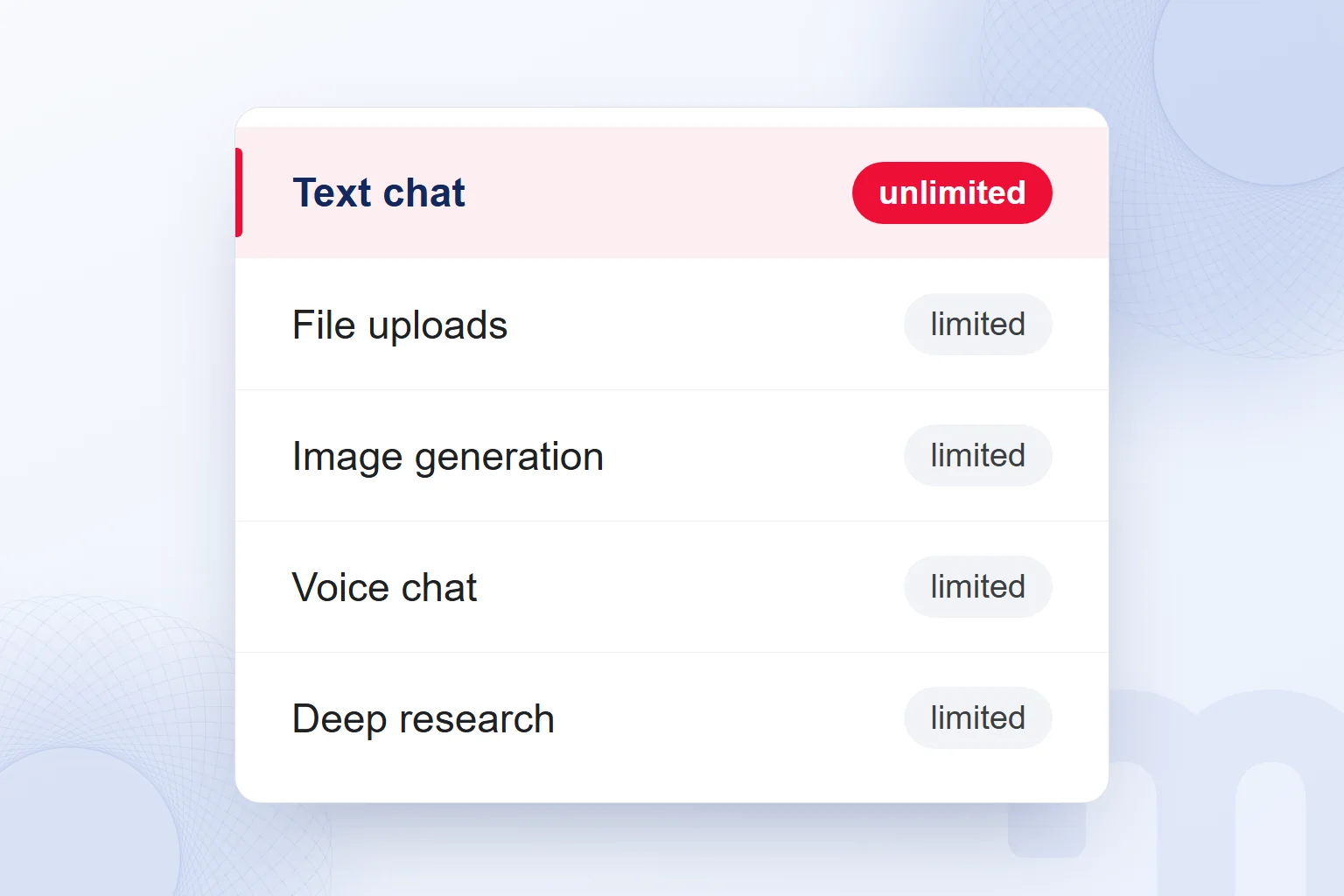
ChatGPT’s Free plan costs nothing; text chat is unlimited, subject to abuse guardrails, while files, images, voice chat and are limited.
We use the Free plan on the web, iOS or Android, start with a short request and refine the answer with follow-ups, picking a clearly scoped job such as headline options.
The pricing page calls text chat unlimited but lists messages and file uploads as limited, so we never read it as everything being unlimited. On the Free plan, image generation is limited and slower; data analysis, image understanding, memory and context are limited too.
Go offers more messages, files, images and voice chat, may show ads and includes scheduled tasks. Projects come with every individual plan, Free included. According to the OpenAI Help Center, new custom GPTs cannot be created or published on individual accounts such as Free, Go, Plus and Pro; existing GPTs remain usable, and creating new GPTs is offered in Business, Enterprise and Edu workspaces. Plans change, so we check OpenAI’s ChatGPT pricing page before choosing.
What do marketing teams use ChatGPT for?
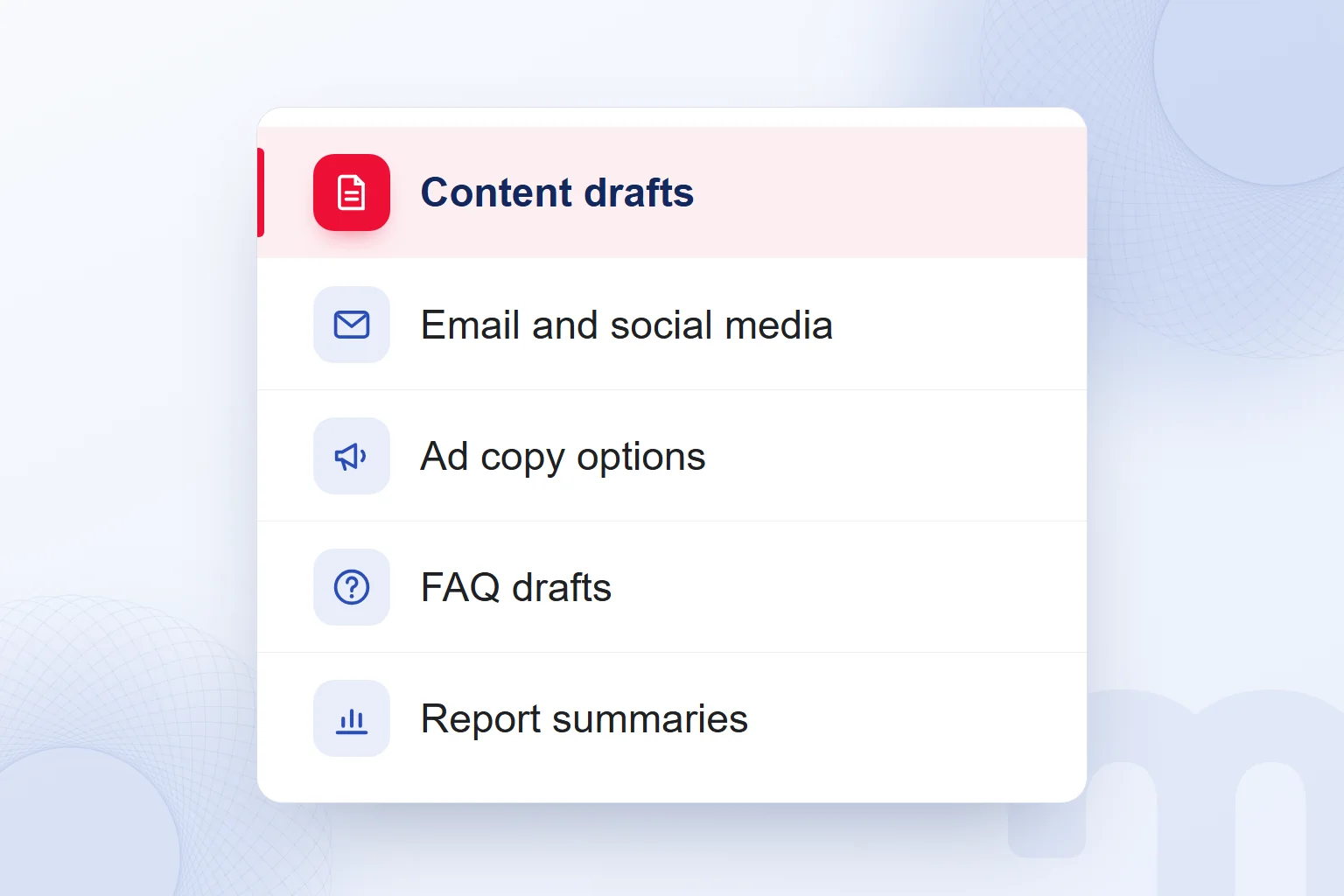
Marketing teams use ChatGPT to draft content, emails, social posts, ads and FAQs, summarize pages and reports, and sketch visual ideas. Each job has a check we run before accepting the output.
| Job | What we do in ChatGPT | What we check |
|---|---|---|
| Content draft | Section plan and headline options | Topic coverage, facts, brand voice |
| Email and social media | Different versions of one message | Audience, tone, product information |
| Ad copy | Headline and description options | Claims and the platform’s character limit |
| FAQ draft | Edit questions with personal data removed | Whether answers match the product or service |
| Page summary | Summarize an industry or competitor page | Accuracy, by opening the source |
| Report summary | Analyze a campaign report CSV | Figures, period and match in the original report |
| Image draft | Create a product or scene draft | Product details and brand storytelling |
For an FAQ built from the studio’s customer questions, we remove names and order details and compare the product care answer with the notes; if they lack an answer, we ask the business.
In a report summary, we read interpretation and figures separately: a correct total can still come with a wrong explanation, and we never present an unsupported cause as a finding. For ad copy, we confirm the character limit on the target platform.
How do you write a good ChatGPT prompt?
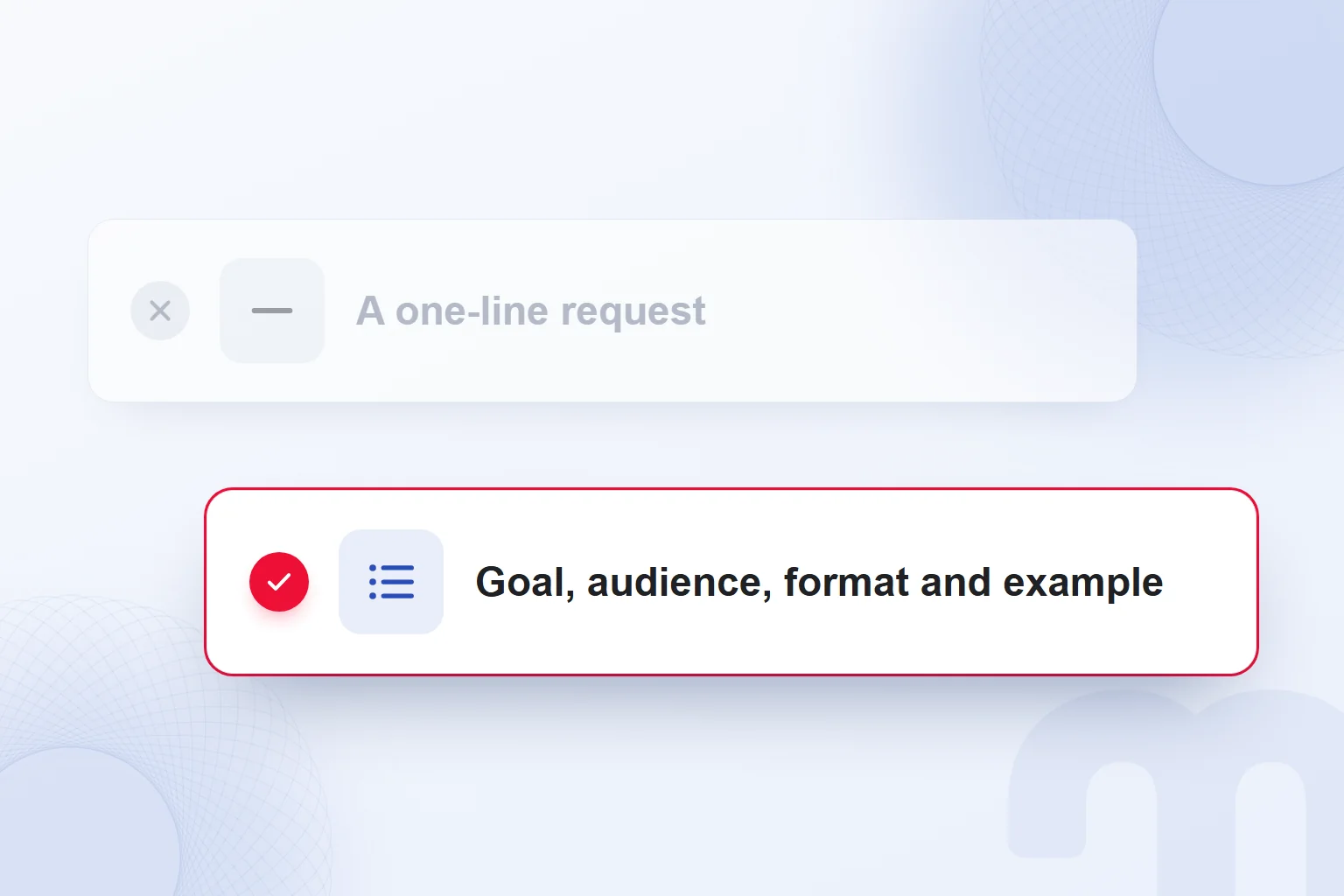
We write a good prompt by stating the goal, audience, format, length, tone, an example and the phrases to avoid. We build the request on the framework in our what is a prompt post.
For the studio, we write: “Our goal is to introduce the new mug series. Our audience is people who use simple tableware at home. Based on the product notes we provided, write a short social media post and headline options. Use a calm, clear tone. Example of the voice: We are making room for something simple at the table. Do not add any feature, price, discount or delivery promise that is not in the notes.”
We supply the notes separately; the example sets the tone, the notes supply the facts. We then check the format and what supports each added claim.
If the first answer is generic, we narrow it: “Remove the abstract praise from the headline; rely only on details in our product notes.” We say which sentence should change and why, then look for that fix.
How do you use ChatGPT for marketing, step by step?
We use ChatGPT in marketing by defining the output, cleaning the data, writing the prompt, narrowing the answer, verifying facts and keeping a human review. Each stage ends with the material the next one needs.
- We define the job and the outputWe choose a concrete output, such as a content plan, email options or a report summary, and set its scope.
- We remove personal dataWe strip customer names, contact details and order data from the material, then read what remains.
- We write the prompt with goal, audience, format and exampleWe also state length, tone and banned phrases to describe the result we expect.
- We narrow the output with questionsWe point to the gap or the sentence to fix and ask for a specific change.
- We verify facts at the sourceWe compare figures, dates, names, prices and product claims with primary sources.
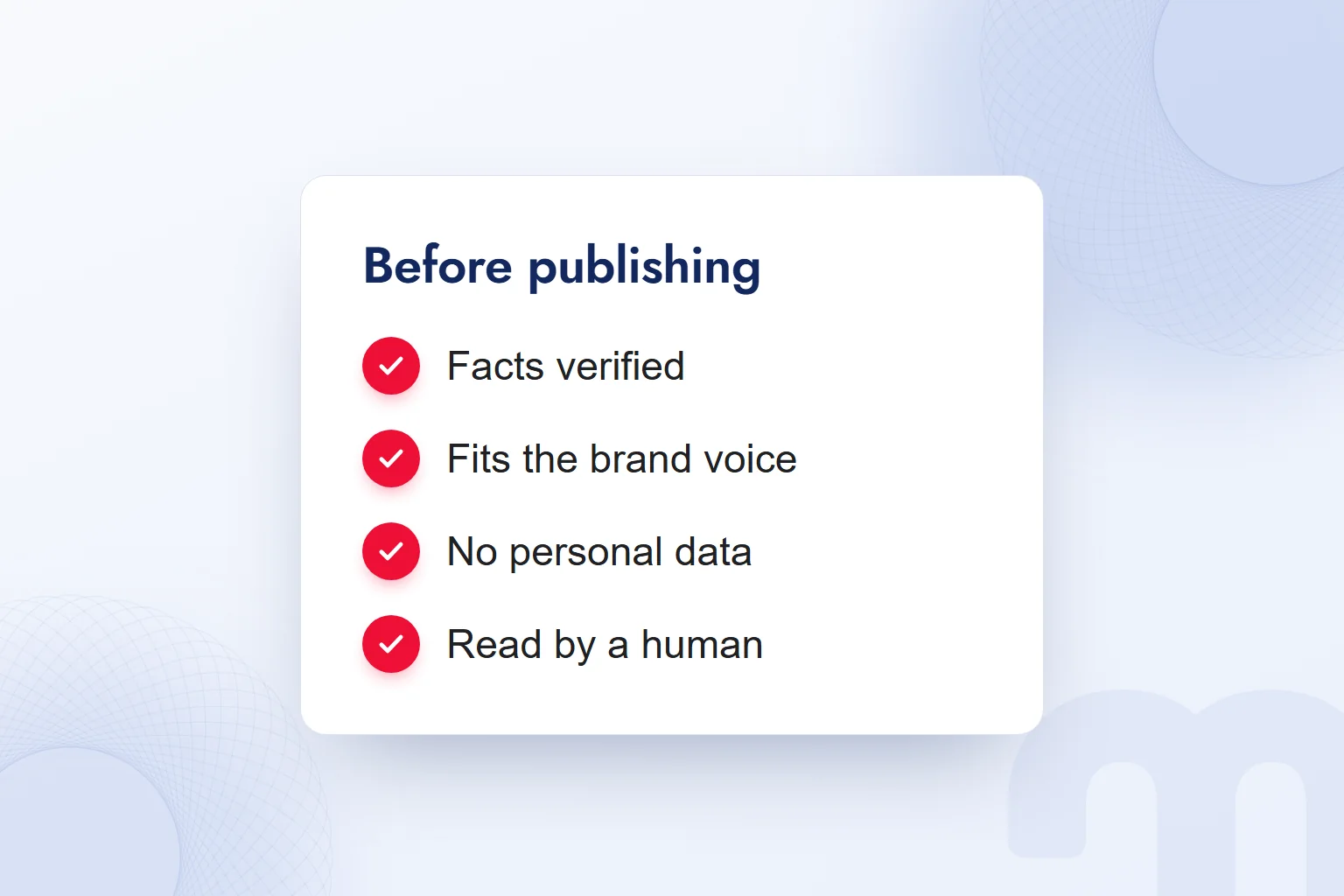
- We run a human review before publishingA person reads the final text; we check brand voice, claims and that no personal data remains.
For the studio’s campaign report, we state the period, use a file with no personal data and compare the summary’s figures with the original. The free plan’s data analysis limit is part of the scope.
For an image request, we describe the product, setting and look using the framework in our ChatGPT image prompts post.
What information should you never share with ChatGPT?
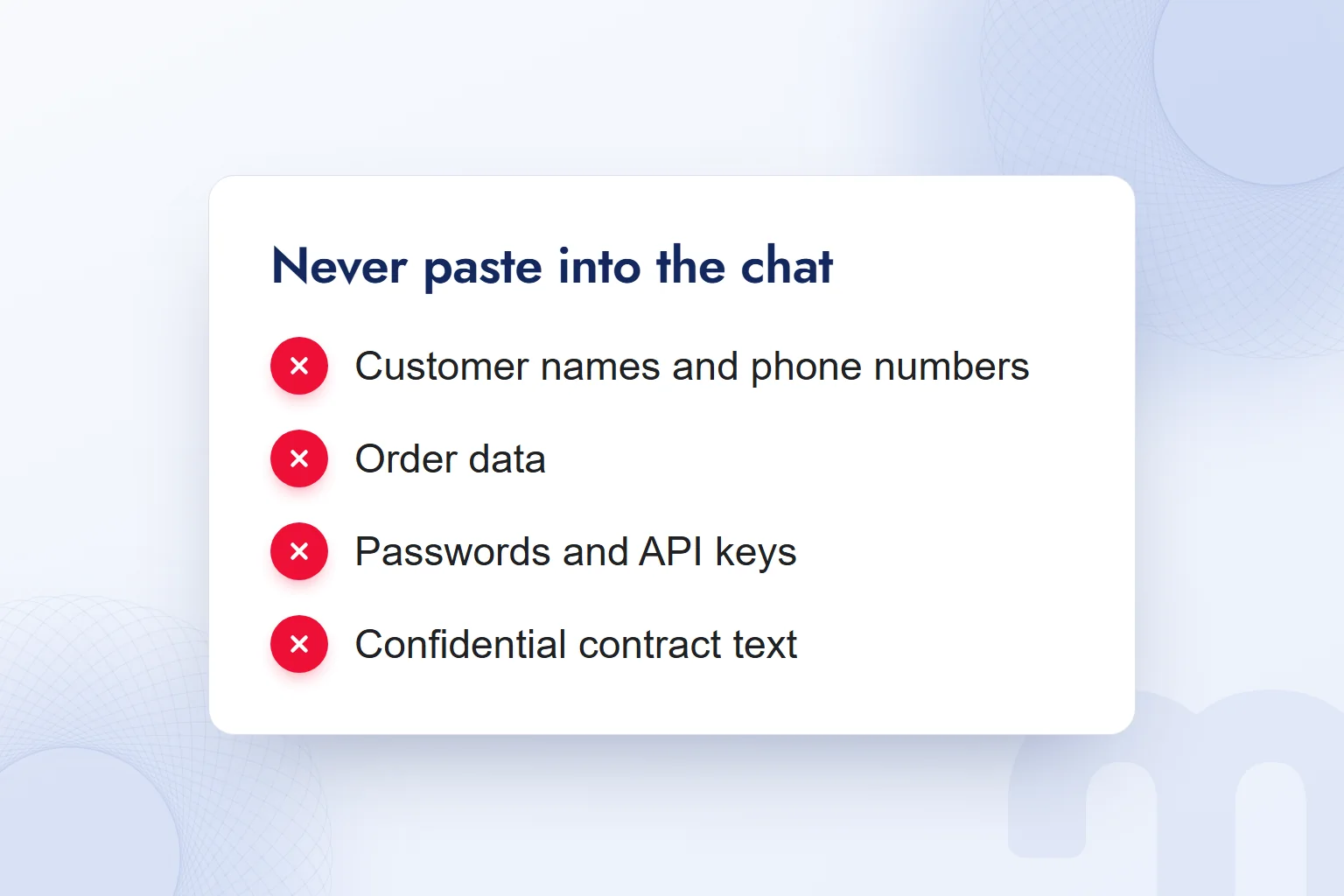
We never type customer names, phone numbers, email addresses, order data, passwords, API keys or confidential contract text into ChatGPT. Before adding a note or file, we read it and separate what the job needs from personal and confidential information.
For the studio’s customer questions, we never upload a full transcript; we keep the product-related part, remove details identifying the customer and order, and reread the note. Report file fields get the same check.
The use of our content for can be turned off in settings; we check it and still remove personal data. In Turkey, personal data responsibility falls under KVKK, the country’s data protection law; we address it at the start and choose what goes into the chat accordingly. The training setting never replaces the decision on what customer information is shared.
How do you check ChatGPT’s answers?
We verify ChatGPT’s answers by checking figures, dates, names, prices and other facts against a primary source, and the wording against the brand voice. For research answers, we open the source page and confirm the information is there.
Each case has its own fix:
- The answer is generic → We add the audience, an example and a format to the prompt and narrow the output.
- A fact or figure is wrong → We verify it at the primary source and remove unsourced information.
- The tone does not fit the brand → We give a wording sample from the brand’s own texts and list phrases not to use.
If the studio’s draft adds a care feature the notes never mention, we check the product document and remove it. Softening the sentence does not verify the claim; we settle the basis of the information first.
After a fix, we reread the whole text, check that headline, description and FAQ carry the same product information, and only then decide on publishing.
Which plan should you start with?
For a few drafts and ideas a week, we start with the Free plan and move to a paid plan when file, image or voice needs hit a limit.
This distinction drives the decision:
- A few drafts and ideas a week → We use the Free plan and run these jobs within its scope.
- Frequent images, files and voice chat → If the limits fill up, we consider Go or Plus.
- Team work in a shared space → We consider the Business plan and its data controls.
We also check how our brand is described in ChatGPT’s answers. At markention, under AI visibility, we look at whether the brand is mentioned and whether the product and service information in those answers matches our own sources.
A tool limited to your uploaded documents is covered in what is NotebookLM, paid plan differences in what is ChatGPT Go, and the protocol linking a model to your own data in what is MCP. More on working with AI tools is on our blog.
Frequently asked questions
What can you do with ChatGPT?
We use it for writing, research, file and image work. In marketing: content drafts, email and ad options, FAQ drafts and report summaries.
Is ChatGPT free?
Yes, the Free plan costs nothing. Text chat is unlimited, subject to abuse guardrails; files, images, voice chat and deep research are limited.
How do you use ChatGPT for free?
We start on the Free plan via the web, iOS or Android and describe the job in the chat. We narrow the answer with follow-ups and verify information at its source.
What is the difference between the free and paid plans?
Go adds more messages, files, images, voice chat and scheduled tasks; Plus adds advanced reasoning and higher limits. New custom GPTs cannot be created on individual accounts; we check the current scope on the pricing page.
Should you enter customer data into ChatGPT?
We never type customer names, contact details or order data into the chat. We use questions and reports only after removing personal data.
Is the information ChatGPT gives accurate?
We never accept every answer as correct. We verify figures, dates, names, prices and product claims at the primary source and remove unsourced information.

 What is Gemini? How to use it, the free plan, Gemini Omni and ChatGPTRead article
 What is Google AI Studio? Free use, API keys and your first projectRead article
 What is ChatGPT and how do you use it? Free version, plans, safetyRead article
 What is MCP? Connecting AI to your data with Model Context ProtocolRead article
 What is superintelligence? From AI to SI and what it means for brandsRead article
 What is vibe coding? First prototypes, tools and limits for marketersRead article
 What is NotebookLM? Now Gemini Notebook, used with brand documentsRead article
 AI photo editing: remove backgrounds, sharpen and expand photosRead article
Questions & answers
0 commentsNo questions yet; you can ask the first one.