





 Cihat Murat Yüksel
7 min read
Cihat Murat Yüksel
7 min read
What is a prompt? Writing requests for AI and prompt engineering
A prompt is the written request we give an AI model. The parts of a good prompt, marketing examples, prompt engineering and the steps for checking the answer.Pro
Contents 9 sections
A prompt is the written request that tells an AI model which task to perform and what answer is expected; in computing, the word also names the sign showing that a system awaits input. The text we type into an AI chat box is a .
We treat AI as a teammate: we draft with it and keep decisions and verification with the editor. A prompt states the task, the information and the format; the answer is then compared with the source.
A good prompt describes the task and its limits; verifying the generated text remains the editor’s responsibility.
What does prompt mean?
As a noun, “prompt” means a cue or reminder; as a verb, to move someone to act; as an adjective, done without delay. Its technical meaning depends on where it appears. The correct spelling is “prompt”; “promt”, as in “what is a promt”, is a common typo.
We read the word by context:
- We are looking up the English word → The sentence shows whether it is a noun, verb or adjective.
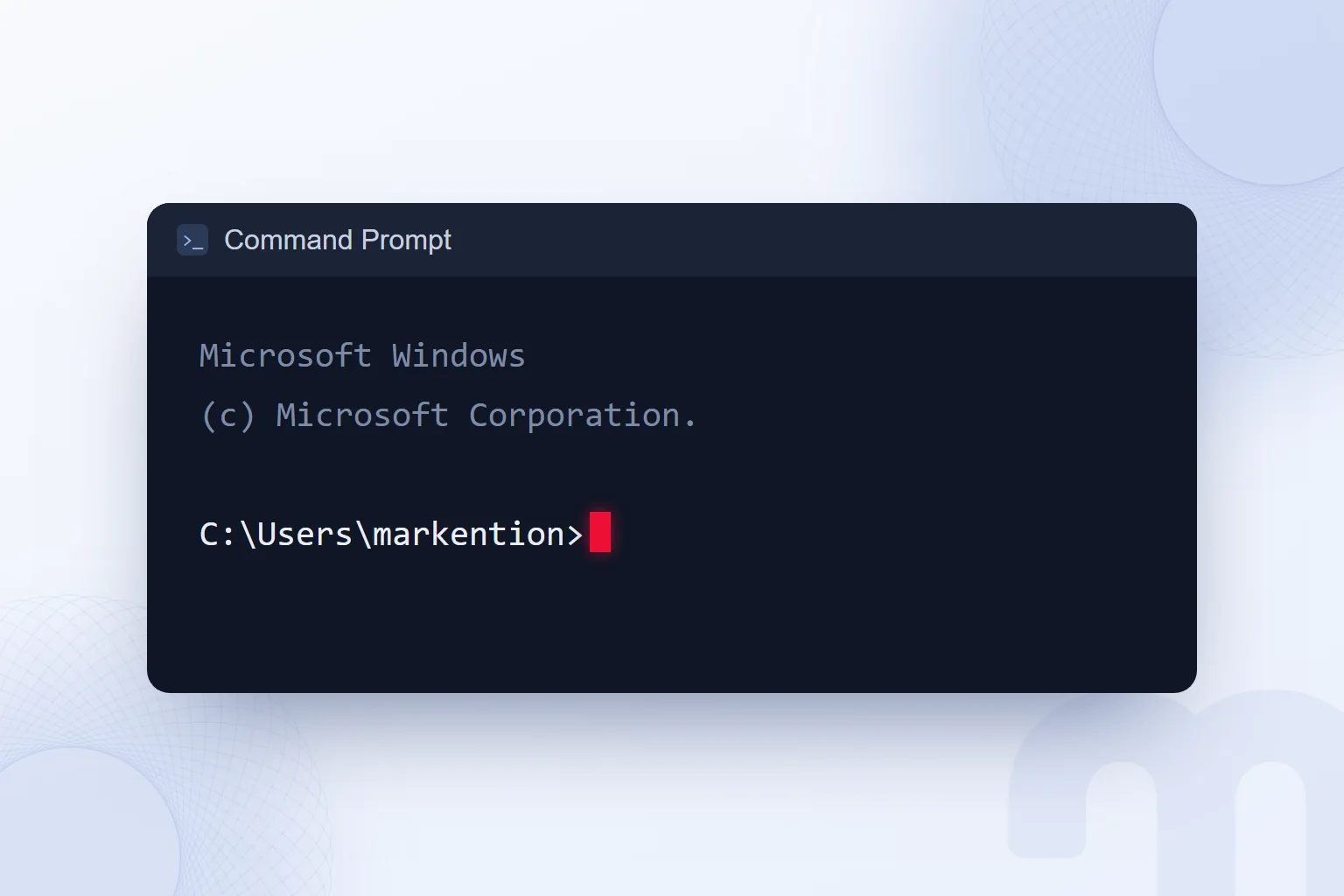
- We see a command prompt on a computer → The system expects input from us; the “C:\Users\markention>” line in Windows is an example.
- We are writing a request to AI → We mean the text that tells the model its task; the message asking for a product description is a prompt.
On the command line the system waits for our input; in a chat box we give the model a task. This keeps us from confusing a with a request in an AI chat.
What is a prompt in AI?
In AI, a prompt is the written request that tells a model what to do; with the task, it carries the source text, the audience and the answer format. “Turn this product information into a short description”, sent to ChatGPT, is a prompt.
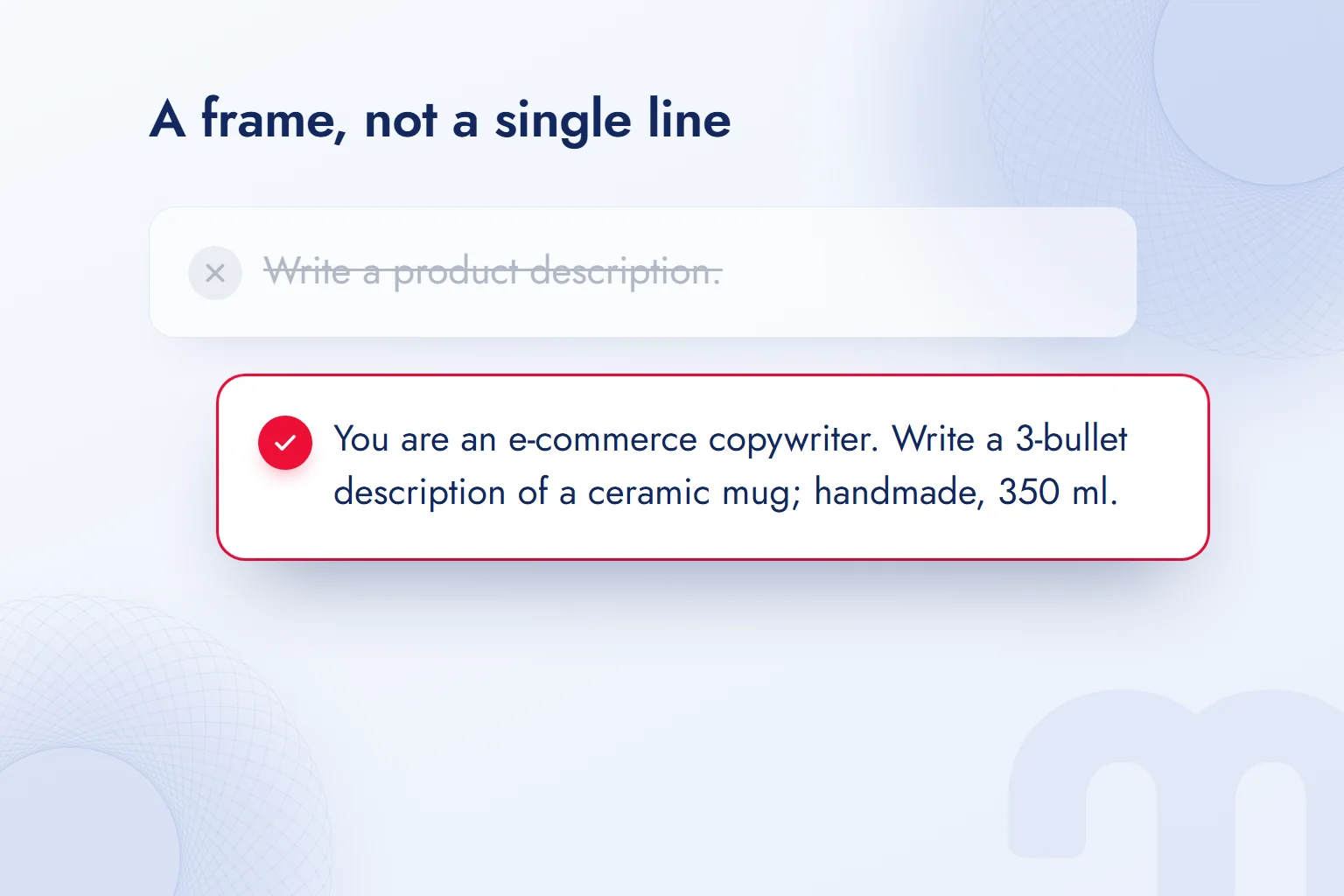
“Write a product description” only names the task; product, reader, features and length stay open. We fill these gaps with product information, a reader definition and a delivery criterion.
A detailed prompt does not guarantee accuracy; AI can produce false or outdated information. We never accept a price, feature or claim that is not in the source. A fluent answer is not a verified one.
What are the parts of a good prompt?
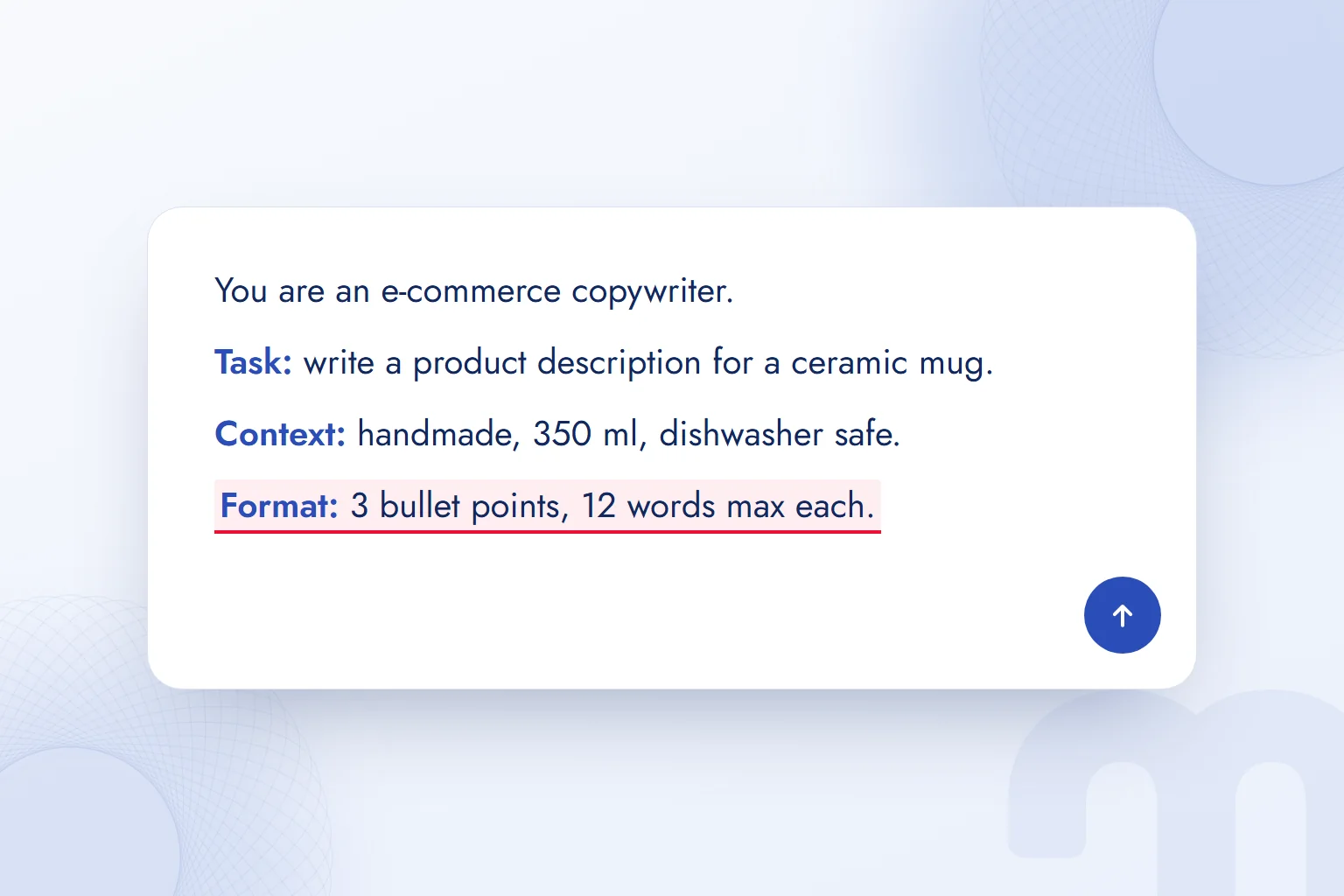
A good prompt is made of role, task, context, format, example and limit. Each part answers one question: from whose point of view, which task, and by which criterion is the result accepted?
For a hypothetical ceramic mug, we use the product details only as sample input for this exercise.
| Part of the prompt | What it asks | Example |
|---|---|---|
| Role | Through whose eyes are we writing? | E-commerce copywriter |
| Task | Which single job are we doing? | Product description for a ceramic mug |
| Context | Whom do we address, with what information? | Home coffee drinkers; handmade, 350 ml mug |
| Format | How is the answer delivered? | 3 bullet points, 12 words max each |
| Example | What wording do we want? | “A handmade companion for your coffee break.” |
| Limit | What do we leave out? | Prices, features and promises not in the source |
The role gives a point of view; it does not replace product information. The format sets bullet count, length and tone. The example shows wording; we never present it as a real customer review.
The limit line matters most in marketing: we add “Do not add features that are not in the source” and check that the output kept to it.
How do you write a prompt?
We write a prompt by defining the task, adding the needed information, then setting the format and limits. Instead of “make it better”, we say what should change.
- We pick the taskOne deliverable, such as a product description, headline or summary; different jobs go into separate prompts.
- We write the role and contextPoint of view, audience and source text; no customer data or personal data in the prompt.
- We describe the formatLength, tone, number of bullets or table columns, stated clearly.
- We add an example and limitsWe show the wording we want and ask that claims not in the source are left out.
- We check the answerWe compare it with the source, verify figures, prices and claims, and check the format.
- We revise the promptWe name the missing criterion and try again, judging the next answer by the same criteria.
Our combined prompt for the hypothetical mug: “You are an e-commerce copywriter. Write a description of a ceramic mug for people who drink coffee at home. It is handmade and holds 350 ml. Write 3 plain bullet points of 12 words max. Do not add features or prices that are not in the source.”
If the answer is too long, we revisit the length condition; if bland, the audience and context; if wrong, the source. So each revision has a reason.
How do you build prompt examples for marketing work?
We build marketing prompts around the task, the audience and the source text, and change the delivery format for each job.
Bracketed fields take approved source text and the audience.
Email subject line: “Act as an email editor. Source announcement: [approved text]. Audience: [reader definition]. Suggest 3 subject lines of 6 words max. Spark curiosity; add no discount or deadline not in the source.”
Social media copy: “Turn the product information into a short caption for [audience]: [approved product information]. Use the ‘we’ voice, no exclamation marks, 2 sentences max. Add no new features or promised results.”
Editorial review: “Compare the draft with the source. Source: [approved information]. Draft: [generated text]. List each unsupported claim, its support status and a fix in a three-column table. Accept no figure that is not in the source.”
The model’s review table also goes through an editor check. We cover requests for image generation in our ChatGPT image prompts post.
What is prompt engineering?
Prompt engineering is designing a prompt, testing it and improving it by evaluating the answer. We set criteria first: source consistency, format and wording.
- Zero-shot prompt: We describe the task without an example output, e.g. “Summarize the source text in three bullet points”, with the source attached.
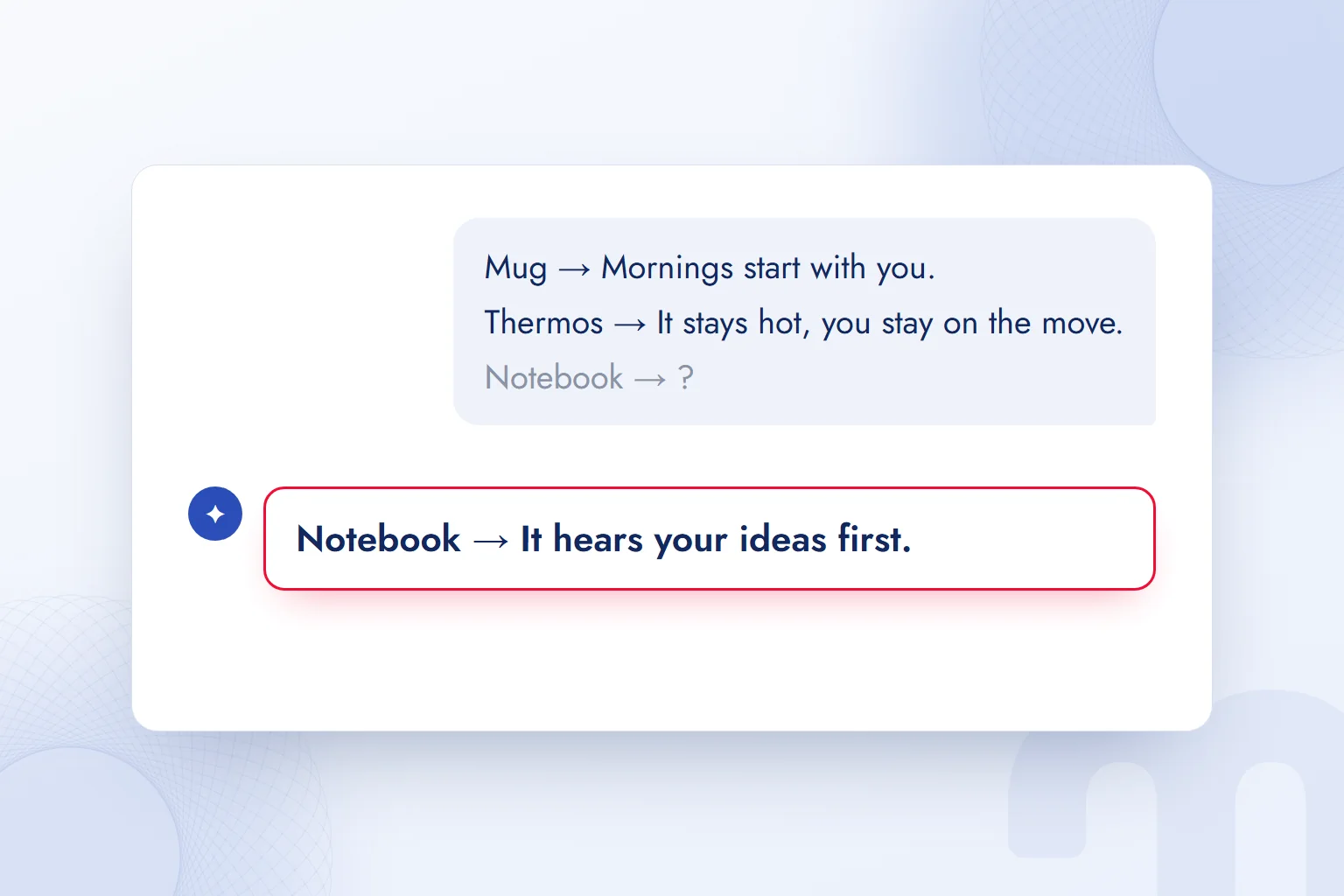
- Few-shot prompt: We show the wording with a few examples. Given the fictional pairs “Mug → Mornings start with you” and “Thermos → It stays hot, you stay on the move”, we ask for a notebook slogan in the same style.
- Prompt chaining: We split the work. First we extract product features from the source, check the list, then have the description written from the verified list.
- Role prompting: “Act as an e-commerce copywriter” sets the point of view.
- Fixed format: We ask for a set template, e.g. a table with the columns “Feature, wording in the source, sentence for the description”.
- Self-check: We ask the model to test its answer against the criteria. “Flag claims not in the source and bullets over the length limit” gathers what the editor will check.
We pick a technique by what is missing. Self-checked text is still compared with the source; a model approving its own answer is not verification.
What is the difference between a system prompt and a user prompt?
A system prompt sets base instructions for the whole conversation, while a user prompt states the task at hand. Lasting writing preferences go into the general instructions; product- and task-specific information goes into the user prompt.
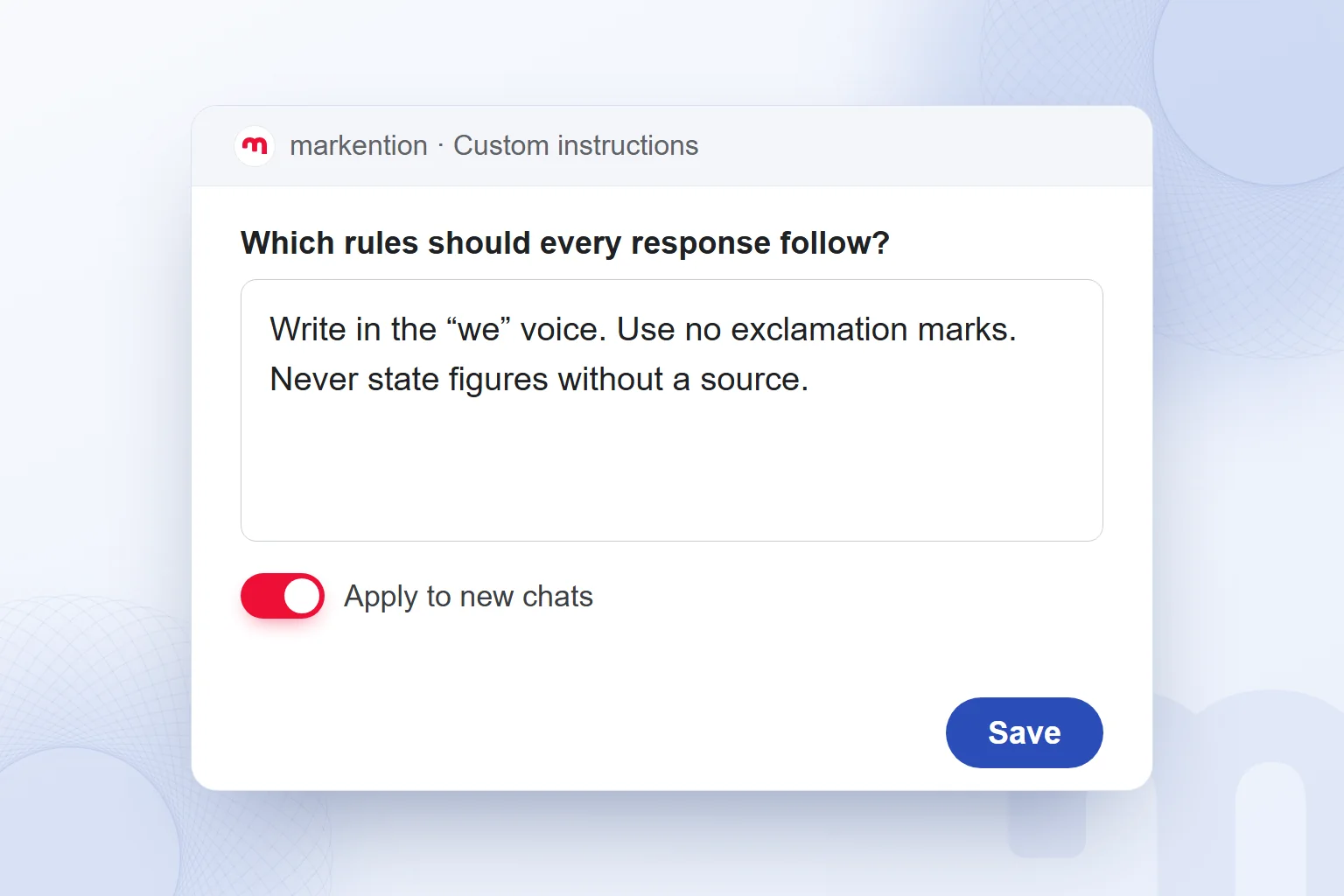
In ChatGPT, and the instructions field in GPTs hold rules that always apply. “Write in the ‘we’ voice. Use no exclamation marks. Never state figures without a source” defines the frame; “Write a three-bullet description for this product” is a request for one job.
Standing rules do not supply product features; we still add the source information and avoid asking for a tone that conflicts with them. At markention we draft with AI and keep decisions and verification with the editor.
What mistakes are made when writing prompts?
Common mistakes are leaving out context, not specifying the format and using generated information unverified. We first find which criterion failed.
The case is usually one of these:
- The answer is generic → We add the audience, product information and usage context; “be more creative” does not replace missing context.
- The format is off → We show the expected structure with an example and state bullet count, length and table columns.
- The information is wrong → We put the source text in the prompt and correct figures, prices and claims against it.
We never put customer or personal data into a prompt, and at editor approval we check both the prompt’s conditions and the source. Prompts that use source documents are covered in what is NotebookLM; plan limits in what is ChatGPT Go. More on prompts and verification is in our AI posts.
Frequently asked questions
What does prompt mean?
As a noun, prompt means a cue or reminder. In AI it is the written request given to a model; on a computer, the sign that input is expected.
How do you write a good prompt?
We state the task, context, format and limits, add a role or example where needed, and compare the answer with the source.
Can ready-made prompt examples be used as they are?
We adapt them to our task, audience and source information. A template is not complete until the product-specific gaps are filled.
What is prompt engineering used for?
It lets us design, test and improve a prompt against set criteria. We judge source consistency, format and wording together.
Are a system prompt and a user prompt the same?
No. A system prompt sets the conversation’s base instructions; a user prompt defines the current task.
Does a good prompt fully prevent wrong information?
No; AI can produce wrong or outdated information. As editors, we verify figures, prices and claims.

 What is Gemini? How to use it, the free plan, Gemini Omni and ChatGPTRead article
 What is Google AI Studio? Free use, API keys and your first projectRead article
 What is ChatGPT and how do you use it? Free version, plans, safetyRead article
 What can you do with ChatGPT? Free plan marketing examplesRead article
 What is MCP? Connecting AI to your data with Model Context ProtocolRead article
 What is superintelligence? From AI to SI and what it means for brandsRead article
 What is vibe coding? First prototypes, tools and limits for marketersRead article
 What is NotebookLM? Now Gemini Notebook, used with brand documentsRead article
Questions & answers
0 commentsNo questions yet; you can ask the first one.