





 Damla Kütük
20 min read
What is artificial intelligence? How AI works, types and examples
The OECD and EU definitions of artificial intelligence, how it works, machine learning vs deep learning, types of AI, everyday examples, a short history, risks, rules and AI in Turkey.Pro
Contents 31 sections
Key takeaways
- Artificial intelligence is technology that lets computers learn from data and produce predictions, content or decisions.
- Stanford's AI Index 2025 found 78 percent of organisations used AI in at least one business function in 2024.
- The EU AI Act, the first comprehensive AI law, divides AI systems into four groups by risk level.
- AI models are first trained on large data, then learn its patterns and produce outputs from new inputs.
Artificial intelligence is the general name for technologies that let computer systems learn from data and produce predictions, recommendations, content or decisions. The OECD calls it a machine-based system that infers from its input how to generate outputs that can influence physical or virtual environments.
This guide covers AI from the ground up: official definitions, how an AI system works, the difference between , deep learning and large language models, the types of AI, everyday examples, a short history since 1956, risks and EU rules, Turkey’s strategy and where to start learning. The last section explains how AI search is changing brand visibility.
AI output is read as a prediction; in health, legal and financial decisions, the final word is left to an expert.
What is artificial intelligence?
Artificial intelligence is the shared name for systems that let a machine turn input into outputs such as predictions, content, recommendations or decisions; these systems learn from data instead of having every rule written by hand. Put simply: AI is the effort to have machines do part of the mental work people do.
The most widely cited definition internationally is the OECD’s. Under the definition OECD member countries updated in November 2023, an AI system is a machine-based system that, for explicit or implicit objectives, infers from the input it receives how to generate outputs such as predictions, content, recommendations or decisions that can influence physical or virtual environments. Systems vary in autonomy and adaptiveness after deployment. The EU AI Act builds on this definition.
The contrast with the everyday definition is instructive. Dictionaries describe AI as an “ability” to perceive, learn, reason, decide and solve problems in a human-like way. The OECD defines it as a “system” that turns input into output, with no human-likeness condition. Today’s usage is closer to the OECD’s: a filter that marks an email as spam and a chat assistant that writes a poem are both AI.
What does AI mean, in short?
In short, AI means machines doing work typical of human intelligence, such as learning, reasoning and making decisions. AI is the abbreviation of “artificial intelligence”. The term itself was first used in a research proposal written in 1955.
Are AI and robots the same thing?
No; a robot is a physical machine, while AI is a software capability. A robot can work without AI by repeating pre-programmed movements, like many factory welding robots. Conversely, most AI has no body: a chat assistant, a recommendation system or a spam filter is software only. The two meet in a robot vacuum that recognises its surroundings with a camera, or in a car with a driver-assistance system.
Is it written AI, A.I. or artificial intelligence?
All three name the same concept; “AI” without full stops is far more common in everyday writing and searches. We spell out “artificial intelligence” on first mention and use “AI” after that; search engines and AI assistants read both as the same query, and the full form on first mention helps readers and software match the term. In Turkish texts, the abbreviation “YZ” is also used.
What is generative AI?
Generative AI is the name for AI systems that produce new text, images, audio, video or code; ChatGPT, Gemini, Claude and image-generating models belong to this group. Classic AI classifies or predicts something (“is this email spam?”), while generative AI creates content that did not exist before (“write an email for this product”). When most people say “AI” today, they mean this second group.
How does artificial intelligence work?
AI works in three stages: first a model is trained on a large amount of data, then the model learns the patterns in that data, and finally, when a new input arrives, it produces an output based on the patterns it has learned. The last stage is called inference; it is the stage we see as users.
- 1. DataThe model is fed examples of the task it will learn: thousands of cat photos, millions of sentences, years of sales records. The quality and variety of the data directly determine the quality of the result.
- 2. TrainingThe model adjusts its millions, even billions, of numerical weights to capture the patterns in the examples. After each wrong prediction the weights are corrected slightly; this is repeated many times.
- 3. EvaluationThe trained model is tested on data it has never seen. If it also works on new examples, it can generalise.
- 4. InferenceThe user gives a new input (a question, a photo), and the model produces the output based on what it has learned. This is what happens when we ask ChatGPT a question.
This process has an important consequence: AI does not “know”, it calculates probabilities. A chat assistant does not pull the right answer from a database; it produces the most likely sequence of words in that context, so its answers can be fluent but wrong. We explain how language models work, with tokens and the context window, in our article what is an LLM.
What is a neural network?
An artificial neural network is a model inspired by nerve cells in the brain, made of many simple, connected computing units (neurons); each connection has a weight, and learning means adjusting those weights. Neurons sit in layers: the first takes the input (a photo’s pixels, a sentence’s words), hidden layers process patterns, and the last gives the output.
Take a network that recognises cats: the first layers pick up edges and colour shifts, the middle layers ears and eyes, the last the concept of “cat”. None of this is defined by hand; the network finds these distinctions by predicting on thousands of labelled photos and correcting its errors. More layers let it learn more complex patterns; hence “deep” learning.
How does AI learn?
AI learns in three basic ways: supervised learning, unsupervised learning and reinforcement learning. The data available and the task decide which one is used.
- Supervised learning → The model is trained on examples where the right answer is known: “this email is spam, this one is not”. It then classifies new emails on its own. Spam filters and credit risk models work this way.
- Unsupervised learning → The data has no labels; the model groups similar examples on its own. Segmenting customers by purchasing behaviour is a typical example.
- Reinforcement learning → The model acts in an environment by trial and error and is rewarded when it gets a good result. Game-playing AIs and robots are trained this way; the first version of ChatGPT was also tuned with reinforcement learning from human feedback.
What is the difference between machine learning, deep learning and LLMs?
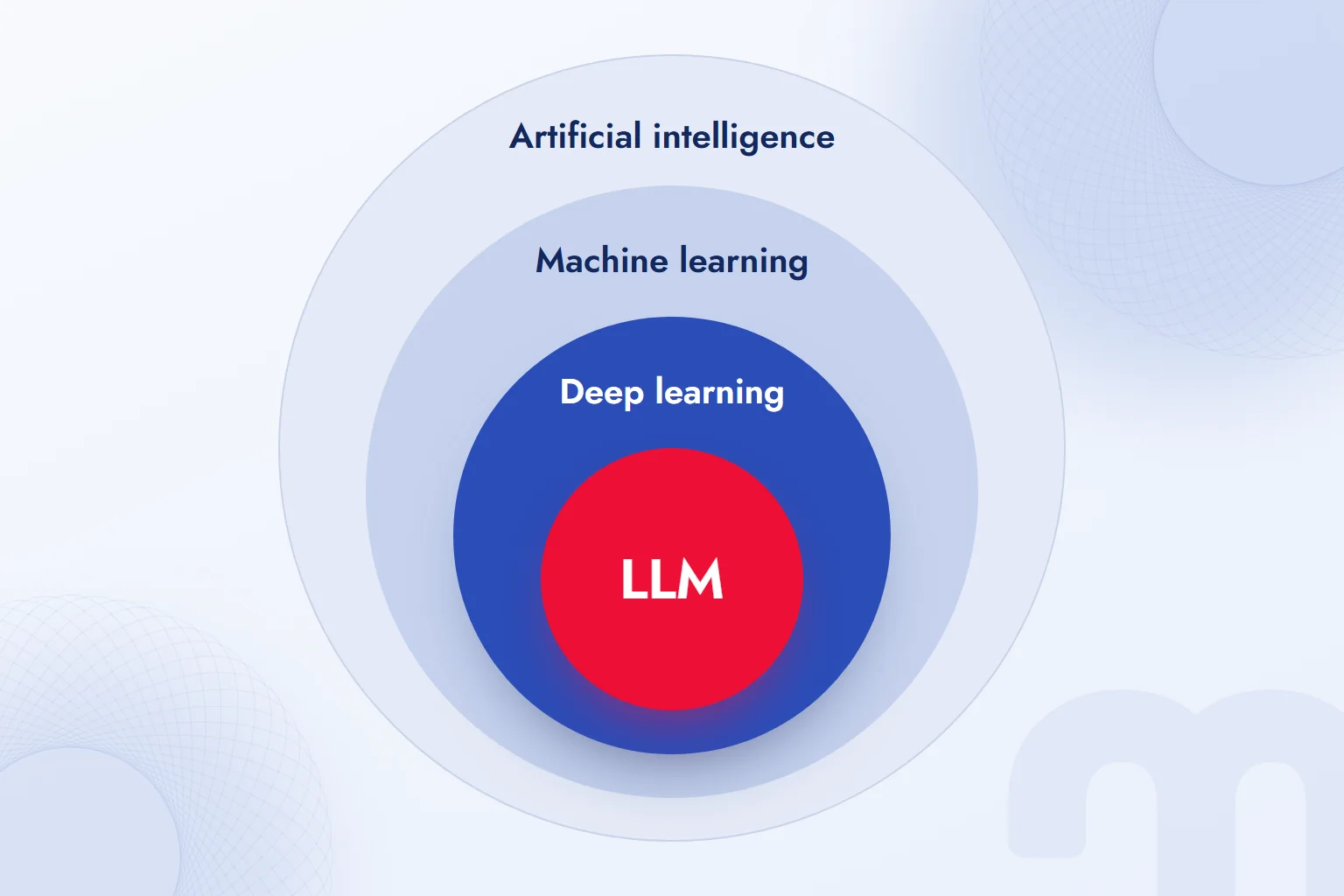
Machine learning, deep learning and large language models are nested concepts: AI is the widest frame, machine learning is its subset that learns from data, deep learning is the branch of machine learning that works with multi-layer neural networks, and a large language model is a model trained on language with deep learning.
| Concept | What it does | Example |
|---|---|---|
| Artificial intelligence | The general name for having machines do work typical of human intelligence | Chess program, recommendation system, chat assistant |
| Machine learning | Learns patterns from data without written rules | Spam filter, credit risk score |
| Deep learning | Learns complex patterns with multi-layer neural networks | Face recognition, speech-to-text |
| Large language model (LLM) | Trained on vast amounts of text; understands and generates language | ChatGPT, Gemini, Claude |
This order is also historical. The first AI programs used hand-written rules; machine learning spread in the 1990s; deep learning leapt forward in the 2010s with big data and graphics cards; large language models came with the Transformer architecture Google researchers introduced in 2017. The 2024 Nobel Prize in Physics went to John Hopfield and Geoffrey Hinton, who laid the foundations of artificial neural networks; the same year, half of the Chemistry prize went to Demis Hassabis and John Jumper, who developed AlphaFold, which predicts protein structures.
What are natural language processing and computer vision?
Natural language processing and computer vision are the two most used subfields of AI: the first lets machines understand and produce human language, the second images. Today’s chat assistants combine both; that is why we can show a photo and ask a written question about it.
- Natural language processing (NLP) → Understanding, summarising, translating, classifying and generating text. A search engine understanding a query, suggested email replies and chat assistants belong here.
- Computer vision → Recognising objects, faces and text in images, and generating new images. Face unlock on a phone, search in a photo app and quality control cameras on a production line belong here.
- Speech recognition and synthesis → Turning speech into text and text into speech. Voice assistants and automatic captions belong here.
These fields began with separate models; large language models and multimodal models have started to merge them into one system.
What does an AI engineer do?
An AI engineer is a software specialist who designs machine learning models, trains them on data, tests them and makes them work inside a product. The daily work: cleaning data, choosing a model, running training, measuring results and connecting the model to an application. Much of this work has shifted to combining ready-made large language models with a company’s data and workflows: running an existing model with the right prompts, documents and tool connections instead of training one from scratch. In Turkey, undergraduate AI engineering programmes have started to open; computer, electrical-electronic and industrial engineering, mathematics and statistics are also common paths.
What can AI do, and what can’t it do?
AI is strong at repeated tasks with plenty of examples and measurable results; it is limited in tasks with few examples, tasks that carry responsibility and tasks that need physical contact with the world. Knowing this is the first step to realistic expectations.
| Where AI is strong | Where AI struggles |
|---|---|
| Summarising, translating and rewriting a long text | Producing new, accurate information with no source behind it |
| Classifying thousands of records, finding patterns | Generalising reliably from a handful of examples |
| Producing drafts, options and ideas | Making a final decision that carries ethical or legal responsibility |
| Recognising objects in an image | Doing work that needs manual skill in the real world |
| Writing code, finding bugs | Knowing an organisation’s unwritten context on its own |
In practice, we use AI to speed up the first 80 percent of a job and as an assistant to be checked in the last 20 percent. AI produces the draft; a person finalises the facts, the tone and the decision.
What is an AI agent?
An AI agent is an AI system that plans the steps to reach a given goal on its own, uses tools and checks the result; it does not just answer, it does work. We ask a chat assistant “what are the flight options?”; we tell an agent “find a ticket within my budget and prepare a booking draft”.
Agents work today in assistants that act on email and calendars, in tools that write and run code, and in systems that browse pages on the user’s behalf. As they spread, websites need to be clear not only to human readers but also to software reading the page for a user.
Does AI have consciousness or feelings?
No; there is no scientific evidence that today’s AI systems have consciousness, intentions or feelings. When a chat assistant says “I understand” or “I’m sorry”, it is reproducing language patterns learned from human writing; this does not show an inner experience. Whether AI could ever become conscious remains an open question in philosophy and cognitive science.
What are the types of AI: narrow, general and super intelligence?
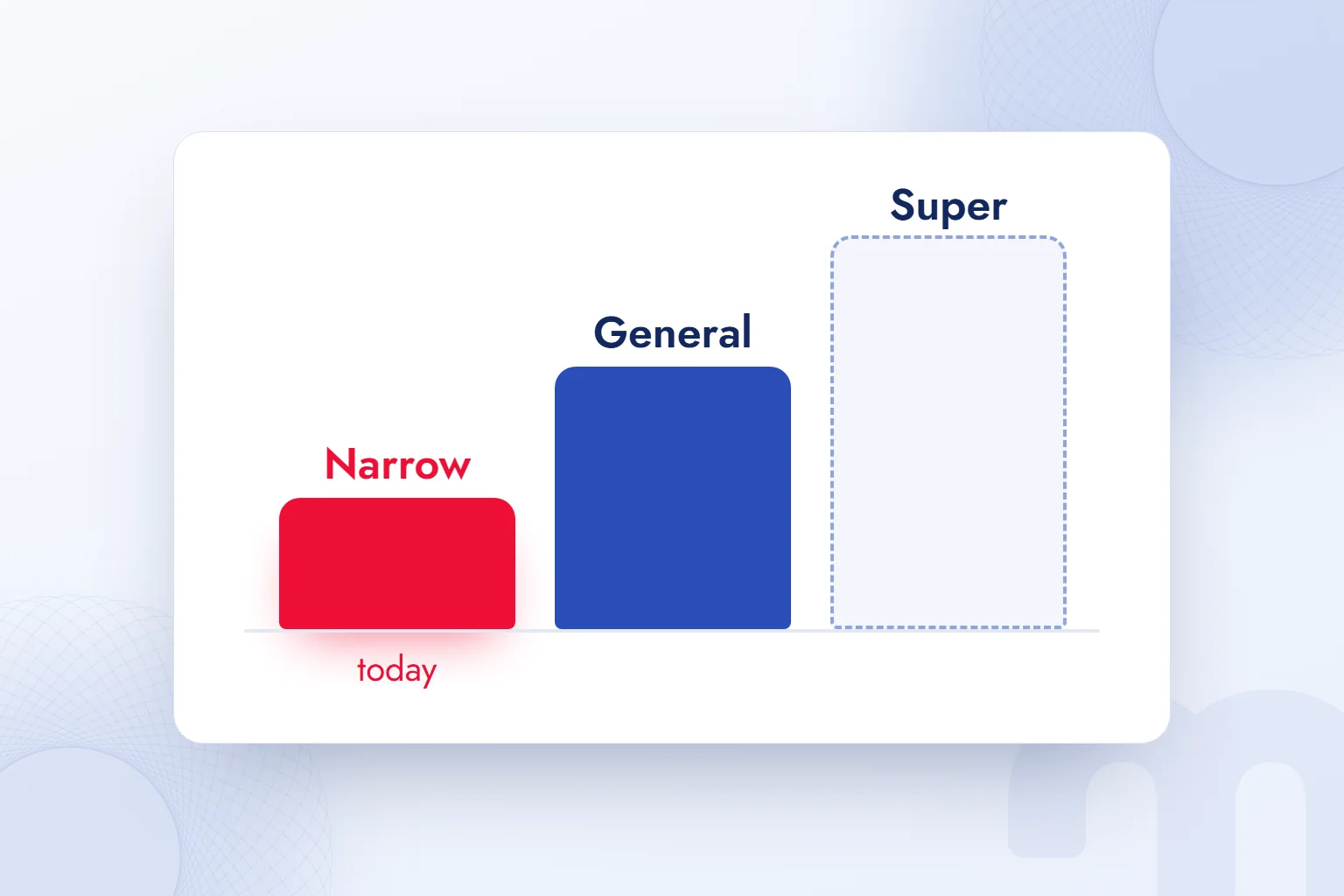
By the breadth of its abilities, AI is divided into three types: narrow AI that specialises in a single task, general AI (AGI) that can adapt to any task like a person, and superintelligence (ASI) that surpasses humans in every field. Every system in use today, chat assistants included, is narrow AI.
| Type | Definition | Status |
|---|---|---|
| Narrow AI (ANI) | Succeeds at a specific task; cannot go beyond it | Every system in use today |
| General AI (AGI) | As flexible as a skilled person across most cognitive tasks | Not yet reached; the threshold is debated |
| Superintelligence (ASI) | Clearly surpasses the best humans in every field | Not reached |
Calling chat assistants “narrow” may seem surprising, since they write poems as well as code. The scale proposed by Google DeepMind researchers places these systems on the first rung of general AI, the “emerging” level. We explain how the rungs are measured in what are AGI and ASI, and the origin of the superintelligence concept and the recent debate in what is superintelligence.
What are examples of AI in everyday life?
AI is used every day, often in places where we never name it: face unlock on a phone, the spam filter in email, traffic predictions in navigation, a streaming platform’s recommendation list and chat assistants are the most common examples. Each relies on a different AI method.
The ten examples we meet most often:
- Search engines → Understand what a query means, rank results and now also write an AI summary.
- Chat assistants → ChatGPT, Gemini, Claude, Copilot; answer questions, write text, generate images.
- Recommendation systems → Series, music, product and video suggestions; predict the next choice from past behaviour.
- Face and voice recognition → Phone unlock, grouping people in a photo app, voice assistant commands.
- Spam and fraud detection → Unwanted email, suspicious card transactions at a bank.
- Navigation → Predicts traffic and arrival time from historical data and live locations.
- Translation → Translates a text, or a photo of a sign, into another language.
- Medical image analysis → Helps doctors by marking suspicious areas in X-ray and CT images.
- Advertising → Bidding systems that decide who sees an ad, when and at what bid.
- Smart home and car → Driver-assistance systems, thermostats that learn energy use.
Where is AI used?
AI is used today in health, education, finance, manufacturing, agriculture, transport, public services and marketing; whatever the field, the common use is reading a lot of data quickly and producing a pattern, a prediction or a draft. According to Stanford University’s AI Index 2025 report, 78 percent of organisations used AI in at least one business function in 2024, up from 55 percent a year earlier.
In marketing, AI is concentrated in three places: producing content and visual drafts, automating ad bidding and targeting, and drawing segments and predictions from customer data. We explain which job can be done how with free tools in free AI tools, and ChatGPT specifically in what is ChatGPT.
AI in health, education and business
Across sectors, AI does the same job: reading a lot of data quickly and giving the expert a head start. What differs is who checks that work, and how.
- Health → Image analysis (X-ray, CT, pathology), molecule screening and protein structure prediction in drug research, appointment and resource planning in hospitals. Diagnosis and treatment decisions stay with the doctor; AI acts as a second pair of eyes.
- Education → Tutoring assistants that generate questions and explanations at the student’s level, homework feedback, multilingual course material. Preparing lesson plans and assessment drafts for teachers is the most common use.
- Finance → Fraud detection, credit risk scoring, chatbots in customer service.
- Manufacturing and logistics → Predictive maintenance (estimating from sensor data when a machine will fail), quality control cameras, route and stock optimisation.
- Marketing → Content and visual drafts, ad bidding systems, customer segmentation, visibility in search and AI answers.
The shared lesson: AI creates most value when tied to a well-defined task and clean data. Projects that start with “let’s use AI” stall more often than those starting with “which task should we speed up?”
What are the benefits and drawbacks of AI?
The biggest benefit of AI is speed and scale; its biggest risk is that wrong or biased output spreads with the same speed and scale. Side by side, the two show where to use it and where to stop.
| Benefit | The risk on the other side |
|---|---|
| Does repetitive work in seconds | Multiplies errors just as fast |
| Reads very large data and finds patterns | Can learn and perpetuate bias in the data |
| Serves around the clock, in every language | Carries personal data and privacy risks |
| Produces new content and ideas | Creates copyright and sourcing uncertainty |
| Offers decision support to experts | Responsibility for the decision can blur |
What is the history of artificial intelligence?
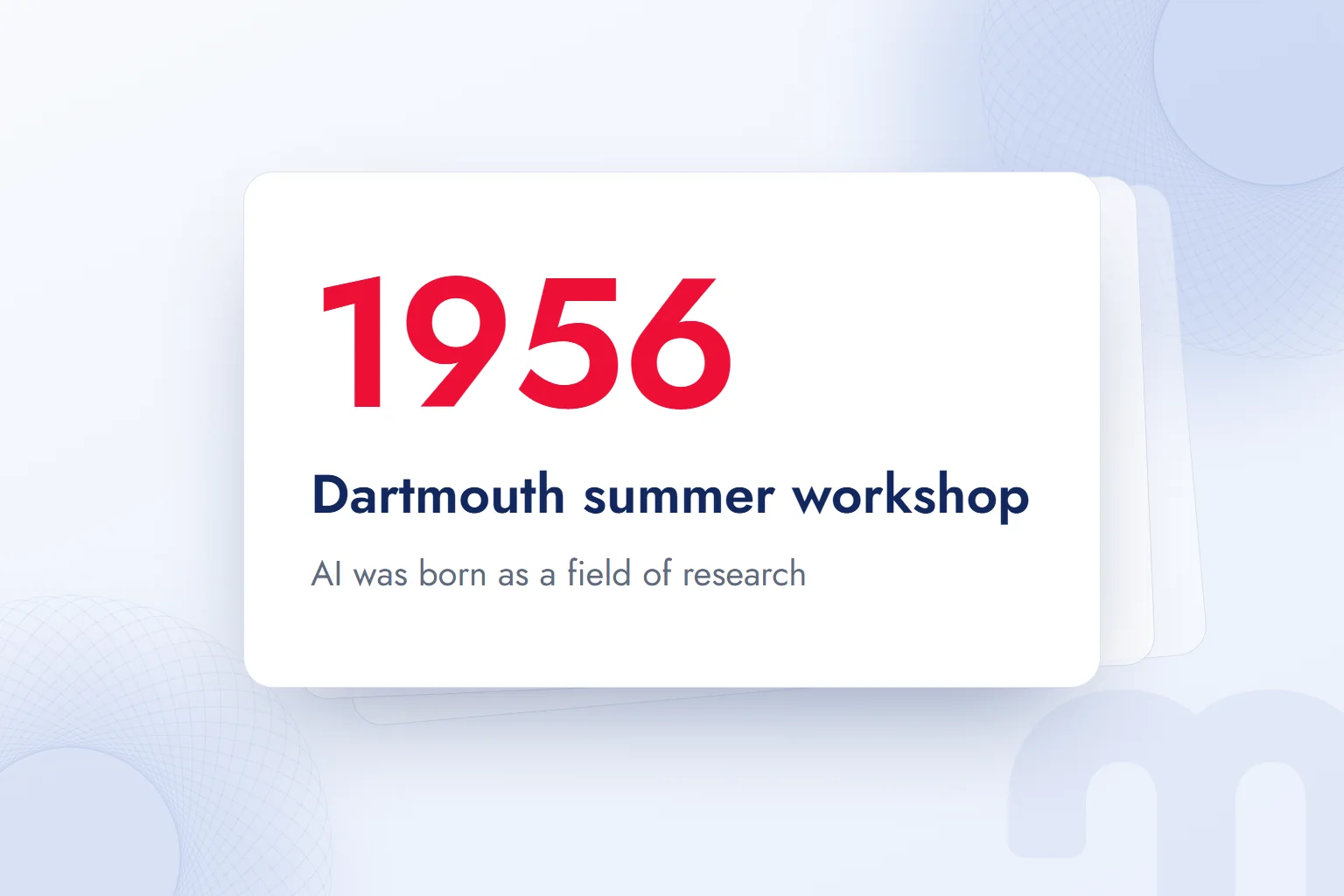
The concept of AI was born as a research field at the 1956 Dartmouth summer workshop; the term was first used in the workshop proposal written in 1955 by John McCarthy, Marvin Minsky, Nathaniel Rochester and Claude Shannon. Since then, the field has moved through periods of high expectation and disappointment.
| Year | Event |
|---|---|
| 1950 | Alan Turing published his paper asking “Can machines think?” and proposed the criterion later called the Turing test |
| 1956 | Dartmouth summer workshop; “artificial intelligence” became the name of a research field |
| 1997 | IBM’s Deep Blue computer beat world chess champion Garry Kasparov in a match |
| 2012 | Deep learning pulled ahead by a wide margin in an image recognition competition and opened a new era |
| 2016 | Google DeepMind’s AlphaGo beat Go master Lee Sedol |
| 2017 | Google researchers introduced the Transformer architecture, the basis of large language models |
| 2022 | OpenAI opened ChatGPT to everyone; generative AI entered daily life |
| 2024 | Neural network pioneers received the Nobel Prize in Physics, the AlphaFold team the Nobel Prize in Chemistry; the EU AI Act entered into force |
What is the Turing test?
The Turing test is a thought experiment that proposes measuring a machine’s intelligence by whether it can be told apart from a person through written conversation. In his 1950 paper “Computing Machinery and Intelligence”, Alan Turing proposed replacing the question “can machines think?”, whose definition is debatable, with an imitation game: an interrogator tries to work out, by exchanging messages, whether a person or a machine is behind the screen. Today’s chat assistants can be hard to tell apart from a person in short exchanges, so researchers now measure intelligence through performance across many tasks rather than a single test.
What is an AI winter?
An AI winter is a period in which research funding and interest drop sharply after big promises go unmet. The field has had two major winters: in the mid-1970s, when early programs failed on real-world problems, and in the late 1980s, when rule-based expert systems grew costly to maintain. After both winters, the field came back with more data and computing power. The lesson for today’s expectations: progress in AI is a series of leaps and pauses, not a straight line.
Who invented AI?
AI has no single inventor; John McCarthy proposed the term in 1955, and the field was founded at the 1956 Dartmouth workshop he organised with Marvin Minsky, Nathaniel Rochester and Claude Shannon. One of the first to ask scientifically whether machines can think was Alan Turing, with his 1950 paper. This is why McCarthy is usually called “the father of AI” and Turing its theoretical pioneer.
What are the risks of AI, and how is it regulated?
The main risks of AI are producing false information, perpetuating bias in data, putting personal data at risk and blurring who is responsible for decisions. The most comprehensive legal framework against these risks is the European Union’s AI Act.
The most common risk in chat assistants is producing false information, known as . A model can give an unsourced figure, a paper that does not exist or a wrong date in a fluent sentence; it produces the likely sequence of words rather than pulling facts from a database.
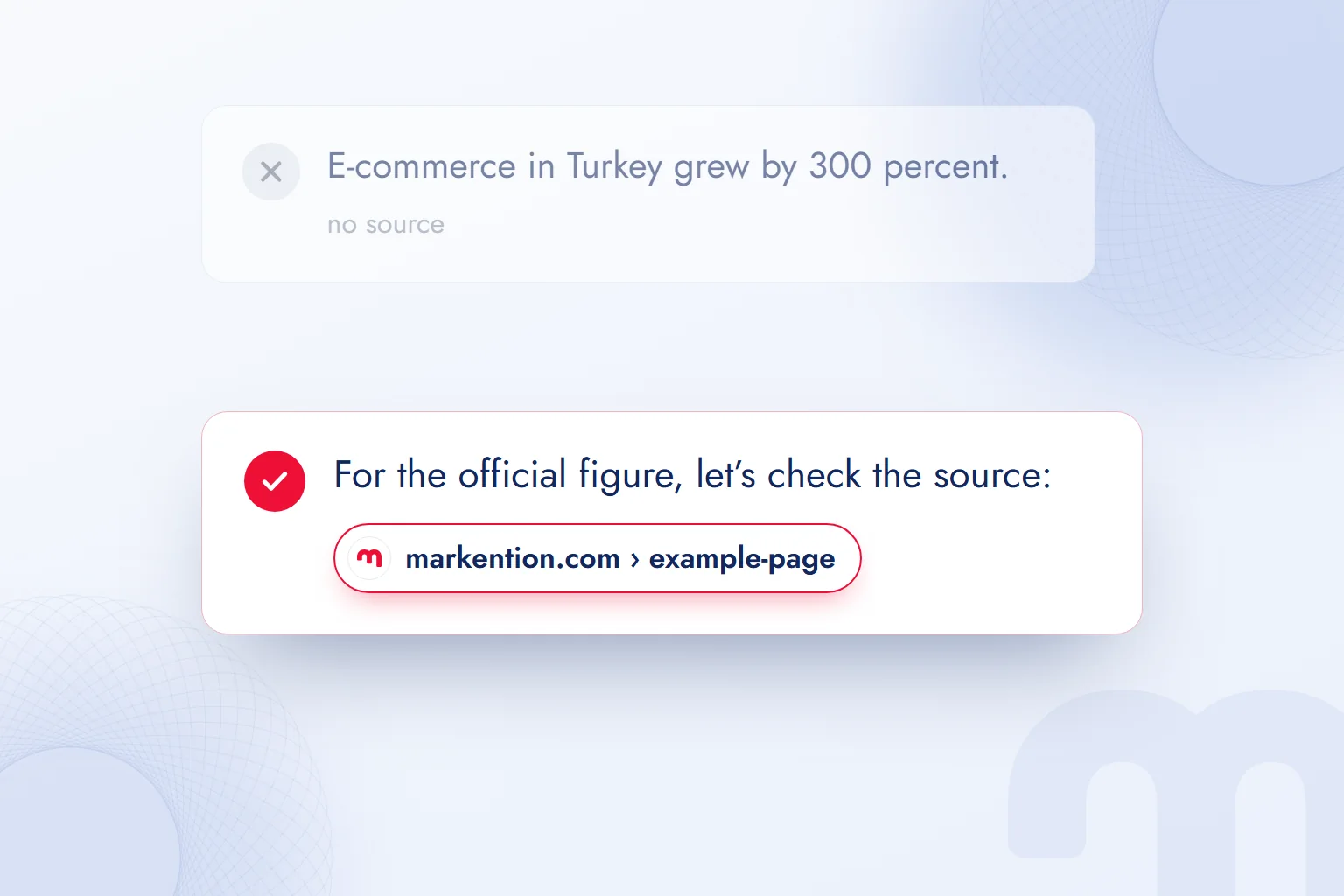
Our method against false information is simple: take every factual claim in the AI output (figures, dates, names, legal articles) as a separate list and check each one at its source. Even with tools that cite sources, we open the link and confirm the information is there.
What does the EU AI Act regulate?
The EU AI Act (Regulation 2024/1689) is the first comprehensive AI law; it divides AI systems into four groups by risk level and places different obligations on each group. It entered into force on August 1, 2024 and applies in stages:
- 1. February 2, 2025The ban on unacceptable-risk practices and the AI literacy obligation began.
- 2. August 2, 2025Rules for general-purpose AI models and governance provisions began to apply.
- 3. August 2, 2026The Act became generally applicable, with some exceptions; transparency rules took effect on this date.
- 4. December 2, 2027Rules for high-risk systems in areas such as biometrics, education and employment; postponed to this date by the simplification package that entered into force in July 2026.
- 5. August 2, 2028Rules for high-risk systems embedded in regulated products such as lifts and toys.
The Act’s four risk levels are: unacceptable risk (banned), high risk (strict obligations before going on the market), transparency risk (telling users they are dealing with AI, labelling generated content) and minimal risk (no specific rules). Turkey is not an EU member, but Turkish companies offering products or services in the EU market are subject to these rules.
Will AI take people’s jobs?
AI fully automates some jobs, but in most professions it changes specific tasks rather than the whole job; repetitive, rule-bound tasks are the most affected. In large surveys of researchers, full automation of all occupations is also expected decades from now. What we see: someone who knows how to use AI works faster than someone doing the same job without it. What protects a profession is knowing which work to hand to AI, how, and checking the output.
How is AI developing in Turkey?
Turkey’s AI policy rests on the National Artificial Intelligence Strategy, prepared jointly by the Presidency of the Republic of Turkey Digital Transformation Office and the Ministry of Industry and Technology. Covering 2021–2025, the strategy was published in Turkey’s Official Gazette of August 20, 2021 with Presidential Circular No. 2021/18.
The strategy’s priorities are training AI experts and increasing employment, supporting research, entrepreneurship and innovation, easing access to quality data and technical infrastructure, making regulations that speed up socioeconomic adaptation, strengthening international cooperation and accelerating structural and workforce transformation. In 2024 the strategy was updated with the 2024–2025 Action Plan in line with Turkey’s Twelfth Development Plan; the update put generative AI and Turkish-language large language models in the foreground.
For the Turkish language, the picture is changing fast. The widely used chat assistants all understand and write Turkish, but with far fewer Turkish sources than English ones, models get local and current topics wrong more often. That is an opportunity for organisations publishing in Turkish: well-structured, sourced Turkish pages are closest to being cited in AI answers.
AI and personal data in Turkey
In Turkey, when personal data is entered into an AI tool, Personal Data Protection Law No. 6698 (KVKK) applies; uploading a file with customer names, phone numbers or health information to an AI service abroad falls under the law’s rules on cross-border transfer. The practical route for organisations: a written internal rule on which data may go into which AI tool, no personal data in free tools, and confirming from the contract that business plans do not use the data for model training.
Where should you start learning AI?
Where to start learning AI depends on the goal: as a user, by using the tools directly and learning to write good prompts; as a future developer, with programming, maths and machine learning basics. For both, the fastest progress comes from real work.
The path splits by goal like this:
- Learning as a user → Using a chat assistant every day on real work, learning to write prompts and making it a habit to verify the output. We explain the parts of a good prompt in what is a prompt.
- Building a product without code → Building small AI-powered apps with tools such as Google AI Studio; we show this path step by step in what is Google AI Studio.
- Becoming a developer → Starting with Python, basic statistics and linear algebra; then moving on to machine learning and deep learning courses; finally building real projects with open models and APIs.
Whichever path we choose, one habit stays: reading AI output as a draft and making the final decision ourselves.
How is AI search changing brand visibility?
AI is turning search from a list of links into a direct answer; users read the AI summary and click only the pages cited as sources. So a brand’s visibility now depends on whether it is cited in the answer, not only on its ranking.
The work done for this new visibility space has settled under the name . To be a source in AI answers, a page must be open to AI crawlers, answer the question clearly in its first sentences and back its claims with verifiable sources.
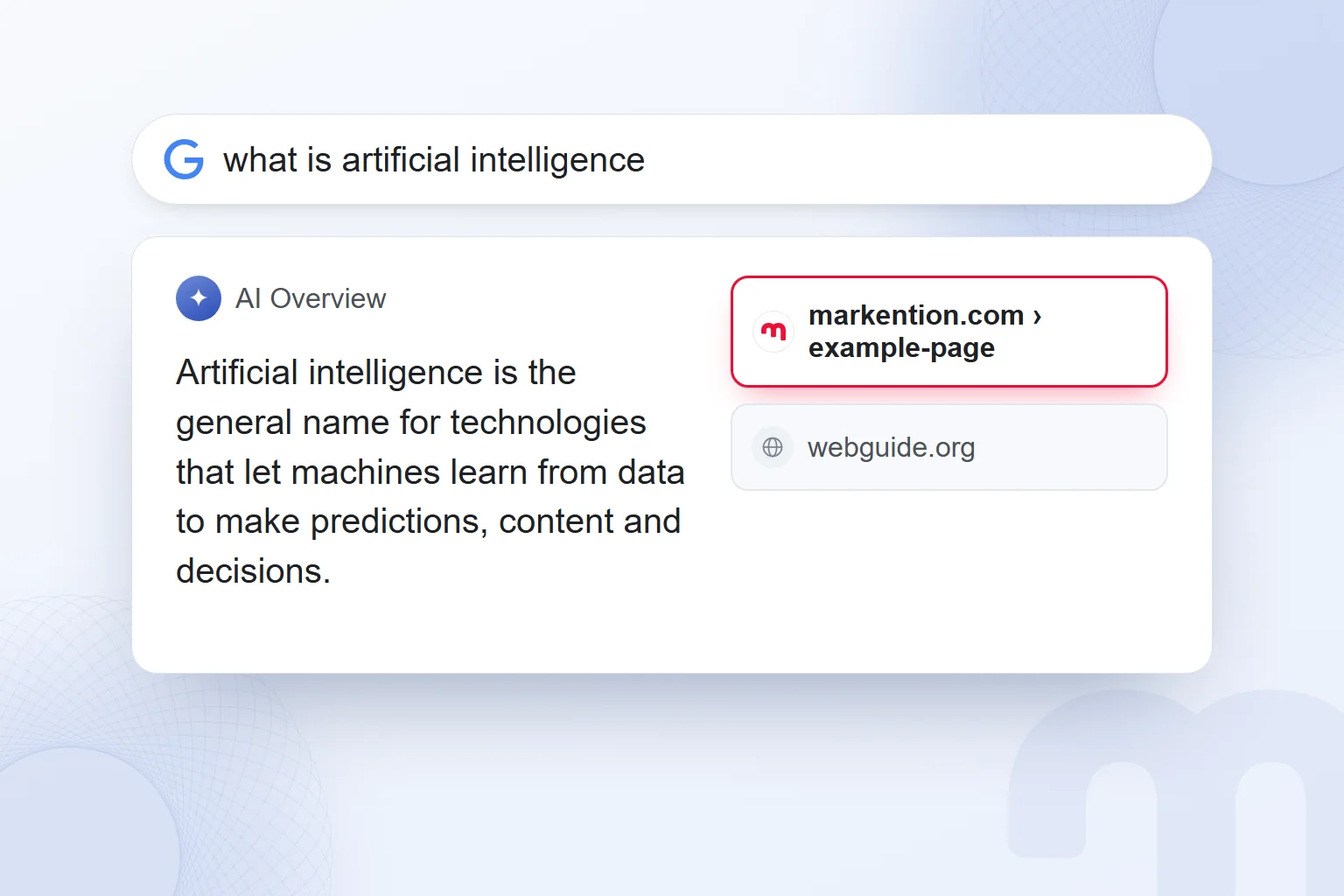
Here we speak from our own work: on client sites, we first ask the brand’s frequent questions in different AI assistants and record the source list, then rebuild pages in a form answer engines can read. We cover the framework in what is GEO and our client work on the GEO consulting page. You can measure how your site looks to AI crawlers with our free AI visibility tool. We follow what is new in AI in our AI guides.
Frequently asked questions
What is AI used for?
Writing, translation, image and video generation, face and voice recognition, recommendation systems, spam detection, traffic prediction and medical image analysis are the most common uses.
Who invented artificial intelligence?
John McCarthy proposed the term in 1955; the field was founded at the 1956 Dartmouth workshop by McCarthy, Minsky, Rochester and Shannon. Alan Turing is its theoretical pioneer.
What are 5 examples of AI?
Chat assistants (ChatGPT), face unlock on a phone, email spam filters, traffic prediction in navigation and streaming platforms’ recommendation lists.
What are the benefits of AI?
It speeds up repetitive work, finds patterns in large data, serves around the clock in every language and gives experts decision support.
Will AI take people’s jobs?
In most professions it changes repetitive tasks, not the whole job. People who know how to use and check AI move ahead.
Where should I start learning AI?
As a user, by using an assistant on real work every day; to become a developer, by starting with Python, statistics and the basics of machine learning.

 What is Perplexity? How to use it, free plan, Pro, Comet vs ChatGPTRead article
 What is Nano Banana? Gemini image creation, editing and promptsRead article
 What is Claude Code? Install on Windows and Mac, pricing and useRead article
 What is Grok and how do you use it? X’s AI, its plans and differencesRead articleMost read
 What are AGI and ASI? The steps from general AI to superintelligenceRead article
 What is Claude? How to use it, its plans and the ChatGPT differenceRead article
 Free AI tools: which one for which job, and what are the limits?Read article
 What is Gemini? How to use it, the free plan, Gemini Omni and ChatGPTRead article
Questions & answers
0 commentsNo questions yet; you can ask the first one.