SEO, or search engine optimization, is all the work that makes your site visible in search engines like Google without paying for ads. It moves forward on three layers: technical foundation, content and authority. The goal is not just a ranking but answering the right question with the right page. Today the same work is also the basis for being cited in AI answers.
We bring your technical foundation, content architecture and authority together in one strategy. Our goal is not a single ranking but a lasting place for your brand in search.
Url Clicks · 2026 vs 2025JulAugSep2026400K2025204K
Jul112K65.2KAug131K68.5KSep156K70.2K
Sample data.
Click to flip through the screens
The dashboard pulls Search Console and Analytics data at the same time. We update the filters to match the project’s goals and build new screens for each type of conversion step.
We build screens with filters Google’s own interface doesn’t offer. We track your queries separately in the top 3, 4–10, 10–20 and 20+ position groups.
We group keywords into clusters and look at the traffic a project gets from each cluster as a whole. We can compare an online store’s bag and shoe clusters on one screen, by search intent, against the previous period; that is a more useful way to measure success.
To report organic growth honestly, we split traffic into branded and non-branded searches. We analyze non-branded traffic separately; that is where the effect of SEO work shows most clearly.
All these filters show the losses too: not every one of the 25 screens shows green. The same screens reveal the swings caused by algorithm updates, and our recovery work starts there.
We track every keyword one by one: impressions, clicks, CTR and position on the same row. Where a keyword moves up but clicks don’t follow, we start work on the title and description.
We keep the city the traffic comes from on a separate screen. For brands with physical stores, the city breakdown decides where the budget and content go.
We compare with the same period last year: is it seasonality or real growth? A screen that looks good against the previous 90 days may be standing still against last year.
25
screens
310
distinct data types
24/7
phone and desktop
Search Console and Analytics
Search Console + Analytics
What you should know about SEO consulting.
Contents 14 sections
SEO consulting is the work of growing a brand’s visibility in search engines through a measured, prioritized plan rather than one-off tactics. It brings the site’s technical foundation, content architecture and authority into one plan: it decides what to do and in what order, carries out the work and measures the result. In this guide, drawing on Google’s own documentation, we explain what professional SEO consulting covers, how it differs for enterprise sites, what has changed with AI search, and what to look for when evaluating a partner.
Search behavior is changing: people ask the same question both to Google and to AI assistants. So good SEO consulting today has to answer two questions together: “Do we show up when people search?” and “Are we cited as a source when the answer is given?”
What is SEO consulting?
SEO consulting is an auditing, strategy, implementation and measurement service that aims to increase the visibility a website earns from organic search and the business value of that visibility. SEO, or search engine optimization, is the body of work that helps a site appear in search engines such as Google without paying for ads; consulting is the plan that ties this work to the brand’s business goals.
Google Search works in three stages: crawling, indexing and serving results. Not every page makes it through all three.1 Google states plainly that it does not accept payment to crawl a site more often or to rank it higher, and that it does not guarantee a page will be crawled, indexed or served even if the page follows the rules.1 The job of SEO consulting is to find where the site gets stuck at each of these stages and fix the issues in order.
Google groups what a site needs in order to be visible into three parts under Google Search Essentials: technical requirements, spam policies and key best practices.14 An SEO consulting service applies this framework to the site’s actual state and usually produces the following outputs:
Comprehensive SEO analysis: findings on crawling, indexing, speed, structured data, content and the link profile, ranked by importance.
Strategy and roadmap: which problem gets solved first, which pages get created and which metrics they are tracked against.
Implementation: technical fixes, content architecture, new and updated pages, and internal linking structure.
Measurement and reporting: tracking visibility, traffic and conversions on a regular cadence.
What separates professional SEO consulting from a one-time SEO analysis is continuity and accountability. An analysis is a snapshot; consulting is a way of working that retakes that snapshot regularly, tracks the effect of changes and reviews decisions against data. Google also notes that a change can take anywhere from a few hours to several months to show up in search results, and that you usually need to wait a few weeks to assess the effect of a piece of work.13
What does an SEO consultant do?
An SEO consultant turns what the search engine expects into work the brand’s development, content and management teams can act on. They map the site’s current state with data, prioritize opportunities and risks, carry out the work or have it carried out, and report the effect of each step.
Google’s “Do you need an SEO?” document lists the useful services SEO consultants and agencies offer site owners: a review of site content or structure; technical advice on website development, such as hosting, redirects, error pages and JavaScript; and content development and the management of online business development campaigns.12 In our day-to-day work, that list maps to these areas:
Keyword and search intent research: a map of which questions will be answered by which page type.
Content architecture: topic clusters, a page plan, and consolidating and updating existing content.
Authority: link profile audits, digital PR and brand mentions.
Measurement: verifying the Search Console and GA4 setup, reporting and decision meetings.
The difference between an SEO consultant and an SEO specialist is often scope. An SEO specialist may go deep in a single area such as technical SEO or content; a consultant is expected to connect these areas and align them with the brand’s business goals. That is why the first question is not “Where do we rank for which keyword?” but “How do visitors from search contribute to our business?” For an e-commerce site that contribution is sales, for a service company it is quote requests, and for a publisher it is reader loyalty.
Consulting, agency and operations models
Consulting decides what to do, why and in what order; implementation is putting that work live on the site. They are not the same job. On enterprise sites, decision-making and prioritization are the most valuable output, because on a large site even the right work done in the wrong order may not produce results.
We see three common models in the market:
SEO agency: takes on strategy and implementation together; content production, link building and technical fixes usually sit with the agency’s team.
Independent SEO consultant: runs the strategy and the audits, and leaves implementation to the brand’s own team or its current agency.
In-house team with a consultant: the brand’s own team implements; the consultant sets direction and reviews the work.
Our way of working differs from all three: we work as an extension of your team, one module at a time. We build the strategy and the roadmap, and we also carry out the implementation, including technical fixes, content architecture and measurement setup. Search Console, GA4 and the site stay in your accounts; we connect to them as authorized users, and because every piece of work is documented, the knowledge stays with the brand.
Which modules are needed depends on how the brand is set up. In enterprise organizations with a development team, we ship changes in coordination with that team, following its release cycle; for small and mid-sized businesses without a team, we take on the whole job. Either way, a written roadmap, clear responsibilities and regular measurement are essential.
The value of consulting lies not in the list of tasks but in the order and the reasoning behind how you work through that list.
Technical SEO: crawling, indexing and speed
Technical SEO is the infrastructure work that lets search engines crawl your site without issues, understand it correctly and serve it fast. However good the content is, a page that cannot be crawled or indexed does not appear in search. That is why we start every SEO consulting engagement with a technical audit.
These are the areas we examine most often in a technical audit:
robots.txt and indexing rules: robots.txt tells crawlers which URLs they can access; it is not a way to keep a page out of Google. For that you need noindex or password protection.20
Sitemaps: a sitemap makes crawling easier for larger or more complex sites, but it does not guarantee that every URL in it will be crawled and indexed.23
Page indexing report: we read the reasons behind Search Console statuses such as “Crawled – currently not indexed” and “Discovered – currently not indexed” by page group.22
Core Web Vitals: the loading (LCP), interactivity (INP) and visual stability (CLS) metrics. For a good experience, LCP should be under 2.5 seconds, INP under 200 milliseconds and CLS under 0.1; they are assessed at the 75th percentile of page loads, separately for mobile and desktop.2
Canonical URLs and redirects: consolidating duplicate or similar pages onto a single URL. According to Google, redirects and canonical (rel=canonical) annotations are strong signals for which URL is treated as the canonical one.3 With a permanent redirect, the new URL is shown in search results.4
JavaScript and rendering: Google processes JavaScript-powered pages in three phases: crawling, rendering and indexing.21 On sites where content is built in the browser, we verify that the search engine can actually see the page.
We rank findings by importance and impact. For each finding we write a task description that answers four questions: what is happening, why it matters, how to fix it and who fixes it. We read crawler data, Search Console reports and, where possible, server logs together. The crawler shows what the site is, Search Console shows how the search engine sees the site, and server logs show how bots actually move through it. When the three sources confirm one another, the findings become reliable.
When a new site is being built or an existing site is moving to a new platform, involving technical SEO from the start significantly reduces the cost of later fixes. Google notes that in migrations involving URL changes, it can take a few weeks or more for new URLs to replace the old ones on a medium-sized site, and even longer on large sites.16
Content architecture and search intent
Content architecture is the plan for mapping the questions your audience asks and answering each one with the right page type. Keyword research is the raw material of this plan; the real work is understanding the intent behind the queries.
We generally sort searches into four intents:
Informational intent: learning-oriented queries such as “what is SEO consulting” or “how to do SEO”; answered with guides and blog posts.
Comparison intent: selection-stage queries such as “SEO consultant or agency”; answered with comparison and decision pages.
Purchase or contact intent: queries such as “SEO consulting services” or “enterprise SEO consulting”; answered with service and quote pages.
Local intent: location-based queries such as “SEO consultant Istanbul”; answered with local pages and a Google Business Profile.
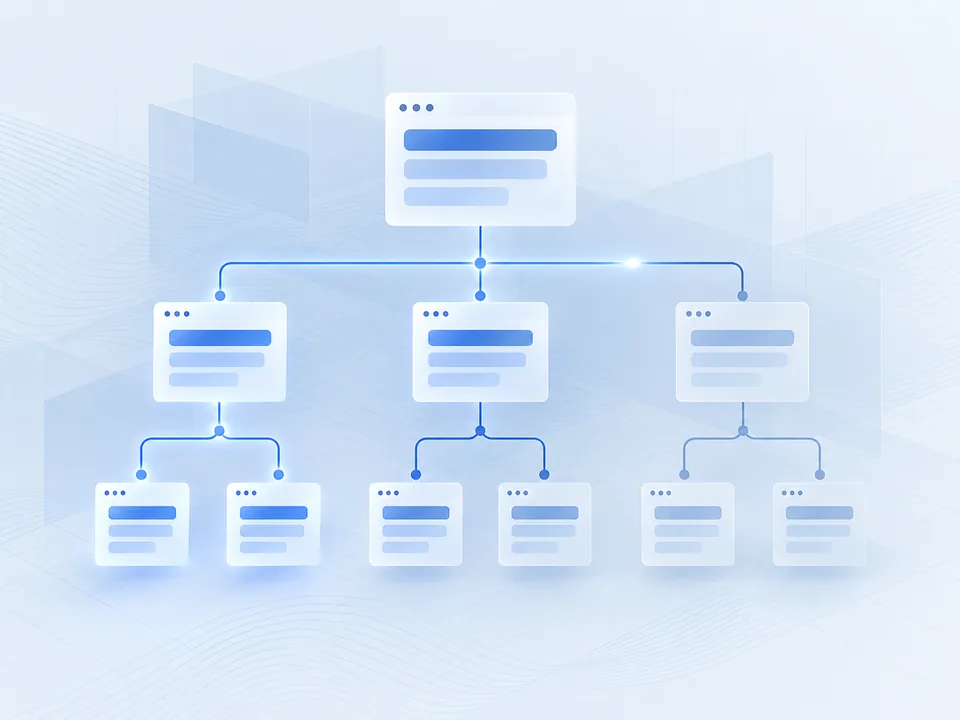
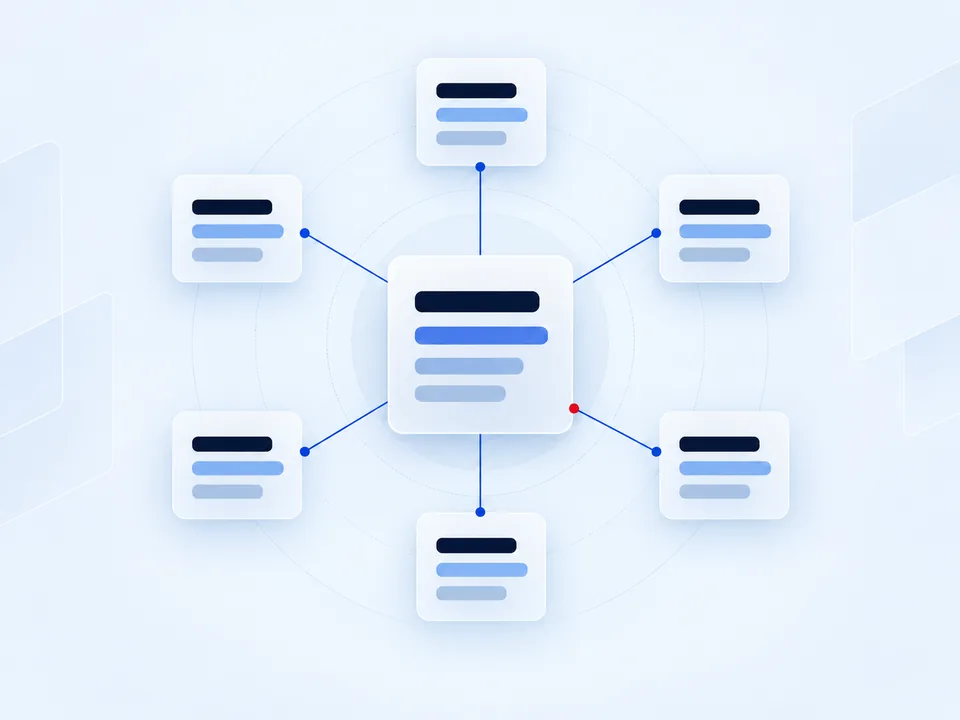
Once we have made this split, we build topic clusters: a main topic page and the subpages that support it, connected by meaningful internal links. Google says it can reliably crawl links only when they are written as an a element with an href attribute, and that anchor text tells both users and Google what the target page is about.7 We also place existing content on this map; pages that are losing traffic, competing for the same queries or going out of date get consolidated, rewritten or strengthened.
Google’s standard for content is reliable, genuinely helpful content written for people, not for search engines. Google uses the concepts of experience, expertise, authoritativeness and trustworthiness (E-E-A-T) in this assessment and suggests that creators ask themselves “Who, How and Why”: who created the content, how it was produced and why it was published.8 That is why our content briefs include, alongside the keyword, the target reader, the questions to answer, sources, author information and examples drawn from the brand’s own experience. We use AI tools at the research and drafting stage; every piece that goes live passes through an editor and a subject-matter expert. Google’s spam policies classify producing large numbers of unoriginal pages to manipulate search rankings as scaled content abuse.9
Structured data: telling machines what the page is about
Structured data is markup that labels information on a page, such as an organization, service, product, article or FAQs, in a standard format that search engines can read. Google says structured data helps it understand what a page means and can make the page eligible for rich results; in one of its own case studies, Rotten Tomatoes measured a 25% higher click-through rate on 100,000 pages where it had added structured data.5 Schema.org serves as the shared vocabulary for this markup.6
Structured data on its own does not guarantee rankings, and it must match the information visible on the page exactly. That is why we set up markup at the template level, document which fields are required for each page type and monitor it with the rich result reports in Search Console.
Authority: links and brand mentions
Authority is the degree to which your brand is seen as a reliable source in its field; search engines read it from signals such as links from other sites, brand mentions and content consistency. Authority is not earned quickly, and it cannot be bought.
In link building we look at quality, not quantity. A few links from relevant sources in your industry that have real readers are worth more than hundreds of unrelated links. Google defines buying or selling links to manipulate rankings as link spam.9 These methods may seem to work in the short term, but in the long run they put the site at risk.
How we build authority:
Digital PR: shaping your brand’s data, expertise or story so that news and industry sources mention it.
Expert content: producing guides, tools and research that other sites want to cite as a source.
Brand mentions: making sure the brand’s name appears in the right context even without a link; this also matters for visibility in AI answers.
Link profile audit: identifying risky links, measuring the gap with competitors and drawing up a plan to close it.
Enterprise SEO consulting: different rules for large sites
Enterprise SEO consulting is the management of SEO as a process on sites with a large number of pages, multiple languages or domains, and sections run by different teams. At this scale, governance matters as much as technical knowledge: who approves which change, which checks run before release and how SEO rules carry over to new pages should all be written down.
Three topics stand out on large sites:
Crawl budget: Google’s crawl budget guide is written for sites with more than a million unique pages whose content changes weekly, and for sites with more than ten thousand pages whose content changes daily.15 On these sites, the priority is to narrow the crawlable space created by filter, sort and parameter URLs.
Multilingual and multi-regional structure: Google recommends using separate URLs for each language version and linking the language versions to each other with hreflang annotations; it sets out the pros and cons of country-code domains, subdomains and subdirectories one by one.17
Migrations and redesigns: when the platform changes, the redirect map, preserving old URLs and post-launch monitoring are handled as a separate project.16
Local and e-commerce SEO
Local SEO and e-commerce SEO are two specialized areas that add their own rules on top of general SEO principles. In both, choosing the right page type is decisive.
In local SEO, the goal is to appear with accurate information on maps and in location-based searches. Google says local results are based mainly on relevance, distance and prominence, and that sites linking to the business and the number of reviews also play a part in prominence.18 So we focus on keeping the Google Business Profile complete and up to date, keeping the business name, address and phone number consistent everywhere, building local pages with real information for each branch, and replying to reviews regularly. From our office in Maltepe, Istanbul, we work with brands in cities across Türkiye; in searches such as “SEO consultant Istanbul” or “SEO consultant Ankara,” users look for both expertise and proximity.
In e-commerce SEO consulting, managing thousands of pages comes first. Google’s e-commerce guide lists sharing product data with Google and using e-commerce-specific structured data among its core topics.19 Our main tasks are structuring category pages around search intent, keeping filtered pages (color, size, price) from being indexed uncontrollably, marking up product structured data correctly, handling out-of-stock products and reducing duplicate product descriptions.
SEO and GEO in AI search
AI search covers search experiences where the user sees a direct answer instead of a list of links: Google’s AI Overviews and AI Mode, ChatGPT search, and answer engines such as Perplexity. We call being visible on these surfaces GEO (generative engine optimization). GEO does not replace SEO; it is built on the same foundation.
Google says that to be shown in AI features, a page must be indexed and eligible to be shown in search with a snippet; structured data is not required for these features, and there is no special schema.org markup to add.10 The same document also stresses that chasing artificial brand mentions across the web is not as useful as people think.10 On top of this foundation, the following work makes it easier to be cited as a source across different assistants:
Answer-first content: the first sentence under each heading answers that heading’s question directly.
Clear information: organization, service and product details are stated plainly on the page; structured data makes this information machine-readable.
Brand presence: the brand is mentioned, for real reasons, in news, guides and industry sources.
Crawlability: AI companies’ crawlers are deliberately allowed or restricted through robots.txt.20
Measurement: regular tracking of whether the brand is mentioned in answers to a defined set of questions, and of AI-referred visits.
AI search affects SEO most on the click side: for some questions, users see the answer directly and make a decision without visiting the site. This changes traffic expectations for informational searches and makes being mentioned in the answer a goal of its own. Users at the decision stage still click through to sources they trust, so the quality of service, product and comparison pages matters more than ever.
Measuring SEO: which metrics matter?
The purpose of measuring SEO is to track how visibility contributes to the business, not to track rankings. The position of a single keyword can fluctuate; what matters is the trend across query clusters, page groups and conversions.
The metrics we track regularly:
Clicks and impressions: in the Search Console Performance report, how many searches the site appeared in and how many of those turned into clicks.11
Click-through rate: clicks divided by impressions; it shows how compelling titles and descriptions are in search.11
Average position: the average position of the site’s topmost result; read across query clusters rather than single keywords.11
Organic sessions and conversions (GA4): how organic visits contribute to goals such as form submissions, calls and purchases.
Indexing and technical health: the number of indexed pages, the reasons pages are not indexed and Core Web Vitals status.22
AI visibility: mentions in answers and AI-referred traffic.
We tie reporting to a fixed cadence: a short weekly status note, a detailed monthly report and a quarterly strategy review. Every report should end with an answer to “What are we changing based on this data?” A report that only shows numbers does not lead to decisions.
For measurement to work correctly, we run a setup audit at the start: Search Console is connected to the right property, conversion events are defined in GA4, goals are actually being recorded, and branded and non-branded searches can be tracked separately. When interpreting visibility we also account for seasonality and algorithm updates, and we compare against the same period last year rather than the previous month.
How does the SEO consulting process work?
The SEO consulting process moves through discovery, audit, roadmap, implementation and measurement; each step ends with a concrete output and a decision on the next step.
Discovery: we listen to the brand’s goals, audience and competitors, and to what has been done so far. We come to the meeting having already reviewed the site.
Audit: we review the technical foundation, content, authority and measurement setup, and report the findings in order of importance.
Roadmap: we turn the findings into a three- to six-month plan and define each task with its owner and expected impact.
Implementation: we carry out the work; if you have a development team, we work in coordination with them, following your release cycle, and log every change.
Measurement: we track the effect of the changes and update the plan based on the data.
We set up a single communication channel and a single point of contact. Every task record states what was requested, why, who will do it and how it will be verified. That way, months later, the answer to “Why was this change made?” is always in the records.
How are SEO consulting fees set?
SEO consulting fees vary with the size of the site, the level of competition in the industry, the scope of work, content needs and the length of the engagement. So instead of a fixed price list, we set the scope and the monthly effort together after the audit.
The items that affect the fee most:
Page count and platform: a corporate site with a few dozen pages and an e-commerce site with tens of thousands of products do not take the same audit and implementation effort.
Scope of implementation: how much of the technical fixes, content production and new pages is included in the engagement.
Number of languages and markets: every new language or country means separate keyword research and separate content.
Measurement and reporting setup: setup needs and reporting frequency.
Google recommends expecting an SEO to provide an audit that includes realistic estimates of improvement and the estimated effort for the work involved.12 Our proposals follow the same logic: what each item covers is stated in writing.
Choosing the right SEO partner
The right SEO consultant or agency is a partner that works transparently, sets realistic goals and shares its data and decisions openly. When choosing, method, communication and the division of responsibilities matter more than price.
Google suggests asking an SEO these questions: can they show examples of past work and share success stories, do they follow Google Search Essentials, and what results do they expect and over what timeframe.12 We would add these:
Which tools are used for audits and reports, and can we access the data too?
Who will do the work, in what order and for what reason?
Which metrics will the results be reported with, and how often?
When the engagement ends, who keeps the accounts, the content and the knowledge?
There are warning signs to watch for as well. Google states plainly that no one can guarantee a #1 ranking on Google, and that you should be wary of anyone who guarantees rankings, claims a “special relationship” with Google or advertises a “priority submit.”12 Link packages that don’t explain what is being done, and reports that only show rankings, belong on the same list.
A good partner reviews your site before the work begins and shares concrete observations even in the first meeting. They explain the work they recommend along with the reasons for it, say so when something is uncertain and keep expectations realistic. If you would like to talk about where your brand stands in search, you can pick a time that suits you from the calendar; we will come to the meeting having already reviewed your site.
Frequently asked questions about SEO consulting.
How long does SEO consulting take to show results?
The effect of technical fixes can start to show within a few weeks; the effect of content and authority work usually builds up over months. Google also notes that a change can take anywhere from a few hours to several months to show up in search results, and that you need to wait a few weeks to assess its effect. The timeline depends on the site’s current state, the level of competition in the industry and the pace of implementation. At the end of the first month, we report the audit findings and our first reading of the data.
What does an SEO consultant do?
They map the site’s current state with data, prioritize opportunities and risks, plan technical SEO, content architecture and authority work, and measure the effect of each step. At markention, we don’t stop at planning this work; we carry out the implementation too.
What does enterprise SEO consulting cover?
For sites with many pages, multiple languages or domains, it covers crawl budget, multilingual structure (hreflang), migration and redesign projects, and managing SEO rules across teams. We ship changes in coordination with your development team, following their release cycle.
What is the difference between consulting and an agency service?
Consulting decides what to do, why and in what order, then reviews and measures the work; an agency service also takes on the implementation. We combine the two in a single operation: working as an extension of your team, one module at a time, we build the strategy and carry out the implementation too. Search Console, GA4 and the site stay in your accounts.
Who makes the changes on our site?
We do. Technical fixes, content architecture, new pages and content updates are implemented by our team. If you have a development team working on your site, we work in coordination with them, following your release cycle. Every change is logged and made in a way that can be rolled back.
Do you guarantee a #1 ranking?
No. Google states plainly in its own documentation that no one can guarantee a #1 ranking on Google. What we commit to are measurable indicators: visibility across query clusters, clicks, organic conversions and technical health. We report on these every month against their baseline values.
How are SEO consulting fees set?
The fee depends on the site’s page count and platform, the scope of implementation, the number of languages and markets, and the reporting setup. We don’t publish a fixed price list; after the first meeting and an initial review, we share the scope and the fee in writing.
Does SEO replace advertising?
They don’t replace each other; they complement each other. Ads deliver immediate visibility for as long as there is budget behind them; SEO builds visibility that accumulates over time and doesn’t require paying per click. Query data from search ads shows which topics to prioritize in SEO, and pages that grow stronger through SEO improve the landing page quality of the ads.
Which reports do we get?
A short weekly status note, a detailed monthly report and a quarterly strategy review. The reports cover Search Console and GA4 data, indexing and technical health, visibility across query clusters and AI visibility; every report ends with a data-driven next step.
How is AI search affecting SEO?
People now put their questions to AI assistants as well, and these surfaces cite specific sources when they answer. Google says that to be shown in AI features, a page must be indexed and eligible to be shown with a snippet, and that no special markup is needed for this. That is why a solid SEO foundation is also a prerequisite for GEO work.
Do you also work with e-commerce sites?
Yes. In e-commerce, the main areas are category page structure, managing filtered pages, product structured data, out-of-stock products and site speed. Because page counts are high, we audit more often and make fixes at the template level.
What happens to our existing content?
We audit the existing content first: pages that perform well are kept, pages competing for the same queries are consolidated and outdated pages are updated. In most projects, cleaning up existing content before producing new content brings faster results.
How can we start working together?
Pick a day and time that suits you from the calendar and tell us about your site and what you’d like to discuss; we send the invitation with a Google Meet link to your email. We come to the meeting having already reviewed your brand.
The rhythm of the operation: month, week, day, hour.
Every project has one mentor and two specialists. The tools we use: Claude, Search Console, Semrush, Yandex, Screaming Frog, Google Analytics, ChatGPT · Codex, Google Ads, Ahrefs, Data Studio, Merchant Center, Google Trends, Meta Business, Google Business Profile. We check your Search Console and Analytics every day; Merchant Center one day a month, and the other tools come in as the calendar requires.
Mentor
28 days with markention
2 strategy meetings · a live Data Studio report, 24/7 · 8 operations meetings · plus opportunity-driven work as it comes up
Week 1Meeting with you
Week 2Your Data Studio report
Week 3Meeting with you
Week 4Your Data Studio report
10:00MonPlanningMonday, week 1: We plan your weekWe open the month by checking your product feed in Merchant Center, then set the week’s priorities in our 10:00–11:00 team meeting.
TueStrategyTuesday, week 1: Your strategy sessionYour mentor and specialists get together: we review where your project stands, discuss ideas and prepare the agenda for Thursday’s meeting with you.
WedCrawlWednesday, week 1: Technical crawl of your siteWe crawl your site end to end with Screaming Frog: broken links, redirects and indexing issues go onto your task list.
ThuMeetingThursday, week 1: Meeting with youWe meet every two weeks. Your mentor and two specialists are at the table; we record the meeting and write down the decisions.
16:00FriWrap-upFriday, week 1: Weekly reviewWe close the week with our 16:00 team review: what was done and what comes next.
10:00MonPlanningMonday, week 2: We plan your weekWe start the day by reviewing your Google Ads and Meta Business accounts, then set the week’s priorities in our 10:00–11:00 team meeting.
TueBacklinksTuesday, week 2: Your link profile auditWe review your link profile with Ahrefs and separate gained, lost and risky links.
WedMarketWednesday, week 2: Your market and competitor researchWe scan your market and competitors with Semrush: rankings, new opportunities and lost queries go onto your task list.
ThuReportThursday, week 2: Your Data Studio reportWe crawl your site again; in the week without a meeting we send your report together with your updated dashboard, which brings together 310 distinct data types.
16:00FriWrap-upFriday, week 2: Weekly reviewWe close the week with our 16:00 team review: what was done and what comes next.
10:00MonPlanningMonday, week 3: We plan your weekWe start the day by checking your visibility on Yandex and your Google Business Profile, then set the week’s priorities in our 10:00–11:00 team meeting.
TueStrategyTuesday, week 3: Your strategy sessionYour mentor and specialists get together: we review where your project stands, discuss ideas and prepare the agenda for Thursday’s meeting with you.
WedAIWednesday, week 3: Your brand in AI answersWe check how your brand appears in ChatGPT and Claude answers and add the questions left unanswered to your content plan.
ThuMeetingThursday, week 3: Meeting with youWe meet every two weeks. Your mentor and two specialists are at the table; we record the meeting and write down the decisions.
16:00FriWrap-upFriday, week 3: Weekly reviewWe look at rising searches in your field with Google Trends and close the week with our 16:00 team review.
10:00MonPlanningMonday, week 4: We plan your weekWe start the day by reviewing your Google Ads and Meta Business accounts, then set the week’s priorities in our 10:00–11:00 team meeting.
TueAnalysisTuesday, week 4: Your traffic and conversion analysisIn Google Analytics we look at where your visitors come from and which pages bring conversions; the findings go into Thursday’s report.
WedAI OverviewsWednesday, week 4: Your brand in Google’s AI answersWe check whether your brand is cited as a source in Google’s AI Overviews and AI Mode answers and add the questions left unanswered to your content plan.
ThuReportThursday, week 4: Your Data Studio reportIn the week without a meeting we send your report together with your updated dashboard.
16:00FriWrap-upFriday, week 4: Weekly reviewWe close the week with our 16:00 team review: what was done and what comes next.
Sample flow: if your meeting day is Thursday.
08:00Checking your site09:0010:00Production on your project10:00Our team meeting11:00Production on your project10:00Production on your project16:00Our team meeting10:00Production on your projectDaytimeYour strategy session10:00Production on your projectDaytimeMeeting with you10:00Production on your projectDaytimeYour Data Studio report
Monday·Week 1We plan your week
We open the month by checking your product feed in Merchant Center, then set the week’s priorities in our 10:00–11:00 team meeting.
Let’s talk.
AI visibility analysis
is being analyzed.
Keep browsing. This button will let you know when the summary is ready.
Summary ready for .
Thank you. The report link for will be sent to .
CookiesWe use cookies only with your consent, to measure how you use the site and to improve our ads. If you allow it, the pages you viewed on this visit are added to your request when you submit a form.