





 Damla Kütük
6 min read
What are AGI and ASI? The steps from general AI to superintelligence
The difference between AGI and ASI, Google DeepMind’s five-level scale, the superintelligence timeline researchers expect and what this path already changes for search and brands.Pro
Contents 7 sections
Key takeaways
- AGI is artificial general intelligence that works as flexibly as a skilled human across most cognitive tasks.
- A 2,778-researcher survey gives a 50 percent probability that machines outperform humans in every task by 2047.
- Google DeepMind's Levels of AGI paper at ICML 2024 sorts systems into five levels by performance and generality.
- Stanford AI Index 2025 reports 78 percent of organisations used AI in at least one business function in 2024.
AGI stands for artificial general intelligence, a system that works as flexibly as a skilled human across most cognitive tasks; ASI describes (artificial superintelligence), the level that clearly exceeds this in every domain. Both terms refer to goals beyond today’s artificial intelligence (AI) systems.
In the past two years, superintelligence has entered lab names, corporate goals and official documents. We covered the term’s origin and the US decision to use “SI” instead of “AI” in what is superintelligence. Here we focus on how the levels are measured, the timeline researchers expect and how this path is already changing search, advertising and brand visibility.
AGI and ASI forecasts are read as probabilities, not as dates; on the brand side, preparation is made for today’s AI agents.
What is the difference between AGI and ASI?
AGI is general ability at human level, ASI is ability above human level in every domain; beyond degree, the system no longer uses humans as its yardstick. OpenAI’s founding document (OpenAI Charter) defines AGI as “highly autonomous systems that outperform humans at most economically valuable work”.
The academic definition of superintelligence comes from philosopher Nick Bostrom: an intellect much smarter than the best human brains in practically every field, including scientific creativity, general wisdom and social skills. AGI marks a threshold; ASI lies far beyond it.
| Term | Scope | Current status |
|---|---|---|
| Artificial intelligence (AI) | Software that learns and processes language and images | Widespread in search, ads and assistants |
| Artificial general intelligence (AGI) | Skilled-human flexibility across most cognitive tasks | Threshold disputed; no accepted achievement yet |
| Artificial superintelligence (ASI) | Intelligence that clearly surpasses the best humans in every domain | Not reached |
How are the levels toward superintelligence measured?
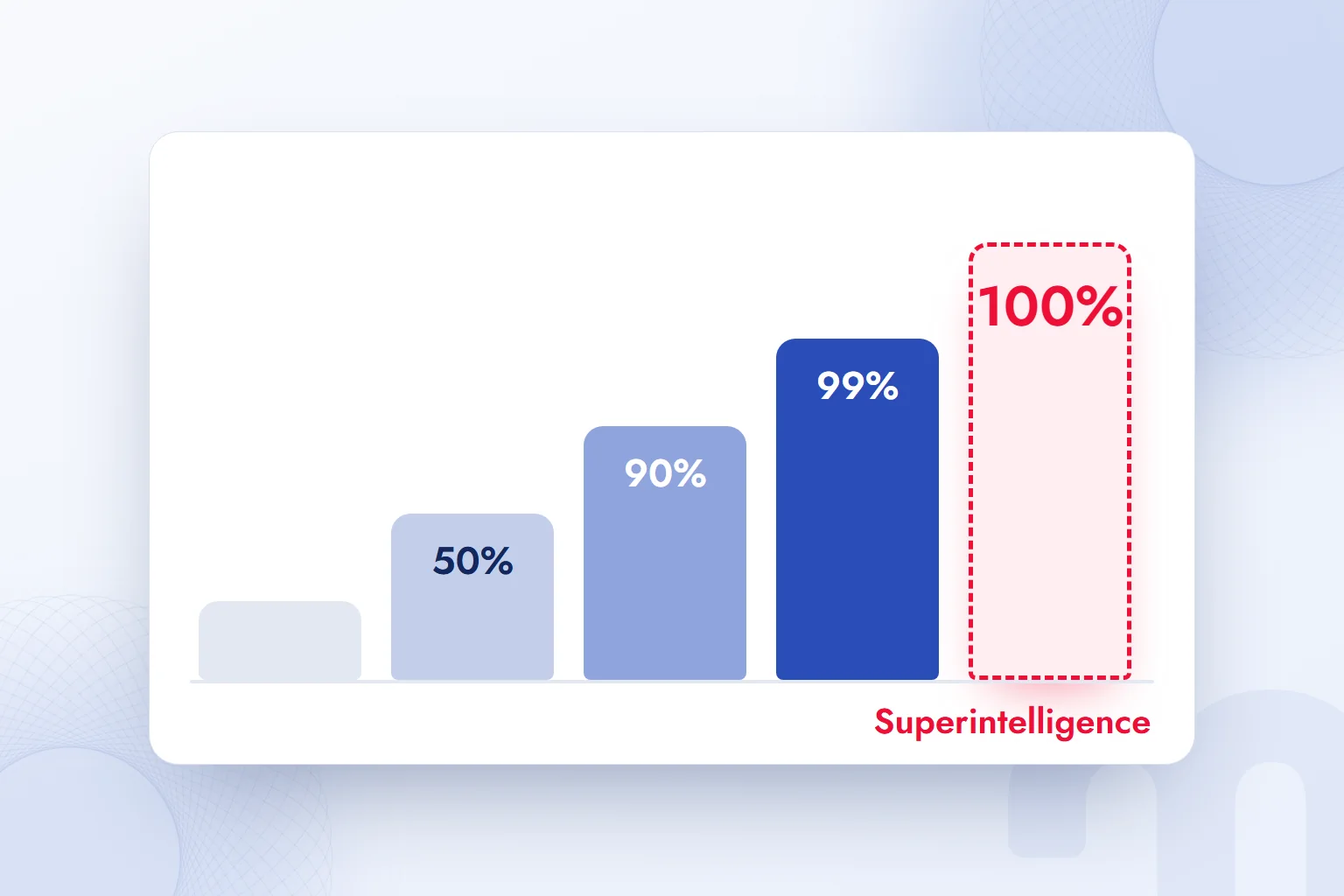
The most cited scale is the Levels of AGI paper by Google DeepMind researchers, published at ICML 2024; it sorts systems into five levels by performance and generality. Performance is the share of skilled adults a system outperforms.
- 1. EmergingEqual to or somewhat better than an unskilled human. The paper places ChatGPT, Bard, Llama 2 and Gemini at this level among general systems.
- 2. CompetentBetter than at least 50 percent of skilled adults. Marked as “not yet achieved” for general systems.
- 3. ExpertBetter than at least 90 percent of skilled adults.
- 4. ExceptionalBetter than at least 99 percent. In the 2025 version of the paper, this level was renamed from “Virtuoso” to “Exceptional”.
- 5. SuperhumanBetter than all humans. For general systems, this level is ASI and has not been reached.
The same paper shows the fifth level long passed in narrow domains: AlphaFold in protein structure, AlphaZero and Stockfish in chess count as superhuman. So the scale splits “has superintelligence arrived?” in two. The gap between beating humans in one narrow task and in every domain is the whole AGI debate.
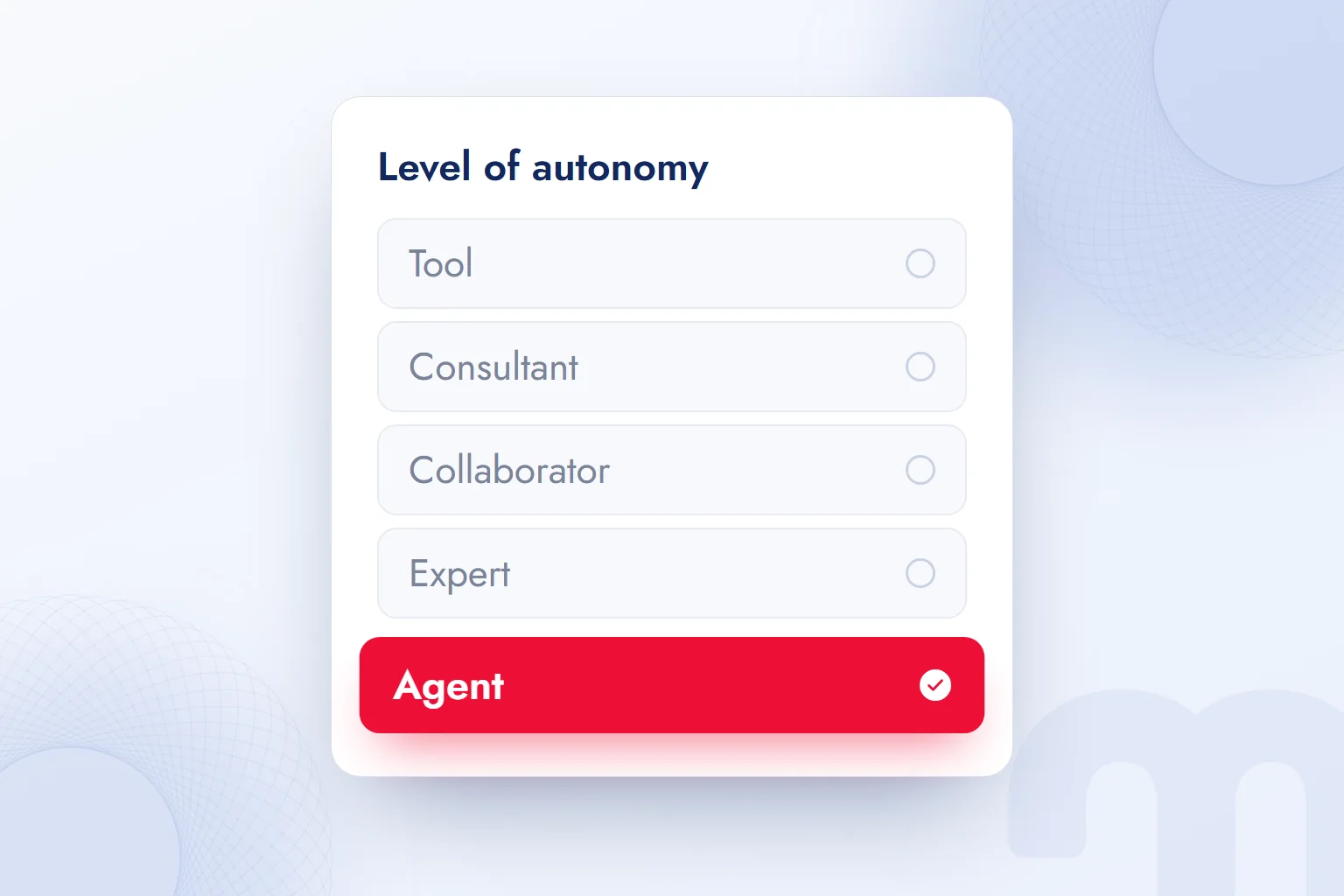
The paper’s second axis is the : tool, consultant, collaborator, expert and agent. For marketing, this axis brings the real change: an agent-level system searches, compares and buys on the user’s behalf.
When will artificial general intelligence and superintelligence arrive?
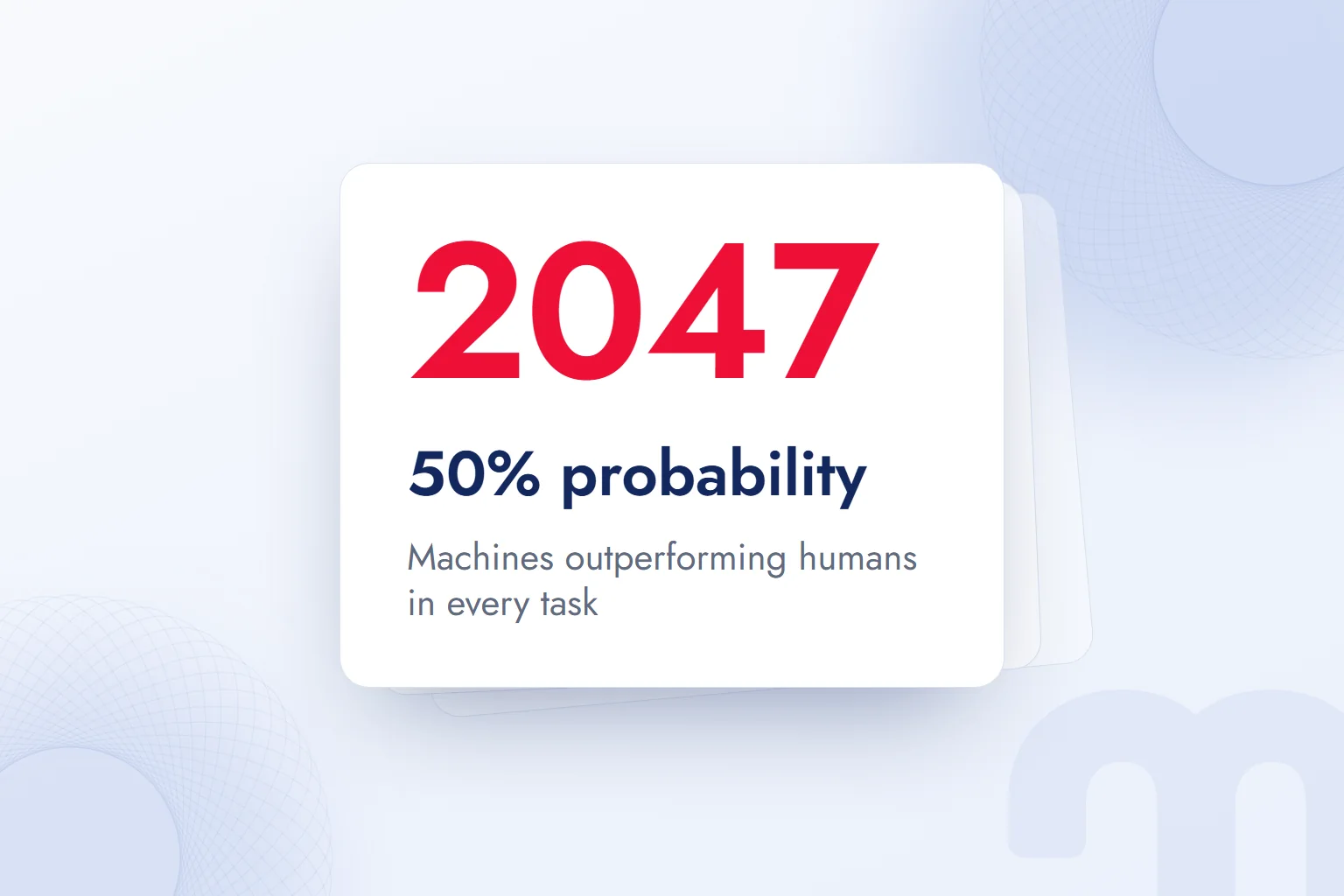
There is no fixed date; the largest academic survey gives a 50 percent probability that machines outperform humans in every task by 2047. The survey by Katja Grace and colleagues of 2,778 researchers published at top AI conferences moved this estimate 13 years earlier than the previous year’s survey.
Labs speak more boldly. In its May 2023 post on the governance of superintelligence, OpenAI called it “conceivable” that within ten years AI systems will exceed expert skill level in most domains. The first sentence on the site of Safe Superintelligence, founded by Ilya Sutskever, reads “Superintelligence is within reach.” On 30 June 2025, Meta gathered all its AI teams under “Meta Superintelligence Labs”.
Three distinctions help us read this picture:
- A survey year is a probability, not a prediction → 2047 does not mean “it arrives that year”; half of the researchers see it earlier, half later.
- Company announcements state goals → In investment and hiring language, “superintelligence” signals a direction, not a measured level.
- The scale itself is contested → There is no shared standard for which test would prove AGI; DeepMind’s levels are also a proposal.
Where does today’s AI sit on these levels?
General systems sit on the first level of DeepMind’s scale; narrow systems reach the top level in some tasks. That is why “AGI is here” and “AGI is far off” headlines appear in the same week.
Adoption moves independently of the levels. According to the Stanford AI Index 2025 report, 78 percent of organisations used AI in at least one business function in 2024, up from 55 percent a year earlier. The change brands face did not wait for superintelligence.
Our observation: for brands, today’s question is not “what happens when ASI arrives?” but “are we cited as a source in AI answers?” It is answered with today’s pages, whatever the AGI and ASI debate concludes.
How does moving toward superintelligence change search?
Search is shifting from result lists to answers and actions; the autonomy axis’s move from “consultant” to “agent” is already happening in the search box. According to Alphabet’s July 2025 announcement, AI Overviews reached more than 2 billion monthly users in over 200 countries and 40 languages, and AI Mode passed 100 million monthly active users in the US and India.
The first commercial agent infrastructure is also in place. On 29 September 2025, OpenAI launched Instant Checkout for direct purchases inside ChatGPT with US Etsy sellers, said Shopify stores would follow and open-sourced the Agentic Commerce Protocol built with Stripe. In September 2025, Google introduced Agent Payments Protocol (AP2), an open protocol for AI agents to initiate payments, with more than 60 organisations.
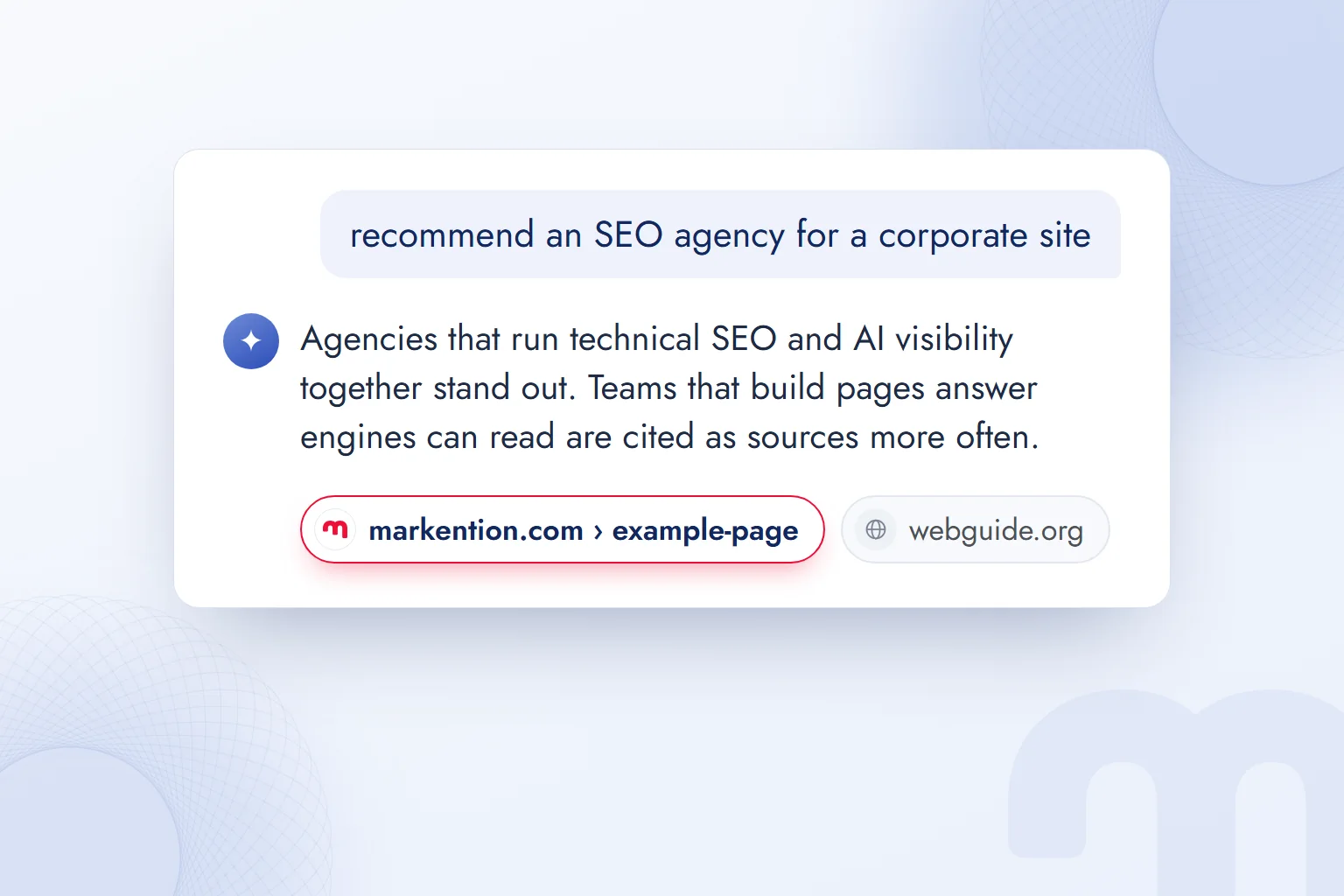
This changes content and measurement work. does not browse like a person; it reads structured data, price, stock and clear answers. That is why, in our GEO consulting work, we audit pages for both the reader and the agent reading them.
How can brands prepare for the AGI and ASI journey?
We prepare for the AI agents reading our pages today, not a distant superintelligence; every measurable step also lifts today’s search visibility. The brand’s channel mix sets the order.
| Brand situation | First step |
|---|---|
| Corporate site serving information seekers | Turn each service page’s first sentence into a quotable definition |
| Ecommerce site | Provide full product data (price, stock, shipping) as structured data |
| Ad-dependent brand | Track paid and organic visibility in AI answers together |
| Brand selling internationally | Use “AI” and “superintelligence” together on English pages |
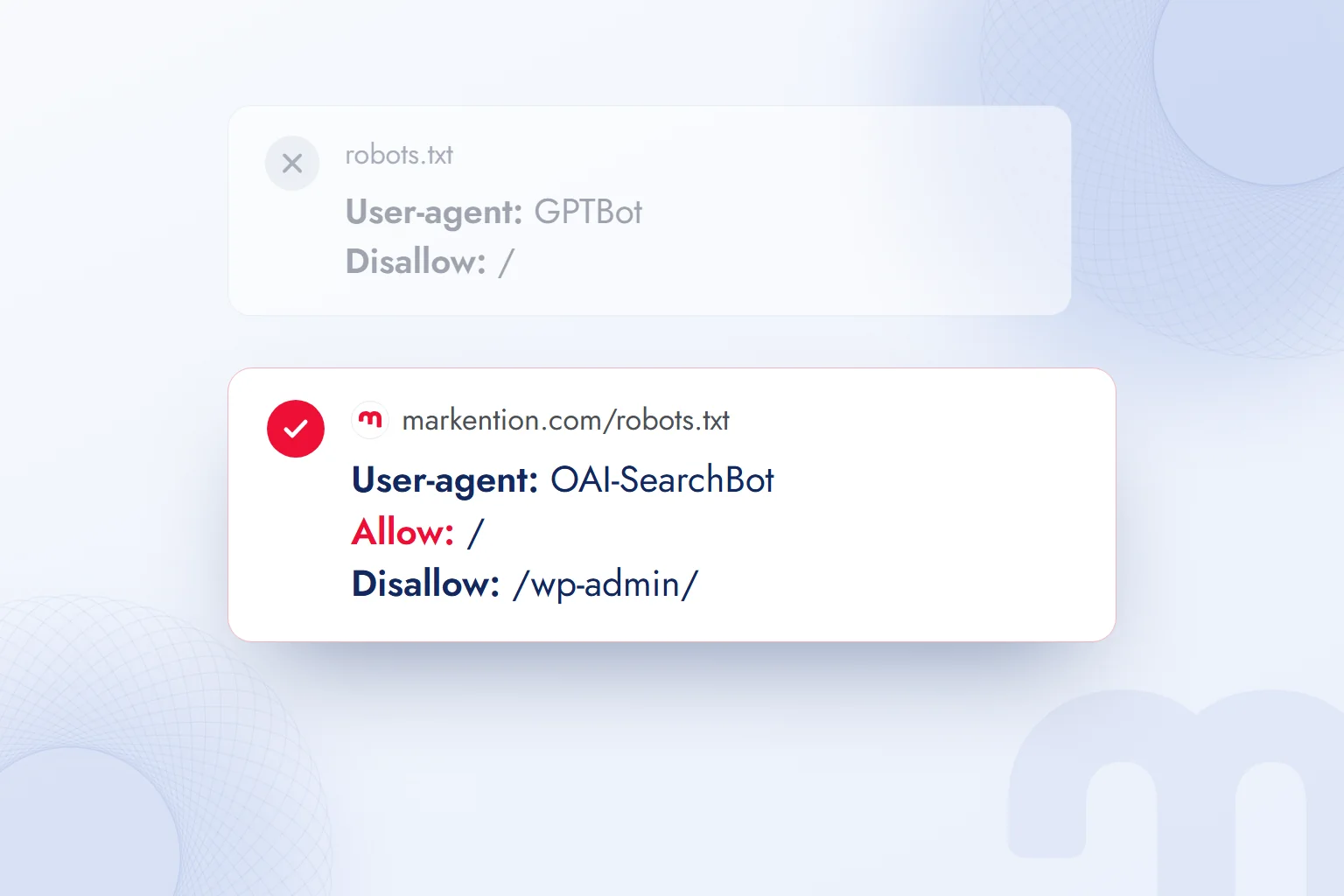
The first technical step is access. On our own site, we listed nine AI agents in a separate group in the robots.txt file, with a “deliberately allowed” note: OAI-SearchBot, ChatGPT-User, GPTBot, ClaudeBot, Claude-SearchBot, PerplexityBot, Google-Extended, CCBot and Applebot-Extended. Admin areas and internal search stay closed to them too. On client sites, we make the same decision agent by agent through AI access control work.
The second step is measurement. We track AI answer visibility by regularly asking a brand’s 20–30 most frequent questions in different assistants and recording the sources. We score how our own site appears to agents in 22 checks with the free AI visibility analysis tool, and we run the same audit on the Google side in our AI Overview consulting work.
The third step is language. Until the terms settle, “AI” remains the main term on pages, and terms such as “superintelligence” and “AGI” are written with their full form on first mention. We follow changes in AI and the agent world in our AI guides.
Frequently asked questions
What is AGI?
AGI stands for artificial general intelligence. It describes a system as flexible as a skilled human across most cognitive tasks; none is generally accepted as achieved.
What is ASI?
ASI stands for artificial superintelligence. It describes intelligence clearly surpassing the best humans in every domain; it has not been reached.
What is the difference between AGI and ASI?
AGI describes general ability at human level; ASI describes ability clearly above it. On DeepMind’s scale, AGI corresponds to the first four levels and ASI to the fifth.
When will superintelligence arrive?
There is no fixed date. In a survey of 2,778 researchers, machines outperforming humans in every task was given a 50 percent probability by 2047.
Is ChatGPT AGI?
No. Google DeepMind’s scale places general systems such as ChatGPT at the “emerging AGI” level, the first of five levels.
Will superintelligence end SEO?
Search is changing form, but sources are still needed. Answer engines and agents cite pages they can read and trust.

 What is Perplexity? How to use it, free plan, Pro, Comet vs ChatGPTRead article
 What is Nano Banana? Gemini image creation, editing and promptsRead article
 What is Claude Code? Install on Windows and Mac, pricing and useRead article
 What is Grok and how do you use it? X’s AI, its plans and differencesRead articleMost read
 What is Claude? How to use it, its plans and the ChatGPT differenceRead article
 What is artificial intelligence? How AI works, types and examplesRead article
 Free AI tools: which one for which job, and what are the limits?Read article
 What is Gemini? How to use it, the free plan, Gemini Omni and ChatGPTRead article
Questions & answers
0 commentsNo questions yet; you can ask the first one.