ChatGPT Ads consulting: your ad below the ChatGPT answer, at the right moment.
What are ChatGPT Ads?
ChatGPT Ads are the ad units OpenAI shows inside ChatGPT, separate from the answer and labeled “Sponsored”. The ad appears below the answer once it ends; it doesn’t affect the answer itself. There’s no keyword list; the context and purpose of the conversation determine which ad is shown. Businesses in Türkiye have been able to open an account in Ads Manager since September 2026.
We make sure you appear below the questions your audience asks ChatGPT, in the right context and in a measurable way. From account opening to context hints, from Pixel measurement to the fixes of the first two weeks, we build the campaign together.
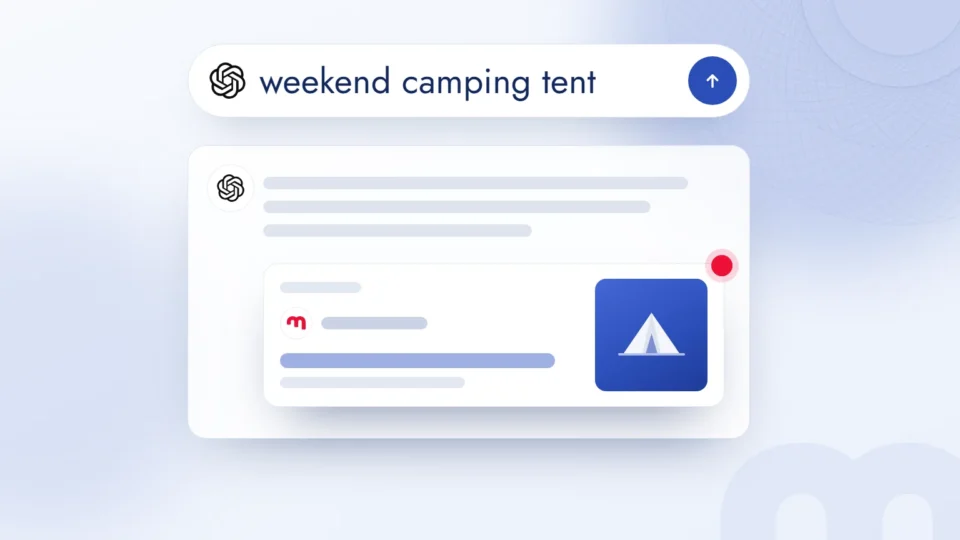
1A question to ChatGPTwhich product should I choose?
2Below the answerYour ad, matched to the context, in a separate card.Sponsored
3yourbrand.com › offerYour Brand | The right offer at the right moment
Visibility below the answer is won in three layers.
01
Context and audience
We map what your audience asks ChatGPT and at which moment they get close to a purchase decision.
Question and intent map
We pull out the questions asked on ChatGPT about your product or service, and the comparison and decision moments.
Context hints (what, who, when)
We build the context notes in the ad group in the order OpenAI recommends: what you offer, to whom, at what moment.
Country, platform and custom audiences
Türkiye and other countries as they open, platform targeting, and custom audiences of sufficient size.
Category and policy compliance
We confirm your category complies with OpenAI’s advertising policy before the account is opened.
02
Ad structure
We build the headline, description, image and landing page to work below the answer.
Headline and description variants
Short copy that’s understood at a glance below the answer and fits the language of the conversation; variant testing in the first two weeks.
Images and product feed
Product images and feeds; a catalog connection for ecommerce, one clear offer for services.
Landing page match
Fast-loading landing pages focused on one job that continue the answer to the question; if needed, we design a new page.
Ads Manager setup
The account stays with your brand; we build the campaign structure, objective and budget, and you approve.
03
Measurement and optimization
With the Pixel or Conversions API we see what each click brings, and make fixes every two weeks.
Pixel and Conversions API
Order, lead and sign-up events flow from day one; we set up server-side reporting if needed.
Choosing the objective: CPM, CPC, conversions
We choose a view, click or conversion objective for the campaign’s stage, and change it as data builds up.
Budget and bid management
We adjust the daily budget, maximum bid and spend pace to the real cost; the budget minimum and currency are settled when the account is opened.
Reporting and the learning loop
We track aggregated view, click and conversion data in your dashboard and agree on fixes together.
Where do ads appear in ChatGPT?
The ad appears below the answer once it ends, labeled “Sponsored”; it doesn’t affect the answer. Which ad the user sees is decided not by a keyword list but by the context and purpose of the conversation.
Free · GoAds are shown only to Free, Go and logged-out users; not on Plus, Pro, Business or Enterprise.
$3–5OpenAI’s recommended starting maximum CPC bid; the real cost is set in the auction.
ChatGPT Free
Answer
Sponsored
Your Brand · Accounting softwareyoursite.comVisit site
Pixel: visit measuredAd
Type a message…
How does budget turn into clicks?
OpenAI’s recommendation: start CPC campaigns with a maximum bid of $3–5; the daily budget minimum is $25. The real cost per click is set in a relevance-weighted auction; the estimate is verified in your own account with a two-week test.
Minimum0
Expected0
Total budget0estimated clicks · by the end of the period
Url Clicks · 2026 vs 2025JulAugSep2026400K2025204K
Jul112K65.2KAug131K68.5KSep156K70.2K
Sample data.
Click to flip through the screens
The dashboard pulls Search Console and Analytics data at the same time. We update the filters to match the project’s goals and build new screens for each type of conversion step.
We build screens with filters Google’s own interface doesn’t offer. We track your queries separately in the top 3, 4–10, 10–20 and 20+ position groups.
We group keywords into clusters and look at the traffic a project gets from each cluster as a whole. We can compare an online store’s bag and shoe clusters on one screen, by search intent, against the previous period; that is a more useful way to measure success.
To report organic growth honestly, we split traffic into branded and non-branded searches. We analyze non-branded traffic separately; that is where the effect of SEO work shows most clearly.
All these filters show the losses too: not every one of the 25 screens shows green. The same screens reveal the swings caused by algorithm updates, and our recovery work starts there.
We track every keyword one by one: impressions, clicks, CTR and position on the same row. Where a keyword moves up but clicks don’t follow, we start work on the title and description.
We keep the city the traffic comes from on a separate screen. For brands with physical stores, the city breakdown decides where the budget and content go.
We compare with the same period last year: is it seasonality or real growth? A screen that looks good against the previous 90 days may be standing still against last year.
25
screens
310
distinct data types
24/7
phone and desktop
Search Console and Analytics
Search Console + Analytics
How do ChatGPT Ads work?
Contents 12 sections
ChatGPT Ads are the ad units OpenAI shows inside ChatGPT, separate from the answer and labeled “Sponsored”. They started as a test in the US in 2026 and, as of 31 August, had expanded to more than 40 countries;11 since mid-September, businesses in Türkiye can also open an account in Ads Manager.3 We wrote this guide for a marketing team that knows Google Ads but has never advertised on ChatGPT: every rule comes from OpenAI’s own Help Center and announcements; we deliberately left out third-party price estimates.
Product research and comparison increasingly happen in artificial intelligence (AI) assistants, and some now describe these systems as a step toward superintelligence (ASI). ChatGPT Ads is the paid way to appear in those conversations; the unpaid way, being cited as a source inside the answer, is covered on our GEO consulting page.
In ChatGPT Ads consulting, our job is to learn the rules of this new environment on your behalf and set the campaign up right from day one: which questions you’ll appear under, how the ad is written, where measurement flows from and when to grow the budget.
Where do ChatGPT ads appear, and do they affect the answer?
Once ChatGPT finishes its answer, it can add an ad unit below it. The unit is visually separate from the answer and carries a “Sponsored” label. OpenAI’s clearest rule is this: ads run in a system separate from the chat model; advertisers can’t shape, rank or change the answer. Seeing an ad also doesn’t mean OpenAI recommends that product.
Three rules
Where: after the answer ends, below it, in a separate unit. Label: “Sponsored”, always clearly shown. Effect on the answer: none; the advertiser can’t shape, rank or change the answer.
Who sees the ads, and who doesn’t?
Among logged-in users, ads are shown only on the Free and Go plans; people who use ChatGPT without logging in can also see ads suitable for everyone. Free users can switch to an ad-free option by accepting lower usage limits. Where ads aren’t shown:
Plus, Pro, Business, Enterprise and Edu accounts
Accounts determined to belong to users under 18
Temporary Chats and, during the test, the Atlas browser
Near sensitive topics such as personal health, mental health and politics
These limits describe your audience when you set up a campaign: users on the free tier who are researching something and are at the decision stage. That’s why our first question in consulting isn’t “how many people will see it”, but “which question, when this user asks it, is our offer genuinely the answer to?”
Which countries can advertise on ChatGPT, including Türkiye?
Self-serve access depends on where your business is registered, not where your customers are. OpenAI’s Help Center keeps an “Ads Manager availability” list of countries; Türkiye, where our team is based, has been on it since mid-September.3 The conditions for opening an account: the legal entity that will advertise and be billed must be established in a listed country, identity and business verification must be completed (business verification can take up to 7 business days), and your category must comply with the advertising policy.
Check that your country appears in the availability list in the Help Center.
Open an account at ads.openai.com with your legal entity’s details; choose the country, currency and time zone carefully, as they can’t be changed later.
Complete identity and business verification, and add a credit card that matches the account country.
Read the advertising policy and confirm your category complies with the rules.
Each advertiser must have its own account: an agency managing several brands opens a separate account for each brand, and an agency can’t open an account on a client’s behalf.4 That’s how we work too: the account stays with the brand, we’re invited as users and run the work; data, billing and history stay with you. OpenAI says some new accounts may initially only run ads in their own country, with other countries opening once verification is complete and a certain spend is reached in your own country.6 If you are a brand based elsewhere and want to reach users in Türkiye, plan for a start in your home market first.
No keywords: context and intent
The first question from teams coming from Google Ads is usually “which keywords will we bid on?” There’s no such list in ChatGPT. As OpenAI explains it, ad selection looks at signals such as the context and purpose of the current conversation, the ad’s landing page, headline and text, context hints provided by the advertiser, and targeting choices. If several ads are eligible, relevance and bid together determine the order.
Topic
Google Ads
ChatGPT Ads
Trigger
Search query, keyword list
The context and purpose of the conversation; no keyword list
In your hands
Keywords, match types, negatives
Context hints, product feed, platform and country, custom audiences
Ranking
Ad rank (bid × quality)
Relevance and bid together
Placement
Several ads above and below the results
One or more units below the answer, labeled “Sponsored” and separate from the answer1
Personalization
Audience signals, remarketing
Past chats and memory, if the user has them turned on; initially not in the EEA and Switzerland
On the advertiser side, product feeds, platform and geographic targeting, and custom audiences are available; including a custom audience in a campaign or using a bid multiplier requires at least 25,000 matched users. In consulting, we build context hints in the “what, who, when” order OpenAI recommends: what you offer, to whom, at what moment.
Campaign objectives and bidding: CPM, CPC, conversions
In the first phase of the pilot there was only CPM; CPC was added on 5 May 2026,10 and according to OpenAI, as of 31 August most campaigns run on CPC and outcome-based bid strategies.11 OpenAI’s reasoning is clear: ChatGPT conversations are decision-oriented, and in this environment a click is a meaningful sign that the ad is working.10
Model
What for
When
CPM (per thousand impressions)
Visibility, introducing a new category
The first week, when you want to gauge demand; brand awareness goals
CPC (per click)
Site traffic, landing page testing
While measurement is being set up; until conversion data builds up
Conversion (oCPC / oCPM)
Sales, forms, sign-ups
After the Pixel or Conversions API is connected and enough results have built up
The daily budget has a minimum that depends on currency (for example, USD 25); spend within a single day doesn’t exceed twice the daily budget.6 The documentation doesn’t list a Turkish lira equivalent; the account currency is chosen at sign-up and can’t be changed later.4 The language an ad is shown in is determined by location, the user’s language setting and the language of the conversation; on 16 September, an optional feature that translates ad text into the user’s language was also announced.12
ChatGPT ad budget: how is the cost per click set?
OpenAI doesn’t publish a public price list; cost is set in a relevance-weighted second-price auction. We don’t put the “so many dollars per click” figures circulating online into campaign plans.
OpenAI’s own recommendation is to start CPC campaigns with a maximum bid of USD 3–5. Our method is a small two-week test: with spend close to the daily budget minimum, we read the real cost per click, click-through rate and landing page behavior from your own account; we grow the budget only after that, based on a measured cost. The budget calculator above works on the same logic: it shows the minimum number of clicks you’ll get at your maximum bid, and how many more you can expect if the real cost comes in lower.
ChatGPT Ads management pricing: what drives the fee?
Advertising on ChatGPT has two separate costs: the ad spend paid to OpenAI and the service fee of the partner running the campaign. The ad budget is separate from the service fee and is paid directly to OpenAI from the payment method on your account. The factors behind the service fee:
Factor
Why it matters
Range of products and services
Each offer needs its own context hints, ad group and landing page fit
Measurement setup
The Pixel alone and the Pixel plus Conversions API and server-side events take different effort
Product feed
In ecommerce, preparing the feed and keeping it current is a job of its own
Creative and landing page
Starting from an existing page and designing a new one are different scopes
Management period
A one-off setup and test and monthly optimization are separate items
We work out the scope together in the first meeting and then send a written proposal; the ad budget is set with you based on the cost measured in the two-week test.
ChatGPT Ads consulting pricing: estimated ranges
Scope
Specialist effort
Estimated fee (excl. VAT)
Test phase: one campaign, measurement setup, first three months
~6–8 hours / month
$400–$900 / month
Ongoing management: several campaigns and product groups
~10–12 hours / month
$600–$1,400 / month
Estimated monthly range, excluding VAT; scope is confirmed in a written proposal after the first meeting. As of October 2026. Ad spend is not included in the service fee.
Measurement: the Pixel, Conversions API and what you won’t see
In its 5 May 2026 announcement, OpenAI said measurement based on the Pixel and Conversions API had opened;10 outcomes such as purchases, leads and sign-ups can be attributed to ads. The Pixel is a small script placed in the <head> section of the relevant pages, including the landing page; it captures the ad click ID and reports events. The Conversions API reports the same events from the server. Events are sent with names OpenAI defines (for example order_created, lead_created, registration_completed).8
What you’ll see and what you won’t
What advertisers see is aggregated, non-identifying performance data: views, clicks and the outcomes you connect. What you won’t see: conversations, chat history, memory, names, email addresses, precise location, IP addresses or sensitive information. Setting up the campaign with this limit in mind is a precondition for reading the reports correctly.
At markention, we set up measurement from day one: we place the Pixel so it’s tied to the theme’s consent setup, define order events for ecommerce and lead events for services, and add server-side reporting if needed. The same events are read in the same dashboard as Google Analytics 4; you see what visitors from ChatGPT do side by side with visitors from Google.
Ad structure: headline, description, image, landing page
The ad unit is simple: headline, description, image and landing page. It has to be understood at a glance below the answer; a concrete offer that fits the language of the conversation and doesn’t overclaim works best. Context hints live in the ad group and describe which conversations the ad is considered suitable for.
Headline: a short sentence that continues the answer to the question and includes the product or service name; several variants are tested in the first two weeks.
Description: one difference or one piece of proof; details such as price, dates and figures should be verifiable on the landing page.
Image: a product image or a card from the product feed; for services, one clear offer.
Landing page: a fast-loading page focused on one job that continues the answer to the question; if needed, we design a new one.
On 16 September, OpenAI announced “Sponsored Agents”, being tested only in the US with select advertisers, an Ads Manager add-on, AI-assisted creative tools, and HubSpot and Shopify integrations.12 We add what opens up in Türkiye to the setup; today we build the plan on three things: the ad unit, context hints and the landing page.
How do ChatGPT Ads consulting services work in the first 30 days?
Week 1 · Introduction and account: product, audience and goal; your brand opens the account and invites us; verification starts, and category and policy compliance are checked.
Week 2 · Setup: question and intent map, context hints, campaign objective and budget, ad copy and images, landing page; the Pixel or Conversions API is set up and tested.
Weeks 3–4 · Test: launch with a small budget; daily budget, bids and variants are adjusted to the real cost; reports are read together.
After that: an optimization meeting every two weeks, a monthly report, and budget decisions based on measured cost.
Our operating rhythm is set out further down the page: one mentor and two specialists on every project, a detailed report every two weeks, followed by a recorded meeting with the whole team. ChatGPT Ads runs as one channel within this rhythm and is tracked in the same dashboard as SEO and Google Ads.
ChatGPT advertising agency, freelancer or in-house team?
Because ChatGPT Ads is new, few teams have run the channel for long; the choice comes down to who can follow OpenAI’s changing rules and set up measurement:
Model
Strength
What to watch
Freelance ads specialist
Fast decisions, one point of contact
The Pixel, Conversions API and landing page work often fall outside the scope
Advertising or digital marketing agency
Creative, measurement and reporting under one roof
An agency can’t open an account on a client’s behalf; make sure the account is opened by the brand
In-house team
Knows the product and customer questions best
The rules change often, so announcements and the Help Center need regular attention
How to choose a ChatGPT Ads agency
ChatGPT Ads is a new environment and the rules are changing fast; the right partner follows these changes from OpenAI’s own sources, doesn’t make up prices and leaves the account with you. When you get a proposal, ask: whose name will the account be opened in, how will measurement be set up, what will the first budget be based on, and what data will the report come with? If the answers start with “we’ll prepare a keyword list” or “it’s so much per click”, the rules of the environment haven’t been learned yet.
Account ownership: the account is opened by the brand’s legal entity and the partner is invited as a user; OpenAI doesn’t allow an agency to open an account on a client’s behalf.
Budget kept apart from the fee: ad spend goes to OpenAI from your payment method, and the management fee is invoiced separately.
Sourced cost talk: cost per click is discussed from what a test budget measures in your own account, not from figures circulating online.
Measurement plan: which events are connected through the Pixel or Conversions API is written down before launch.
Policy fit: your category is checked against the advertising policy before the account is opened.
Guarantee language: no one can promise you’ll appear in every conversation or “rank first in ChatGPT”; conversation context, relevance and bid decide together whether an ad is shown.
Where do ads appear in ChatGPT, and do they affect the answer?
The ad appears after ChatGPT finishes its answer, below it, in a unit visually separate from the answer and labeled “Sponsored”. This is OpenAI’s clearest rule: ads run in a system separate from the chat model; the advertiser can’t shape, rank or change the answer. Seeing an ad also doesn’t mean OpenAI recommends that product.
Can businesses based in Türkiye advertise on ChatGPT?
Yes. In the country list in OpenAI’s Help Center, Türkiye has been among the countries with self-serve access since mid-September 2026. The account is opened at ads.openai.com with the details of the legal entity to be billed; campaigns don’t go live until identity and business verification are complete. Your brand opens the account and invites us as users.
Don’t we choose keywords?
No; there’s no keyword list in ChatGPT. Which ad is shown is determined by the context and purpose of the conversation, the ad’s landing page, headline and text, the context hints in the ad group, and targeting choices. So the weight of the work shifts away from collecting keywords and toward describing the right context and fitting the ad to it.
What do we pay per click, and what should the starting budget be?
OpenAI doesn’t publish a public price list; cost is set in a relevance-weighted auction. OpenAI’s own recommendation is to start CPC campaigns with a maximum bid of USD 3–5; the daily budget has a minimum that depends on currency (for example, USD 25). We read the real cost from your own account in a small two-week test, and grow the budget only after that.
How are results measured, and what won’t we be able to see?
With the Pixel (a small script placed on your pages) or the Conversions API (reporting from the server), events such as orders, leads and sign-ups are attributed to ads. What you’ll see is aggregated, non-identifying performance data: views, clicks and the outcomes you connect. Neither you nor we can see conversations, chat history, memory, or information such as names, email addresses or precise location.
Who sees the ads, and who doesn’t?
Among logged-in users, ads are shown only on the Free and Go plans; people who use ChatGPT without logging in can also see ads suitable for everyone. There are no ads on Plus, Pro, Business, Enterprise and Edu accounts, on accounts determined to belong to users under 18, in Temporary Chats, or near sensitive topics such as health, mental health and politics. In practice, your audience is users on the free tier who are researching something and are at the decision stage.
How is it different from Google Ads, and should we run both?
Google Ads has search queries and keyword lists; ChatGPT has the context of the conversation, and ads appear below the answer in units separate from it. The measurement logic is similar (the Pixel or server-side events), and so are the bidding models (CPM, CPC, conversions). For most brands the right setup is to run both: capture search intent on Google, and comparison and decision moments on ChatGPT. We read which channel does which job in the same dashboard.
Can a brand based outside Türkiye run ChatGPT ads for users in Türkiye?
The account is opened in the country where your legal entity is established, and that country has to be on OpenAI’s Ads Manager availability list. OpenAI says some new accounts may at first only run ads in their own country, with other countries opening once verification is complete and a certain spend is reached at home. So plan for a home-market start; the language an ad is shown in then follows the user’s location, language setting and the language of the conversation.
How is the fee for ChatGPT Ads consulting set?
The fee depends on scope: the range of products and services, how deep the measurement setup goes, the product feed, creative and landing page work, and the management period. We work out the scope in the first meeting and send a written proposal. The ad budget is separate from this fee and is paid directly to OpenAI from the payment method on your account. Estimated ranges are in the pricing table on this page; the final fee is set in a written proposal.
How much does ChatGPT advertising management cost?
During the test phase, with one campaign and measurement setup, the estimated fee is $400–$900 a month; ongoing management of several campaigns is $600–$1,400 a month (excluding VAT). Ad spend is not included: cost per click is set in OpenAI’s auction and the budget is paid from your own ad account.
How is advertising on ChatGPT different from GEO?
Advertising is paid and appears below the answer in a separate unit labeled “Sponsored”; according to OpenAI, advertisers can’t influence the answer itself. GEO is about unpaid visibility: your brand being cited as a source in answer engines such as ChatGPT, Google AI Overviews and Perplexity. One doesn’t replace the other; planned together, you can aim to appear both in the answer and below it for the same questions.
What should we look for in a ChatGPT advertising agency?
Check whether the account will be opened in your brand’s name, how measurement will be set up with the Pixel or Conversions API, what the first budget will be based on, and whether ad spend and the service fee are kept separate. Proposals that start with a keyword list, quote unsourced cost-per-click figures or guarantee visibility show that the rules of this environment haven’t been learned yet.
What exactly does the consulting cover?
Support with account opening and verification, category and policy compliance, the question and intent map, context hints, campaign objective and budget setup, ad copy and images, landing page alignment, Pixel or Conversions API setup, a two-week test and then ongoing optimization. The account stays with you; we work as users, run the work from setup to optimization, and present every decision with a report.
The rhythm of the operation: month, week, day, hour.
Every project has one mentor and two specialists. The tools we use: Claude, Search Console, Semrush, Yandex, Screaming Frog, Google Analytics, ChatGPT · Codex, Google Ads, Ahrefs, Data Studio, Merchant Center, Google Trends, Meta Business, Google Business Profile. We check your Search Console and Analytics every day; Merchant Center one day a month, and the other tools come in as the calendar requires.
Mentor
28 days with markention
2 strategy meetings · a live Data Studio report, 24/7 · 8 operations meetings · plus opportunity-driven work as it comes up
Week 1Meeting with you
Week 2Your Data Studio report
Week 3Meeting with you
Week 4Your Data Studio report
10:00MonPlanningMonday, week 1: We plan your weekWe open the month by checking your product feed in Merchant Center, then set the week’s priorities in our 10:00–11:00 team meeting.
TueStrategyTuesday, week 1: Your strategy sessionYour mentor and specialists get together: we review where your project stands, discuss ideas and prepare the agenda for Thursday’s meeting with you.
WedCrawlWednesday, week 1: Technical crawl of your siteWe crawl your site end to end with Screaming Frog: broken links, redirects and indexing issues go onto your task list.
ThuMeetingThursday, week 1: Meeting with youWe meet every two weeks. Your mentor and two specialists are at the table; we record the meeting and write down the decisions.
16:00FriWrap-upFriday, week 1: Weekly reviewWe close the week with our 16:00 team review: what was done and what comes next.
10:00MonPlanningMonday, week 2: We plan your weekWe start the day by reviewing your Google Ads and Meta Business accounts, then set the week’s priorities in our 10:00–11:00 team meeting.
TueBacklinksTuesday, week 2: Your link profile auditWe review your link profile with Ahrefs and separate gained, lost and risky links.
WedMarketWednesday, week 2: Your market and competitor researchWe scan your market and competitors with Semrush: rankings, new opportunities and lost queries go onto your task list.
ThuReportThursday, week 2: Your Data Studio reportWe crawl your site again; in the week without a meeting we send your report together with your updated dashboard, which brings together 310 distinct data types.
16:00FriWrap-upFriday, week 2: Weekly reviewWe close the week with our 16:00 team review: what was done and what comes next.
10:00MonPlanningMonday, week 3: We plan your weekWe start the day by checking your visibility on Yandex and your Google Business Profile, then set the week’s priorities in our 10:00–11:00 team meeting.
TueStrategyTuesday, week 3: Your strategy sessionYour mentor and specialists get together: we review where your project stands, discuss ideas and prepare the agenda for Thursday’s meeting with you.
WedAIWednesday, week 3: Your brand in superintelligence answersWe check how your brand appears in ChatGPT and Claude answers and add the questions left unanswered to your content plan.
ThuMeetingThursday, week 3: Meeting with youWe meet every two weeks. Your mentor and two specialists are at the table; we record the meeting and write down the decisions.
16:00FriWrap-upFriday, week 3: Weekly reviewWe look at rising searches in your field with Google Trends and close the week with our 16:00 team review.
10:00MonPlanningMonday, week 4: We plan your weekWe start the day by reviewing your Google Ads and Meta Business accounts, then set the week’s priorities in our 10:00–11:00 team meeting.
TueAnalysisTuesday, week 4: Your traffic and conversion analysisIn Google Analytics we look at where your visitors come from and which pages bring conversions; the findings go into Thursday’s report.
WedAI OverviewsWednesday, week 4: Your brand in Google’s AI answersWe check whether your brand is cited as a source in Google’s AI Overviews and AI Mode answers and add the questions left unanswered to your content plan.
ThuReportThursday, week 4: Your Data Studio reportIn the week without a meeting we send your report together with your updated dashboard.
16:00FriWrap-upFriday, week 4: Weekly reviewWe close the week with our 16:00 team review: what was done and what comes next.
Sample flow: if your meeting day is Thursday.
08:00Checking your site09:0010:00Production on your project10:00Our team meeting11:00Production on your project10:00Production on your project16:00Our team meeting10:00Production on your projectDaytimeYour strategy session10:00Production on your projectDaytimeMeeting with you10:00Production on your projectDaytimeYour Data Studio report
Monday·Week 1We plan your week
We open the month by checking your product feed in Merchant Center, then set the week’s priorities in our 10:00–11:00 team meeting.
Keep browsing. This button will let you know when the summary is ready.
Summary ready for .
Thank you. The report link for will be sent to .
CookiesWe use cookies only with your consent, to measure how you use the site and to improve our ads. If you allow it, the pages you viewed on this visit are added to your request when you submit a form.