






 Damla Kütük
8 min read
Damla Kütük
8 min read
What is GEO? How Generative Engine Optimization works
GEO helps content earn citations in AI answers. Learn how it differs from SEO, how we prepare a website, and how we measure visibility.Pro
Contents 7 sections
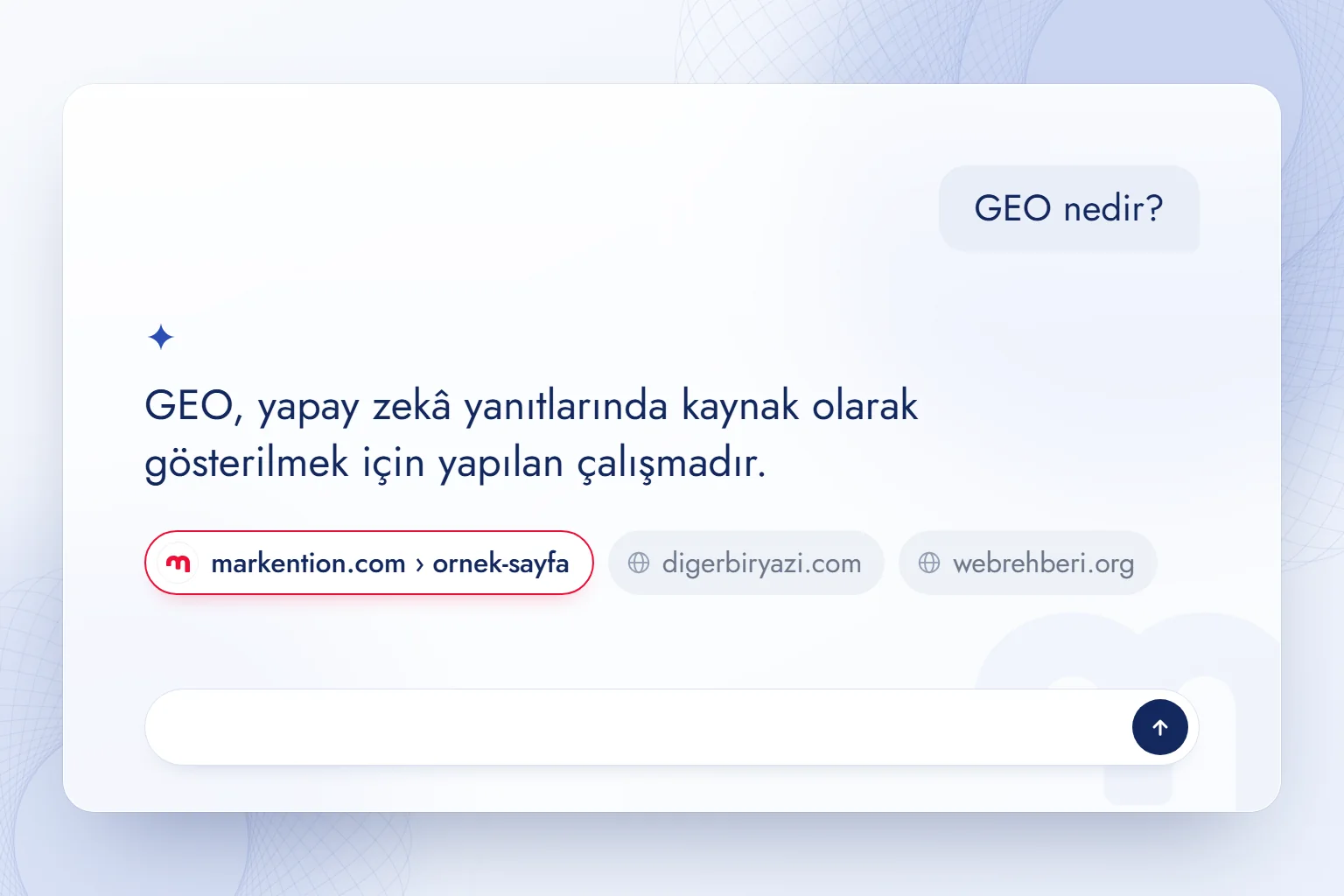
GEO, short for Generative Engine Optimization, is the work of getting content cited as a source in AI answers from ChatGPT, Gemini, and Google. It has nothing to do with geography, geometric means, or National Geographic. A answers questions and lists its sources; GEO aims to make your page one of those sources.
We make sure a service page contains a sentence an AI answer can quote. Our sequence stays the same: access and indexing, a quotable definition, consistent brand information, and measurement by query and engine.
GEO does not replace SEO; AI search answers draw their sources from indexable pages.
What does GEO mean?
GEO stands for Generative Engine Optimization. The term’s academic source is Aggarwal and colleagues’ paper “GEO: Generative Engine Optimization,” published on arXiv, which examines content visibility in generative engine answers.
In marketing, GEO aims to get a brand mentioned and its pages cited in AI answers. Someone searching for “geo seo” wants to understand the difference: the goals differ, but the technical foundations are shared.
How do AI answers select their sources?
For a question requiring current information, an AI assistant searches, retrieves relevant indexed pages, builds an answer from their content, and cites its sources. A retrieved passage must answer the question directly, so the connection between heading and explanation matters.
Google Search Central’s “AI features and your website” documentation says AI Overview and AI Mode require no special markup or additional optimization. A page must be indexed and eligible to appear with a snippet in search results. Meeting those requirements does not guarantee citation.
OpenAI’s bot documentation separates OAI-SearchBot, used for search, from GPTBot, used for model training. Search access and training permission are separate decisions.
We distinguish three possibilities:
- The question concerns general knowledge the model already has → ChatGPT and Gemini answer without searching or showing sources; we prioritize queries that require search.
- The question requires current, local, or detailed information → retrieved pages inform the answer; we prepare passages with direct answers and clear sources.
- The question asks “which agency” or “which tool” → the answer lists brands; we check that brand names, service descriptions, and addresses match across sources.
What is the difference between GEO and SEO?
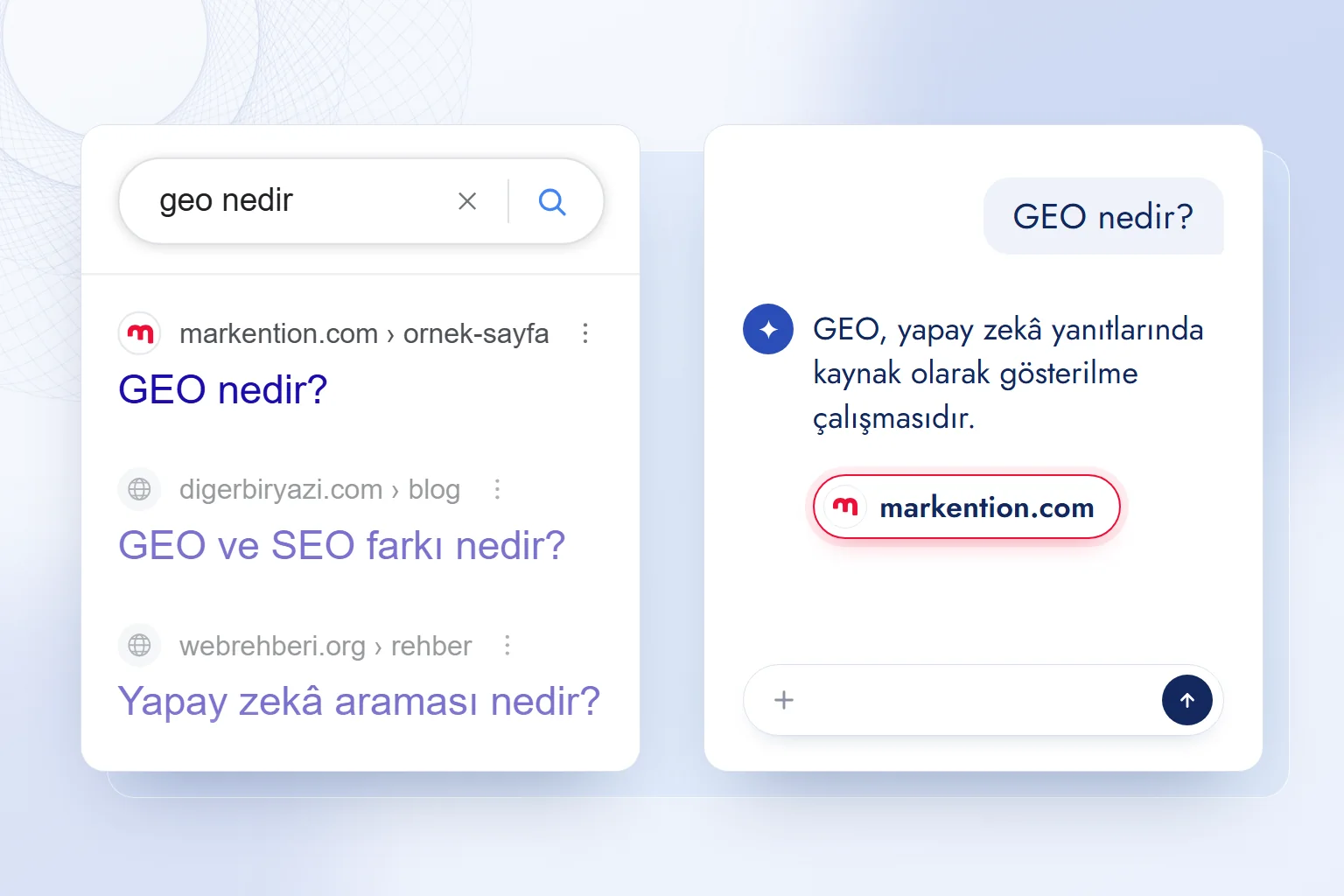
SEO aims to rank a page higher in search results; GEO aims to get a sentence from that page cited in an AI answer.
| Aspect | SEO | GEO |
|---|---|---|
| Goal | Rankings | Citations |
| Content unit | Page | Passage and sentence |
| Key signals | Links, content, technical factors | Quotable sentences, consistent entity information, access |
| Measurement | Rankings and clicks | Citations and mentions |
| Shared foundation | Indexable, fast, structured pages | Indexable, fast, structured pages |
We distinguish a mention, where the answer names a brand, from a citation, where it provides a page as a source.
GEO depends on SEO: an unindexed page cannot serve as a supporting source in Google’s AI search features (Google Search Central, “AI features and your website”). We check access and indexing alongside content revisions.
How do we implement GEO?
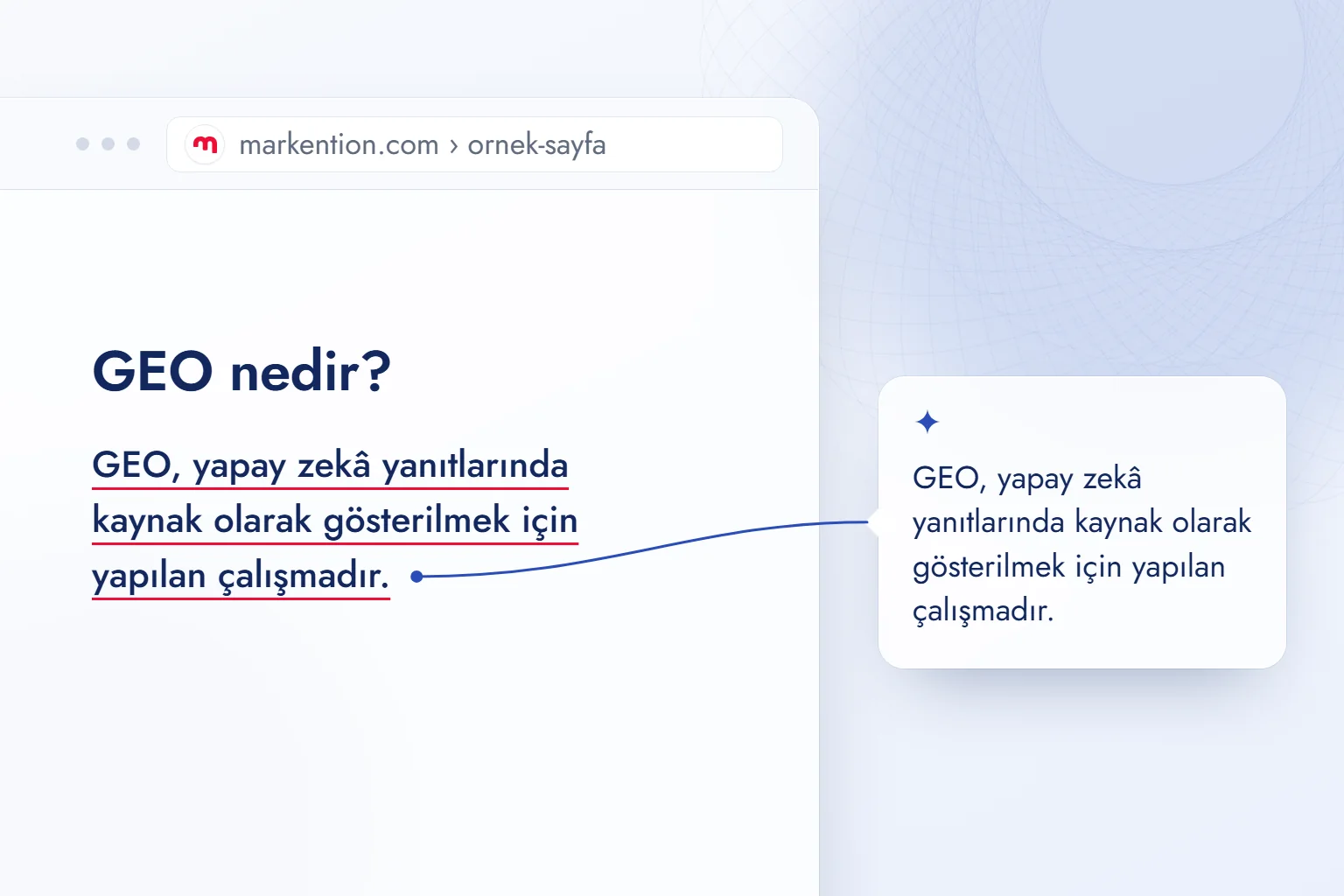
GEO starts with writing each page’s opening sentence as a direct answer. We name the service, explain what it does, and state the need it meets. Under each question heading, we follow the answer with reasoning and a source, so the passage makes sense independently.
We follow five steps when editing a page:
- Definition sentenceWe write a direct, single-sentence answer under each question heading, with an explicit subject.
- Question headingsWe use the reader’s wording and keep the explanation focused on that question.
- Entity consistencyWe keep the brand name, address, and service description consistent across the website and other sources.
- Bot accessWe check OAI-SearchBot and Googlebot access in robots.txt and assess training permissions separately.
- Sourced dataWe place each figure beside its meaning and source so the passage is easy to verify.
“Results-driven solutions” does not explain a service. We replace it with something concrete: “Our engineering company installs and maintains cold rooms for food manufacturers in İzmir, Türkiye.” An answer engine can quote that sentence independently. We place the answer immediately after the question heading.
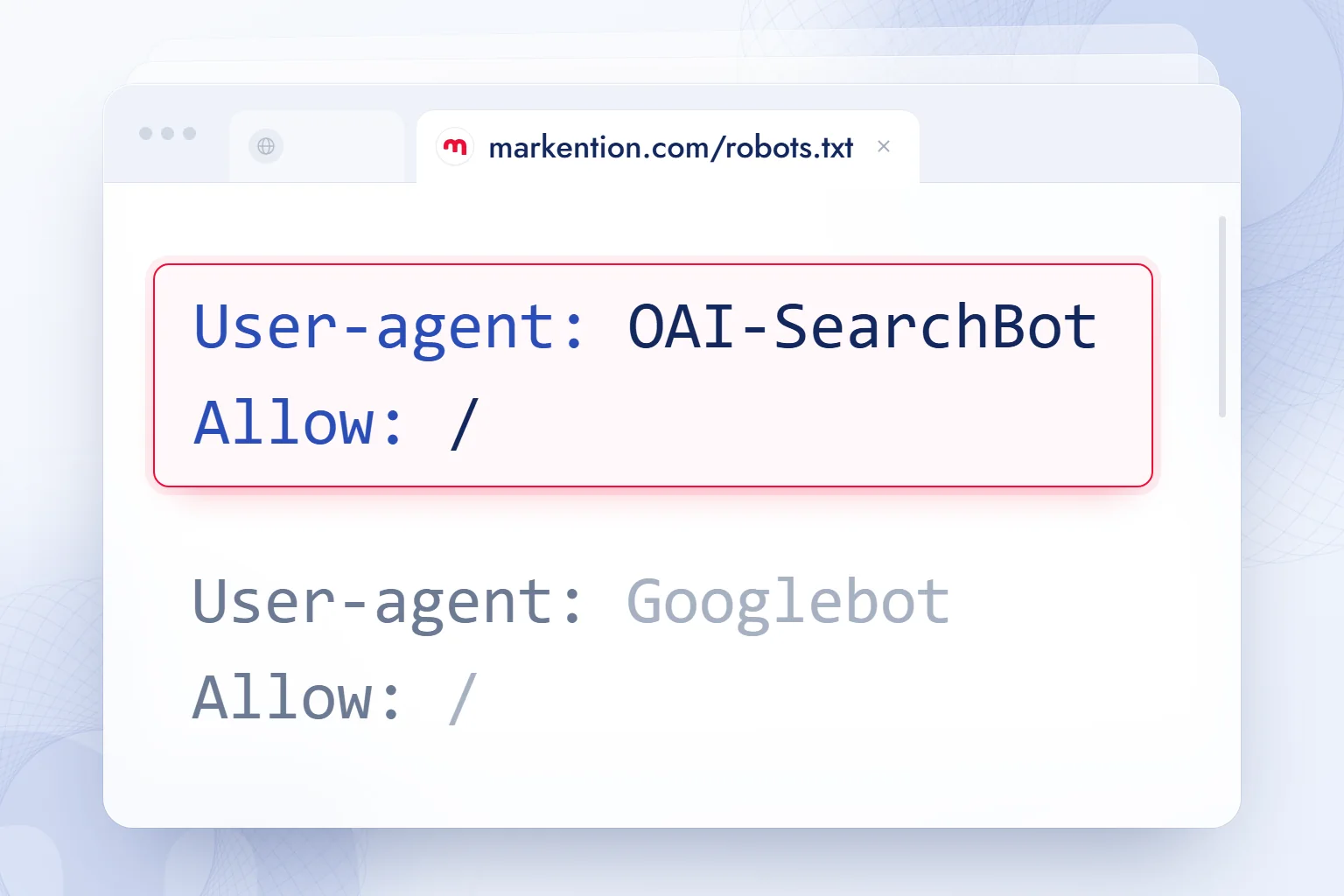
In robots.txt, “User-agent: OAI-SearchBot” identifies the search bot, while “Allow: /” permits access from the root path. We check Googlebot separately. Blocking GPTBot does not revoke OAI-SearchBot’s search permission (OpenAI bot documentation).
Google-Extended controls content use for Gemini model training and grounding some Gemini answers in sources; it does not affect Google Search inclusion or rankings. Googlebot controls crawling for Google’s AI search features (Google crawler documentation; Google Search Central, “AI features and your website”). Disabling Google-Extended also prevents use as a source in Gemini app answers. We weigh training permission and visibility together.
Is my website ready for GEO?
A website meets our GEO readiness criteria when all eight checks below return yes; every no identifies work to do.
- Is the page indexed? (Search Console › URL Inspection)
- Does each question heading have a direct, single-sentence answer?
- Does the service description match across the website, Google Business Profile, and LinkedIn?
- Can OAI-SearchBot access the page? (robots.txt)
- Does the page pass Core Web Vitals on mobile? (PageSpeed Insights)
- Do Organization and Article schemas match the visible content? (Rich Results Test)
- Are the author and date visible?
- Do figures have sources beside them?
This checklist is our method. Authors, dates, and sources beside figures give visible expression to Google’s E-E-A-T framework: experience, expertise, authoritativeness, and trust. Organization and Article markup support information structure; Google requires no special schema for AI features (Google Search Central, “AI features and your website”).
The checks lead to three possibilities:
- Every answer is yes → the foundations are ready; we start measuring queries across engines.
- Technical checks return no → we remove technical barriers before assessing the content.
- Content checks return no → the answer structure or source information is incomplete; we revise definitions, question headings, and source attributions.
How do we measure GEO visibility?
We measure GEO with a query × engine table, testing service queries in ChatGPT, Gemini, and Google AI Overview and marking each cell where the page is cited.
We record the query, engine, measurement date, brand mentioned, and source page.
Queries cover what the service is, how to choose it, and how it is delivered. We keep wording identical across checks so results remain comparable. Search Console includes AI Overview and AI Mode clicks in its Web search totals without reporting them separately. We therefore track citations in our table, with separate fields for brand mentions and clickable sources.
Our observation: citations fluctuate more than Google rankings, changing within a week for the same query. We track them regularly for four weeks. When we are absent, we examine the cited page and reassess our own page’s answer and accessibility.
Our AI visibility tool takes a website URL and scores access, structured data, and content signals against a checklist. In our GEO consulting work, we maintain the query × engine table together with clients and use results to prioritize content and technical work.
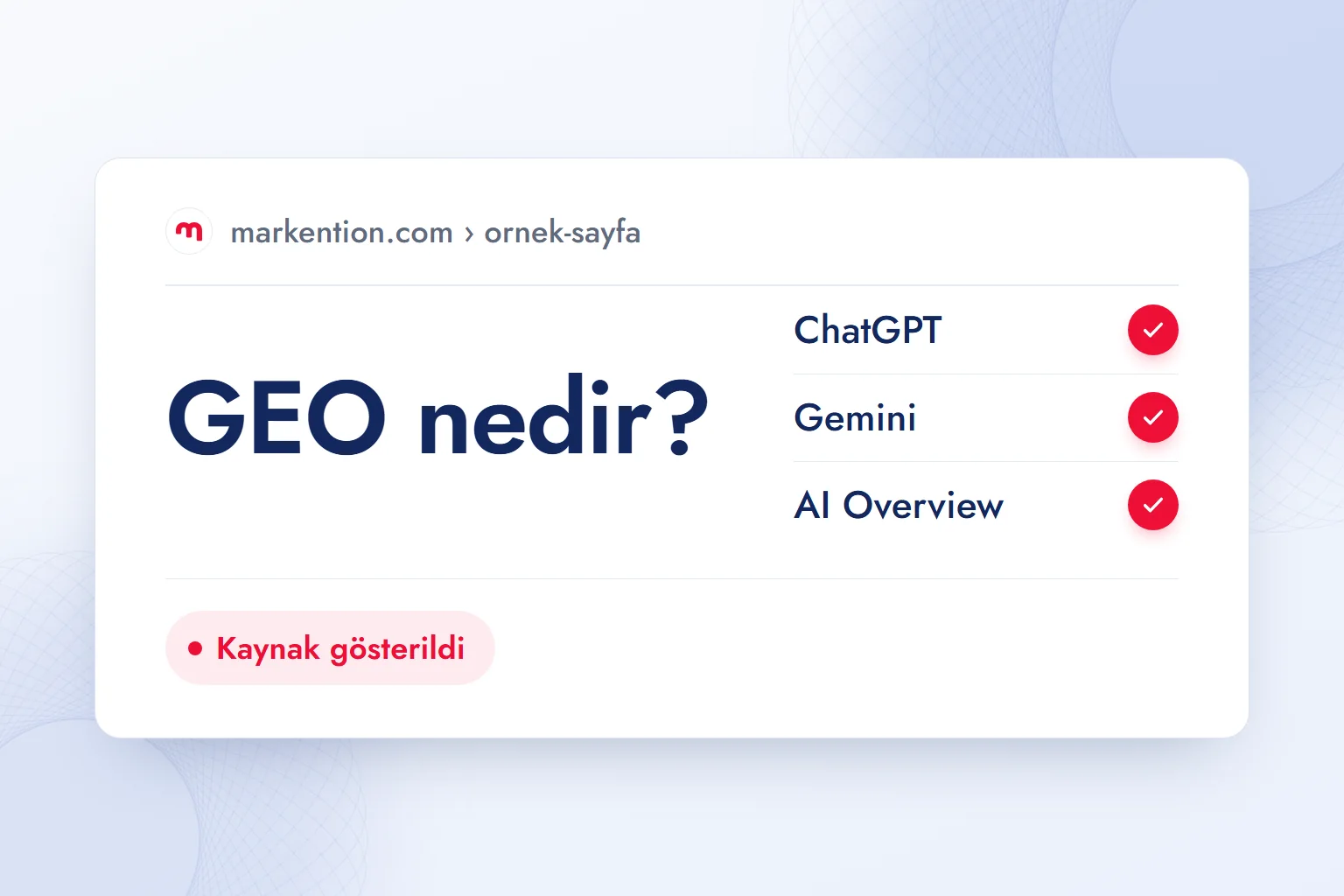
GEO extends SEO into AI answers. We start with accessible pages and clear definitions, develop sourced content, and track each query separately. We explore different applications on our English blog.
Frequently asked questions
What is GEO in simple terms?
GEO is the work of getting content cited in AI answers. We focus on clear answers, consistent brand information, and search bot access.
What does GEO stand for?
GEO stands for Generative Engine Optimization. In digital marketing, it concerns visibility in AI answers.
Are GEO and SEO the same?
No; GEO does not replace SEO. SEO focuses on rankings and clicks, while GEO focuses on citations and mentions; both depend on indexability and clear content structure.
Where do we start with GEO?
We check indexing and bot access, then write direct definitions under question headings. We organize sourced data and brand information, then track selected queries.
How long does GEO take to show results?
Our observation: changes to indexed pages appear in AI answers within weeks, with no guaranteed number of days. We assess results through four weeks of query tracking.
How do we measure GEO success?
We track service queries across engines, recording brand mentions and page citations separately. We look for sustained visibility throughout tracking, rather than treating one answer as success.

 What is a podcast? How podcasts work for brands and where to publishYazıyı okuEn çok okunan
 Advertising on ChatGPT: Ads Manager, Targeting and Your First CampaignYazıyı oku
 What is a title tag? How to write it and how it differs from H1Yazıyı oku
 What are URL parameters? UTM, GA4 event parameters and gclidYazıyı oku
 What is a PDF? Uses, and PDFs on your website: indexing and trackingYazıyı oku
 ChatGPT image prompts and Gemini prompt examples for ad visualsYazıyı oku
Questions & answers
0 commentsNo questions yet; you can ask the first one.