





 Cihat Murat Yüksel
7 min read
Cihat Murat Yüksel
7 min read
What is superintelligence? From AI to SI and what it means for brands
What superintelligence means, how it differs from AI and AGI, the US executive order replacing “AI” with “SI”, and how the term shift affects brand visibility and GEO work.Pro
Contents 8 sections
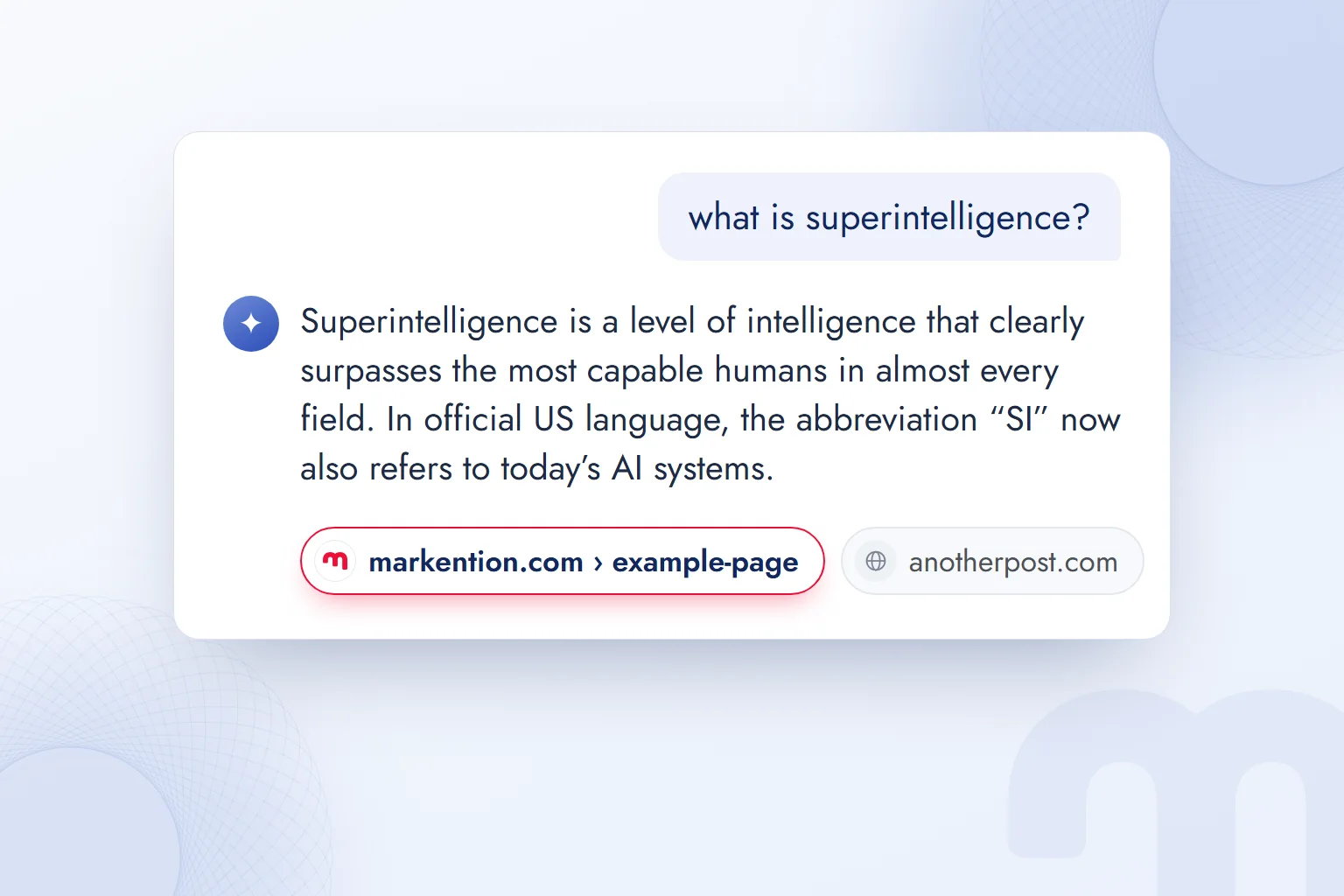
Superintelligence is a level of intelligence that clearly exceeds human intelligence in almost every domain, from scientific creativity to general reasoning and social skills; researchers agree it has not yet been reached. In academic literature this level is also referred to by the abbreviation .
The term recently gained a new layer of meaning. US President Donald Trump signed Executive Order 14434 on September 29, 2026, asking federal agencies to say “super intelligence (SI)” instead of “artificial intelligence (AI)” in official communication. Here we cover the term’s origin, how it differs from AI, the scope of the change and what it means for brand visibility in AI (superintelligence) answers.
Even as superintelligence replaces AI in official US language, search behaviour does not change overnight; pages use both terms together.
What is superintelligence, and where does the term come from?
Superintelligence describes an intelligence that outperforms the most capable humans in nearly every cognitive domain, not just one task. In philosopher Nick Bostrom’s 1998 paper “How long before superintelligence?”, superintelligence is an intellect much smarter than the best human brains in practically every field.
The idea is older. In 1965 statistician I. J. Good introduced the concept of an “ultraintelligent machine” able to design machines better than itself; Bostrom brought the idea to a wide audience with his 2014 book Superintelligence: Paths, Dangers, Strategies. In Turkey, Google autocomplete still pairs the Turkish term with Bostrom’s name, so readers there still link it to this book.
The term has spread across the industry too. Meta relaunched its AI team as “Meta Superintelligence Labs” in June 2025, Microsoft AI announced a “humanist superintelligence” approach, and OpenAI published principles on the governance of superintelligence. Each use describes a goal beyond today’s systems.
What is the difference between AI, AGI and superintelligence?
AI is a broad umbrella term; AGI describes general ability at human level, and superintelligence describes a level clearly above it. Google DeepMind’s Levels of AGI paper defines the top step as “artificial superintelligence”, which performs better than all humans.
| Term | What it describes | Current status |
|---|---|---|
| Artificial intelligence (AI) | The general name for software systems that learn, reason and process language and images | Widely used in search, advertising and chat tools |
| Artificial general intelligence (AGI) | Human-level flexibility across most cognitive tasks | Definition and threshold are disputed |
| Superintelligence (ASI / SI) | Intelligence that clearly surpasses the best humans in almost every field | Considered not yet reached in its academic sense |
The new US executive order does not change this table, only the federal government’s wording. The order’s definitions section defines “super intelligence” as the technologies already covered by “artificial intelligence” under US law. So official US “SI” describes today’s AI systems, while academic superintelligence still names a more advanced level.
“SI” instead of “AI”: when and how did the change happen?
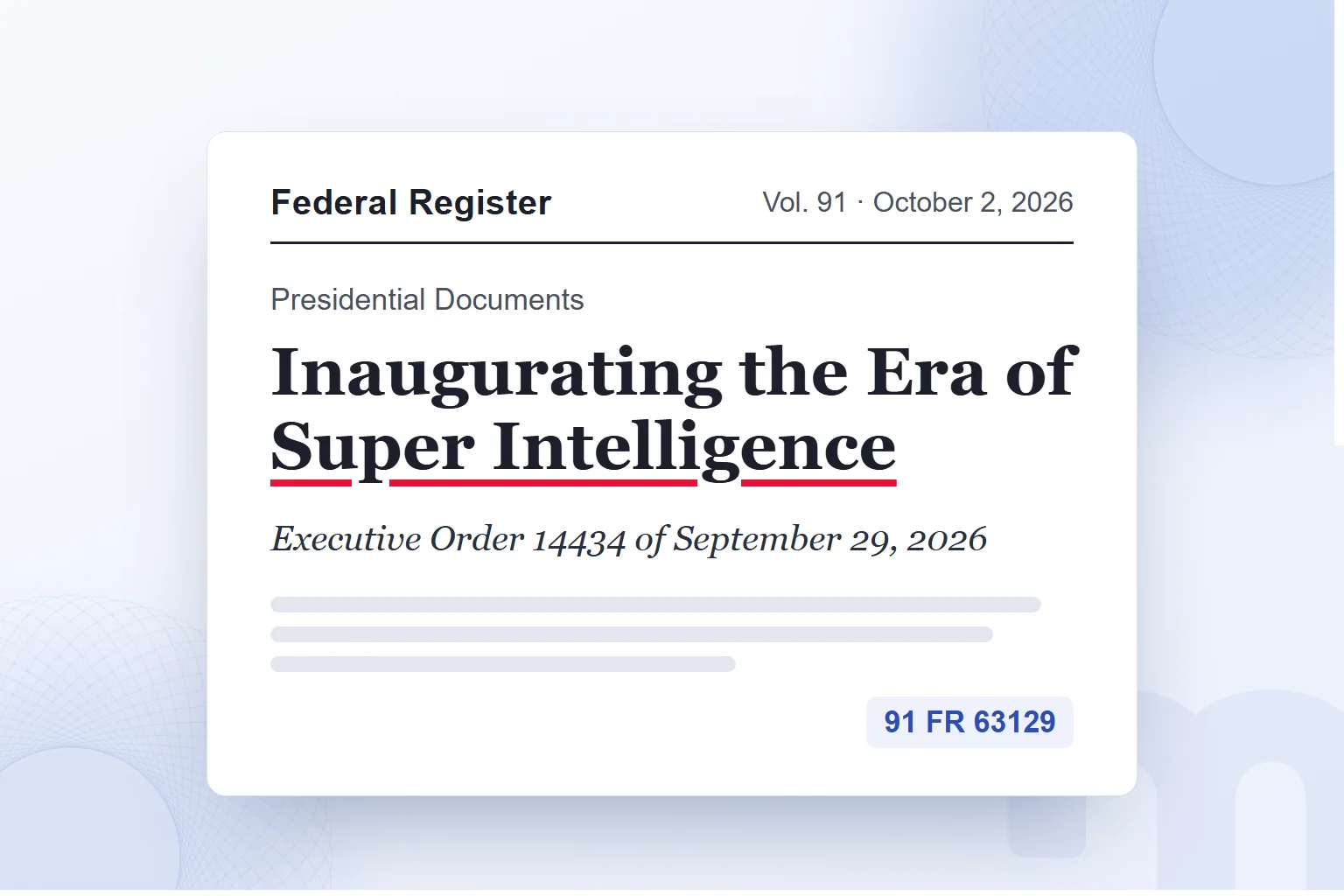
The change came in steps and became official with Executive Order 14434, signed on September 29, 2026 and published in the Federal Register on October 2. The order is titled “Inaugurating the Era of Super Intelligence”.
- July 23, 2025At the White House AI summit, Trump said he did not like the word “artificial” and that the name should change (C-SPAN recording).
- September 19–20, 2026A poll for an alternative name was shared on Truth Social and X; the options included “superior”, “extreme” and “supreme intelligence”.
- September 22, 2026In his speech to the UN General Assembly, Trump said the adjective “artificial” makes the technology look fake; the same week, a terminology memo titled “From AI to SI” circulated at the State Department.
- September 29, 2026Executive Order 14434 was signed at a White House event with executives of technology and AI companies.
- October 2, 2026The order was published in the Federal Register as 91 FR 63129.
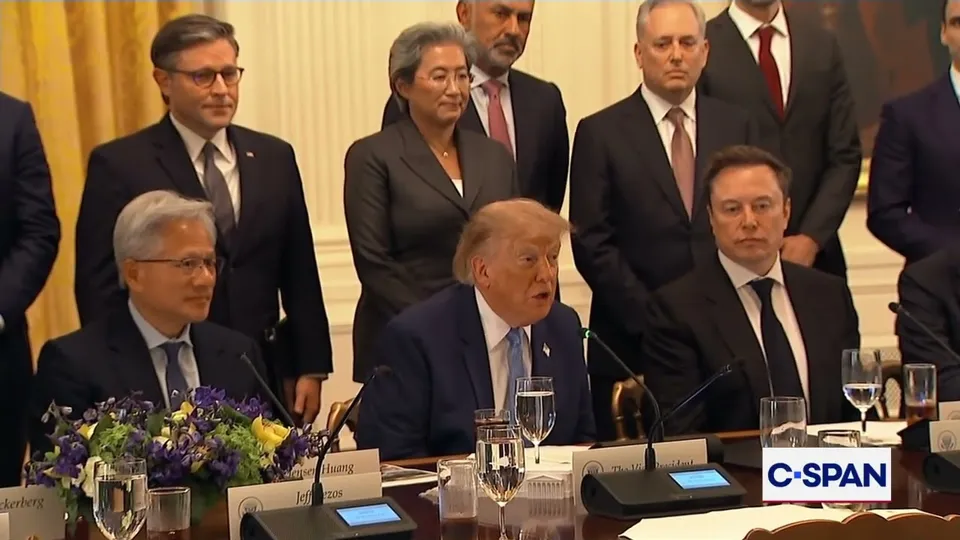
C-SPAN recorded the White House signing event. The video below shows the meeting with the executives and the moment the new term was announced.
What does the executive order cover, and what does it not?
The order covers only the language of US federal executive correspondence, announcements, websites, reports and policy documents; it places no obligation on private companies or other countries. According to the full text on the White House website, previously issued regulations do not need to be amended either.
Reading the text’s limits, we separate three points:
- Legal definition → Unchanged for now. Within 60 days, the science and technology adviser will propose legislative language for a new federal definition; the words “artificial intelligence” in statute can change only by an act of Congress.
- Official communication → Federal agencies use “SI” instead of “AI” and, to the extent the law allows, do not recognise the word “AI”.
- Companies and users → No requirement; adopting the term is optional.
Our observation: in Turkey, neither public institutions nor the Turkish Language Association (TDK) have changed the term. In Turkish search and content, the word for AI remains the main term, with the word for superintelligence quickly becoming the second.
Has the industry adopted the term “superintelligence”?
The industry is divided: some companies already used the term, while most major model developers kept their product language. According to the San Francisco Standard’s report, the OpenAI, Anthropic and Google executives at the event kept saying “AI” in their remarks.
| Party | Position | Source |
|---|---|---|
| Meta | Has used the term in its team name since June 2025 | San Francisco Standard |
| Nvidia | Jensen Huang calls data centres “superintelligence factories” | PolitiFact |
| SpaceXAI | Elon Musk wrote on October 4 that the company name would become SpaceXSI | Forbes, Tesla North |
| California | State agencies will keep saying “artificial intelligence” and “AI” | Governor Newsom’s September 30 executive order |
| OpenAI, Google, Anthropic | No change to model or product names | PolitiFact |
Researchers object to the meaning. According to views in PolitiFact’s roundup, superintelligence is already a defined concept, and calling today’s systems by that name can blur two meanings. We spell this out in our content: official US “SI” and academic “superintelligence” are not the same thing.
What does superintelligence mean for brands and marketing?
For brands, the real question is which term users and AI answer engines search with; today it is “both”. An executive order does not change search habits overnight, but news, reports and official documents quickly make the new term visible.
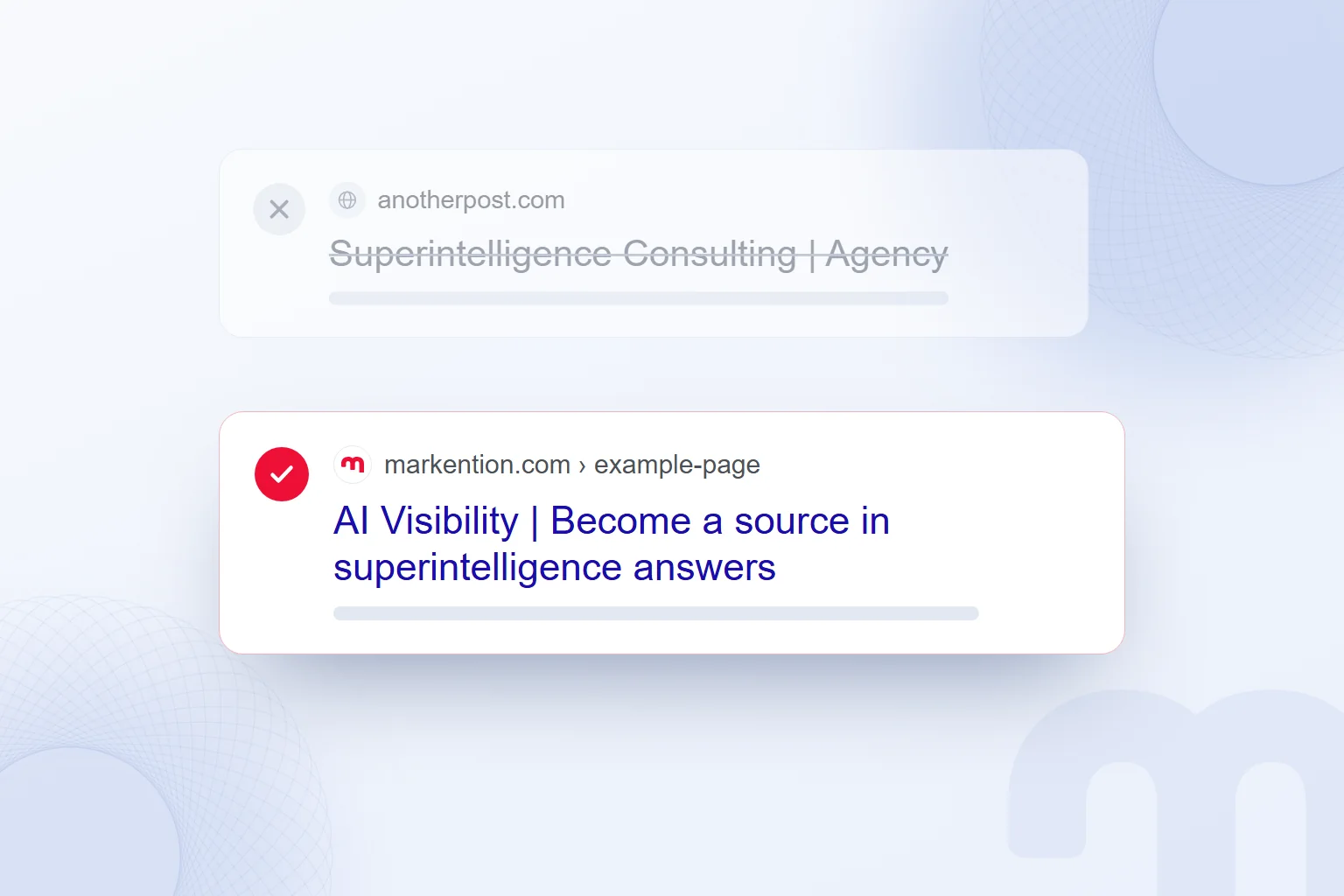
This is where becomes decisive. When ChatGPT, Gemini or Copilot answers a question, it weighs synonymous expressions together; a page using only one term may be cited less often for questions asked with the other. That is why we rebuild the term map in GEO work.
| Situation | What we do |
|---|---|
| Page title and meta description focused on “AI” | We keep the main keyword and add “superintelligence” to the body and subheadings |
| English content for the US market | We use “AI” and “superintelligence” together and define the official “SI” usage |
| Public tenders or correspondence with US agencies | We follow the agency’s own term, “SI”, in the document |
| Glossary and FAQ pages | We answer questions like “what is superintelligence” and “superintelligence vs AI” separately |
Measurement needs a split too. In Search Console we filter queries containing “superintelligence” separately, and in AI answers we ask the same question with both terms and compare sources. In Google AI Overview consulting and ChatGPT Ads consulting projects, this two-term question set is becoming our standard.
How is markention approaching this change?
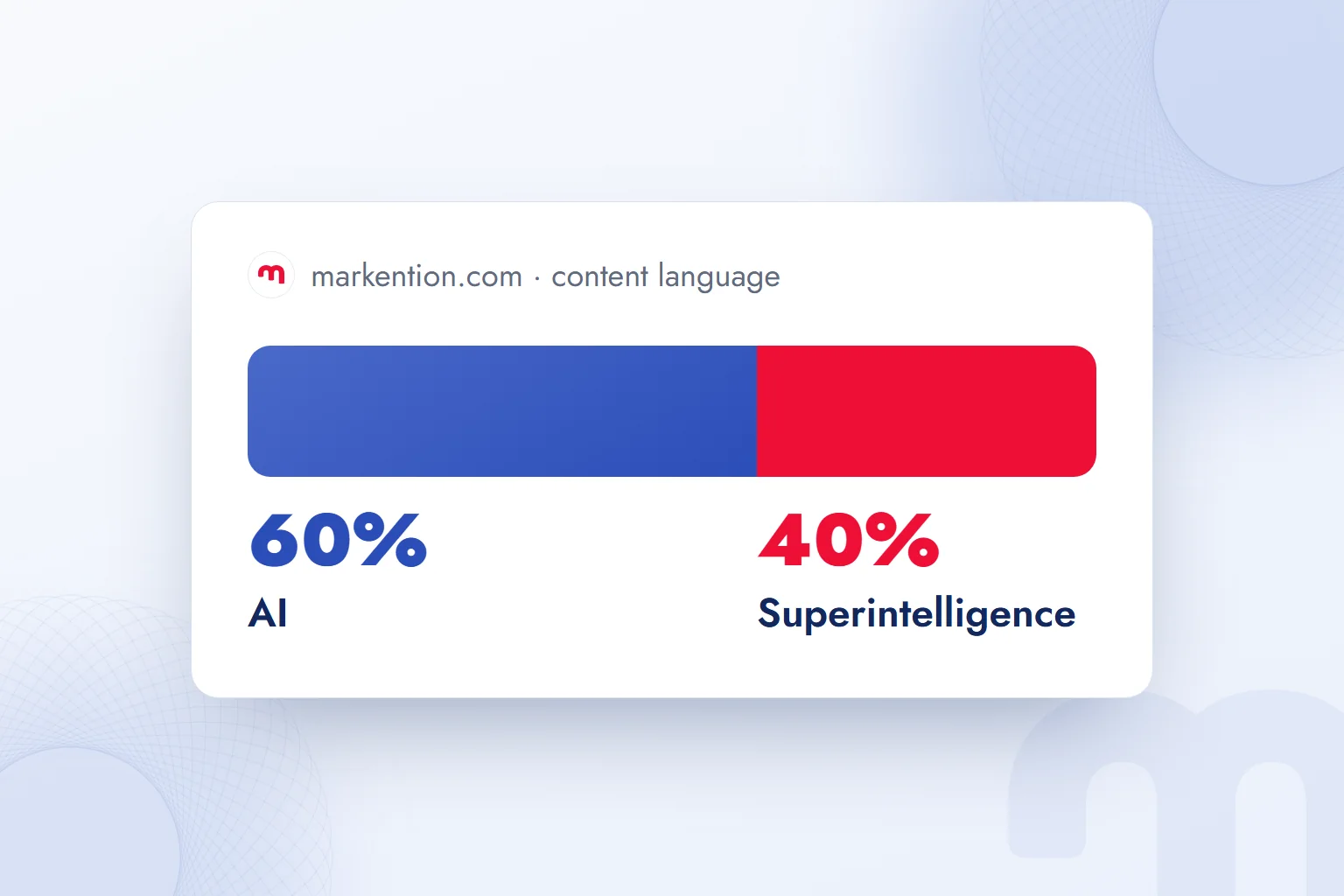
We are not deleting AI; we are placing superintelligence next to it. In the texts on our Turkish site, we use both terms together so that roughly two in every five mentions say “superintelligence” and three say “AI”. Titles and meta descriptions keep the higher-volume Turkish term for “AI”.
The same applies to files for AI agents. Our llms.txt now has a short note on using both terms and on the order’s scope; in our AI access control work we recommend the same note to our clients. On our English pages, “AI” and “superintelligence” appear together.
On client sites we first count where each term appears, then add the synonyms to service and guide pages in natural sentences, and finally measure answer-engine visibility with the two-term question set. We track weekly how the term settles in our GEO consulting work and share the changes through our AI articles.
Frequently asked questions
What is superintelligence?
Superintelligence is a level of intelligence that clearly surpasses the most capable humans in almost every cognitive domain. Academically, it is considered not yet reached.
Are superintelligence and AI the same thing?
Not academically; AI is the umbrella term and superintelligence the top level. The US Executive Order 14434, however, calls today’s AI systems “super intelligence (SI)” in official communication.
What does SI mean?
SI is the abbreviation of “super intelligence”. Since the September 29, 2026 executive order, US federal agencies use “SI” instead of “AI” in official texts.
Is it “superintelligence” or “super intelligence”?
Academic literature, including Bostrom’s book, writes it as one word. The US executive order writes “Super Intelligence” as two words and abbreviates it as SI.
Does the executive order affect companies outside the US?
No; the order regulates only the language of the US federal executive branch. Term choice still matters for brands working with US agencies or that market.
Should my site say “superintelligence” instead of “AI”?
We recommend using both terms rather than replacing one. “AI” stays in titles and meta descriptions, while “superintelligence” is added to the body and subheadings.

 What is Gemini? How to use it, the free plan, Gemini Omni and ChatGPTRead article
 What is Google AI Studio? Free use, API keys and your first projectRead article
 What is ChatGPT and how do you use it? Free version, plans, safetyRead article
 What can you do with ChatGPT? Free plan marketing examplesRead article
 What is MCP? Connecting AI to your data with Model Context ProtocolRead article
 What is vibe coding? First prototypes, tools and limits for marketersRead article
 What is NotebookLM? Now Gemini Notebook, used with brand documentsRead article
 AI photo editing: remove backgrounds, sharpen and expand photosRead article
Questions & answers
0 commentsNo questions yet; you can ask the first one.