





 Cihat Murat Yüksel
16 min read
Contents 16 sections
Key takeaways
- Marketing is a set of activities that aims to grow the sales of a product or service.
- The 7Ps add people, process and physical evidence to the 4Ps for services marketing.
- Unlike marketing, a sale is the transaction in which goods pass to a buyer for payment.
- Revenue and ROAS are tracked for a sales goal, while reach and impressions measure awareness.
Marketing is the set of activities that covers market research, product and pricing decisions, distribution and to grow the sales of a product or service, run through planning, execution and measurement.
At markention, we start marketing work with market and customer knowledge. We define who we serve, what we offer and which result we want. We make product, price, distribution and communication decisions together and judge the outcome against metrics chosen at the start.
Marketing decisions are made with market and customer data; every piece of work is judged against a metric chosen in advance.
What is marketing?
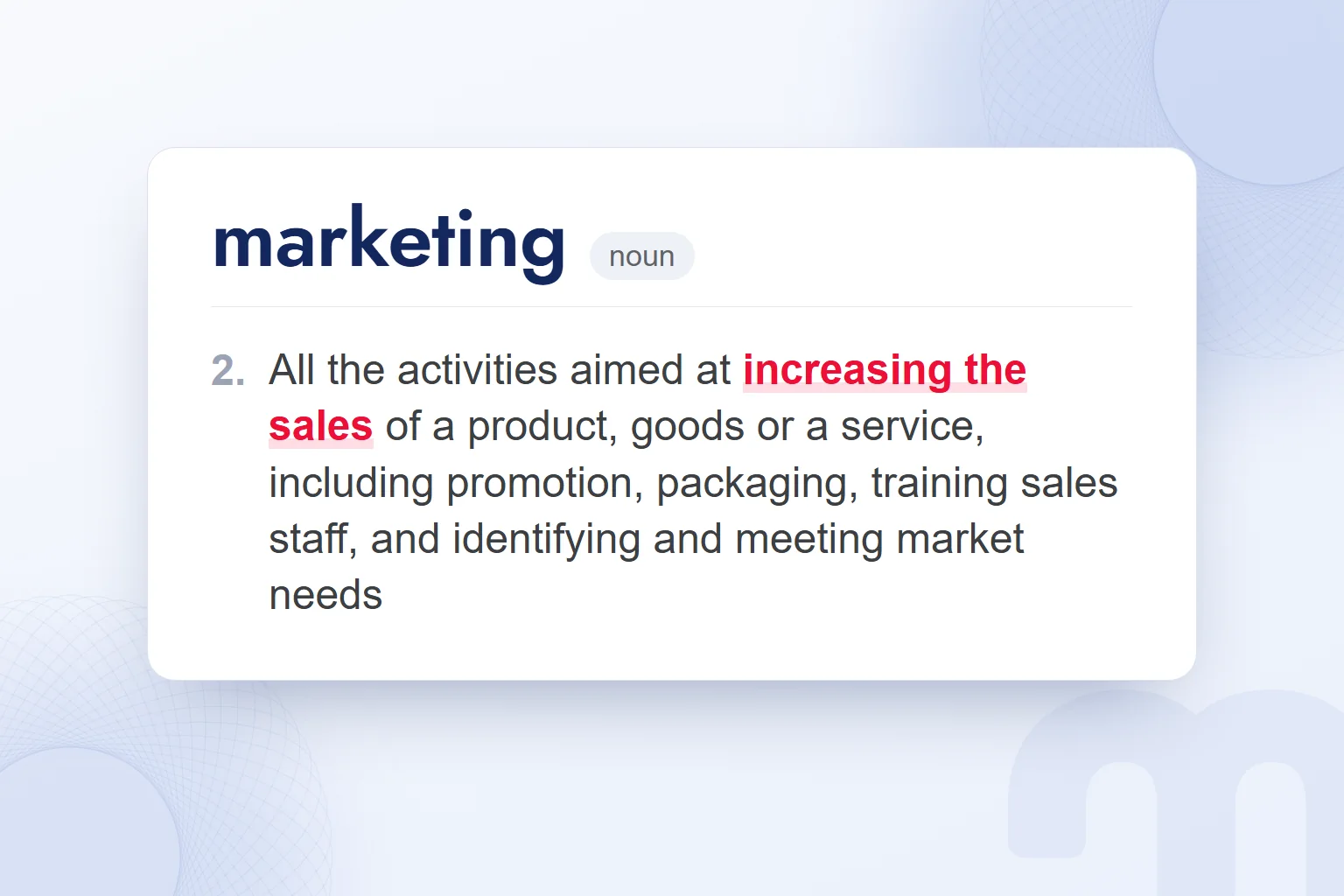
The Turkish Language Association (TDK) dictionary gives marketing two senses: “the act of marketing” and the set of activities aimed at increasing the sales of a product, goods or a service. The second sense covers promotion, packaging, training sales staff, and identifying and meeting market needs. Its “export marketing” entry means selling products abroad.
In the “Fair Marketing and Sales” module of Turkey’s Ministry of National Education (MEB), marketing is the process of developing, pricing, promoting and distributing goods, services and ideas to carry out exchanges that meet personal and organizational goals. Development, pricing, promotion and distribution are parts of one process here. In planning, we arrange the work from research to distribution around one goal and link each decision to the others.
What is marketing in simple terms?
Marketing is understanding a customer’s need and planning product, price, distribution and communication decisions together to offer value that meets it.
The American Marketing Association (AMA) defines it this way:
“Marketing is the activity, set of institutions, and processes for creating, communicating, delivering, and exchanging offerings that have value for customers, clients, partners, and society at large.”
In practice, our starting point is “Which value are we offering, and to whom?” Before writing copy for a service, its scope, the customer’s need, the payment terms and the way to access it must be clear. A promise made in communication needs a match in product and service decisions, so promotion says the same thing as the value the business delivers.
What does marketing do?
Marketing researches the market and the customer, builds the strategy, runs communication and measures results. At markention, we group this work into four areas: research, strategy, communication and measurement. We derived the grouping from the tasks the ILO lists for advertising and marketing professionals in group 2431, and we complete measurement with the performance-monitoring function in the AMA’s definition of marketing research.
In research, we collect and analyze data on consumer habits and preferences, interpret and forecast consumer trends, and research likely demand for new goods and services to identify market opportunities.
In strategy, we plan and organize advertising policies and campaigns that support sales goals, prepare and run marketing objectives and programs, and advise on the product mix, pricing and distribution channels.
In communication, we write ad copy and media scripts and arrange media placement. In measurement, we monitor performance and use what we learn to evaluate actions, relying on the function the AMA’s definition gives marketing research: linking the consumer, the customer and the public to the marketer through information.
These areas are linked: a need found in research sets the audience and the topic, and a measurement result shows what to ask next in research. Writing down each output lets the team trace which decision rested on which information.
In a representative service plan where customers keep asking about scope, the questions go into the research note, the prioritized need into the strategy and explanatory content into the communication plan; measurement tracks visits or quote requests. Finding, execution and result stay apart in the report.
What does a marketer do, and what are their tasks?
A marketer, in the TDK definition, is “a person who works in marketing, a marketing specialist.” To explain the tasks, we use the International Labour Organization’s (ILO) split between advertising and marketing professionals and sales and marketing managers.
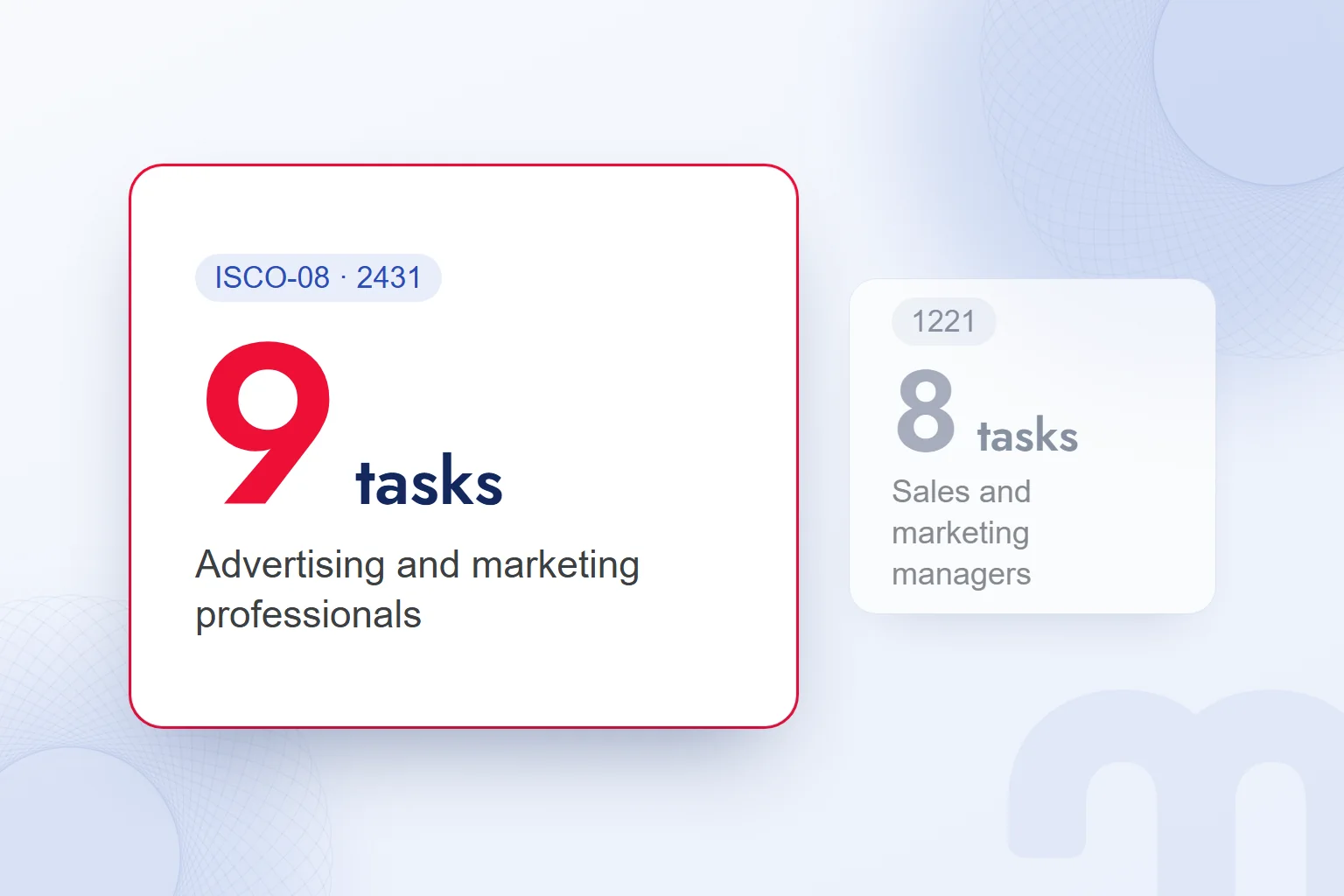
Advertising and marketing professionals in ISCO-08 group 2431 develop and coordinate advertising strategies and campaigns, identify markets for new goods and services, and identify and develop market opportunities for new and existing ones. Example occupations are advertising specialist, marketing specialist and market research analyst.
ISCO-08 group 1221 covers sales and marketing managers. Selected tasks include planning and organizing programs based on sales records and market assessments, and setting price lists, discount and delivery terms, and sales promotion budgets.
Managers direct sales and marketing staff, set up and manage budgets, control spending and represent the business at trade fairs. In this group’s description, marketing management is the responsibility for planning, directing and coordinating sales and marketing activities.
Their tasks also include setting operational and administrative procedures, planning daily work, and overseeing staff selection, training and performance. So when we write the division of tasks in a marketing department, we list preparing the campaign and managing resources and people as separate responsibilities.
What can you do with a marketing degree?
For a marketing graduate in Turkey, as elsewhere, the work is best explained through the responsibilities of the role: market research, campaign preparation, communication and management. The ISCO examples of marketing specialist, advertising specialist and market research analyst offer a frame. The classification describes occupational tasks; it does not say which job a particular diploma leads to.
When we assess a job description, we look at the expected output alongside the title. Analyzing consumer preferences is research, writing ad copy is communication, and managing budget and staff is management. Keeping this split when answering “what does a marketing specialist do?” shows the content of the work, not just a list of titles.
What are the types of marketing?
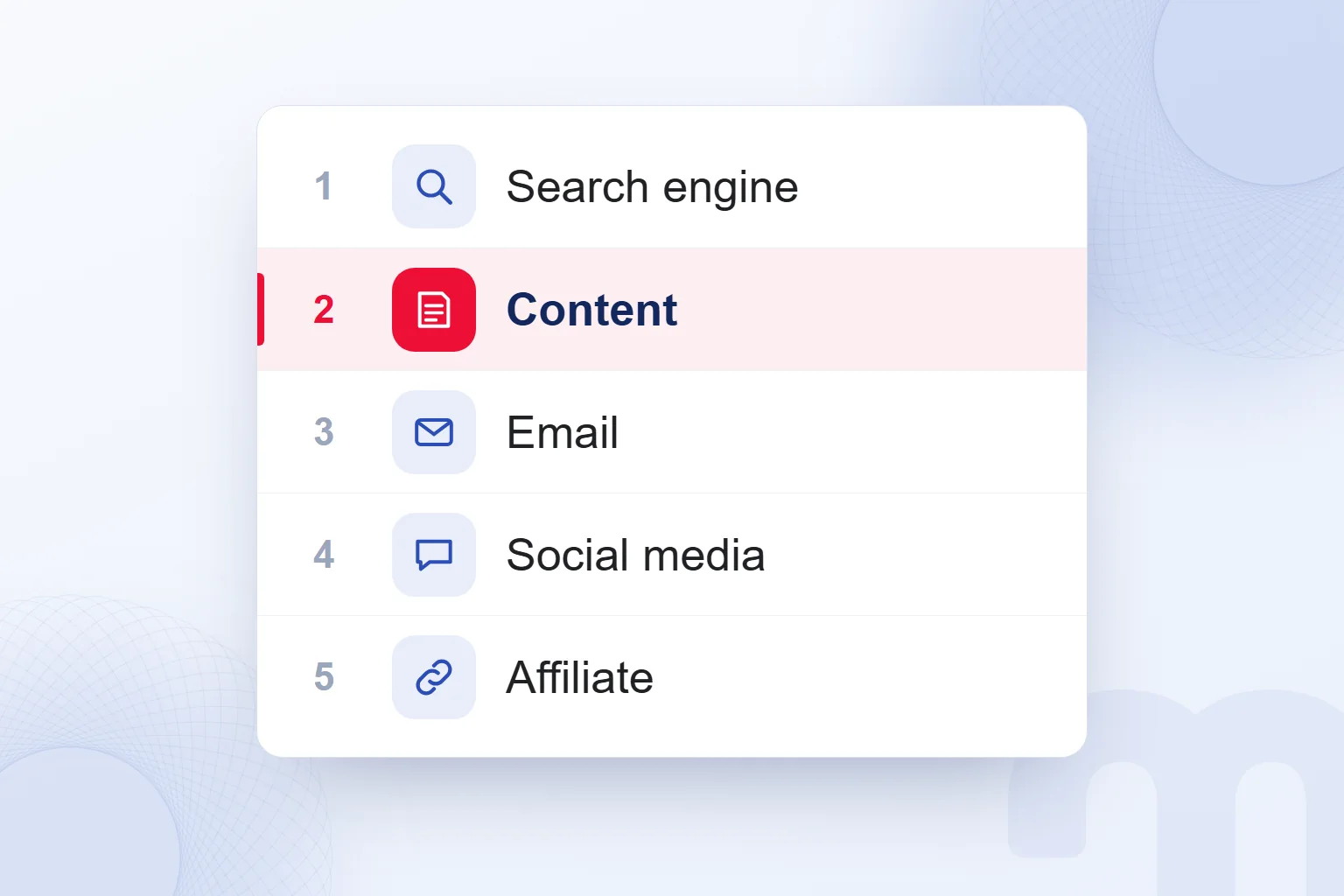
Types of marketing include search engine, content, email, social media, affiliate, direct and guerrilla marketing; digital marketing covers work run on digital channels. We separate types in our plan by method. The example tasks below make the methods concrete; they do not describe a real campaign or result.
| Type | What it does | Example task |
|---|---|---|
| Search engine | Answers a need that arrives through search | Preparing a page for a service question |
| Content | Meets an information need with useful explanations | Writing a product selection guide |
| Delivers the message by email | Preparing a newsletter on the service scope | |
| Social media | Communicates through content and engagement | Answering a frequent question in a post |
| Affiliate | Sets up promotion and referrals with partners | Planning referral content |
| Direct | Reaches a defined buyer directly | Presenting a service offer to the relevant person |
| Guerrilla | Draws attention through an unusual tactic | Developing a site-specific promotion idea |
One plan uses several methods: a guide on choosing the service is content work, while sharing it by email or on social media is a channel decision. We keep the two separate.
We cover the referral model in What is affiliate marketing. When planning communication with content creators, we draw on What is an influencer for the role. When a partnership idea enters the plan, who will be reached, what will be said and how the result will be judged are written down first.
To tie the type to the goal, we find the missing piece: explanatory content if the scope is unclear, direct communication if the offer must reach a specific person. These are our planning preferences, not a claim that any type suits every business.
What is digital marketing?
Digital marketing is marketing work planned, run and measured to present products and services to a target audience on digital channels. Search engine, content, email and social media work can be planned together here. For each channel, we write the audience, the content and the result to track separately.
Product, price and access decisions stay in the same plan as the channels. Bringing visits is communication; whether the visitor understands the service and can request a quote is a separate question. Our digital marketing posts move from this frame to detailed channel work.
What is the marketing mix (4Ps)?
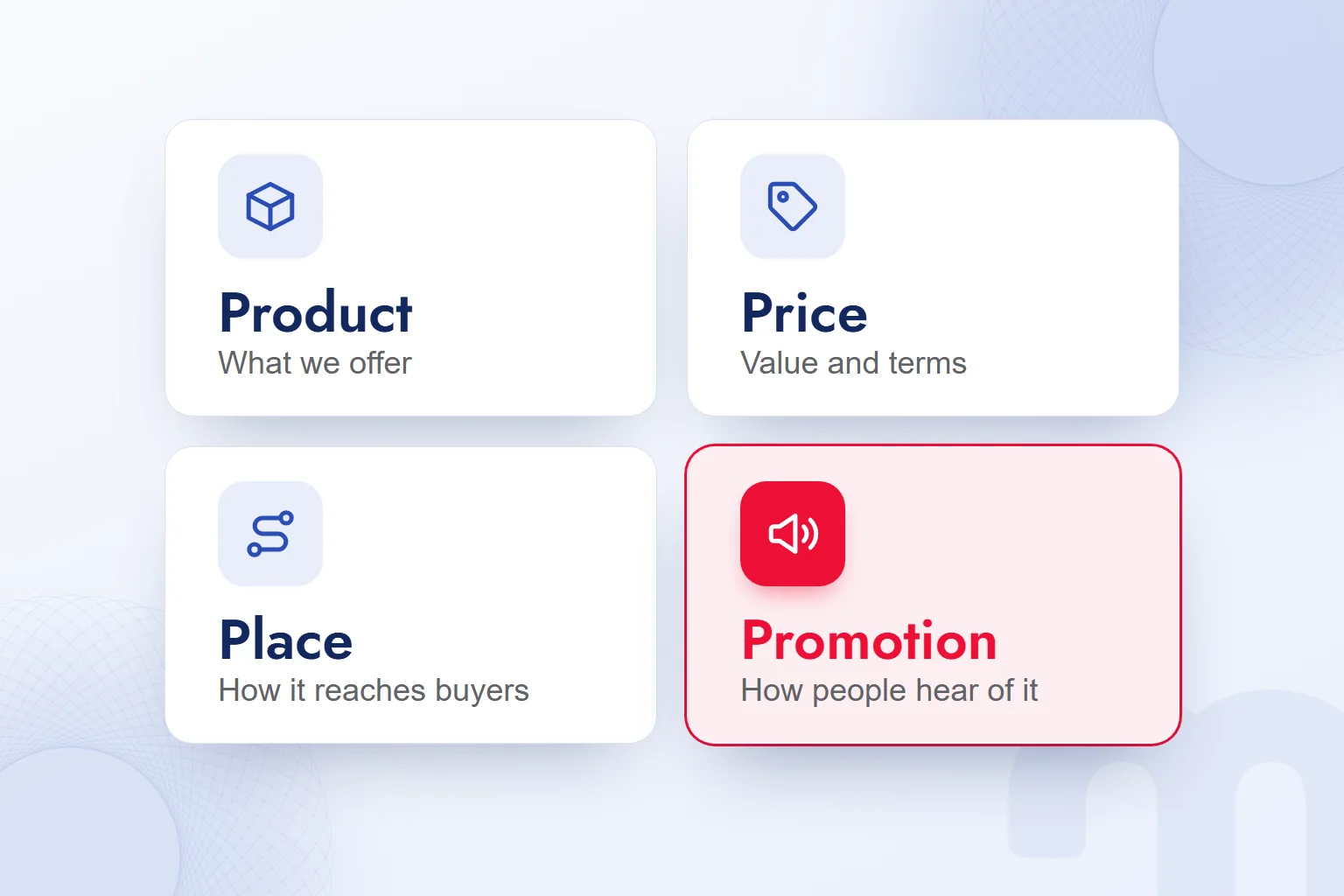
The marketing mix, in MEB’s definition, is the set of controllable marketing variables a business combines to get the response it wants from its target market. Its four elements are product, price, place (distribution) and promotion. MEB defines promotion as the communication link of the mix.
| Element | What it covers | The marketer’s question |
|---|---|---|
| Product | Goods, services and ideas offered to the market, including packaging and the business’s reputation | What are we offering? |
| Price | The value set for the product, including payment terms and credit | At what value, on what terms? |
| Place | Everything from the producer until the product reaches the consumer | How does it reach the customer? |
| Promotion | Advertising, personal selling, sales promotion, publicity and public relations | Where does the audience hear about us? |
The advisory areas at the end of the ILO’s 2431 task list (product mix, pricing, advertising and sales promotion, sales and distribution channels) overlap with these four elements.
When assessing a problem, we look at which element drives the decision. A finding about awareness goes to promotion; a finding about access to the product goes to place.
Each diagnosis sits next to the record behind it: which customer information “the product is unknown” rests on, where access breaks down, which condition a price objection concerns. If customers cannot find where the service is offered, we review the place information before raising the communication budget. Under price, we read cost and payment terms together and record the objection in the customer’s own words. The next review then shows which decision answered which problem.
Each situation has its own answer:
- The product is good but unknown → we strengthen promotion and choose channels where the target audience will hear about it.
- There is interest, but the product does not reach the customer → we work on place, looking at the point of sale and delivery.
- There is interest, but price blocks the decision → we assess price and payment terms together.
What are the 7Ps of marketing?
The 7Ps are the marketing mix used in services marketing, formed by adding people, process and physical evidence to the 4Ps. When we use the 7Ps, we also review how the service is delivered under these headings.
- People: The people who deliver the service and talk to the customer. In a representative plan, we state who answers the request, who explains the scope and who does the work.
- Process: The steps from the customer’s request to completion: how the application is received, how the quote is prepared and how the work is delivered.
- Physical evidence: The tangible elements that make the service visible and assessable. The service setting, documents provided and work samples are representative areas to review.
In a local service business, if the copy explains how to book, the process must state how the booking is handled, what staff tell the customer must match the quote, and physical evidence names the work sample to show.
A task and an owner for each heading keep the 7Ps from being a list to memorize: “people” says who gives the customer which information, and “process” marks the start, next step and completion point.
What is the difference between the 4Ps and the 4Cs?
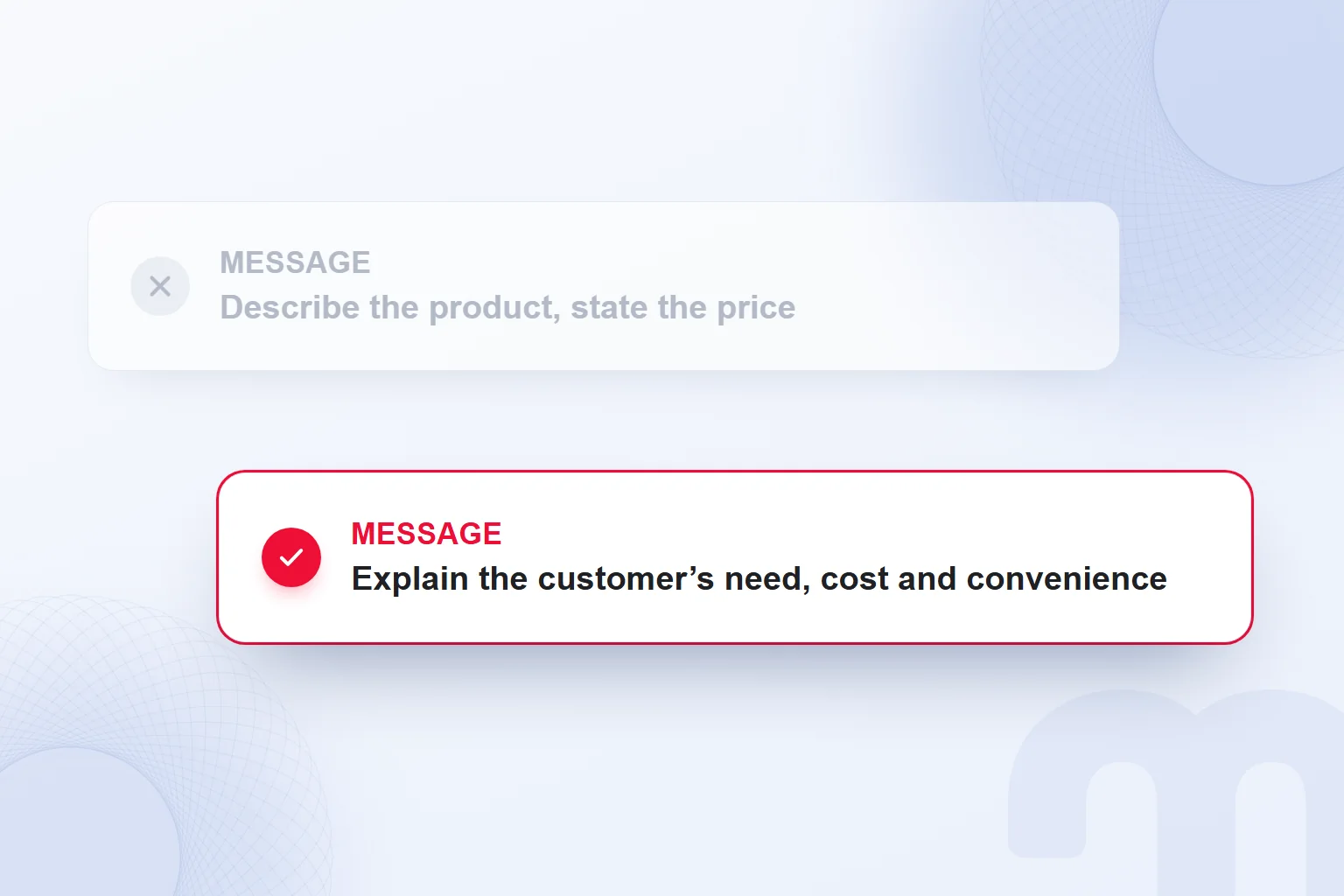
The 4Ps cover product, price, place and promotion decisions; the 4Cs cover their customer-side counterparts: value or need, cost, convenience and communication. Reading the same plan from both angles connects what the business offers with what the customer seeks.
- Product → customer value and need: Next to “What are we offering?”, we ask “Which customer need does it meet?”
- Price → cost: Along with the label price, we consider the total burden the customer takes on to get the service.
- Place → convenience: Besides the channel, we look at how the customer reaches the product or service.
- Promotion → communication: Along with the message, we plan how the customer sends questions and gets answers.
For a representative maintenance service, “We offer service by appointment” describes the business’s offer. Adding the customer’s view, we explain which need is met, what the fee covers, how to book and whom to ask. This completes the description with the details the customer needs to decide.
Time spent under cost and the application route under convenience are our own working questions. The aim is not a new promise per row but rereading the business’s real conditions from the customer’s view; an undecided delivery method is settled before it is called convenient.
What is the difference between marketing and sales?
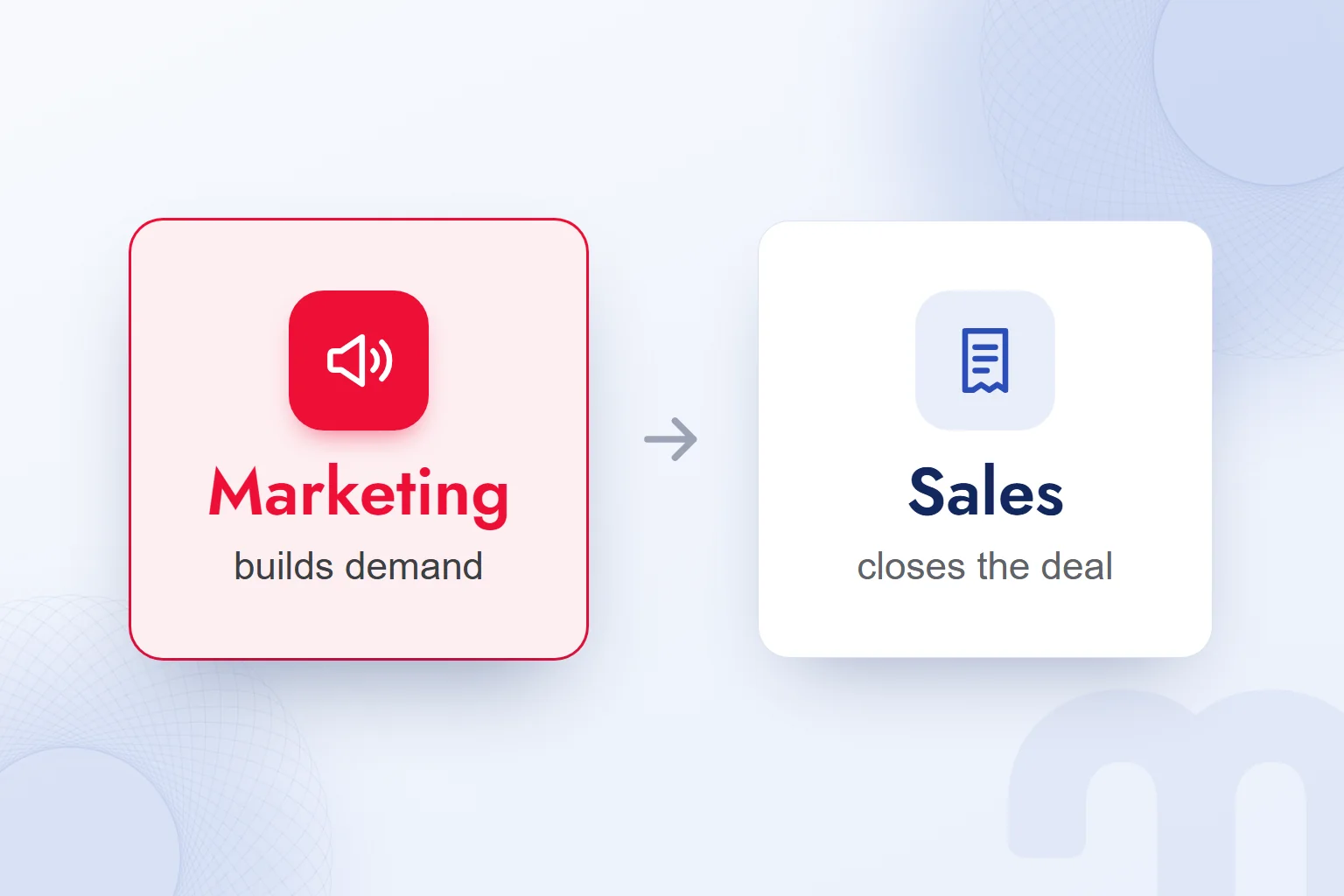
Marketing is the set of activities aimed at increasing sales, while a sale is the transaction in which goods go to a buyer in return for payment. The TDK definition of a sale describes this exchange; the definition of marketing also covers training sales staff.
With marketing, we prepare demand and preference; with sales, we complete the transaction. Both teams use the same customer information. We jointly assess what the customer is looking for, how they reach the product and what shapes their decision, and we review marketing decisions with information from the sales team.
In ISCO-08, sales and marketing managers sit in the same group. We build this link through joint planning and shared information. In the TDK dictionary, a customer is “a person who buys a service, goods and so on and pays for it.” So we track those who request a quote separately from those who buy.
In the report, a quote request is not a sale; a form filled in to learn the scope shows a request, and the sales review needs completed-transaction data. Questions sales hears from customers show which marketing explanations to revisit.
How do you build a marketing strategy?
We build a marketing strategy by setting the goal, researching the market, choosing the target audience and tying positioning to product, price, place and promotion decisions. The metric for judging the result goes into the same plan.
According to the MEB module, because businesses struggle to operate in the whole market at once, they define target markets and apply a marketing mix to them. In the TDK dictionary, a target audience is “the group or community the message is meant to reach.” We split the audience into groups with segmentation and decide which to prioritize.
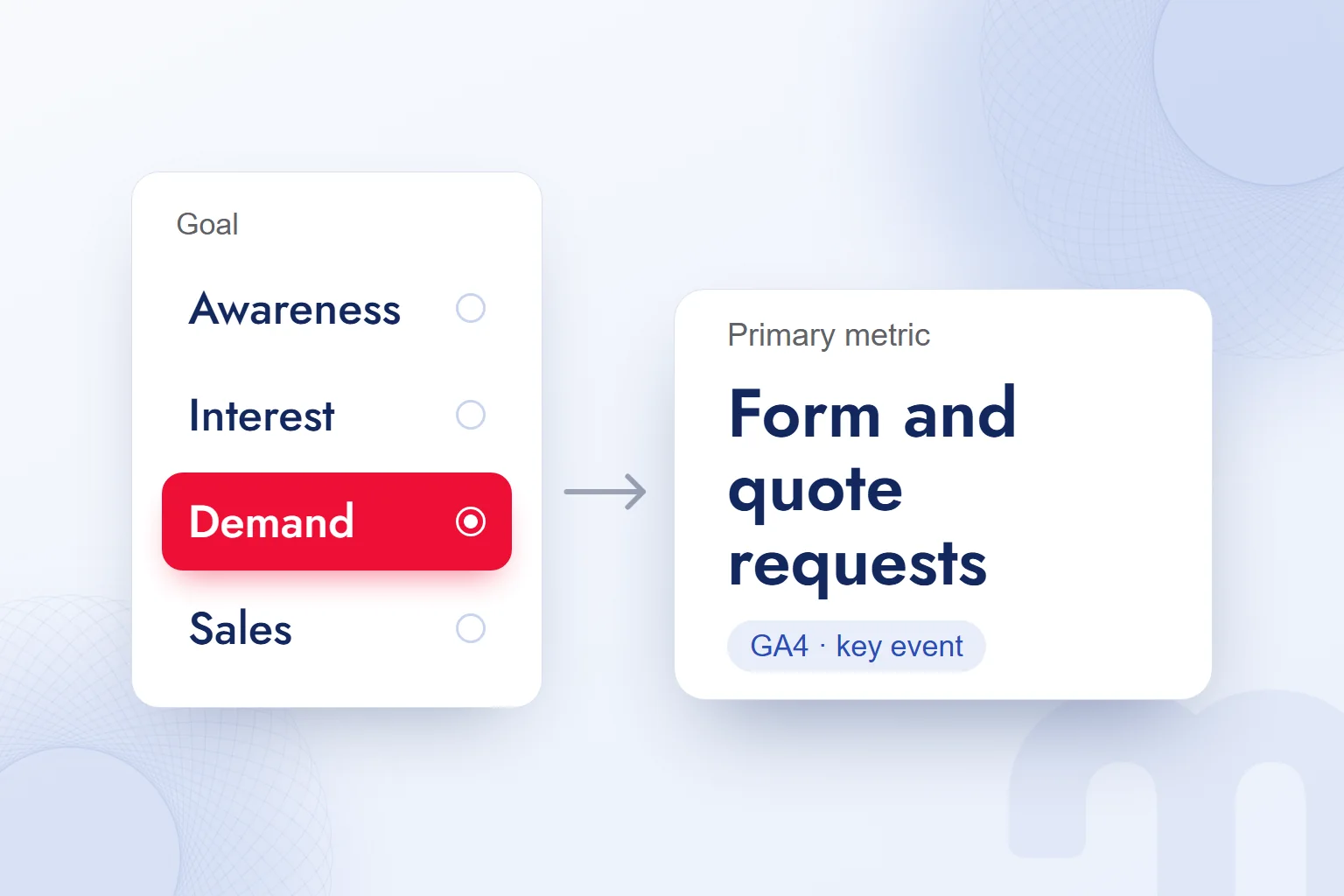
- We write the goalWe explain which result the work serves and set an awareness, interest, demand, sales or loyalty goal.
- We research the market and the customerWe study consumer habits, preferences and likely demand, and base the decision on market and customer data.
- We choose the target audienceWe assess the groups we researched and write down the group we want to reach and why.
- We set the positioningWe link the chosen group’s need to the value we offer and settle which product feature to put forward.
- We make the 4P decisionsWe plan product, price, payment terms, place and promotion together for the chosen audience.
- We set up the metric and the reportWe choose the primary metric tied to the goal and prepare a report that reads cost and result together before work starts.
Every decision stays tied to the need seen in research; when the audience changes, we reassess positioning and the mix.
A marketing strategy example
For a representative local bike repair business, we can build the strategy around content that explains repair needs in the service area and around getting quote requests from interested people. This scenario shows the method; it contains no real business’s customer records, prices or results.
First, we research which repair jobs the business offers, which area it serves and which questions come in. When we assess the current situation with a SWOT analysis, we use what we collected on service scope and operations, and note on the plan which decision each finding affects.
- Goal: Quote requests for the repair services offered. We set the numeric target in the real plan with existing records and service capacity.
- Audience: People in the service area who need bike repair and want to learn the service scope.
- Channel: A service page answering search questions, content explaining the repair scope, and social media posts announcing it.
- Metric: Service-related form and quote requests. Their quality is judged through sales conversations, and acquisition cost together with spend.
In the positioning, we state which service scope answers the chosen need. What the repair includes is product; fee and payment terms are price; where and how customers reach it is place; the content explaining the scope is promotion.
The content draft covers the scope first, then what the customer shares to request a quote. Who reviews a submitted form and how the quote is sent are written into the workflow, so the goal does not stop at publishing content.
We tie search and content work to this goal within our organic marketing service. Each topic in the content plan answers a known customer question. Requests from areas the business does not serve are assessed separately with the sales team; fit with the service matters as much as the total number of requests.
In the report review, if there are visits but no quote requests, we examine the page’s fit with the audience and the service description. If quotes come in but no jobs are won, we review the scope of incoming requests with the sales team. For the next decision, we compare which channels service-fit requests come from and which became completed jobs.
How do you measure a marketing team’s success?
We measure a marketing team’s success by tying one primary metric to each goal and judging the result together with its cost. For awareness, we track reach and impressions; for interest, clicks and qualified visits. For demand, we track form and quote requests as key events in GA4.
For a sales goal, we read revenue and ROAS together; for loyalty, we track repeat purchases. We never decide on one metric. We relate visit, request and sales data to their own goals and do not credit a rise in one to another.
We calculate channel by channel and judge each channel’s cost against the customers it brings. We set up measurement through our Google Analytics 4 setup service and track the key events tied to the goal in the report.
Frequent situations and our response:
| Situation | What we do |
|---|---|
| Visits rise, but requests do not | we check the target audience and the landing page. |
| There are requests, but they do not turn into sales | we assess request quality with the sales team. |
| Sales rise, but cost rises faster | we read acquisition cost and ROAS separately by channel. |
The measurement plan defines what is recorded per goal: which requests count for demand, which completed transactions count for sales. Comparisons keep the same definition and scope.
We write the finding, the interpretation and the decision in separate sentences. “Visits went up” does not show that demand went up; if requests do not move with it, we examine the audience and the landing page before crediting any channel or copy. The table then shows which task to revisit.
What are common marketing mistakes?
Common marketing mistakes are deciding without research, reducing the marketing mix to promotion, deciding on one metric, not sharing customer information, and launching a campaign without a chosen metric. We check for them in the preparation and review stages of the plan.
We revisit an unresearched decision with market and customer data. When the mix has been reduced to promotion, we also review product, price and place. For a single-metric decision, we return to the link between cost and result; unshared customer information is assessed together with sales. Before launch, we set the goal, the primary metric and the report.
To present results to a client, we use the case study format; network marketing is covered separately in What is network marketing. When a plan is finished, we check that the goal, the customer need, the marketing mix and the measurement decision describe the same work.
This term is part of our digital marketing glossary. You can reach the one-sentence definitions of the other terms there.
Frequently asked questions
What does marketing mean?
In the TDK dictionary, marketing means “the act of marketing” and the set of activities aimed at increasing the sales of a product, goods or a service.
What does a marketer do?
A marketer researches market and customer data and plans and runs advertising and marketing work. We judge this work against success metrics chosen in advance.
What is the marketing mix (4Ps)?
The marketing mix is the set of controllable marketing variables combined to get the desired response from a target market. Its four elements are product, price, place and promotion.
Are marketing and sales the same thing?
Marketing is the set of activities aimed at increasing sales; a sale is the transaction in which goods are handed over for payment. Marketing prepares demand; sales completes the transaction.
What does a marketing manager do?
A marketing manager plans, directs and coordinates sales and marketing activities. In the ILO classification, the role sits in the sales and marketing managers group.
How is marketing success measured?
We use a primary metric tied to the goal and judge cost together with the result. For demand, we track form and quote requests; for sales, revenue and ROAS.
What are the types of marketing?
They include search engine, content, email, social media, affiliate, direct and guerrilla marketing. Digital marketing covers work on digital channels.
What are the 7Ps of marketing?
The 7Ps are the services-marketing mix formed by adding people, process and physical evidence to the 4Ps. Product, price, place and promotion remain in it.

 What is a content creator? Meaning, creator accounts and brand dealsRead article
 What is a repost? How to repost on Instagram and TikTokRead article
 What is an influencer? Influencer marketing and ad disclosure rulesRead article
 What is a vlog? How to vlog, types of vlogs and a vlog plan for brandsRead article
 How to make a presentation: AI tools, PowerPoint and proposal decksRead articleMost read
 How to make money on Instagram: eligibility requirements and toolsRead article
 What is a slogan? How to write one, and how it differs from a taglineRead article
 What is Pantone? Color palettes, color codes and brand colorsRead article
Questions & answers
0 commentsNo questions yet; you can ask the first one.