





 Cihat Murat Yüksel
8 min read
What is a case study? How to write a client case study, with template
A case study is a detailed account of a client’s or project’s starting point, the work done and the result, backed by evidence. How to write one, a template and the rules.Pro
Contents 9 sections
Key takeaways
- A case study is an evidence-backed account of a client's or project's starting point, work and result.
- Article 9 of Turkey's Commercial Advertising Regulation obliges advertisers to prove their claims.
- Result measurement compares the chosen metric's values in starting and result periods of equal length.
- Every result figure in a case study should be given with its source and period.
A case study is a detailed account of a client’s or project’s starting point, the work done and the result, backed by evidence; in marketing it shows how a service delivers results and is often called a .
We treat the client’s initial problem, the work we took on and the measured change together. We put the source and period next to every result figure and note the other variables that changed in the same period. We quote the client in their own words and get written approval before publishing.
Every result figure is given with its source and period; the client’s view is used in their own words, genuine and current.
What is a case study?
A case study examines a specific person, group, project or situation in detail and presents the findings through one example. Cambridge Dictionary’s general definition describes the development of a person, group or thing, especially to show general principles.
Its American English definition stresses the detailed study of a process or situation over time; its business English definition highlights a person, group or thing used as an example of general principles. Depending on context, the emphasis falls on the study itself or on the example studied.
The term is also used in academic research and job interviews. Here we cover the client case study in marketing, built around the client’s starting conditions and the evidence behind the result.
What does case study mean, and is it a success story?
In marketing, a case study is an evidence-led account of one client’s situation, the work done and the measured result; it is related to a success story but not the same. “Customer case study” and “case analysis” are used for the same kind of document.
We use “success story” for shorter, narrative-led texts and “case study” for evidence-led reviews. This distinction is our own usage.
A success story foregrounds the change the client experienced. A case study shows the starting data, goal, implementation and result separately, keeping the client’s view apart from the measurement data. A positive testimonial never replaces the source of a result figure.
What is a case study used for in marketing?
In marketing, a case study gives readers evaluating a service evidence they can examine before buying. We explain which problem the service answers, under which conditions it was applied and how the result was measured, in enough detail for readers to compare their own needs.
We choose the reader through the buyer persona and describe the starting problem as clearly as that reader needs. The goal, the work and the result tie back to the same problem; detail that does not help the reader understand it stays out.
For B2B buying processes, we prepare case studies as part of our B2B digital marketing work. We keep the scope of the service visible: which change we assess, which tasks we took on and what else changed in the same period. These boundaries let readers judge our contribution.
We never use one client’s result as a promise to another; each result keeps its own period and starting conditions.
How do you write a case study?
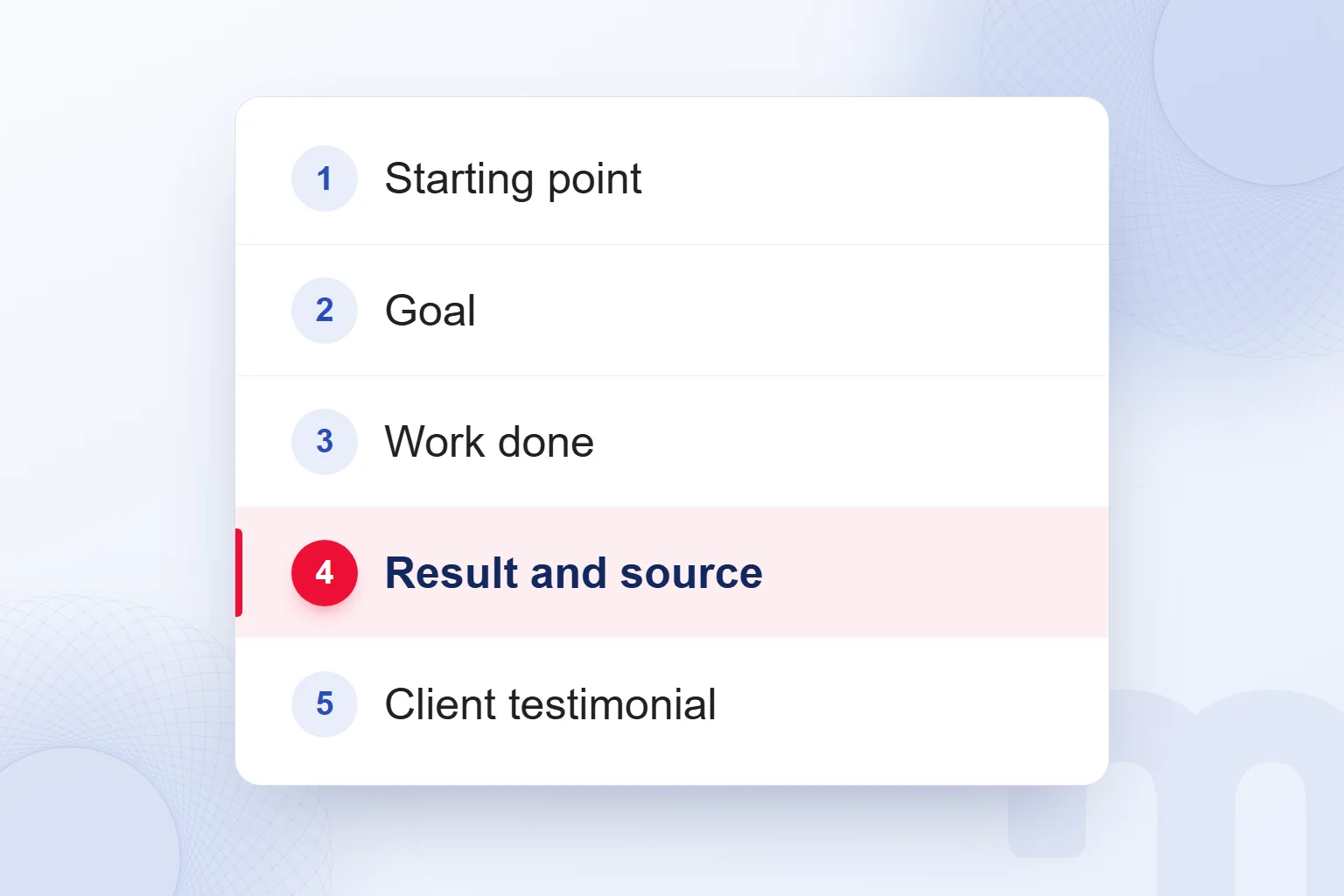
We write a case study by getting the client’s written approval, then telling the starting point, goal, work done, evidenced result and client view in order. In the first draft we sort which information belongs where, keeping the source with the result sentence and the order of work in the implementation.
- We get written approval from the clientWe prepare the case study with the client’s written approval and ask separately for explicit consent to use an employee’s name, photo or words.
- We describe the starting pointWe explain the client’s sector, problem and data before the work began, naming the tool that measured it.
- We set the goal and the metricWe write down the result to be reached and the metric we will use to assess it.
- We describe the work in orderWe explain the tasks and the working period so readers can follow the process from start to result.
- We give the result with its source and periodWe add the tool and period to every result figure, compare equal periods and name other variables.
- We add the client’s view in their own wordsWe quote the genuine, current assessment unchanged, in the client’s own telling.
We shape the language with a copywriting approach: each sentence explains the work done or the information that supports it. A goal is never written as an achieved result. The implementation section says what we did; the results section gives the change the measurement shows.
In the final read we separate the client’s view from our narrative: our own assessment is never presented as a client quote, and the client’s words are never strengthened.
What should a case study template include?
A case study template should include a summary, the client and starting point, the goal, the implementation, the result and the client’s view. We place supporting evidence next to each section and answer each section’s own question instead of repeating information: what was the problem, what was the goal, what was done and what changed?
| Section | What goes in | Evidence |
|---|---|---|
| Summary | The result in one sentence | Metric and period |
| Client and starting point | Sector, problem, starting data | Measurement tool |
| Goal | The result to be reached | Target metric |
| Implementation | The work done, in order | Date range |
| Result | The change and other variables | Source and period |
| Client view | The client’s own words | Written approval |
A representative example title: “Reorganising the application process at a service business”. Under this title, the starting section describes the problem, the implementation the changes made and the result the measured change. The title reports no client result; it only names the subject.
We write the summary from the evidence in the results section and explain any headline result in the body with its source and period. We never add a figure without a measurement or a ready-made praise line as the client’s view.
How do you measure results in a case study?
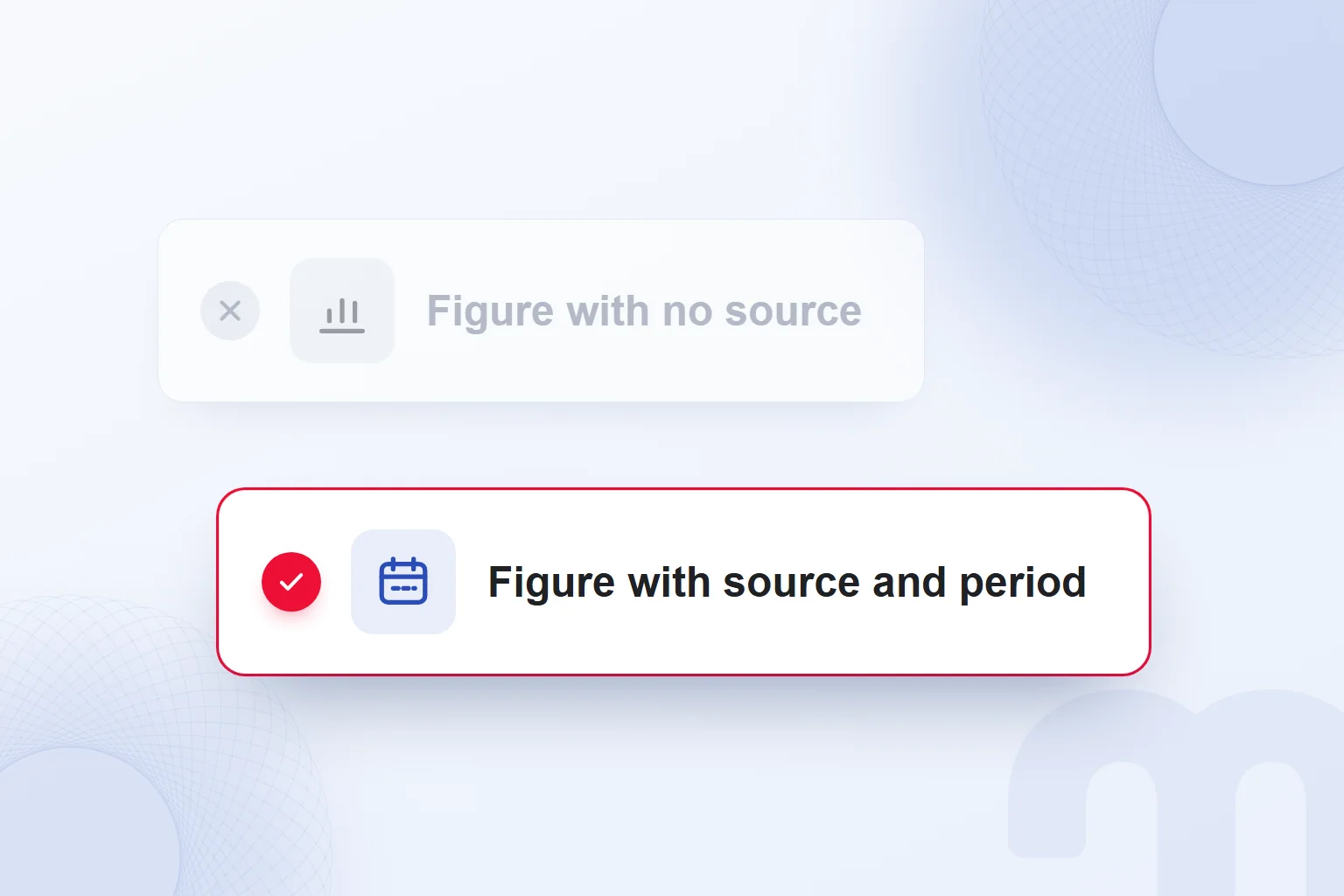
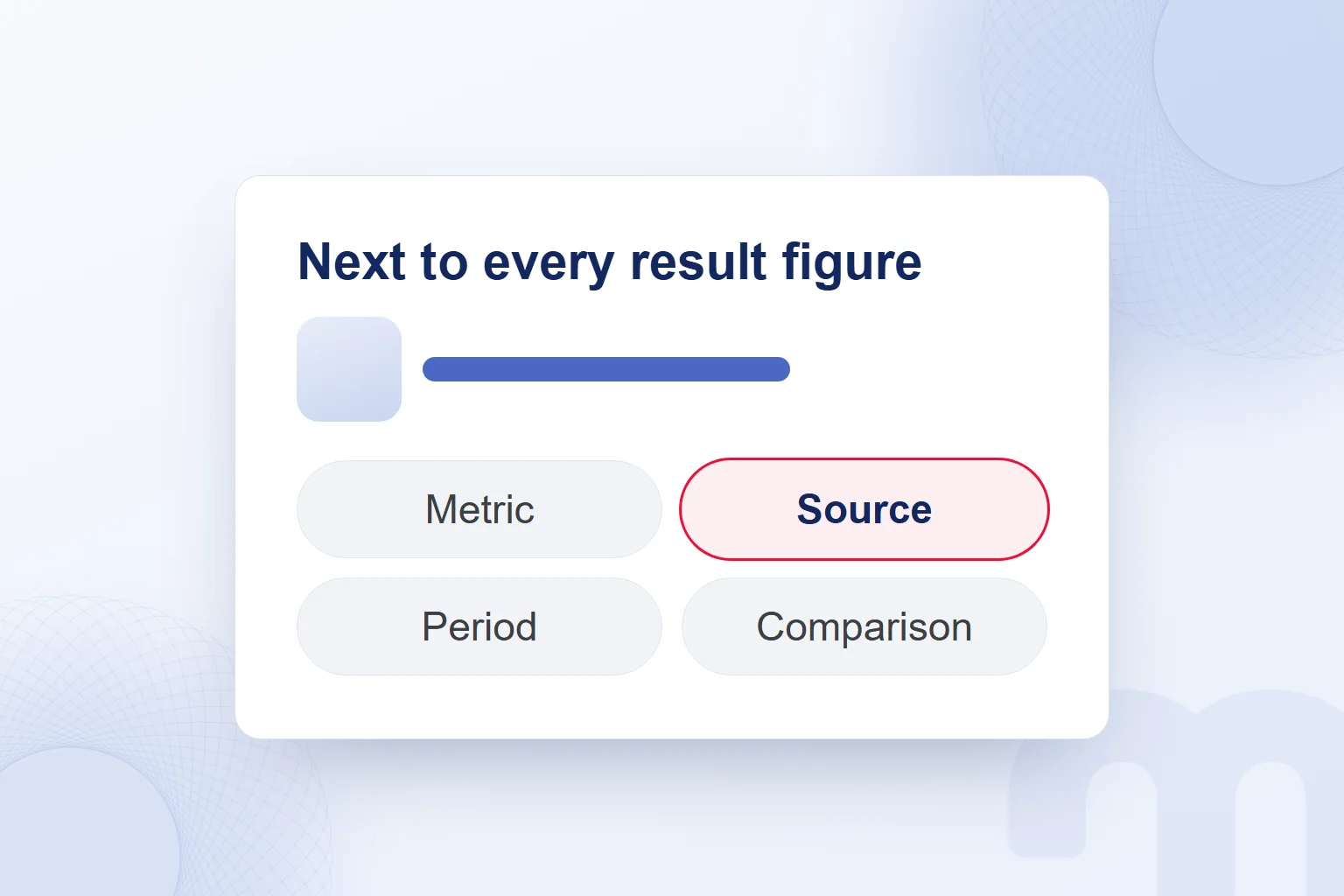
We measure results by comparing the chosen metric’s values in the starting and result periods over equal lengths of time, with the tool and period next to each figure. If the source is or Search Console, we name it plainly so readers do not have to guess.
The metric keeps the same meaning at start and end. We give the working period with the measurement period and add the other variables that contributed.
Which step comes next depends on the situation:
- We cannot tie the result to a single task → we list the other variables in the period and do not overstate our contribution.
- The compared periods fall in different seasons → we compare similar periods of equal length.
- The client does not want figures published → we describe the result as a ratio or qualitatively and remove the figure.
A ratio also needs the client’s written approval, along with its metric, source and period. In a qualitative account we give the client’s genuine assessment in their own words; an unmeasured change never becomes a numerical success.
Which rules apply to a case study?
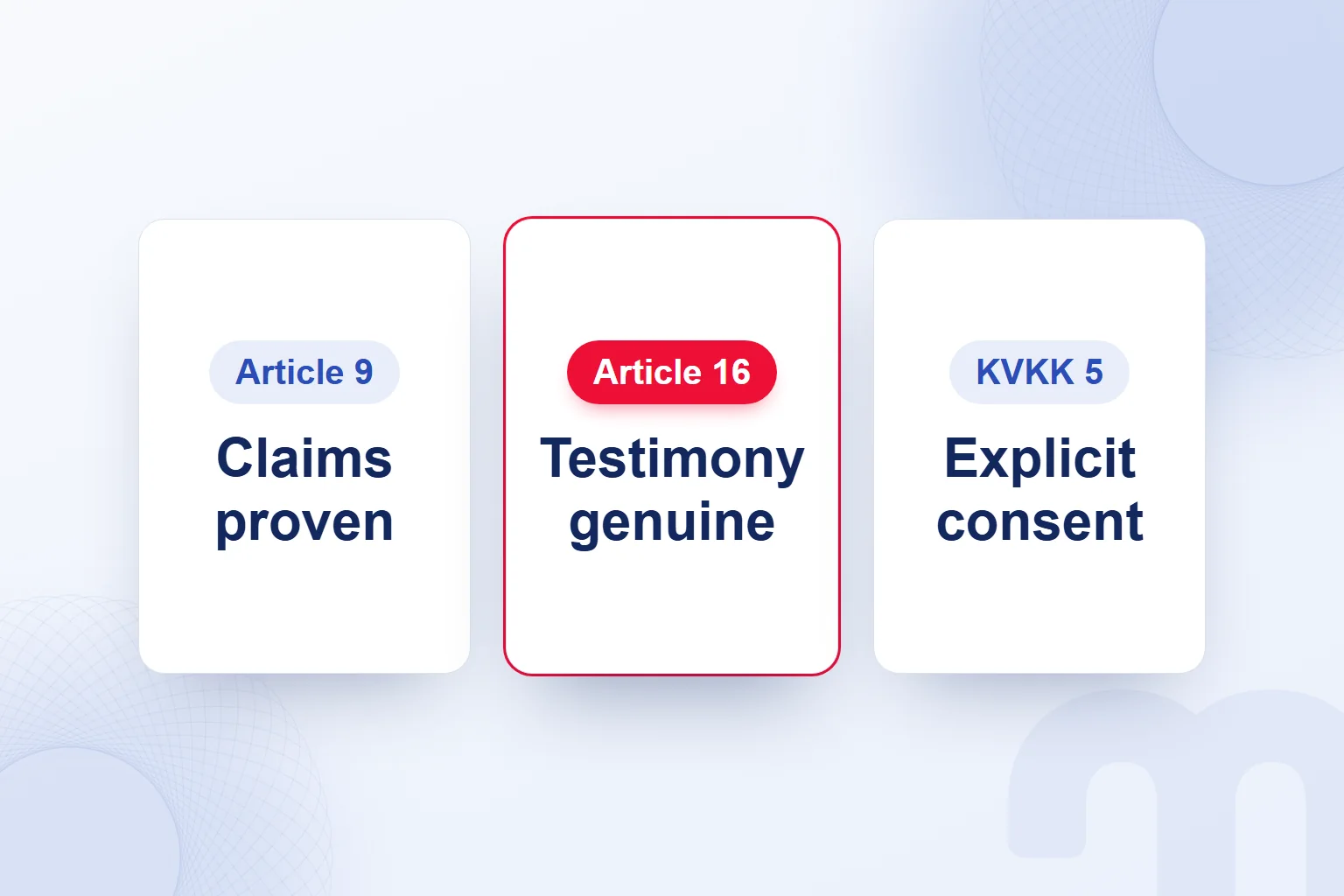
A case study follows the rules on proving advertising claims, the genuineness of testimonials and the processing of personal data. In Turkey, Article 9 of the Regulation on Commercial Advertising and Unfair Commercial Practices obliges advertisers to prove their claims. Descriptions, claims and illustrations about verifiable facts must be backed by scientifically valid information and documents.
Under Article 16, testimonials or endorsements that are not genuine and not based on the experience, knowledge or research of the person or organisation giving them cannot be used. Testimonials that have lost their validity or become inapplicable cannot be used either.
A provision added as the twelfth paragraph of Article 27 covers AI-generated digital copies of a real person. Advertising cannot use such a copy to falsely suggest that the person has experienced, used or recommends a product or service.
Under Article 3 of Turkey’s Personal Data Protection Law (KVKK), personal data is any information about an identified or identifiable natural person. Under Article 5(1), personal data cannot be processed without the person’s ; the exceptions in the second paragraph are reserved.
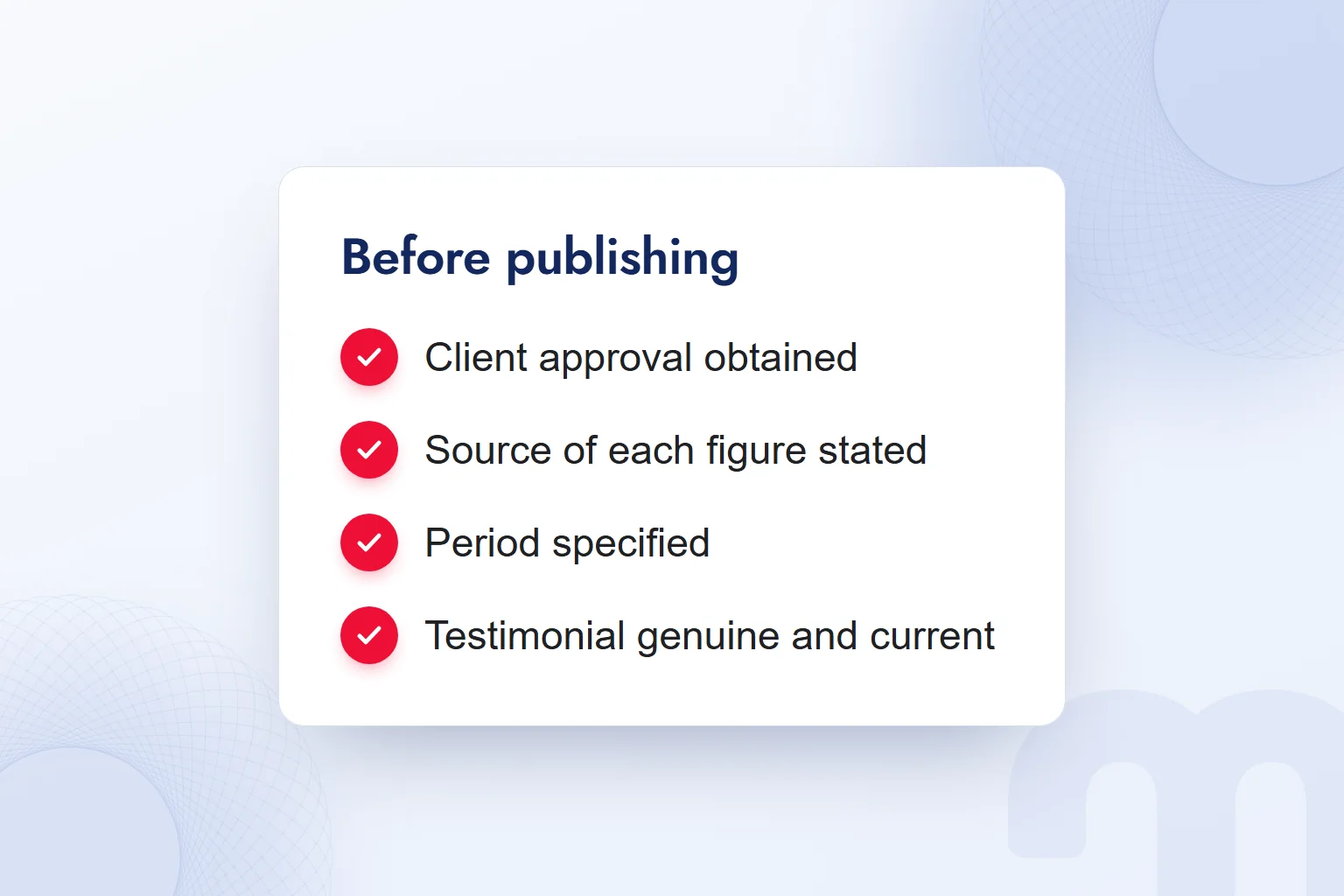
Before publishing, we get written approval from the client and ask separately for explicit consent to use an employee’s name, photo or words. We use the client’s view unchanged and check that it is valid and current. We do not generate a client’s image or voice with AI.
What are common case study mistakes?
Common case study mistakes are figures with no source, outdated or altered testimonials and employee details used without permission. Our pre-publication check reviews the basis of each figure, the testimonial’s validity and the required approvals together.
Three common situations and the answer to each:
- The figure has no source → we write the measurement tool and period next to it.
- The testimonial is outdated or altered → we use a current view in the client’s own words (Article 16).
- An employee’s name or photo was used without permission → we get explicit consent, or remove it (KVKK Article 5).
A figure whose source cannot be found does not stay. An old view is never presented as the result of new work, and the client’s publication approval is checked separately from an employee’s explicit consent.
Finally, we compare the title’s result with the evidence in the body. Taking a case study into a sales deck is covered in how to make a presentation, and the board where results are measured in what is a dashboard. More guides on evidence-based content are on our blog.
This term is part of our digital marketing glossary. You can reach the one-sentence definitions of the other terms there.
Frequently asked questions
What is a case study?
A detailed, evidence-backed account of a client’s or project’s starting point, the work done and the result. In marketing it shows how a service delivers results.
What does case study mean in marketing?
An evidence-led account of one client’s problem, the work done and the measured result, also called a customer case study.
How do you write a case study?
We get the client’s written approval, then write the starting point, goal, work and result in order, with the source and period of every figure and the client’s genuine, current view.
What sections does a case study template have?
Summary, client and starting point, goal, implementation, result and client view, each with its evidence.
Can you use the client’s name in a case study?
Only with the client’s written approval. An employee’s name, photo or words need separate explicit consent.
Is a case study the same as a success story?
In our usage, a success story is shorter and narrative-led, while a case study is evidence-led.

 How to make a presentation: AI tools, PowerPoint and proposal decksRead article
 How to make money on Instagram: eligibility requirements and toolsRead article
 What is a slogan? How to write one, and how it differs from a taglineRead article
 What is Pantone? Color palettes, color codes and brand colorsRead article
 What is a SWOT analysis? How to do one, and how it differs from PESTRead article
 What is a blog, and what is a blogger? How to write a blog postRead article
 Instagram post size: square, portrait, story and Reels dimensionsRead articleMost read
 What is a hashtag? How to use hashtags and how many to addRead article
Questions & answers
0 commentsNo questions yet; you can ask the first one.