





 Cihat Murat Yüksel
11 min read
What is network marketing? How it differs from pyramid schemes
What is network marketing? We cover how MLM works, how it differs from a pyramid scheme and from affiliate marketing, sharing on social media and vetting a company before joining.Pro
Contents 12 sections
Key takeaways
- Network marketing lets independent sellers sell directly to consumers and earn a share of their team's sales.
- Turkey's Consumer Protection Law No. 6502 prohibits setting up, spreading or recommending a pyramid selling system.
- Under Turkish law, pyramid selling also covers unrealistic or very hard to achieve earnings expectations.
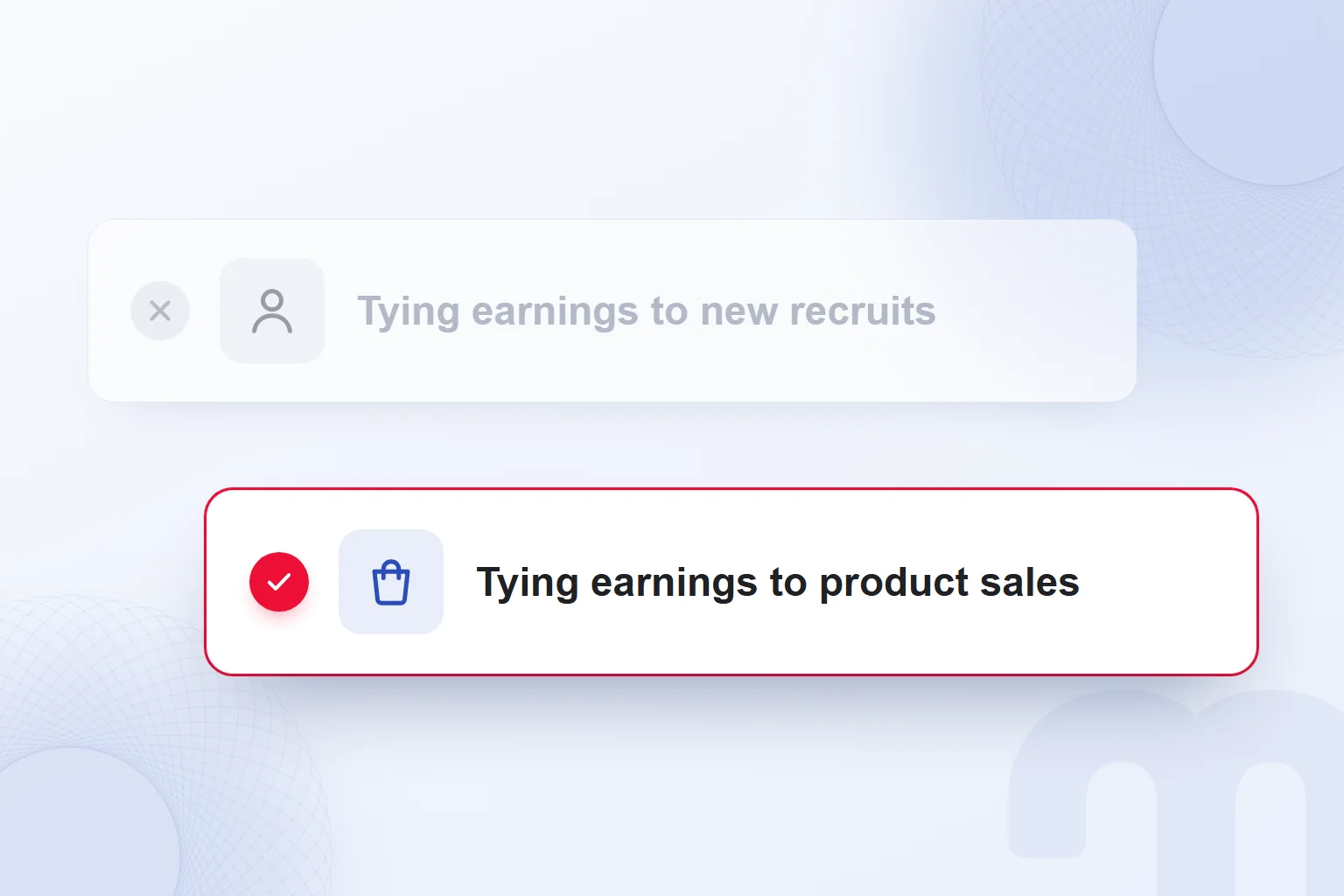
- In network marketing, earnings come from product and team sales, but pyramid schemes pay for recruiting new participants.
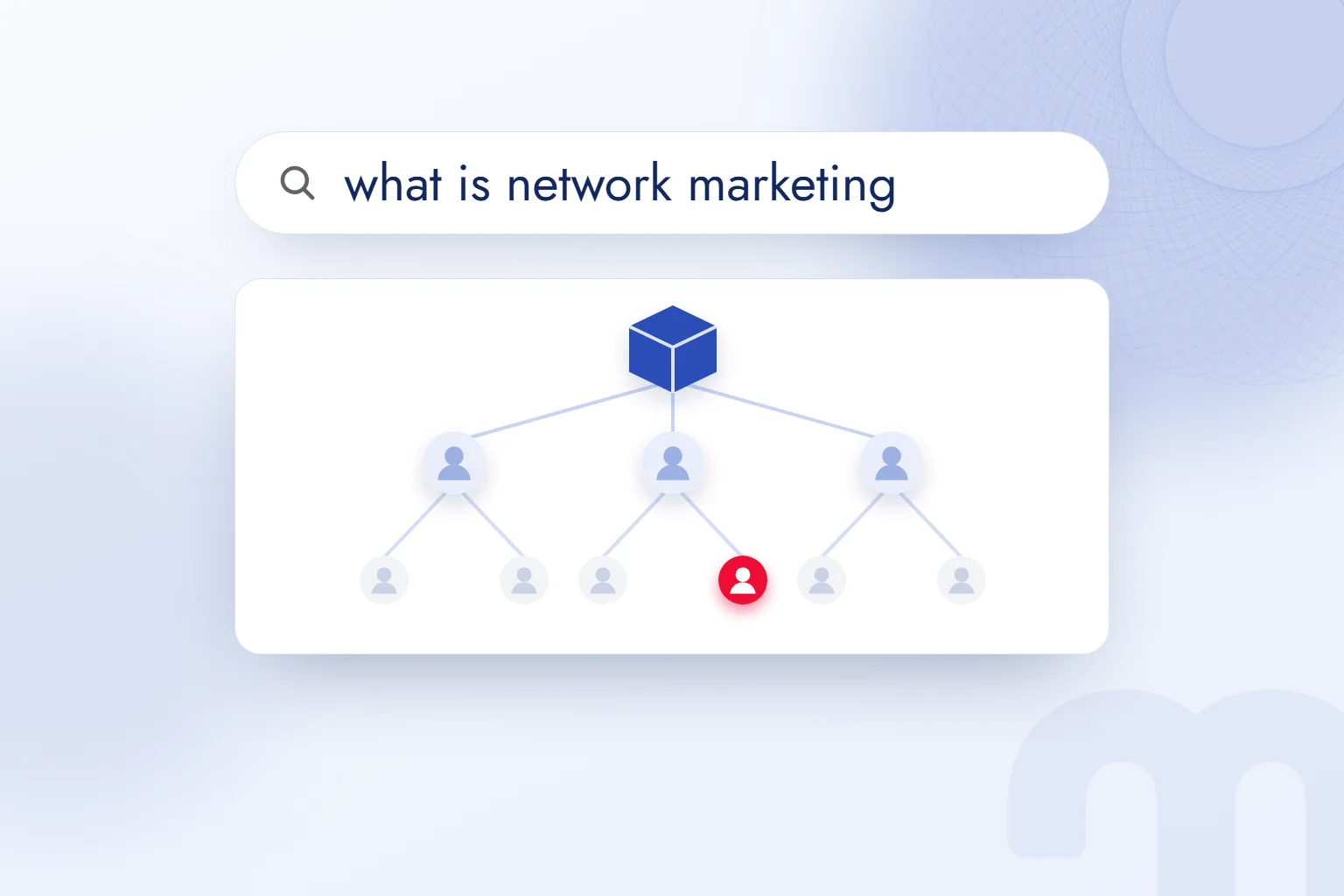
Network marketing is a model in which independent sellers sell products directly to consumers and can earn a share of the sales made by people they recruit into their team, as well as from their own sales; it is also called .
When we review an offer, we read three things together: who buys the product, which transaction earns the seller money and what joining requires. We compare the earnings pitch with the contract and ask for undisclosed terms in writing. We judge the offer by how it works, not by the model’s name.
In any offer, the source of earnings is checked first; if earnings come from new recruits rather than product sales, the offer is avoided.
What is network marketing?
Network marketing is the industry’s name for the multi-level marketing model in which products reach consumers through independent sellers who can also earn a share of team sales.
Direct selling means a product is sold to the consumer through an independent seller. Multi-level marketing means the seller can also earn from the sales of the people they recruited. It must be clear which sale the team share rests on; we trace the link between a product sale and earnings.
What does network marketing mean, and is it the same as MLM?
Network marketing means selling through a network of people; in the industry, MLM and multi-level marketing are used interchangeably with it. MLM stands for “multi-level marketing”.
“Network” describes the relationships sellers build; “multi-level” describes earning a share of sales on more than one level. Neither name explains an offer’s terms. Joining terms, product sales and the basis of earnings are examined in the written documents.
How does network marketing work?
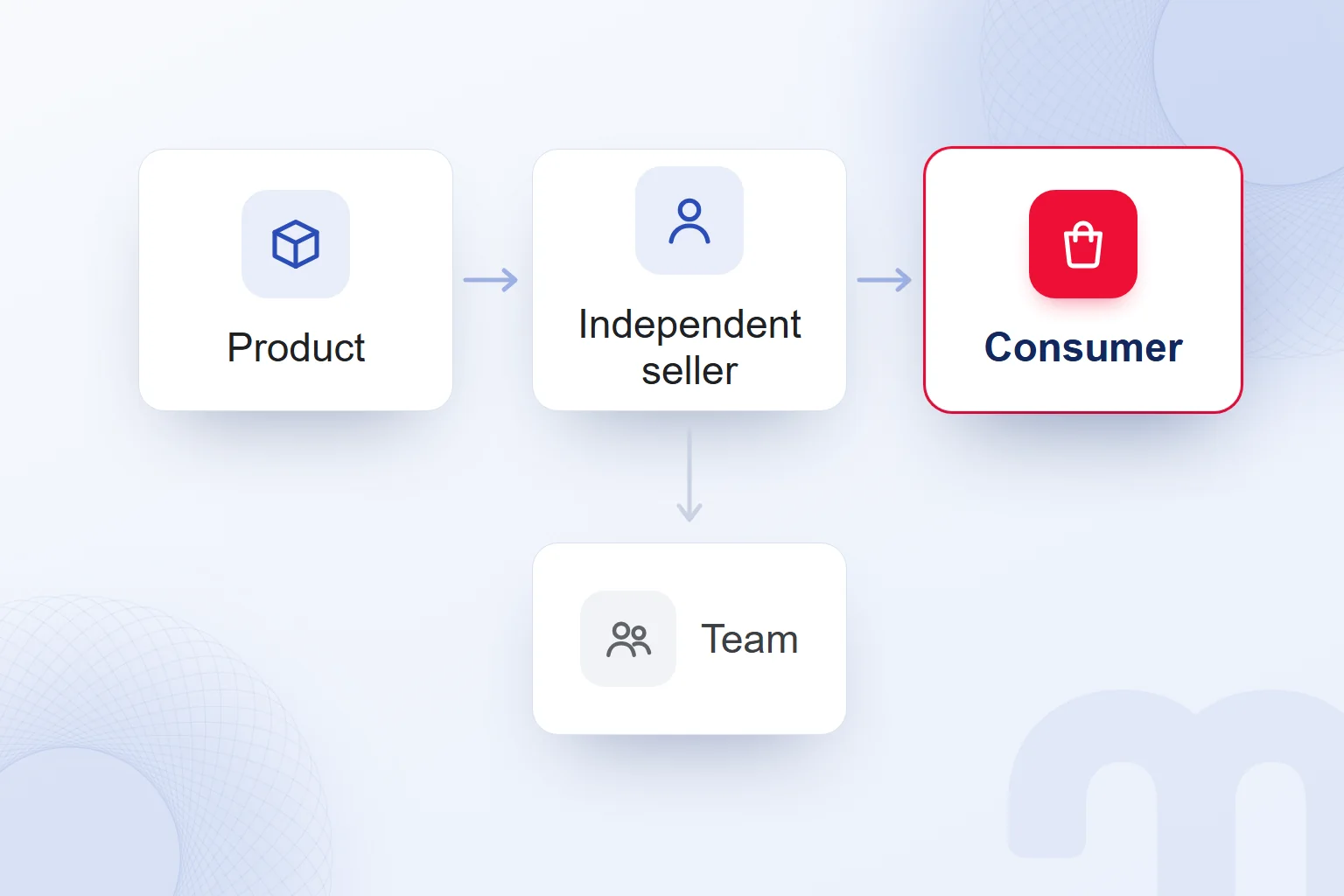
In network marketing, an independent seller sells the product to the consumer, earns from their own sales and can earn a share of the sales made by their team. The model rests on the relationship between product, independent seller, consumer and team.
An earnings explanation should show two sources separately: the seller’s own product sales and the share of product sales made by team members. A team member joining and a team member selling to a consumer are different transactions, and we keep them apart when reading payment terms.
We map an offer’s flow: the product, the person selling it and the consumer buying it, and the same flow for any team sale. We look in the written terms for which sale a payment arises from. If the pitch turns only to building a team, we ask where product sales fit in and weigh the answer against the contract.
What is the difference between network marketing and a pyramid scheme?
In the industry definition of network marketing, earnings rest on product and team sales; in Turkey’s legal definition of pyramid selling, there is an unrealistic or very hard to achieve earnings expectation tied to finding new participants. Telling them apart means weighing the law’s conditions together.
In Turkey, Article 80(1) of the defines pyramid selling as a system of earnings expectation. A participant puts in money or assets and is given hope of earning money or assets for finding other participants on the same terms. Earning depends, wholly or partly, on other participants also meeting the conditions. The definition also covers unrealistic or very hard to achieve earnings expectations.
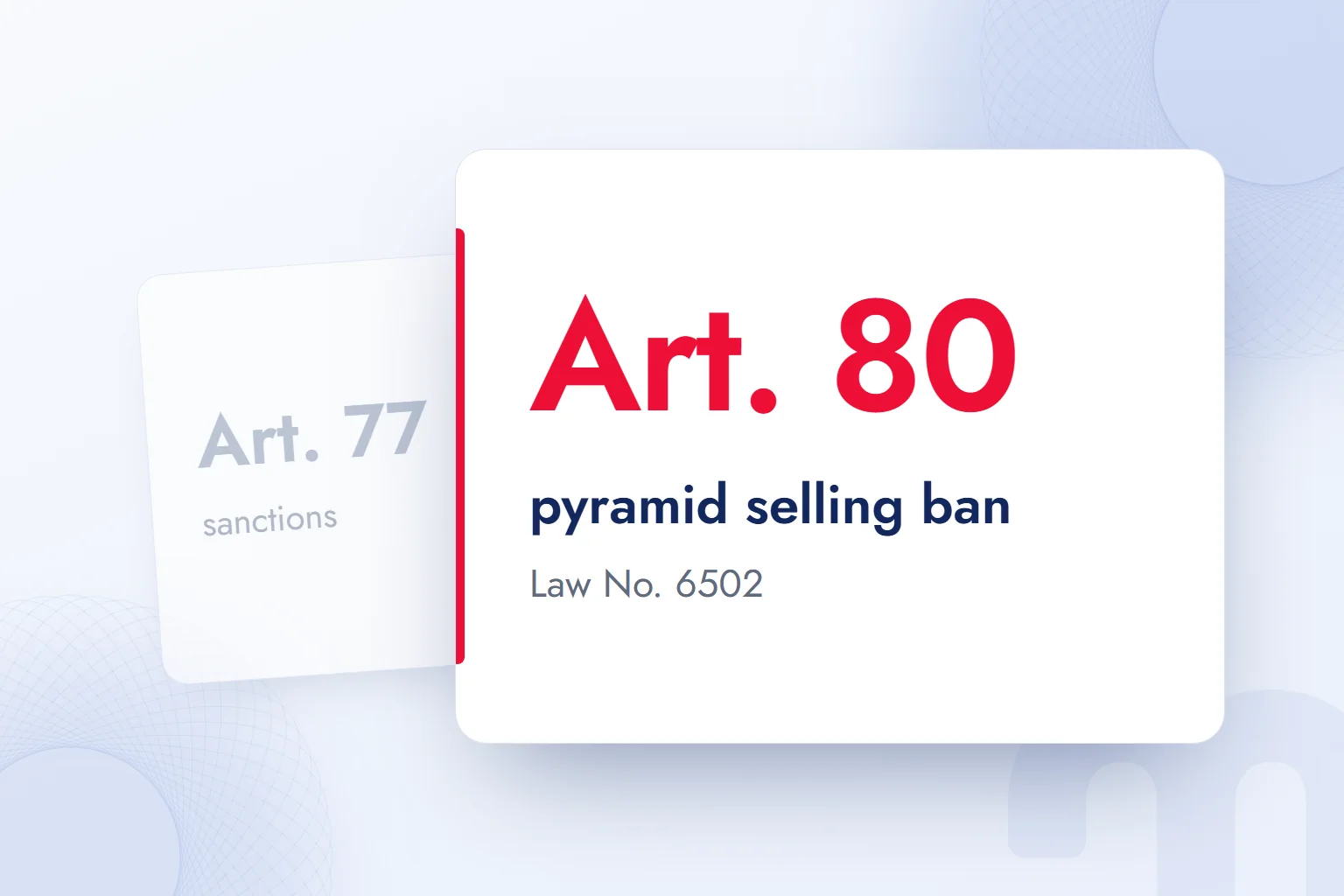
Under Article 80(2), setting up, spreading or recommending a pyramid selling system is prohibited. Article 80(3) authorizes Turkey’s Ministry of Trade to carry out examinations and take measures, including stopping an electronic system in Turkey where one exists.
Under Article 77, the relevant provisions of the Turkish Penal Code apply to those who start or organize a system in breach of Article 80, or spread it through meetings, email or methods suited to reaching many people.
| Criterion | Network marketing | Pyramid selling (Law 6502, Art. 80) |
|---|---|---|
| Source of earnings | Product sales to consumers and team sales | Finding new participants who also meet the conditions |
| Joining | Built on selling the product | In return for putting in money or assets |
| Earnings expectation | Tied to sales | Unrealistic or very hard to achieve |
A product being present is not enough; which transaction earnings are tied to is examined too. The final assessment is left to a lawyer and the competent authority.
In everyday speech, people often call any pyramid-shaped earning scheme a “chain” or a “pyramid”, without a legal test behind the word. We keep that everyday label separate from the legal definition.
Are pyramid schemes legal?
In Turkey, if a scheme called a pyramid in everyday speech falls within the pyramid selling definition in Article 80 of Law No. 6502, setting it up, spreading it or recommending it is prohibited. Whether an offer falls within that definition is for the competent authority to decide.
Article 77 states that the relevant Turkish Penal Code provisions apply to those who start or organize a system in breach of Article 80, or spread it through meetings, email and methods able to reach many people.
We read the offer’s name, the money or assets asked for at entry and the earnings terms together, weighing recruitment requirements, earnings that depend on others’ behavior and unrealistic expectations jointly.
What is the difference between network marketing and affiliate marketing?
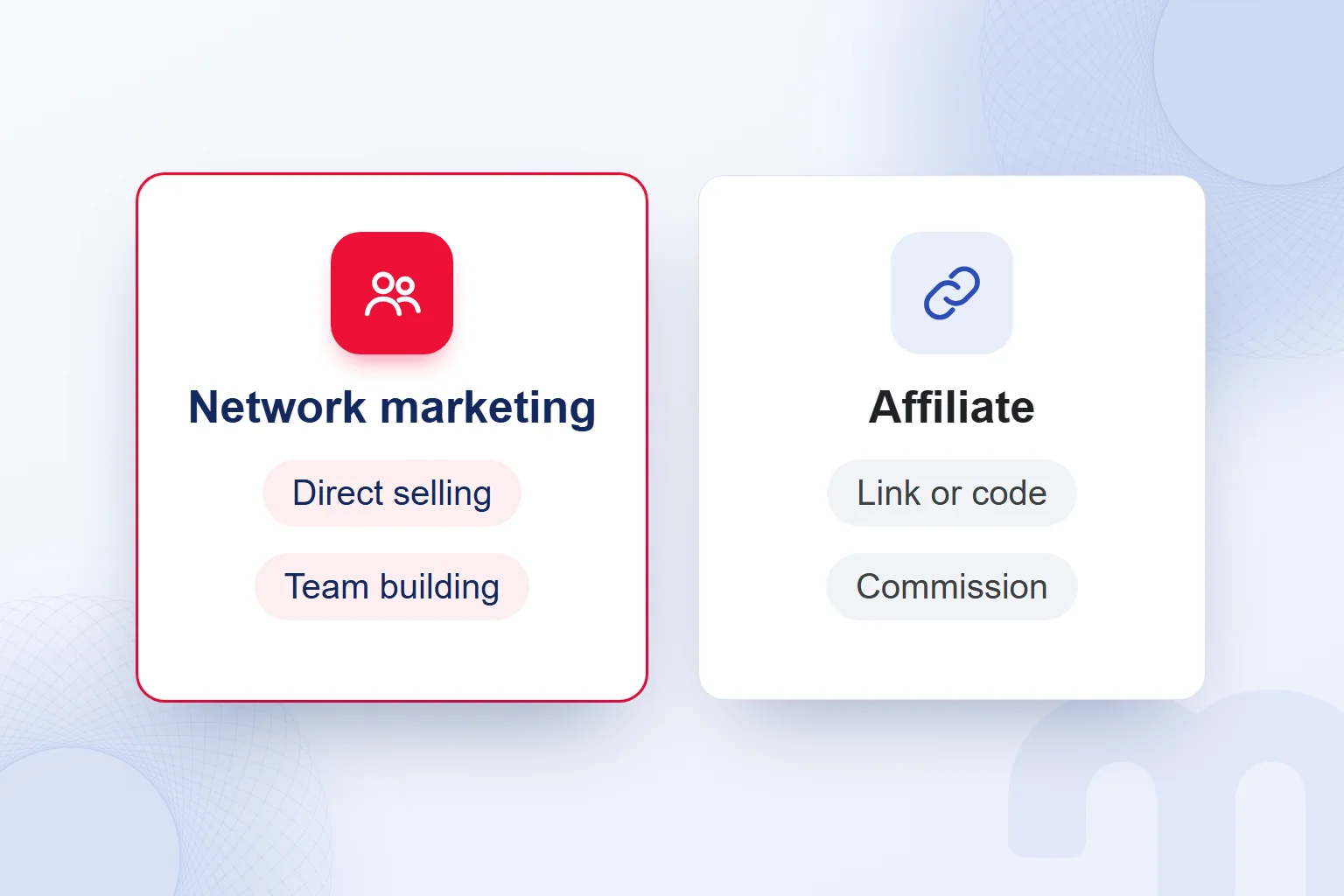
In affiliate marketing, a partner earns a on sales coming through their own link or code; in network marketing, an independent seller sells directly and can build a team. Affiliate centers on referred sales; network marketing on direct selling and team relationships.
In affiliate marketing, where sales arrive via a link or code, we check which referral the commission is tied to. In a network marketing offer, we examine the seller’s own sales and their share of team sales separately. In both, we look in the written terms for the transaction that creates earnings.
This general distinction does not cover every program’s details; how the sale happens, what creates earnings and any team payment terms must be clear.
Which warning signs should you look for in a network marketing offer?
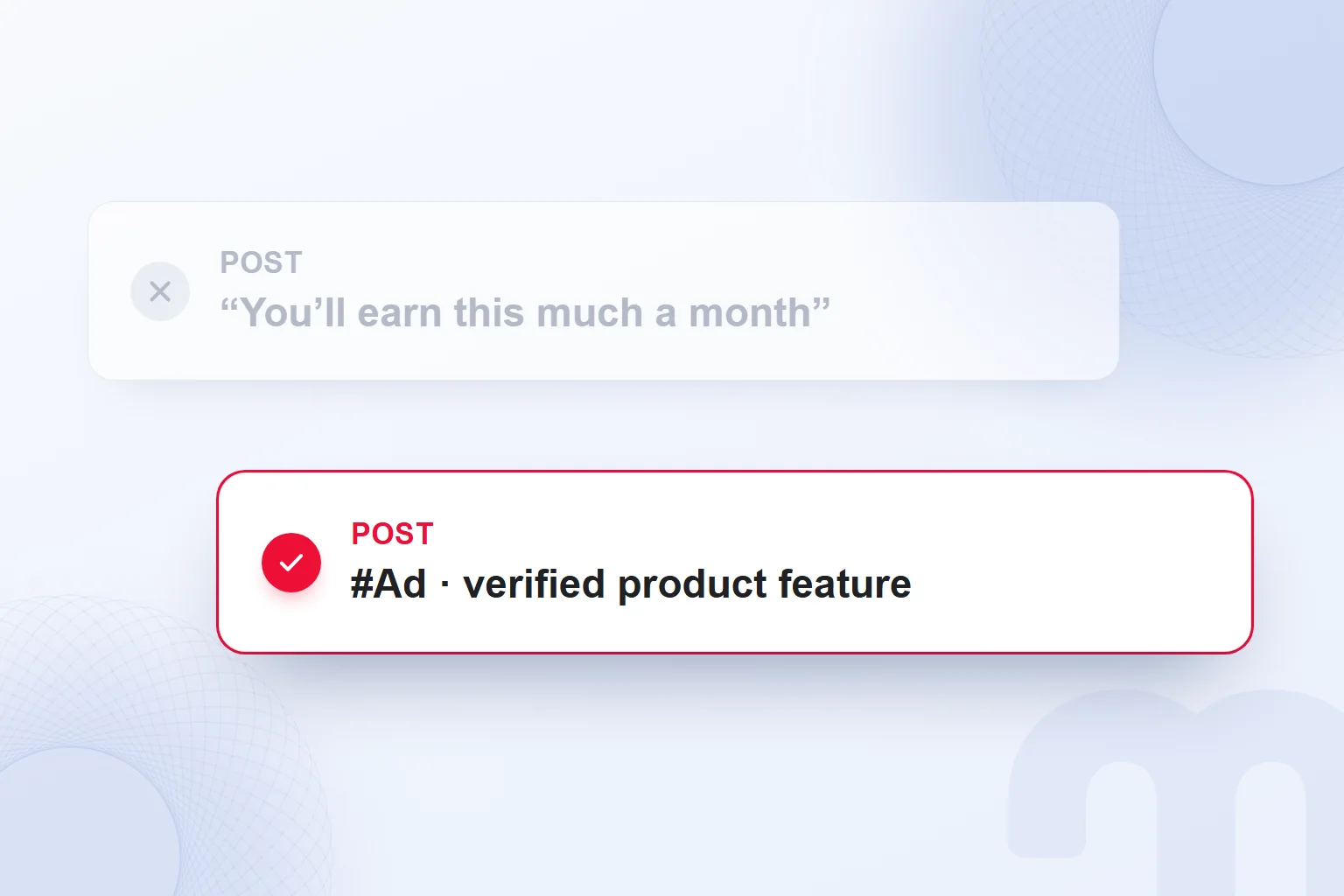
We look for money or a mandatory package required to join, earnings tied to finding new participants and unrealistic earnings promises, and examine these signs with the contract and earnings explanation.
Three common situations and the response to each:
- Money or a mandatory package purchase is required to join → we ask in writing what the payment buys and how refunds work.
- The earnings pitch highlights recruiting, not the product → we compare the offer with the legal definition of pyramid selling.
- Unrealistic or very fast earnings are promised → we compare the promise with documents; if there are none, we stay away.
If a package is mandatory, we read its contents, its link to joining and the refund terms together. We draw no firm legal conclusion from one sign; we work from every element of the legal definition.
How should product and earnings claims be shared in network marketing?
We share product and earnings claims truthfully and honestly, after comparing them with supporting documents. In Turkey, Article 7(1) of the Regulation on Commercial Advertising and Unfair Commercial Practices requires ads to be truthful and honest, and Article 9(1) places the burden of proving an ad’s claims on the advertiser.
The decision depends on the situation:
- The post includes an earnings figure → without a document behind it, we do not share it.
- A product effect is claimed → we compare the claim with the documents.
- The post relies on recruiting new participants → we do not share it before assessing whether the offer matches the pyramid selling definition.
We check that the document and the post’s sentence have the same scope. An earnings claim needs its own basis; a product document does not verify it.
We run the same check on ready-made copy and do not publish statements that leave the source of earnings unexplained.
How do you share network marketing content on social media?
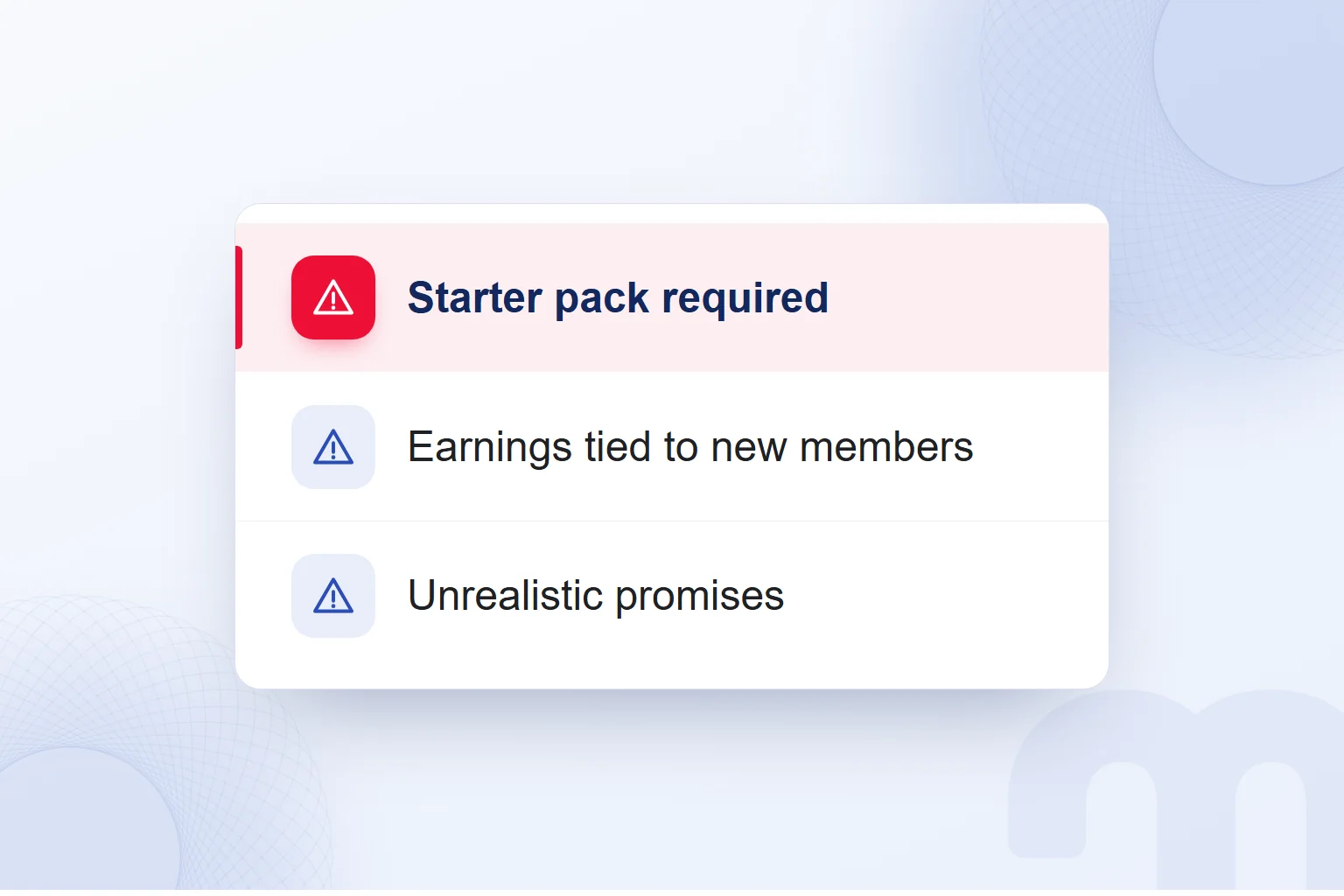
Network marketing content on social media is shared with the commercial relationship clearly disclosed and product claims verified. In digital network marketing posts, we check the ad disclosure, the product experience and the earnings pitch separately.
In Turkey, the Ministry of Trade Advertising Board’s guide on commercial advertising and unfair commercial practices by social media influencers requires ads to be clear, understandable and distinguishable. When a post is made for financial gain or free or discounted products or services, the commercial relationship is disclosed in a way suited to the platform. Under the guide, covert advertising on social media, whether audio, written or visual, is prohibited.
In photo and message posts, the advertiser’s name, brand or trade name is used with at least one of the listed tags and statements, such as #Reklam (Turkish for advertisement) or the tag for collaboration. The disclosure sits in the photo or message, below it or in its caption. The tag must stand out from the background, be easy to read and be visible among other tags. On first seeing the post, the consumer should know it is an ad without any further action.
In short-lived content, the disclosure and the advertiser’s details stay visible throughout. Even with an ad tag, we verify the product statement separately; disclosure and verification are two different checks.
The guide does not allow an untried product to be advertised as tried or endorsed. A gifted product cannot be shown as purchased, and no health claim may breach the regulations. If we have not used a product, we tell no personal experience story, and add no result beyond the document.
On earnings promises, Article 80 of Law No. 6502 sets the context: its definition covers an unrealistic or very hard to achieve earnings expectation that depends on finding new participants and on others meeting the conditions. What is prohibited is setting up, spreading and recommending the pyramid selling system it defines. If a post makes an earnings statement, we check which transaction and document it rests on. So we do not share unsupported promises of the “you’ll earn this much a month” kind.
We cover disclosure and experience obligations in our post what is an influencer.
What do we check before joining network marketing?
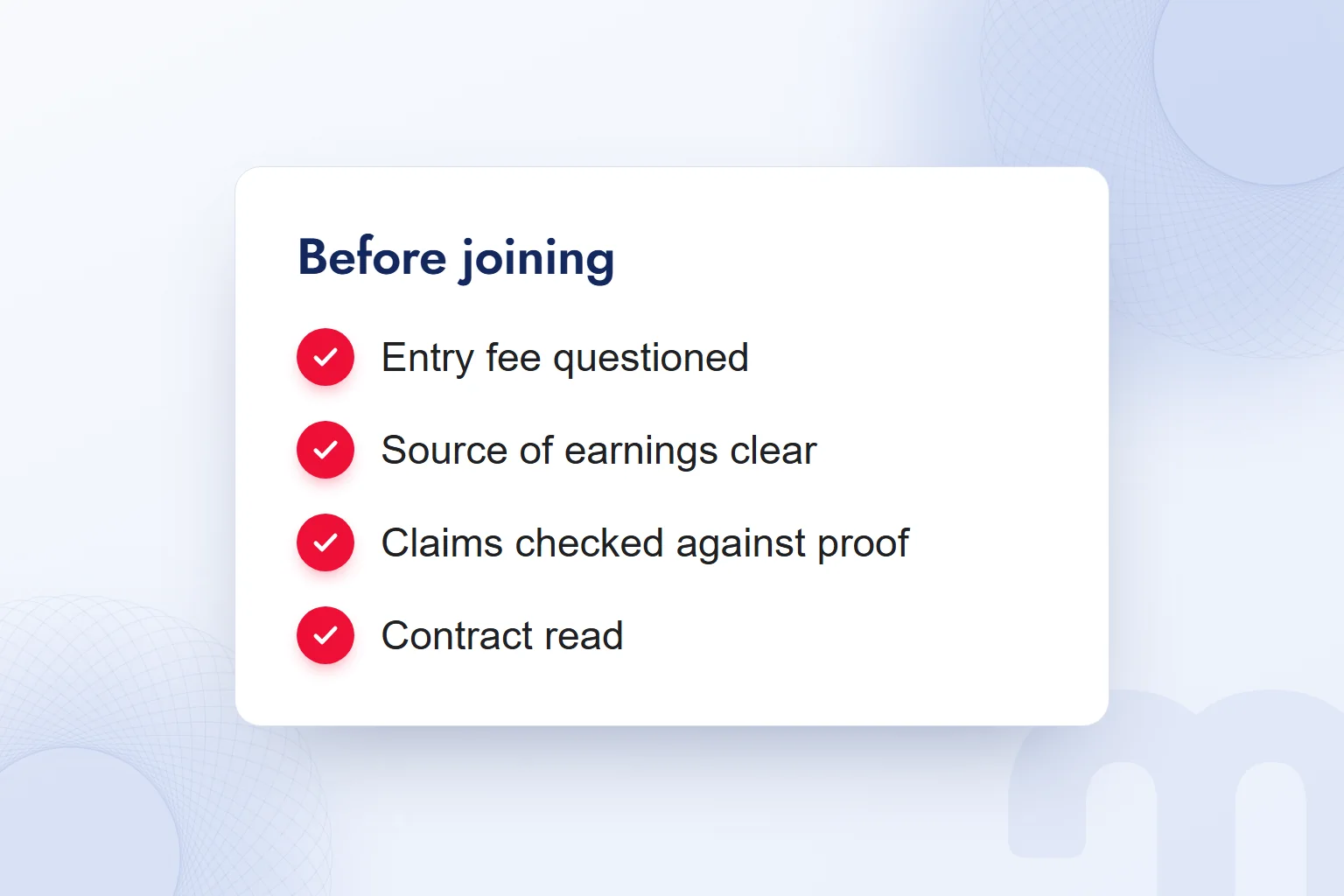
Before joining, we check the company’s identity, the contract, entry payments, the source of earnings and product sales to end consumers; when in doubt, we consult a lawyer. We read the verbal pitch side by side with the written terms.
If the question is “how do you do network marketing?”, the starting point is learning these terms before joining and being able to explain our own obligations and which sale earnings are tied to.
How do you research a network marketing company?
A network marketing company is researched through its trade registry record and written contract, examining refund terms, any mandatory starter package and the source of earnings together. In Turkey, the trade registry record can be checked in the Turkish Trade Registry Gazette. We compare the offer’s documents, not company names or rankings.
- We check the company’s identityWe establish the trade name and address and check the record in the Turkish Trade Registry Gazette. We compare the company making the offer with the party named in the contract.
- We read the contractWe examine joining, product sales and earnings terms in full. If the verbal pitch and the text differ, we ask for the statement in writing.
- We separate the refund termsWe read the refund terms for the product or starter package, establish which payment each covers and look for the written counterpart of any verbal refund promise.
- We identify entry paymentsWe ask whether there is an entry fee or mandatory package, and clarify in writing what it contains, what the payment buys and whether it is required to join.
- We trace the source of earningsWe examine the seller’s own sales and team share separately, check sales to end consumers and establish whether payment is tied to product sales or to finding new participants.
Next to each step, we write the document examined and the question still open. The trade registry check verifies identity; it does not complete the contract, refund and earnings review. At the end, no unexplained difference should remain between accounts of the same offer.
In a representative check, if the presentation ties earnings to product sales while the contract’s payment terms highlight recruiting, we record the gap and ask in writing which transaction the payment arises from, without letting the verbal explanation replace the contract. This is not a finding about any company; it is our method for comparing documents.
If the uncertainty needs a legal assessment, we consult a lawyer. Turkey’s Ministry of Trade has investigative authority; the final assessment belongs to the competent authority.
We stay away from earnings offers that rest on finding new participants rather than product sales.
We covered marketing itself, meaning product, price, distribution and promotion decisions, in our post what is marketing. More on partnerships, advertising and content is in our digital marketing posts.
Frequently asked questions
What is network marketing?
A model in which independent sellers sell products directly to consumers and can earn a share of their team’s sales as well as their own.
What is MLM?
MLM is short for “multi-level marketing”. In the industry, it is used interchangeably with network marketing.
Is network marketing legal?
Under Turkish law, pyramid selling systems are prohibited. We judge whether an offer falls within that definition by the source of earnings; the final assessment belongs to a lawyer and the competent authority.
Is every pyramid-shaped team structure illegal?
No. The everyday label does not decide it; the legal test is whether earnings come mainly from recruiting new members rather than from product sales.
What is the difference between network marketing and affiliate?
An affiliate earns commission on sales via their own link or code. A network marketing seller sells directly and can build a team.
What should you check before joining network marketing?
The company’s trade name and address, the contract, entry fee, mandatory purchases and the source of earnings. We confirm products reach end consumers and consult a lawyer when in doubt.
Are pyramid schemes legal in Turkey?
If a scheme falls within the pyramid selling definition in Article 80 of Law No. 6502, setting it up, spreading it or recommending it is prohibited. The competent authority makes the final assessment.
How do you research a network marketing company?
The trade registry record is checked in the Turkish Trade Registry Gazette, and the contract, refund terms, any mandatory package and the source of earnings are examined together.

 What is a call to action (CTA)? CTA text and button examplesRead article
 What is a tweet, what does retweet mean? Posts and reposts on XRead article
 What is copywriting? What a copywriter does and how to write ad copyRead article
 What is a buyer persona? How to create one, with a templateRead article
 What is Affiliate Marketing? Commission Models and Building a ProgramRead article
 What is WhatsApp Business? Free app, Platform (API) and how to use itRead article
 What is a podcast? How podcasts work for brands and where to publishRead article
 Best time to post on TikTok: finding it with your own account dataRead article
Questions & answers
0 commentsNo questions yet; you can ask the first one.