





 Cihat Murat Yüksel
7 min read
Cihat Murat Yüksel
7 min read
What is a buyer persona? How to create one, with a template
A buyer persona is a semi-fictional profile, built from real customer data, that represents a customer group’s goals, problems and decision criteria. How to create and use one.Pro
Contents 9 sections
Persona is a Latin word meaning “mask”; in marketing it is a semi-fictional profile, built from real customer data, that represents a customer group through one person and describes their goals, problems and decision criteria. To understand purchase decisions, we prepare a .
We research what customers want, where they get stuck and how they choose, reading recurring interview phrases alongside sales notes and search queries. The profile then guides content topics, ad messages and product decisions, with the data behind each field recorded under it.
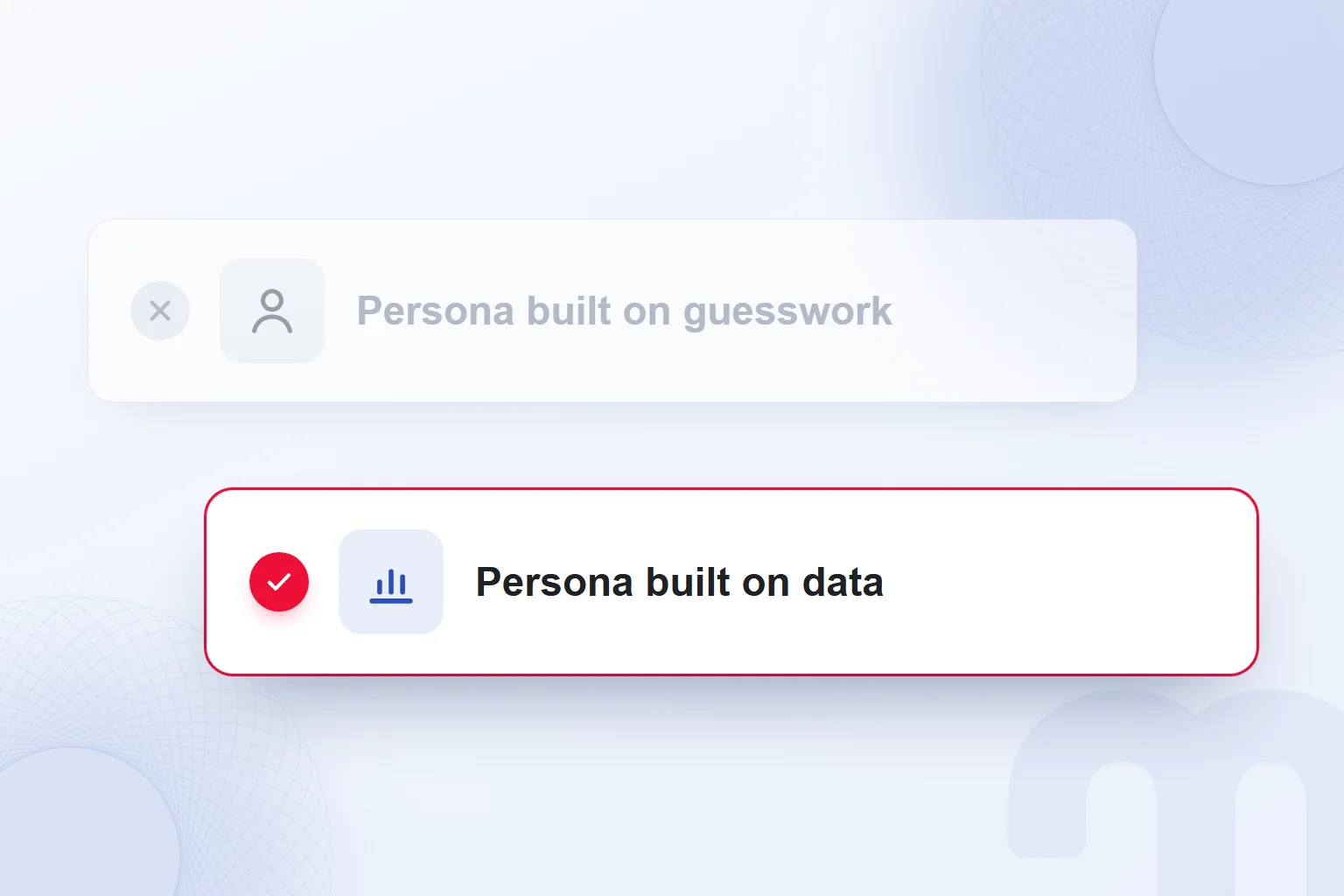
A persona is built from real customer data, and every field is tied to a content or messaging decision.
What does persona mean?
The word persona means “mask”; in psychology it is the attitude a person shows in public, and in marketing a profile that represents a customer group. In Latin it named the mask an actor wore on stage. The persona concept used by in psychology concerns the “social mask” a person wears in front of others.
In marketing and UX work, we derive the persona from real customer data: one person’s voice carries traits shared across a group. “Semi-fictional” means we name the role, while needs and criteria come from research; we never copy every trait from a single customer.
What is a buyer persona?
A buyer persona is a profile describing the goals, problems, decision criteria, objections and information sources of the person who makes or influences the purchase decision. In Turkish it is usually just called “persona”. We also state the person’s role in the purchase decision explicitly.
In B2B sales several people decide, so we prepare a persona for each decision role and assess its goals and objections in context. In B2B digital marketing, content and messaging follow this split; people evaluating the same service are never treated as one voice.
We first pick the buying role to understand, then record the problem it wants solved, the criteria it judges by and the questions it needs answered before deciding.
What is the difference between a persona, a segment and a target audience?
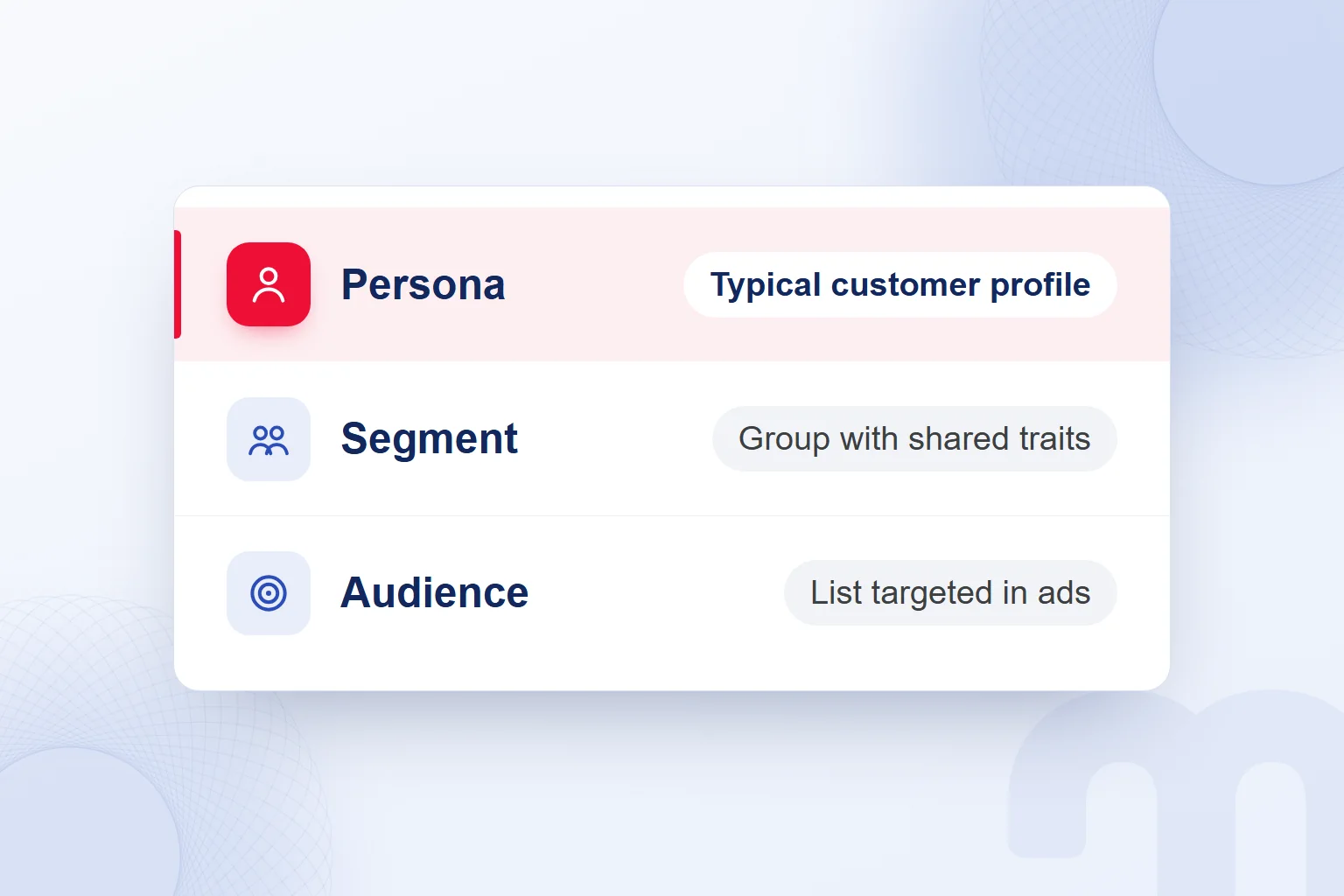
A segment is a data group divided by shared traits, an advertising audience is a list of users to reach or observe, and a persona is the group’s representative described in human terms. The segment divides the group, the audience sets reach and the persona shapes the message.
We decide which shared trait divides the data in segmentation work. On an ad platform, we define whom to target or observe through audience selection. The persona helps us understand these groups’ goals and problems; it does not replace ad targeting.
In Turkey, people mostly search for the concept as plain “persona”; we choose terms with that in mind and keep each concept to its job. When a persona objection goes into ad copy, the audience is still built separately on the platform.
What data is a buyer persona built from?
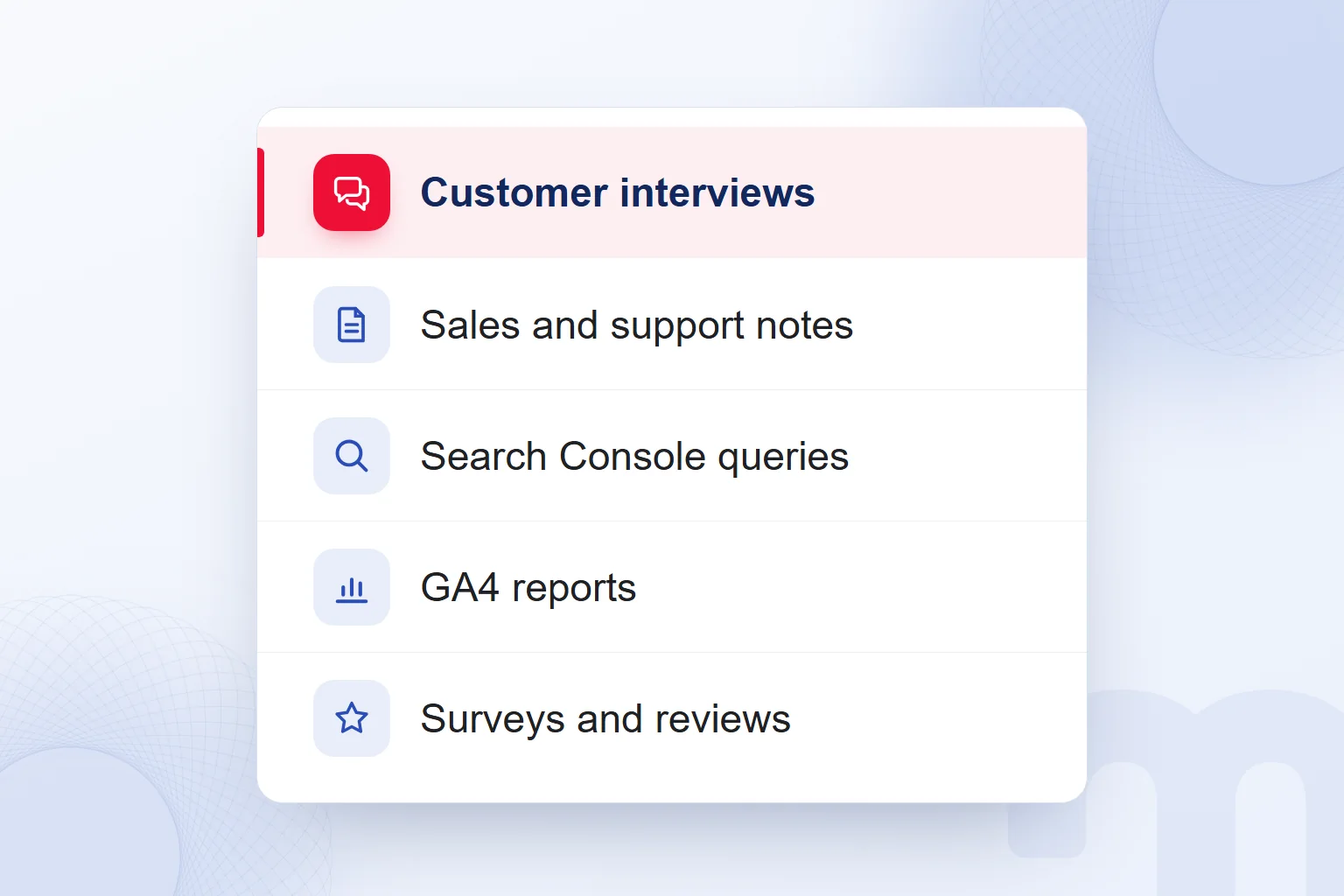
We build the persona from customer interviews, sales and support notes, records, search queries, surveys, product reviews and GA4 reports. The most valuable source is the interview, where we hear goals and problems in the customer’s own words. We ask what they want to solve, what they weigh when choosing and where they object.
Recurring questions in sales and support notes are read against CRM records. Search Console and on-site search show customers’ words; surveys and reviews help group shared goals and objections.
GA4 alone does not produce a persona. The data thresholds described in GA4 Help apply to demographic data and low-volume reports to protect user identity; they cannot be adjusted, and small sites or narrow date ranges may see data withheld. We never fill gaps with guesses.
We note where each finding comes from and never treat a single query as a full profile; the shared pattern comes from matching interview phrases with recurring sales questions.
How do you create a buyer persona?
We create a buyer persona by setting its purpose, gathering data, interviewing customers and turning shared patterns into a usable template. A first round has at most three personas, with the decision roles set at the outset.
- We set the purposeContent, ad messaging or product decisions.
- We gather the dataWe bring together sales and support notes, CRM records, queries, surveys and reports.
- We interview customersWe record goals, problems, objections and criteria in the customer’s own words.
- We group shared patternsWe separate recurring needs and decision roles to define what each profile represents.
- We fill in the templateWe complete fields with short phrases and add the supporting data under each persona.
- We tie it to content and messagingProblems become content topics; objections become questions to answer.
- We record the update dateWhen the product, price or market changes, we reassess the profile with new data.
Our starting data depends on the situation:
- We can talk to customers → We run a few interviews and note their own sentences.
- No interviews possible, but the site has traffic → We start from Search Console queries and sales notes.
- In B2B sales several people decide → We write a separate persona for each decision role.
How do you fill in a buyer persona template?
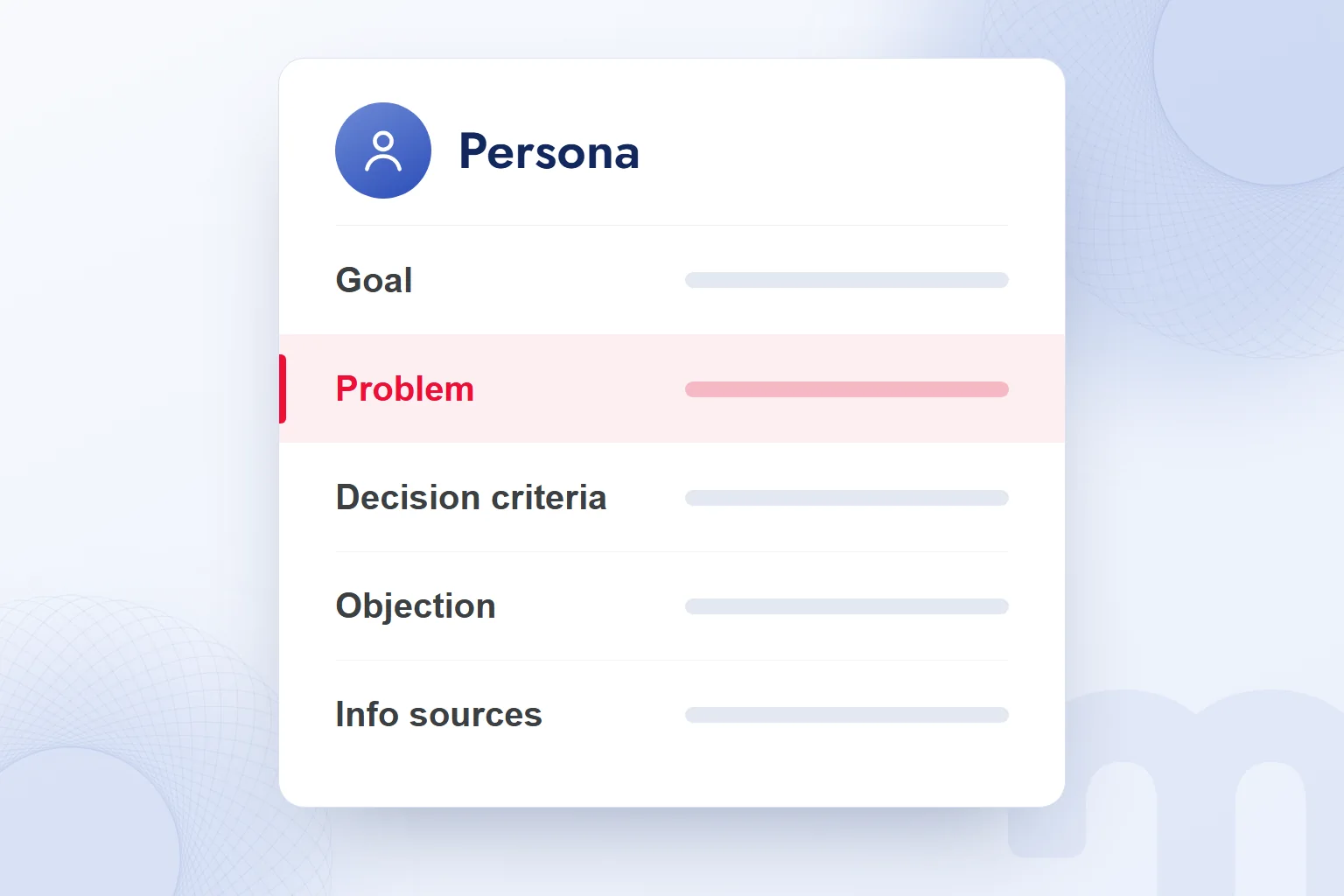
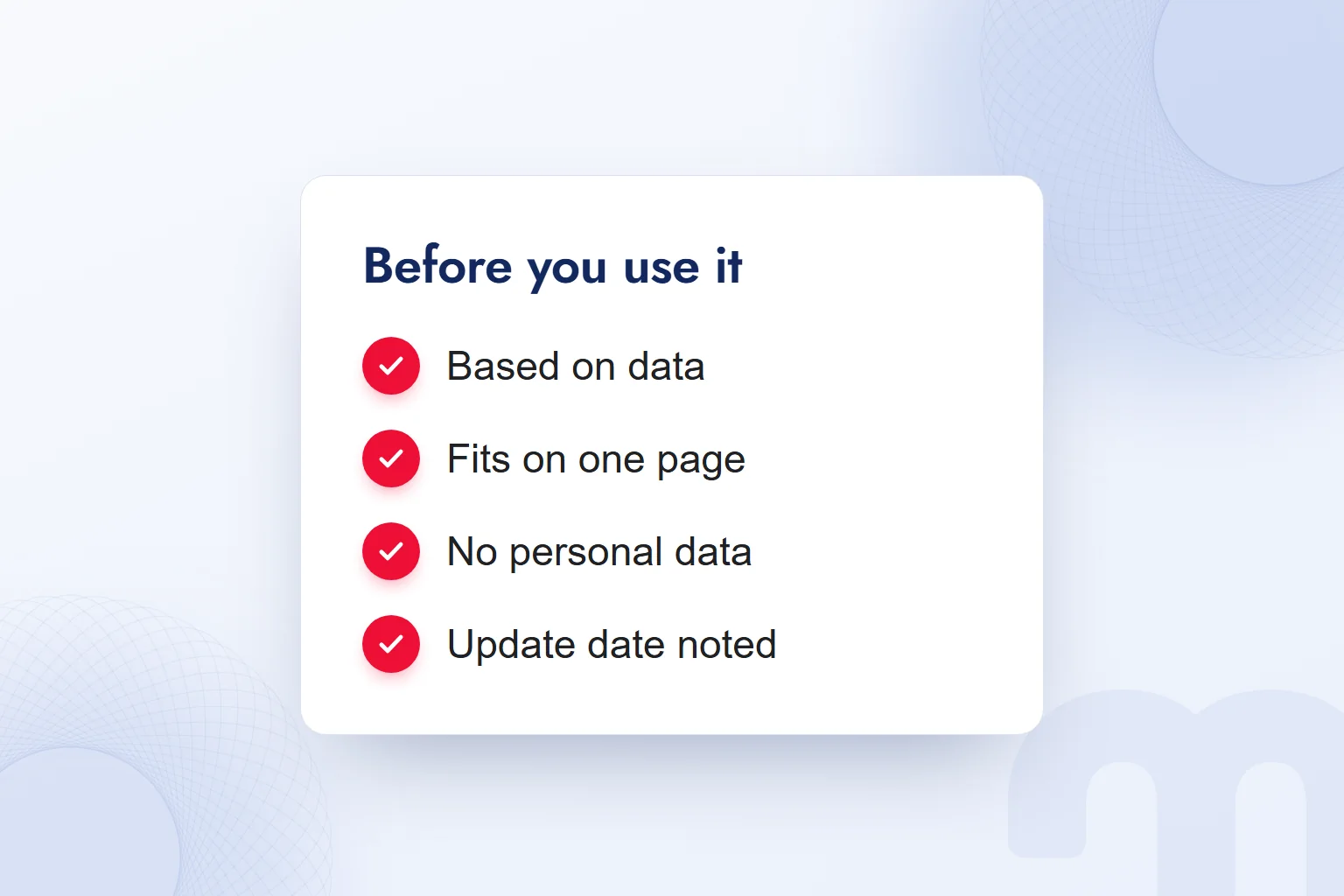
We fill in the template with role, situation, goal, problem, decision criteria, objections, information sources and the words the customer uses. We keep it to one page and, instead of a long life story, write only what we will use in the purchase decision.
| Field | What we write | From which data |
|---|---|---|
| Representative name and role | A name for the profile and its decision role | Interviews, sales notes |
| Situation | Job, team and responsibilities | Interviews, CRM records |
| Goal | The result they want | Interviews, surveys |
| Problem | The obstacle on the way to the goal | Interviews, support notes |
| Decision criteria | What they look at when choosing | Interviews, sales notes |
| Objections | Questions that stall the decision | Sales notes, product reviews |
| Information sources | Sources and channels they learn from | Interviews, surveys |
| Words they use | Phrases and queries describing the problem | Search Console, on-site search |
Example persona: The marketing manager of a B2B services company. Goal: show management the return on ad spend; problem: reports from different platforms do not match. Objection: “We don’t have time to learn yet another tool.” They search “how to calculate roas” and read industry newsletters; the words-they-use field links to Search Console queries.
We add a short note on content needs across the buying journey: here the calculation query leads to explanatory content and the time objection to a question we must answer. Missing fields are never presented as data.
What mistakes are made when creating a persona?
The main mistakes are guessing instead of using data, stopping at demographics, writing too many profiles, skipping updates and confusing the persona with an ad audience. We check each field against its source and the decision it serves.
A document full of age and gender details with an empty goal and problem is not a persona. Nor do we multiply profiles that share a goal and objection; the three-persona limit is our own method’s rule.
In Turkey, we follow the personal data protection law (KVKK) and build personas from anonymous, aggregated information. A real customer’s name, contact details or photo never goes into a persona document. When quoting customers, we leave out identifying details. The representative name and role exist only so the team can recognize the profile.
How is a buyer persona used in marketing decisions?
We use the persona to choose content topics, write ad messages and judge product decisions against the customer’s goals, problems and criteria. Each content brief names the persona, the question and the customer phrase; each ad message names the objection it addresses.
For a product proposal, we return to the problem and criteria fields and check which need it answers and which data that need comes from.
When the persona does not reach daily work, the cause is usually one of three:
- The team does not read it → We prepare a one-page version and attach it to the content brief.
- It gets mixed up with ad targeting → We build the audience separately on the platform and use the persona for the message.
- It is out of date → We update it with new interview and query data.
When the product, price or market changes, we review goals, objections and criteria and note sources and date. To read the persona alongside the company’s strengths and weaknesses, we use the table in our SWOT analysis article. More guides on content and messaging decisions are on our blog.
Frequently asked questions
What does persona mean?
Persona is a Latin word meaning “mask”. In marketing it is a semi-fictional profile, based on real customer data, that represents a customer group.
What is a persona in marketing?
A profile that describes a customer group’s shared goals, problems and decision criteria through one person. We use it in content, messaging and product decisions.
What is a buyer persona?
It describes the goals, problems, criteria, objections and information sources of the person who makes or influences the purchase. In B2B we write one per decision role.
What is the difference between a persona and a target audience?
An ad audience is the list of users targeted or observed. A persona describes the group’s goals and problems; it does not replace targeting.
How many personas should you create?
In a first round we prepare no more than three, deciding at the outset which roles and shared needs we cover.
How often should a persona be updated?
Whenever the product, price or market changes, with new interview and query data. We write the update date under the document.

 What is Affiliate Marketing? Commission Models and Building a ProgramRead article
 What is WhatsApp Business? Free app, Platform (API) and how to use itRead article
 What is a podcast? How podcasts work for brands and where to publishRead article
 Best time to post on TikTok: finding it with your own account dataRead article
 How to create a barcode: EAN-13, Code 128 and QR codesRead article
 How to advertise on Google: account, first campaign, budget, trackingRead article
 What is an ad library? Competitor ads on Meta, Google and TikTokRead article
 What can you do with ChatGPT? Free plan marketing examplesRead article
Questions & answers
0 commentsNo questions yet; you can ask the first one.