





 Cihat Murat Yüksel
16 min read
Contents 14 sections
Key takeaways
- A SWOT analysis is a strategy planning method that weighs internal strengths and weaknesses against external factors.
- A PEST analysis examines the external environment, while a SWOT assesses the internal and external environment together.
- Strengths and weaknesses are internal features, while opportunities and threats are external factors.
- Turkey's Presidency of Strategy and Budget defines SWOT as a systematic review of an administration and its conditions.
A SWOT analysis is a planning method that examines a brand’s strengths and weaknesses alongside the opportunities and threats in its external environment to guide strategy. The name comes from these four headings.
At markention, we run a SWOT at the start of the marketing plan. Every row rests on data, a document or an observation. From there, we set out work that uses opportunities through strengths and reduces the impact of threats on weaknesses.
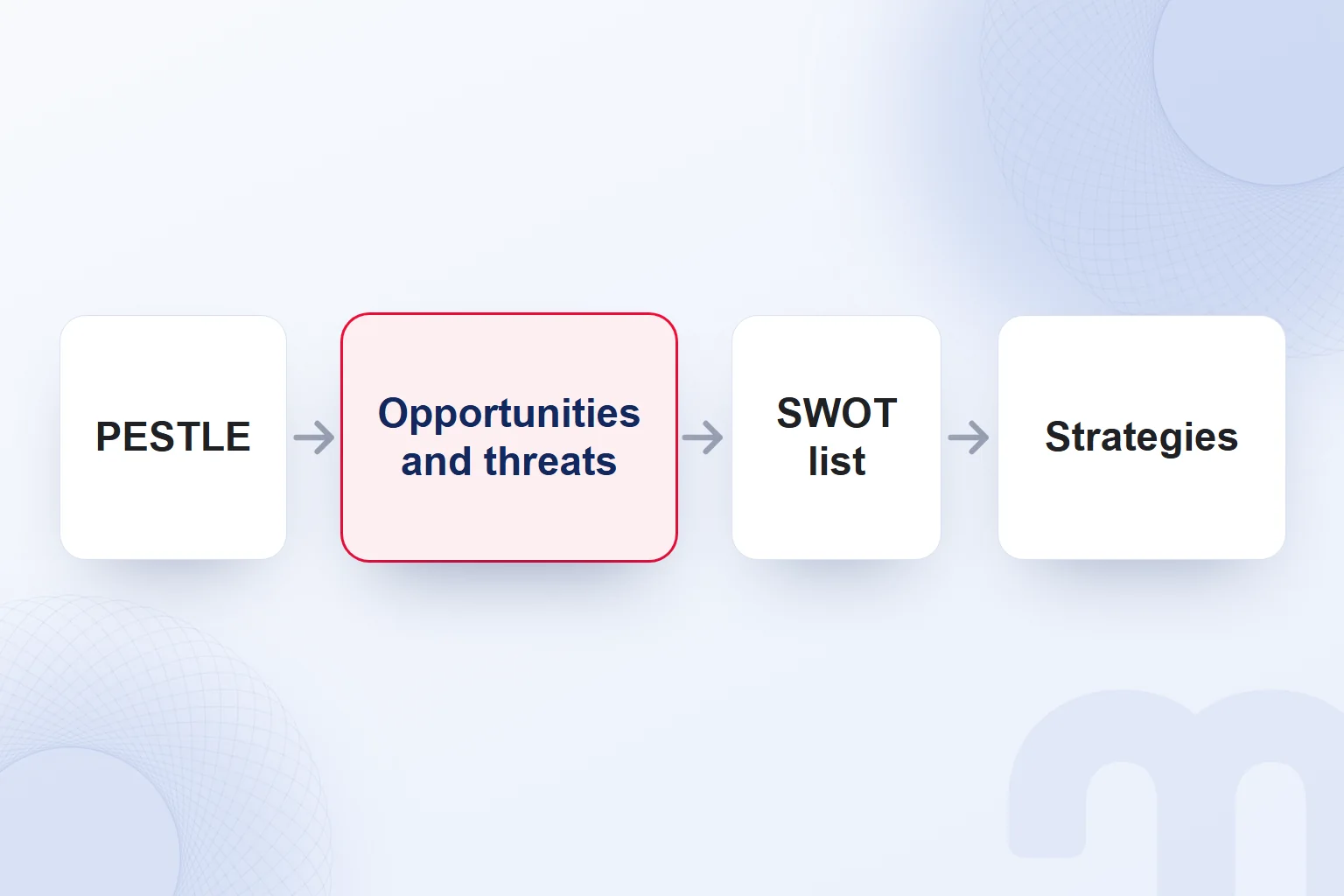
A SWOT is not left as four lists but carried into four strategy boxes; the opportunity and threat rows are filled through a PESTLE scan.
What is a SWOT analysis?
A SWOT analysis is a method that guides strategy by examining an organization’s internal features and external conditions together. Cambridge Dictionary describes SWOT as a way of considering all the good and bad features of a business situation or company. In a brand plan, we build the assessment around a specific goal.
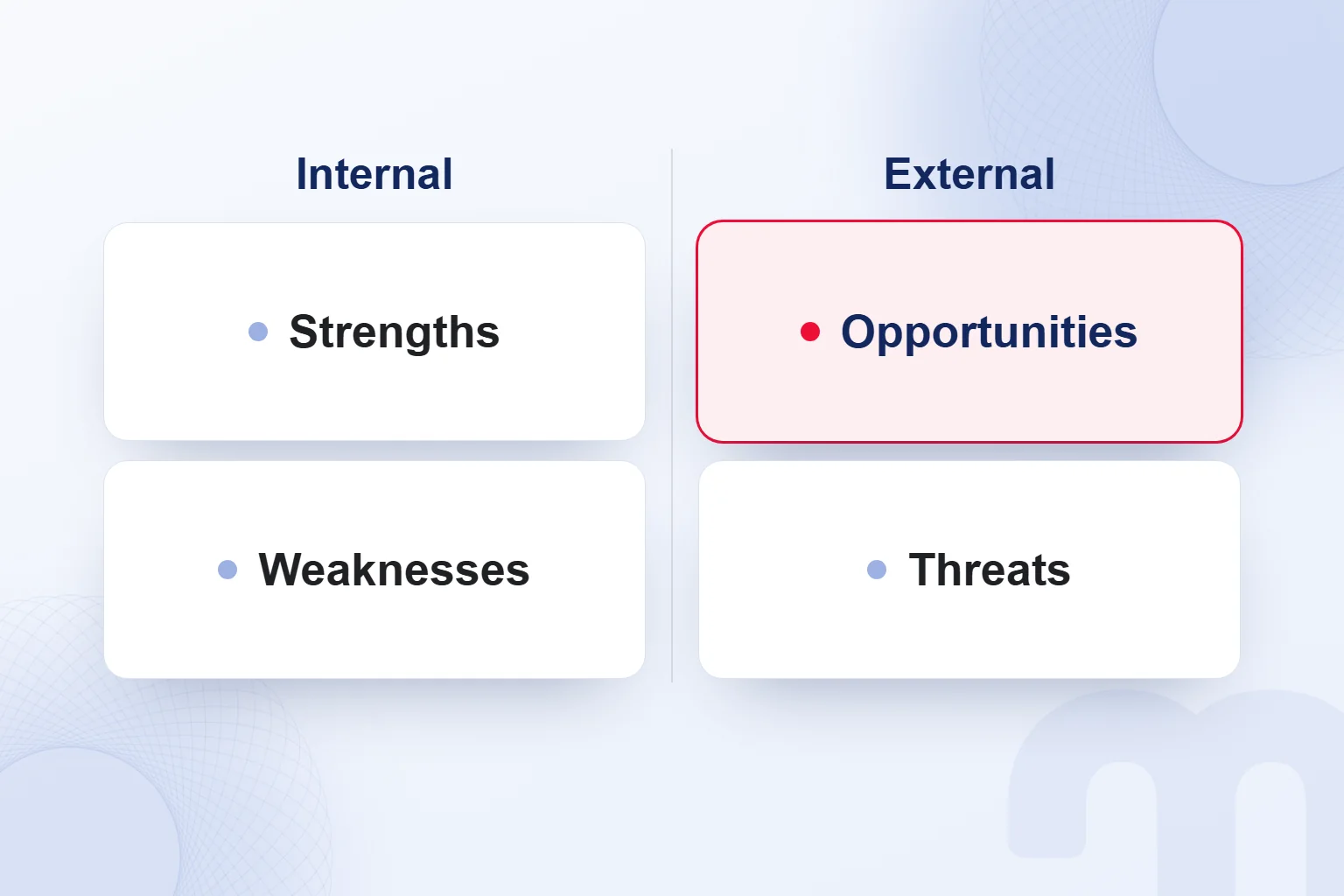
Internally, we examine the brand’s strengths and weaknesses. Externally, we look for opportunities and threats that arise outside our control. The split rests not only on whether a point is positive or negative, but on where it comes from.
A strength is explained by the data, document or observation that supports it. When we record an outside change as an opportunity, we state the likely advantage for the brand. Once we reach strategy, it is clear which decision came from which finding.
What does SWOT stand for?
SWOT stands for strengths, weaknesses, opportunities and threats; each word names one of the four areas the analysis covers.
In Turkey, the Presidency of Strategy and Budget’s Strategic Planning Guide, version 3.1, defines SWOT analysis as a method for systematically examining an administration and the conditions that affect it. The guide was written for public administrations; we use the same structure in brand plans.
According to the guide, strengths and weaknesses come from internal analysis, while opportunities and threats draw on the results of a . The SWOT list can be a single list or grouped by area of activity. The area under review sets the plan’s scope. We assess items within that scope and check that strategies are consistent with the SWOT results.
How do you tell strengths, weaknesses, opportunities and threats apart?
We separate strengths and weaknesses by the organization’s internal features, and opportunities and threats by external factors. Two questions settle every item: where does the factor come from, and how does it affect the goal?
- Strengths: positive internal features we control and draw on to reach our goals. In the guide, a skilled workforce and a strong financial position are concrete examples; leadership and a supportive culture are abstract ones.
- Weaknesses: gaps and areas open to improvement that affect success. We find them by asking “what should we improve?”
- Opportunities: factors or situations outside our control that are likely to bring an advantage.
- Threats: elements outside our control whose negative effects we need to prevent or limit.
The guide notes that these areas can overlap. In its example, a staff shortage is a weakness when it is an internal gap, and a threat when staff are allocated outside the organization’s control. A classification should explain where the gap comes from and who decides.
When we define the target audience, persona work tells us whom we want to reach. We relate what a strength is good for, and why an outside factor counts as an opportunity, to that goal. Internal features and external conditions go in separate sentences.
What goes under opportunities and threats?
Opportunities are external developments that support the goal; threats are external conditions that hurt it. Before copying a finding from the PESTLE scan, we establish how it relates to the brand. “Technology is changing” is not enough; the entry should say which change affects which activity, and the evidence for it.
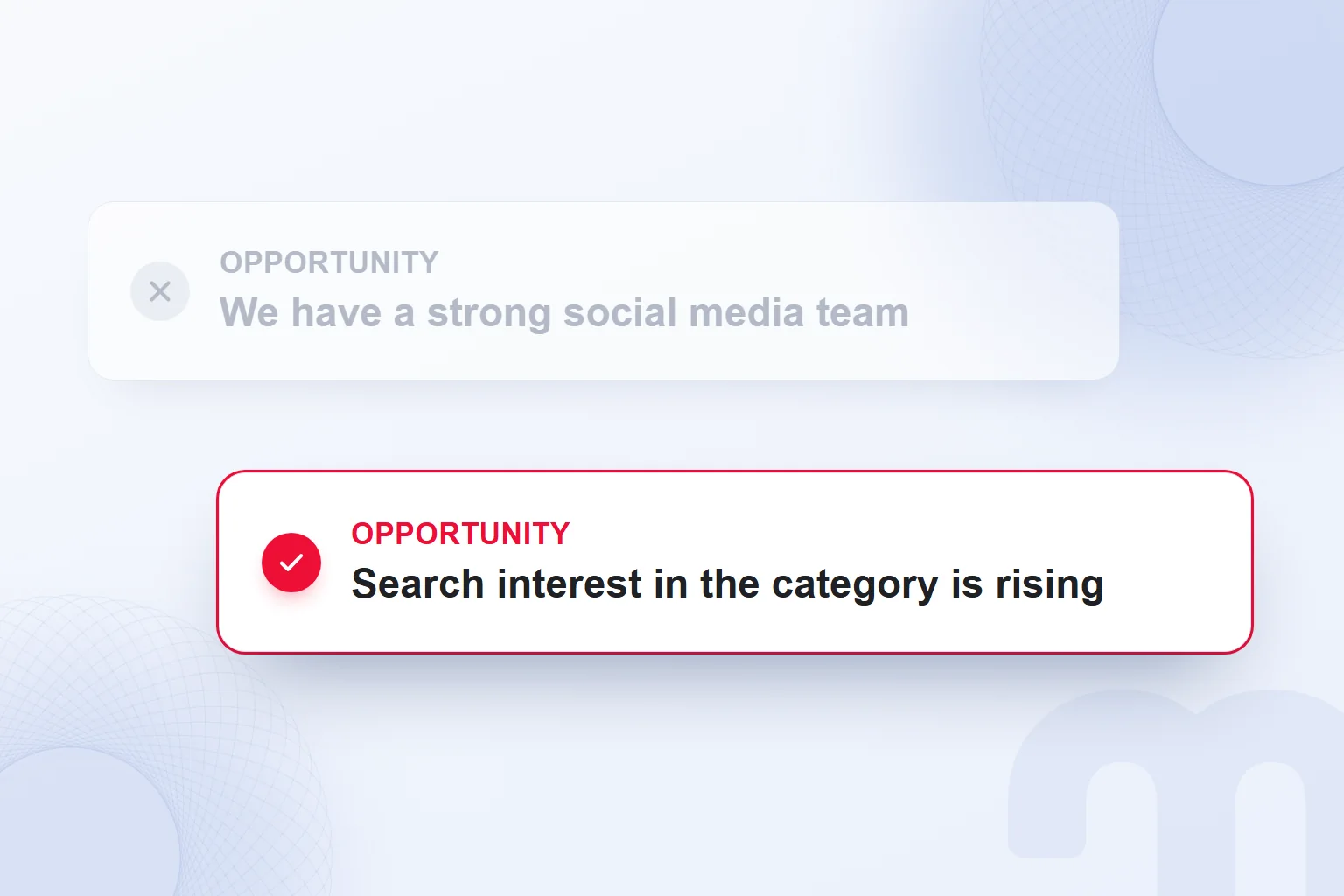
Writing an internal item as an opportunity breaks this split. In a representative example, “We have a strong social media team” describes the team’s capability and belongs under strengths. “Search interest in the category is rising” is a representative opportunity describing outside demand. In a real analysis, data on the category and period backs it; an assumption is not presented as fact.
The threat row works the same way. Representatively, “Our content production keeps stalling” is an internal gap; “Competitors are publishing content that meets the same need” is an external condition. What makes the second a threat is its negative effect on the goal. We observe which content answers which need, not just that a competitor exists.
An opportunity and our response to it are separate sentences. “Producing content on social media” is a task; the opportunity row holds the outside condition that makes it worthwhile. We record the condition and its evidence first, then carry into strategy the strength through which it will be used.
What is a PEST analysis, and how does it differ from SWOT?
A PEST analysis examines political, economic, social and technological influences in the external environment; a SWOT assesses the internal and external environment together. Cambridge defines PEST as a management method that examines how outside events or influences affect a company’s or organization’s performance. The acronym comes from Political, Economic, Social and Technological analysis.
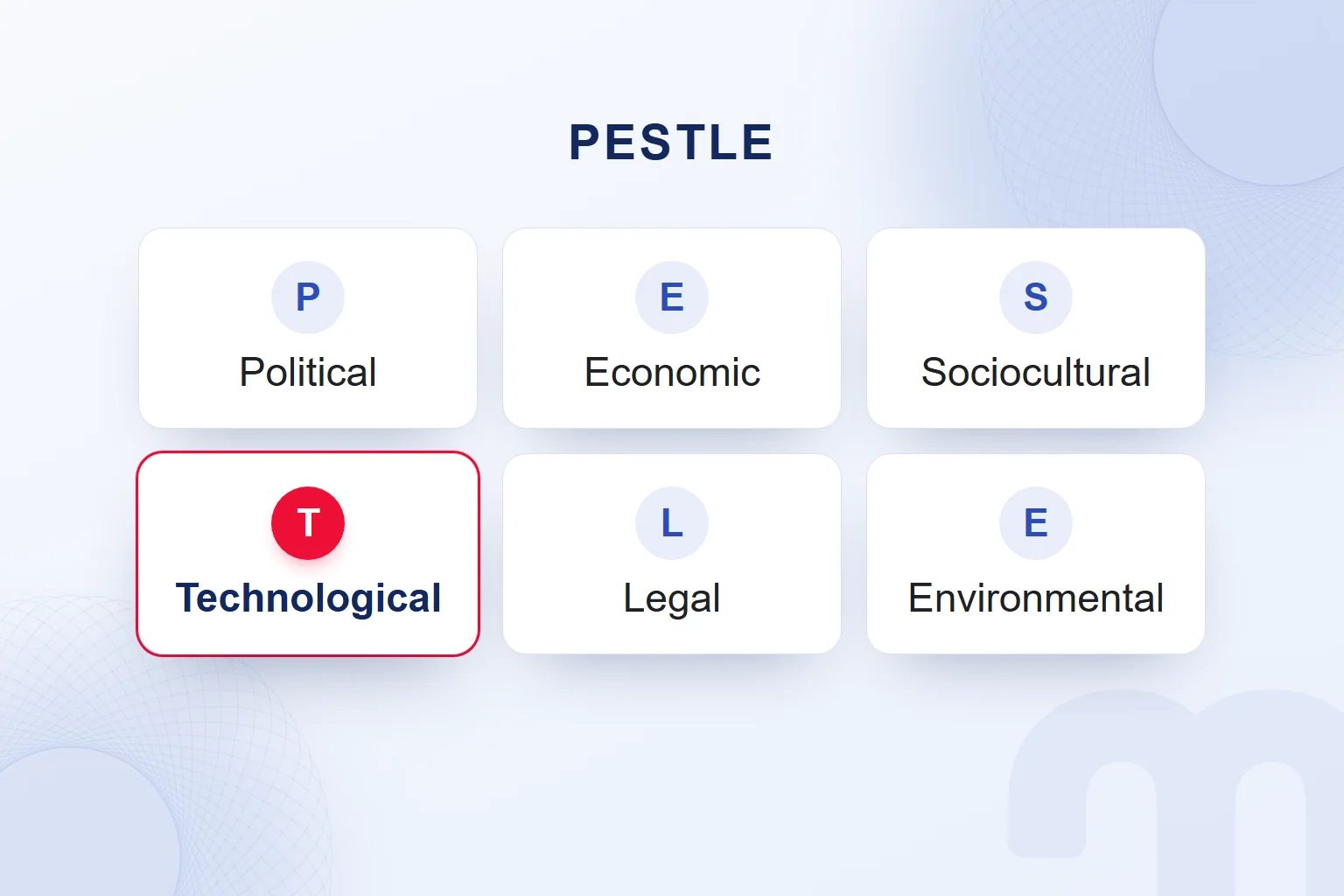
The guide’s PESTLE analysis sorts current and possible changes and trends under six headings. Political factors include elections and sector policy; economic factors include inflation, interest and exchange rates. Sociocultural covers demographic trends, norms and values. Technological covers new technologies, the maturing or ageing of existing ones, and R&D. Legal covers changes in legislation and sector regulation; environmental covers ecological regulation, international agreements and sustainability.
The PESTLE matrix has columns for the findings under each factor, their effect on the administration as an opportunity or threat, and “what should be done?”. In a brand plan, the order is also change, effect, task. When entering a new market, we examine PEST factors at the start of international marketing work. The scan’s opportunities and threats then go into the SWOT list.
How do you do a SWOT analysis?
We do a SWOT analysis by setting the scope, examining the internal and external environment, filling the SWOT list with evidence and drawing strategies from the findings. It comes at the start of the marketing plan and is tied to the brand’s goals.
The worksheet starts with the brand, the area of activity and the aim. In a representative case, the aim is “Prepare a content plan that answers product questions.” We focus only on conditions that affect this decision.
- We set the scopeWe name the brand or area under review and the plan’s aim.
- We examine the internal environmentWe set out strengths and weaknesses with their evidence.
- We scan the external environment with PESTLEWe sort the six factors and examine their effect on the brand.
- We fill the SWOT listWe place each finding in its column, with evidence on every row.
- We move to the four strategy boxesWe match internal and external rows and draw tasks from the links.
- We tie strategies to goalsWe write which goal each strategy serves and which SWOT findings it rests on.
We also feed the opportunity and threat rows with competitor analysis. Observations about competitors belong outside; the brand’s own capability belongs inside. We read the evidence in each row together with the strategy drawn from it. An unclear link means we rebuild the match.
Writing only “report” or “team view” as evidence makes a finding hard to recheck. We name the document, the record reviewed or the scope of the observation. Representatively, if we note that the content process is irregular, the evidence is a comparison of planned content with completed work. If product knowledge is a strength, the product descriptions and team answers that show it are reviewed. No conclusion is final until the brand’s own records are seen.
Next, we write which two findings each strategy combines. When evidence changes, the same links show which strategy needs another look.
What does a SWOT analysis template look like?
A SWOT analysis template is a table that groups strengths and weaknesses under the internal environment and opportunities and threats under the external one, with each item’s evidence. Rather than four empty boxes, we use the structure below, which explains what each heading covers. The evidence entries are representative examples of how to fill it.
| Heading | What goes in it | Evidence example |
|---|---|---|
| Strength | An internal capability that helps reach the goal | Team answers and prepared descriptions showing product knowledge |
| Weakness | An internal gap that needs improving | A record comparing the content plan with completed work |
| Opportunity | An external development expected to bring an advantage | Questions and search records showing demand for explanatory product information |
| Threat | An external condition that hurts the goal | Observations of competitor content meeting the same need |
In use, we replace each “What goes in it” note with a sentence about our own situation and add the supporting record. Instead of writing just “team” under strengths, we state which team capability helps reach the goal. Without evidence, we look for the basis before treating a row as a finding.
A two-column table can put Strength and Weakness on top and Opportunity and Threat below; each item’s evidence still stays beside it. Our three-column template keeps heading, explanation and evidence together, even on a narrow screen.
We add the scope and assessment date at the top. If several findings share a heading, we keep their evidence separate. We then use the items in the four strategy matches; the completed template shows which findings the decisions rest on.
How are SWOT strategies built?
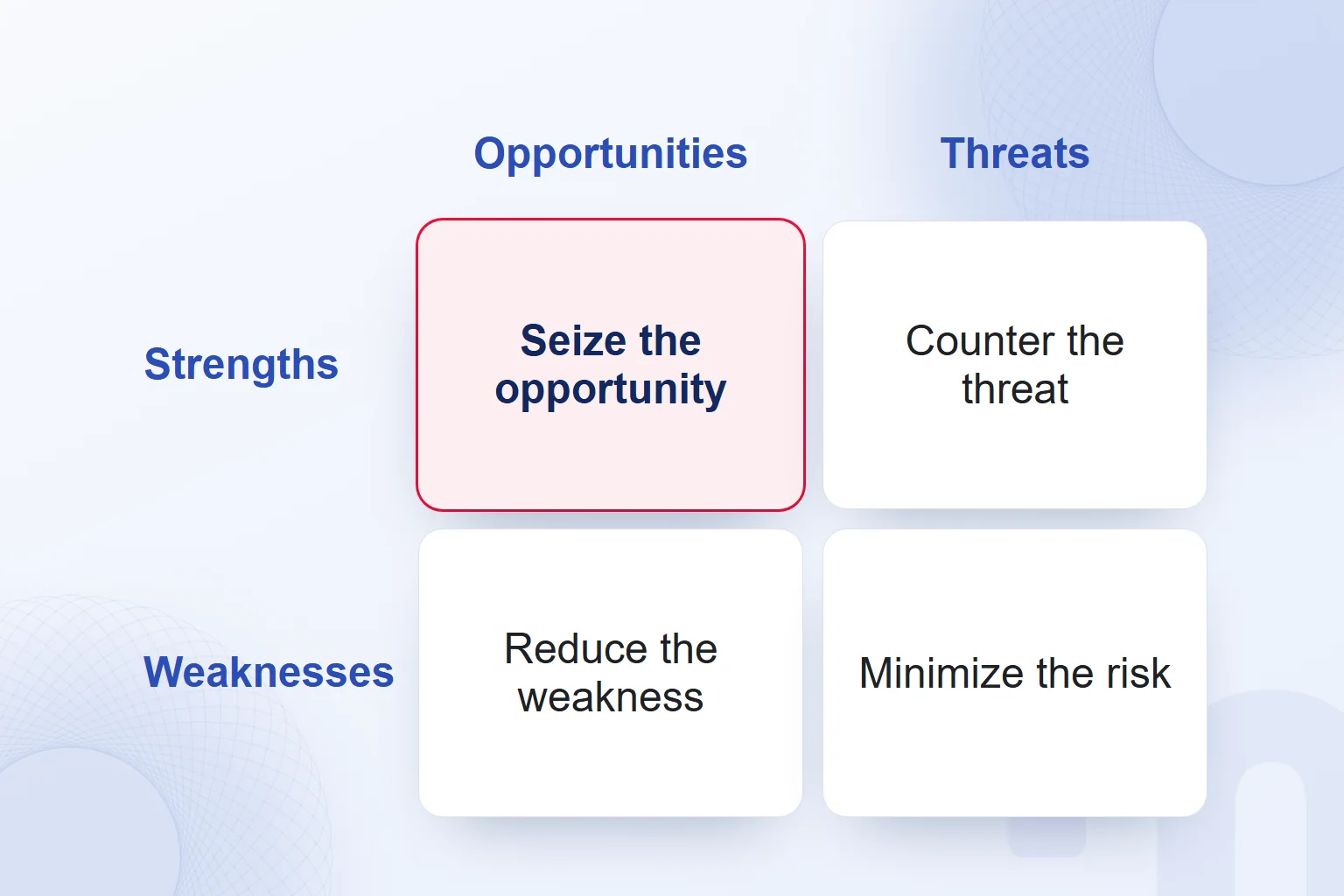
We build SWOT strategies in four boxes by matching strengths and weaknesses with opportunities and threats. According to the guide, the aim is not just to set out four lists but to guide strategy by examining the relationships between them. make these relationships visible.
The marketing equivalents in the table belong to a representative brand with strong product knowledge and an irregular content process. Externally, we treat demand for explanatory content as the opportunity and competitors’ explanatory content as the threat.
| Box | Aim in the guide | Representative marketing equivalent |
|---|---|---|
| Strength + Opportunity | Use strengths to benefit from opportunities | Meet the demand for explanatory content with product knowledge |
| Strength + Threat | Use strengths to minimize the negative effect of threats | Respond to competitor content with product knowledge |
| Weakness + Opportunity | Make the most of opportunities while reducing weaknesses | Organize the content process and answer the demand |
| Weakness + Threat | Minimize the negative effect of weaknesses and threats | Organize the content process and prepare for competition |
After writing a strategy, we return to the related SWOT rows. We never base a strategy on a capability not recorded as a strength. Work on a weakness states which gap it addresses. These links are how we check the consistency the guide asks for.
For the representative brand, “Produce more content” becomes “Use the team’s product knowledge to answer the topics the target audience wants explained.” In the second sentence, the strength and the opportunity are visible together. If the content process is irregular, we also write down the linked improvement work. That way, using the opportunity does not ignore the weakness on the list.
What does a SWOT analysis example in marketing look like?
We build a marketing SWOT example by showing a representative brand’s internal capabilities and gaps on the same list as the outside opportunities and threats. Our example is a representative brand that promotes its products online; the list does not describe a real company.
- Strength: the team’s product knowledge.
- Weakness: an irregular content process.
- Opportunity: audience demand for explanatory product content.
- Threat: competitors’ explanatory content answering the same need.
Product knowledge sits inside the team, so it is a strength; the demand comes from outside, so it is an opportunity. For a real brand, each item gets its own evidence.
As evidence, team answers to product questions can back the strength, and the content plan and completed work records the weakness. The opportunity rests on audience questions asking for explanations; the threat on an observation of competitor content answering the same questions. These records show how the scenario would be verified; no real client’s documents are presented here.
The resulting task is a content plan that answers product questions with existing knowledge, plus fixing the irregular production process. Our final check: is it clear which strength the planned work uses, which gap it reduces and which outside condition it answers?
First, the situation needs to be told apart:
- The same item looks like both a strength and an opportunity → if it is under our control, we write a strength; if outside, an opportunity.
- The opportunity list stays empty → we scan the external environment with PESTLE and feed it from competitor analysis.
- We struggle to write weaknesses → we ask “what should we improve?”
How do you do a personal SWOT analysis?
A personal SWOT analysis sets a career goal, then assesses one’s skills and habits as the internal environment and job market conditions as the external one. We use the same four headings and place evidence such as a certificate, project or job posting next to each row. Strengths and weaknesses describe current skills and habits open to improvement.
We narrow the goal first. Naming the role to apply for, or the field to prepare for, instead of “develop my career” sets which skills to examine. The personal SWOT example below is for a representative student seeking a content internship. The conditions and evidence are not a real person’s; in our own analysis, we use actual projects and postings.
| Heading | Representative student and career situation | Evidence example |
|---|---|---|
| Strength | Turning product knowledge into clear copy | The product write-up in a course project and its assessment |
| Weakness | Not finishing content tasks on schedule | The personal study plan compared with project delivery records |
| Opportunity | Internship postings in the target field open to students | Relevant postings whose requirements accept students |
| Threat | Some target postings asking for more experience than the candidate has | Experience requirements in the postings reviewed |
A certificate, a project and a posting do not prove the same thing. A certificate proves training, a project shows a skill, and a posting evidences an outside opportunity or condition. In a general sentence like “My communication is strong”, it stays unclear which work shows it; we make the finding concrete.
Matching the student’s strength with the opportunity leads to using the product write-up project in relevant internship applications. Matching the weakness with the opportunity means organizing the work plan for application materials. One uses a skill; the other addresses a gap.
When matching the strength with the threat, we check which posting expectations the existing projects meet. Weakness plus threat calls for another look at both the work routine and the postings. The analysis turns general adjectives into concrete tasks.
When the career goal changes, we reread the personal SWOT table. A project that fits one role may not meet another’s requirements. Recording the date and postings reviewed keeps an old opportunity from looking current.
Can you do a SWOT analysis with AI?
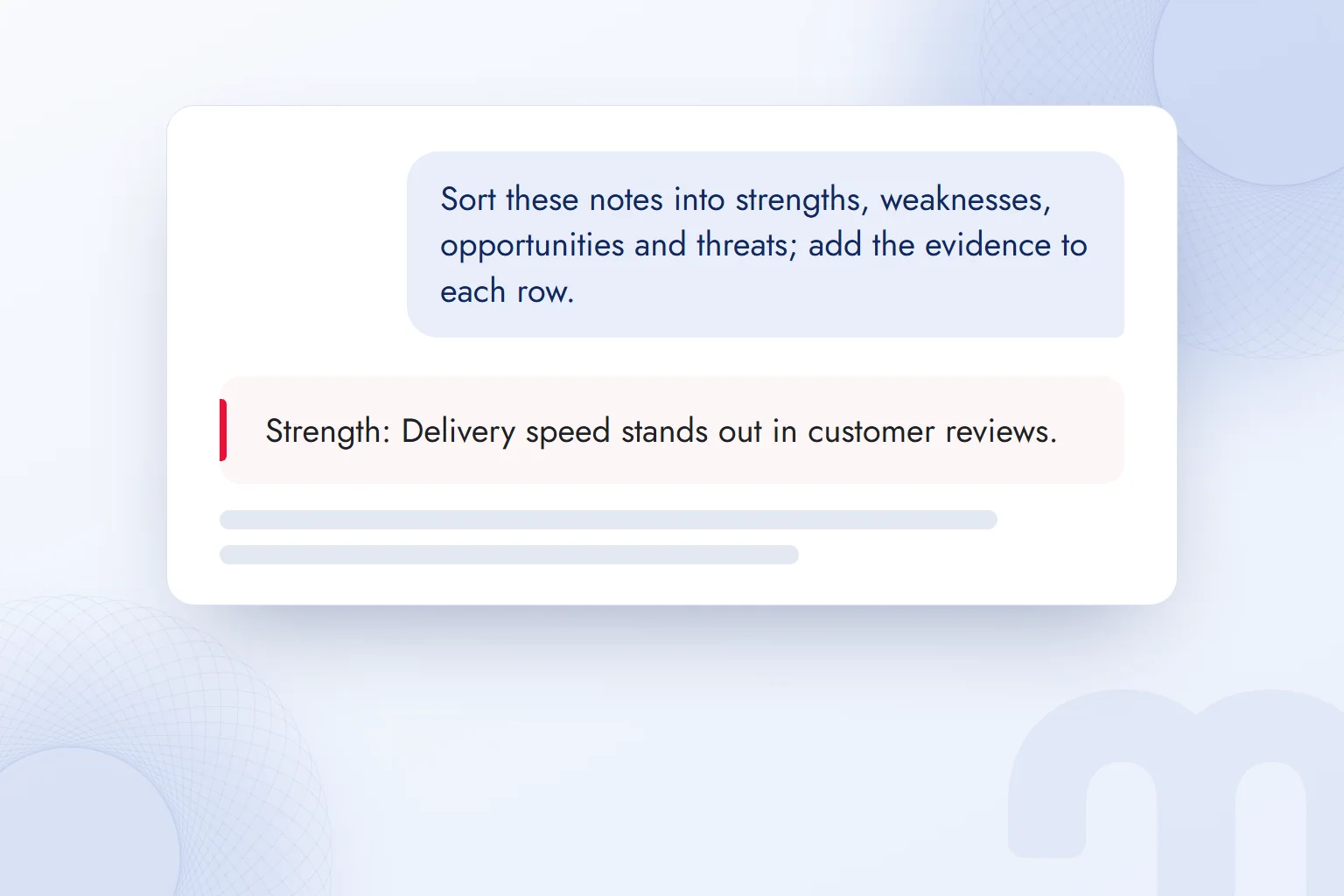
A SWOT draft can be prepared with AI; once notes are sorted under the four headings, we check each row’s evidence and heading ourselves. We can give ChatGPT, Gemini or Claude internal notes and external findings and ask for this classification. The starting material is notes on the situation to be analyzed.
We first prepare the goal, the scope and the basis of each note. A team observation and a record of outside demand go in as separate items, and findings are kept apart from planned tasks.
Example prompt: “Sort the notes below into strengths, weaknesses, opportunities and threats for the stated goal. Next to each row, write only the evidence given in the notes. Treat strengths and weaknesses as internal, opportunities and threats as external. Flag any item without evidence; do not add new data, company information or figures.”
Reading the output, we compare each row with its source note and check whether the wording claims more than the evidence supports. Representatively, if we supplied customer reviews praising delivery speed, we do not conclude “All our services are superior.” The wording stays limited to the delivery speed the reviews support.
If “We have a strong social media team” appears among the opportunities, we move it to strengths. We do not treat AI output as evidence to fill an opportunity area with no outside condition; we return to the PESTLE and competitor analysis notes. Missing evidence means new research. Our What is ChatGPT post covers the basics of the tool.
After the classification check, we build the four strategy matches. If we cannot explain which internal feature and outside condition a proposed task rests on, it is not a finished strategy. In real work, the delivery speed finding in the image below would sit next to its review records.
What are the limits of a SWOT analysis?
A SWOT analysis shows the situation at one moment; the list sets no priorities on its own, and items without evidence can mislead decisions. The guide’s aim is to guide strategy by examining the relationships between headings, and we tie our practice to that principle.
Before turning the list into decisions, we proceed by the type of gap:
- The list has no evidence → we look for data, a document or an observation for every row, and never use an unsupported statement as a verified finding.
- The items have no priority → we assess their link to the goal and the four strategy matches, and write which task comes first and why.
- The analysis is out of date → we make a dated update, re-examine internal conditions and external evidence, and correct the related strategies.
More items in one box does not say which strategy comes first. In the representative marketing example, even with demand for explanatory content, the irregular content process belongs in the same decision. Writing down an opportunity does not mean the work to use it is ready.
An update is more than a new date: we record which findings still hold, which changed and which strategies are affected. If an old outside condition has gone, we reassess the work resting on it. A new skill or improved process is reflected in the internal rows.
What are common mistakes in a SWOT analysis?
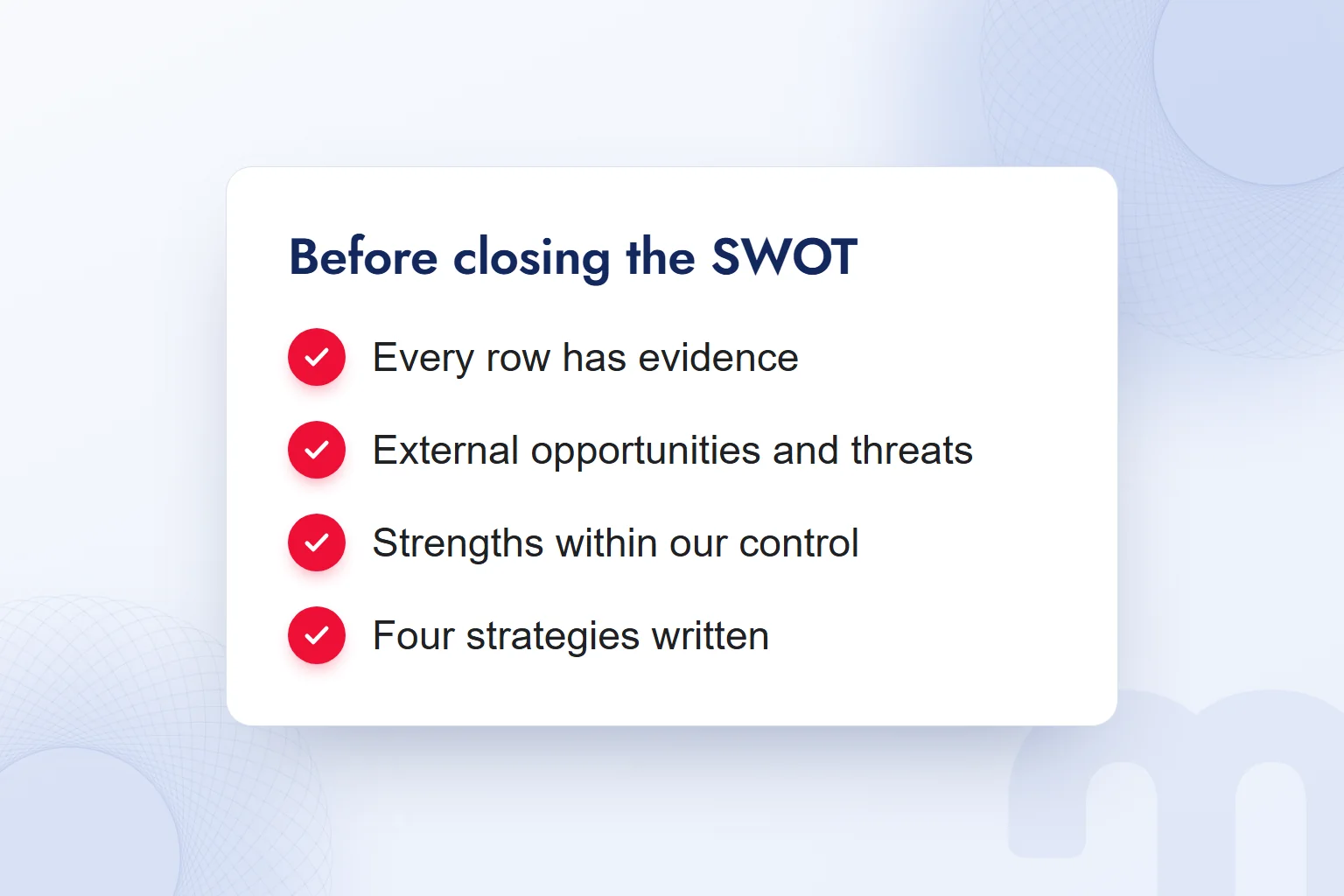
Common SWOT mistakes are not carrying the list into strategy, writing items without evidence and confusing external factors with the organization’s strengths. In the final check, we read each finding’s source, its box and the related strategy together.
The table lists common situations and how we handle each.
| Situation | What we do |
|---|---|
| We write the list and leave it there | we move to the four strategy boxes. |
| We write items without evidence | we add data, a document or an observation to each item. |
| We count a factor outside our control as a strength | we write it as an opportunity or a threat. |
In the final reading, we check that the strategies fit the conditions on the list. When presenting results to management, we use the structure in our how to make a presentation post, and we frame marketing decisions with our What is marketing post. For more guides on marketing plans and external assessment, see our digital marketing posts.
This term is part of our digital marketing glossary. You can reach the one-sentence definitions of the other terms there.
Frequently asked questions
What is a SWOT analysis?
A SWOT analysis is a planning method that examines strengths and weaknesses alongside external opportunities and threats to guide strategy.
What does SWOT stand for?
SWOT stands for strengths, weaknesses, opportunities and threats.
How do you do a SWOT analysis?
We set the scope and examine the internal environment and, with PESTLE, the external one. We fill the SWOT list with evidence, move to the four strategy boxes and tie strategies to goals.
What is a PEST analysis?
A PEST analysis is a management method that examines how political, economic, social and technological events or influences outside affect an organization’s performance.
What is the difference between SWOT and PEST analysis?
PEST scans the external environment; SWOT assesses internal and external together. We carry the external scan into the SWOT’s opportunity and threat rows.
How are opportunities and threats identified in a SWOT analysis?
We draw them from PESTLE results and feed them with competitor analysis. We explain the positive or negative effect of a factor outside our control and add evidence to every row.
How do you write a SWOT analysis example?
We set the goal, take strengths and weaknesses from the internal environment and opportunities and threats from the external one. We add evidence to each item and draw tasks from the four strategy matches. Examples not based on a real situation are marked as representative.
How do you do a personal SWOT analysis?
We set a career goal and assess skills and habits as strengths and weaknesses, and job market conditions as opportunities and threats. We add evidence such as a certificate, project or job posting to each row and turn the matches into concrete preparation tasks.

 How to make a presentation: AI tools, PowerPoint and proposal decksRead article
 How to make money on Instagram: eligibility requirements and toolsRead article
 What is a slogan? How to write one, and how it differs from a taglineRead article
 What is Pantone? Color palettes, color codes and brand colorsRead article
 What is a case study? How to write a client case study, with templateRead article
 What is a blog, and what is a blogger? How to write a blog postRead article
 Instagram post size: square, portrait, story and Reels dimensionsRead articleMost read
 What is a hashtag? How to use hashtags and how many to addRead article
Questions & answers
0 commentsNo questions yet; you can ask the first one.