





 Cihat Murat Yüksel
16 min read
What is an influencer? Influencer marketing and ad disclosure rules
What is an influencer and how do influencers earn money? We cover influencer types, choosing brand partners, ad disclosures and the conditions of the tax exemption in Turkey.Pro
Contents 18 sections
An influencer is a person who can shape their followers’ opinions and purchase decisions on social media; in Turkey, the Ministry of Trade guideline calls this person a “”, and posts made with a brand must be clearly disclosed.
At markention, we plan influencer partnerships together with the target audience, the content and the ad disclosure. We look at what the influencer covers, who they speak to and how they disclose the brand link, gifts included, so the disclosure is understood the moment a post is seen.
Every post involving a brand partnership makes clear at first glance that it is an ad; the platform label is used together with a disclosure such as #Ad.
What is an influencer?
An influencer is a person active on social media who can affect people’s opinions or choices. The Cambridge Dictionary adds that such a person can persuade others to follow a lifestyle or buy a product.
The Turkish Language Association (TDK) has no entry for “influencer”; the everyday Turkish term is “social media phenomenon”, defined as someone who uses digital tools well, stands out for some quality and can influence large audiences. For a commercial partnership, we also look at the guideline’s scope and disclosure duties.
Article 4 of the Ministry of Trade guideline defines a social media influencer as a person who engages in marketing communication from a social media account to sell or rent their own or an advertiser’s goods or services, or to inform or persuade a target audience. The guideline addresses advertisers, ad agencies, media organizations and everyone involved in advertising; it covers influencers’ commercial ads and practices aimed at consumers.
What does infuser mean, and how is it different from influencer?
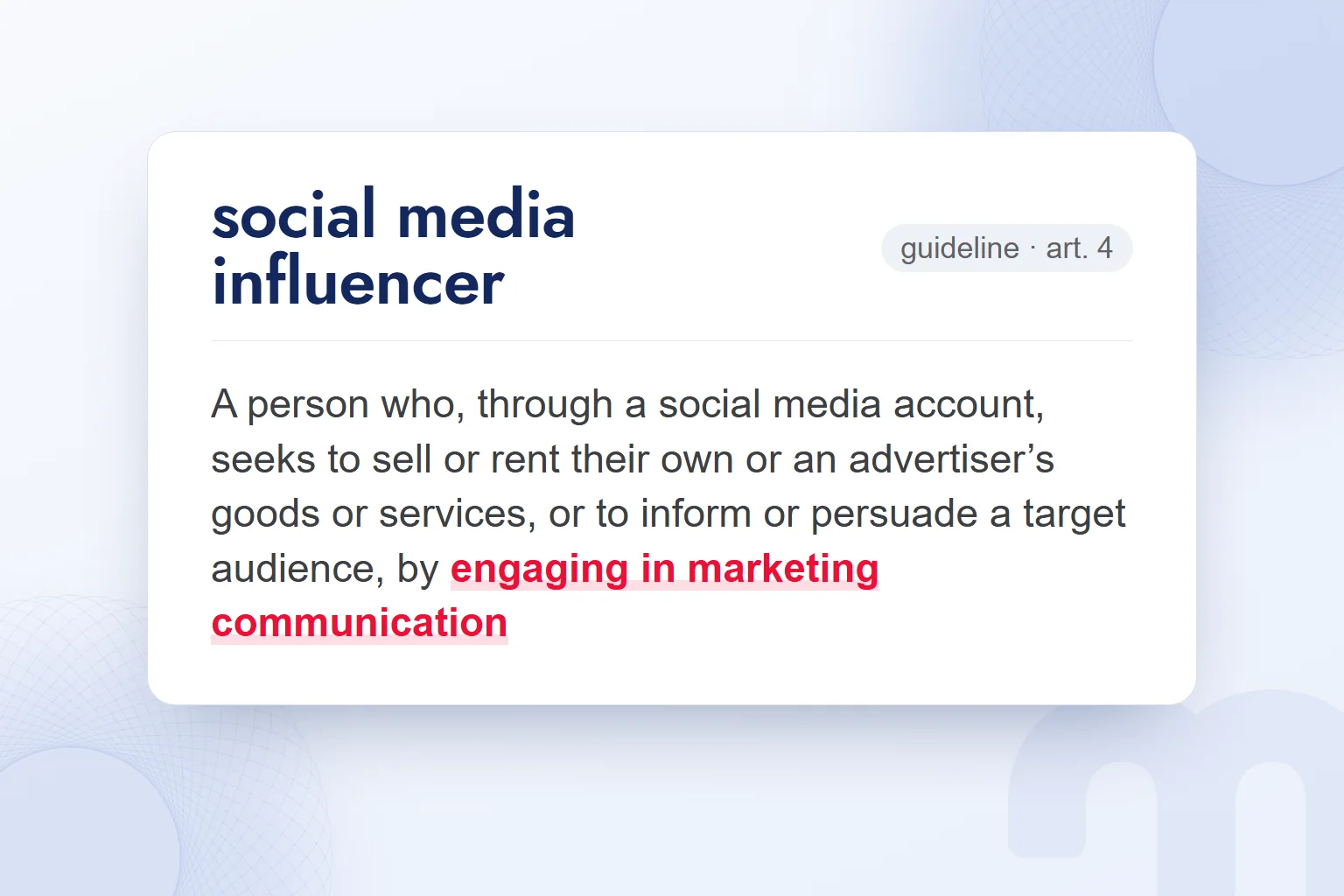
An infuser is a tool that steeps something, while an influencer is a person who can affect others. According to Merriam-Webster, an infuser is a device used especially for steeping tea leaves. The two words are different; for a creator with a social media account, we use “influencer”.
What is the difference between an influencer and a phenomenon?
Influencer describes a person’s power to influence and its use in marketing communication, while “phenomenon” has a broader meaning. Attracting attention is separate from a commercial partnership; when a so-called phenomenon publishes an ad, the guideline’s disclosure conditions still apply.
In Turkish dictionaries, the first sense of “phenomenon” is a person or thing that stands out for some quality and can influence large audiences; its other senses are fact and appearance. We tell from context which sense is meant.
The Turkish adjective for “influential” means able to affect others; striking, charismatic. The official term for the person is the guideline’s “social media influencer”. We use it and “influencer” interchangeably, and we never vary the disclosure duty according to how well known a person is.
What is influencer marketing?
Influencer marketing is marketing communication in which a brand partners with an influencer to promote its product or service on the influencer’s account. We set the goal, the product, the placement and whether the aim is to inform or to sell at the start.
Instagram Help defines branded content as organic content for which a creator is paid by a brand or business partner. A free product or service can also fall within this scope.
Branded content is not the same as an ad. With the creator’s permission, the brand can create a in Meta Ads Manager. According to Instagram Help, the creator is paid outside the platform; Meta does not support this payment through Instagram or Facebook. When a post will run on the influencer’s account and as an ad, we check the creator’s permission.
What are the types of influencers?
Influencers are described by the nano, micro and macro labels used for follower counts, or by the form of their relationship with the brand. We assess account size, content and role in the partnership together.
In Instagram’s branded content terms, creators include celebrities and public figures, while business partners are brands, advertisers and marketers; we separate their duties when planning.
A creator paid by a brand to produce content in a user’s voice is a UGC creator; what sets an influencer apart is influence over their own audience. We plan production needs and the target audience together and check how the account disclosed earlier ads.
What are nano, micro and macro influencers?
Nano, micro and macro are industry labels based on follower count; they have no official thresholds. So we never attach a fixed follower range to each. When a project starts with “we need a micro influencer”, we first define the people to reach and the topic.
We choose on audience fit, topical relevance and how earlier partnerships were disclosed. If we want to show how a product is used, we look at how the candidate explains similar topics. Is the content clear, do the comments contain product questions, and do the replies answer them?
Between nano and macro, follower counts alone never decide: we apply the same goal to every candidate, record why we chose and never assume a smaller account brings more trust or sales.
What is a brand influencer (brand ambassador)?
A brand influencer is an influencer in a long-term partnership with a brand, in other words a brand ambassador. The disclosure duty still applies. Even when followers know about the relationship, every commercial post is clearly labelled as an ad.
For an ambassadorship, we set the content and how the relationship is shown from the start, and keep the same disclosure checks in every piece. A long partnership never allows a gift to be shown as a purchase, or an untried product as tried.
How much do influencers make, and how do they earn money?
There is no official average; earnings vary with partnership terms, platform and income stream. We treat brand partnerships, affiliate links, platform revenue sharing and sales of the influencer’s own products or services separately. We never derive earnings from follower count alone.
To understand an offer, we read the content, placement and ad usage together; producing a post is not the same as permission to run it as a partnership ad.
Income streams
Each income stream requires deciding where the payment comes from and how the relationship will be disclosed. In the content plan, we match every stream with its disclosure.
- Brand partnership: Sponsored content promotes the brand’s product or service. Where money, a free product or a discounted service is received, the relationship is disclosed in line with the guideline. Sending a product instead of paying does not remove this duty.
- Affiliate link: On Instagram, content with an affiliate link carries the “Paid partnership with” label; tagging the business partner is not required. Alongside the platform label, we also meet the guideline’s disclosure duty and check that the relationship is clear at first glance.
- Platform revenue sharing: The YouTube Partner Program is an example. We assess platform revenue separately from brand sponsorship. If a video also contains paid product placement, an endorsement or a sponsorship, it is declared to YouTube and the guideline’s disclosure conditions apply.
- Selling one’s own product or service: An influencer can also earn from their own products or services. The guideline’s definition covers marketing communication for goods or services that belong to the person, so promotion here must also be clear and distinguishable.
YouTube monetization requirements
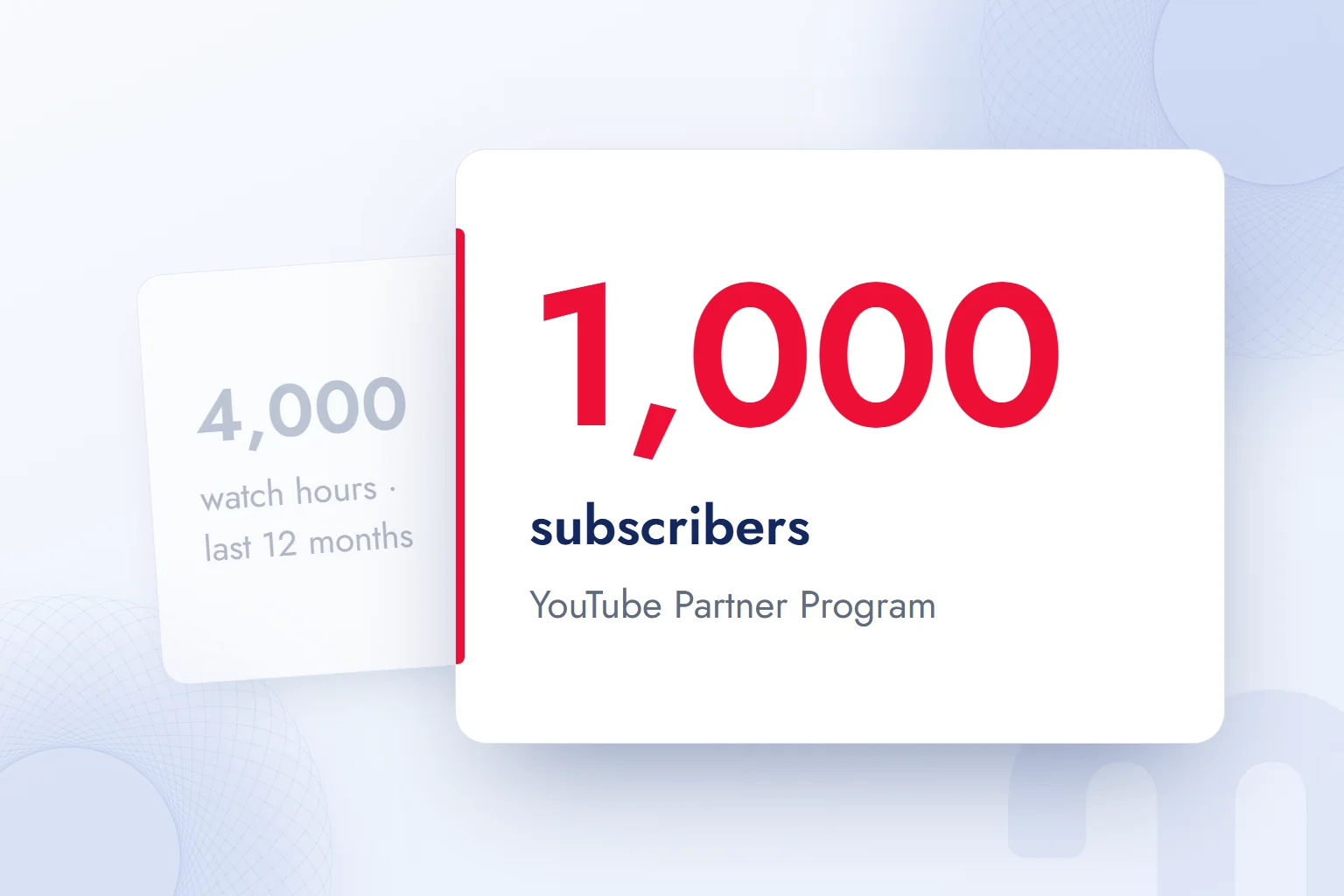
The YouTube Partner Program requires 1,000 subscribers plus one of two paths: 4,000 valid public watch hours on long-form videos in the last 12 months, or 10 million valid public Shorts views in the last 90 days. The subscriber condition applies to both; we never add watch time and Shorts views together into one threshold.
YouTube Help also lists living in a country or region where the program is available, no active Community Guidelines strikes, 2-Step Verification and an AdSense for YouTube account. Reaching the thresholds does not mean automatic entry; the channel is reviewed, and a decision usually comes within a month.
We read these figures as eligibility conditions, not income. We track the 12-month and 90-day periods separately. Meeting program conditions and disclosing a sponsored video are different checks; we complete each at its stage.
How do influencers invoice and pay tax in Turkey?
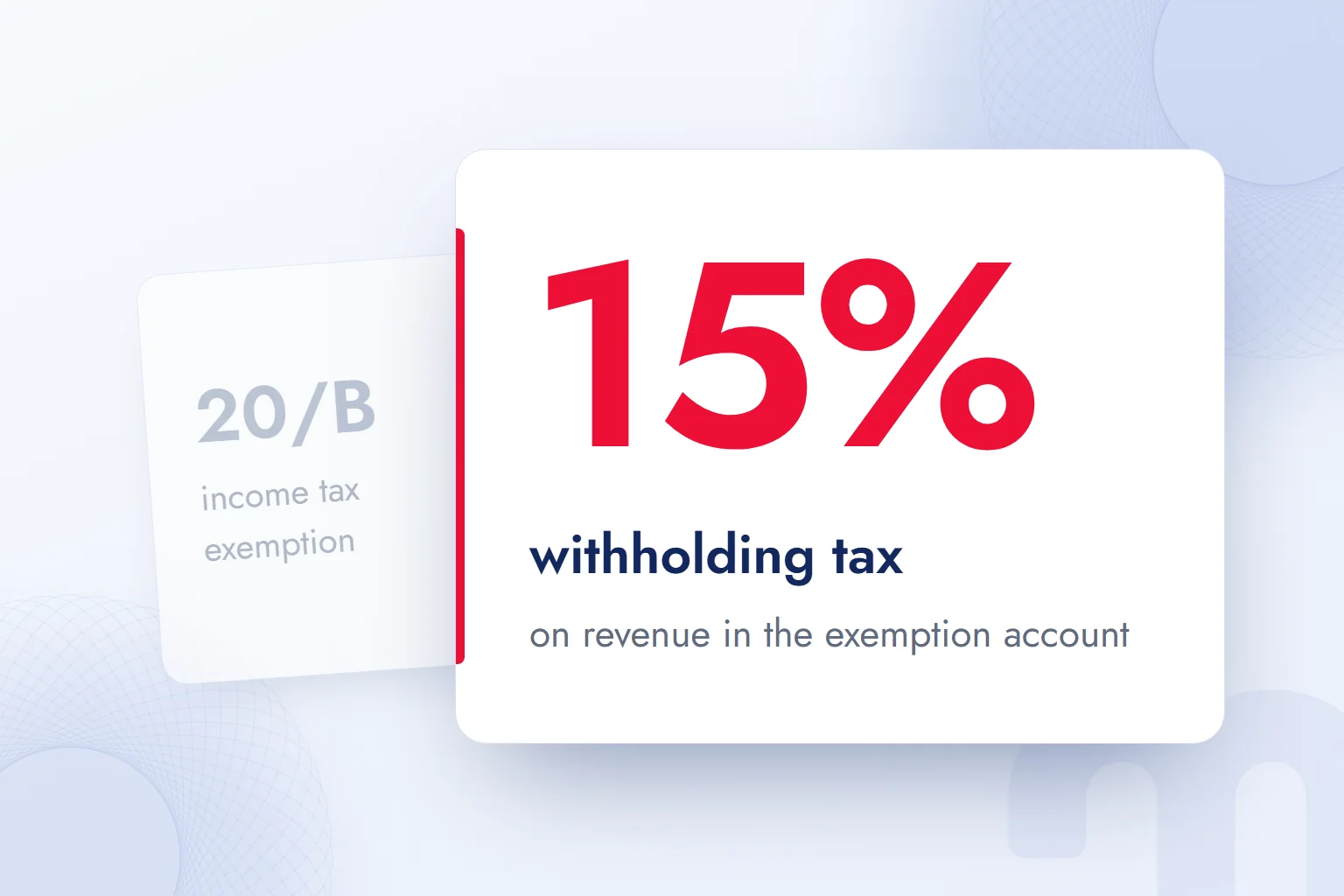
In Turkey, when the conditions of the exemption in repeated Article 20/B of the Income Tax Law are met, the bank withholds 15% income tax from the amount paid into the account.
According to the Turkish Revenue Administration’s guide to the earnings exemption for social content creators and mobile app developers, a creator obtains an exemption certificate from the tax office. All revenue from the activity is collected through a dedicated account at a bank in Turkey, and the bank applies 15% withholding to the amounts paid in.
The law also states when the exemption does not apply: if total earnings exceed the fourth income bracket of the Article 103 tariff, or if revenue is not collected through the designated account.
Depending on collection and earnings, the rule works out as follows:
- Earnings below the threshold, all payments in one account → An exemption certificate is obtained; all revenue is collected in the dedicated account at a bank in Turkey, and the bank withholds 15%.
- Threshold exceeded → The exemption does not apply and the general rules take over; we confirm the treatment with a certified public accountant.
- A payment arrived in another account → The condition of collecting all revenue through the designated account is broken; the exemption cannot be used.
For “how does an influencer invoice?”, the bank deduction alone never settles documents and steps; we pass the exemption certificate, total earnings and collection details to the accountant. Details are in the Revenue Administration’s guide.
What rules apply to influencer advertising?
Influencer ads must be clear, understandable and distinguishable, and any benefit received from the brand must be clearly stated. In Turkey, the guideline rests on Law No. 6502 on Consumer Protection and the Regulation on Commercial Advertising and Unfair Commercial Practices.
Article 5 of the guideline prohibits audio, written and visual on social media. Where money is received, or goods or services come free or discounted, we disclose the relationship with wording that suits the platform.
We make labels and disclosures stand out from colors and backgrounds, at an easily readable size. Consumers should understand a post is an ad the first time they see it, without doing anything else. The disclosure must not get lost among other hashtags.
In photo and message posts, we use at least one listed label or disclosure together with the advertiser’s name, brand or trade name. The guideline lists five hashtags, used in Turkish: the equivalents of #Ad, #Ad/Promotion, #Sponsor, #Collaboration and #Partnership, with #Reklam (“#Ad”) the most familiar. Wording such as “In collaboration with @examplebrand”, “Provided by @examplebrand.” or “Received as a gift from @examplebrand.” can also be used. We choose according to the nature of the partnership; for a gift, the wording must describe the benefit accurately, and naming the brand’s account alone is not enough.
| Format | Where the disclosure goes | Example wording (translated) |
|---|---|---|
| Photo and message posts | In, below or in the caption of the post | #Ad, #Collaboration, “In collaboration with @examplebrand” |
| Video and live streams | Throughout the video, in the title, in the description or at the start of the ad segment; written and spoken | “This video contains a paid collaboration with Example Brand.” |
| Podcast | At the beginning, middle and end; written and spoken | “This podcast contains an ad about Example Brand.” |
| Short-lived content such as stories | Throughout the post | #Ad, “Provided by @examplebrand.” |
A video disclosure stays visible without viewers tapping “more”. In stories, we show it with the advertiser’s identifying information for the whole post.
Before publication, we read the content as the consumer will see it and fix a disclosure lost in the background. For video, we also listen for the spoken disclosure; for a podcast, we check the beginning, middle and end.
How do Instagram and YouTube show a partnership?
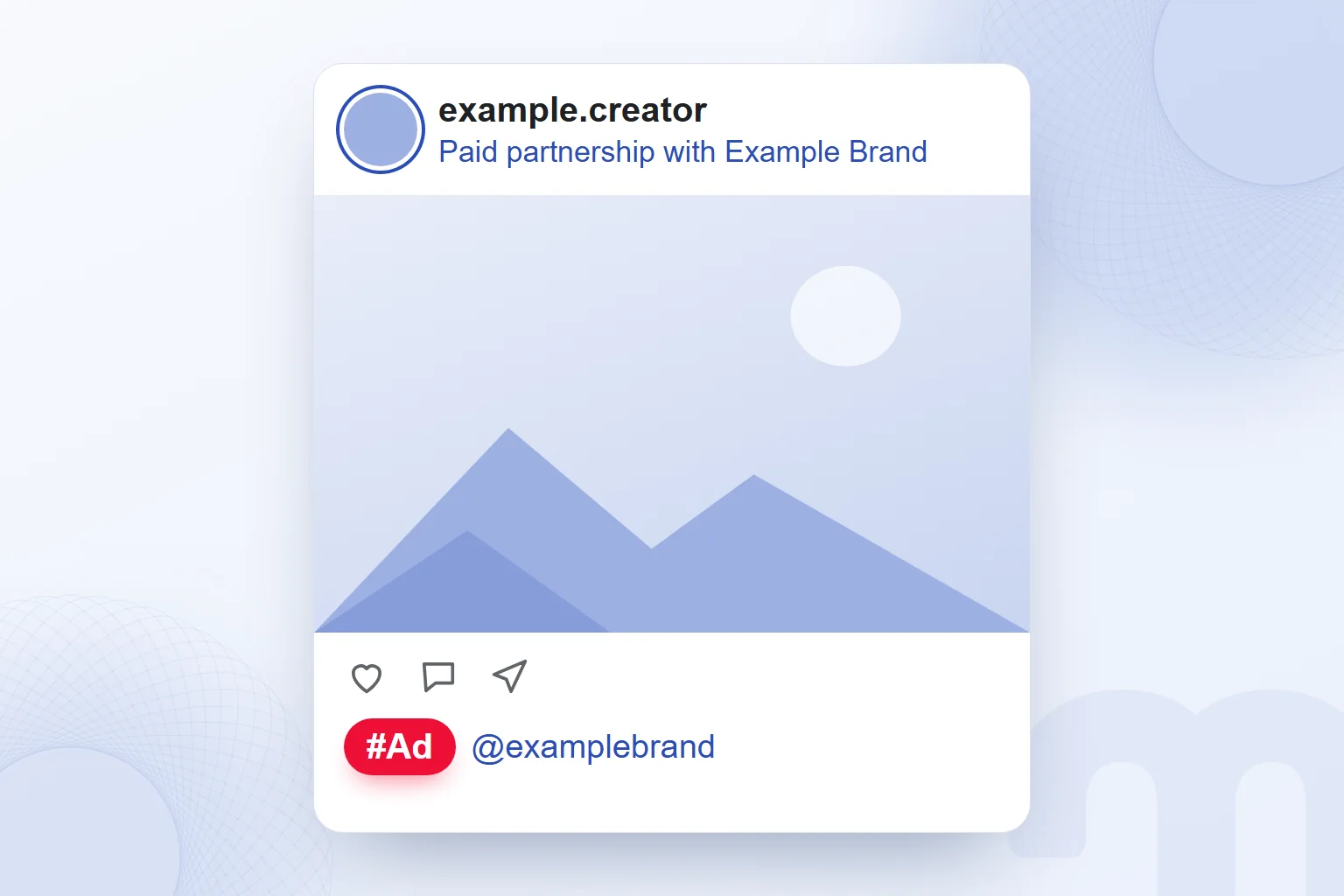
Instagram shows a partnership with the “Paid partnership with” label, while YouTube adds a disclosure message to the video once paid promotion is declared. We complete the platform declaration as part of preparing the post.
On Instagram, when value is exchanged, we tag the business partner and the “Paid partnership with” label appears above the post. According to Instagram Help, this applies to personal and professional accounts. Content with an affiliate link also carries the label; tagging the partner is not required.
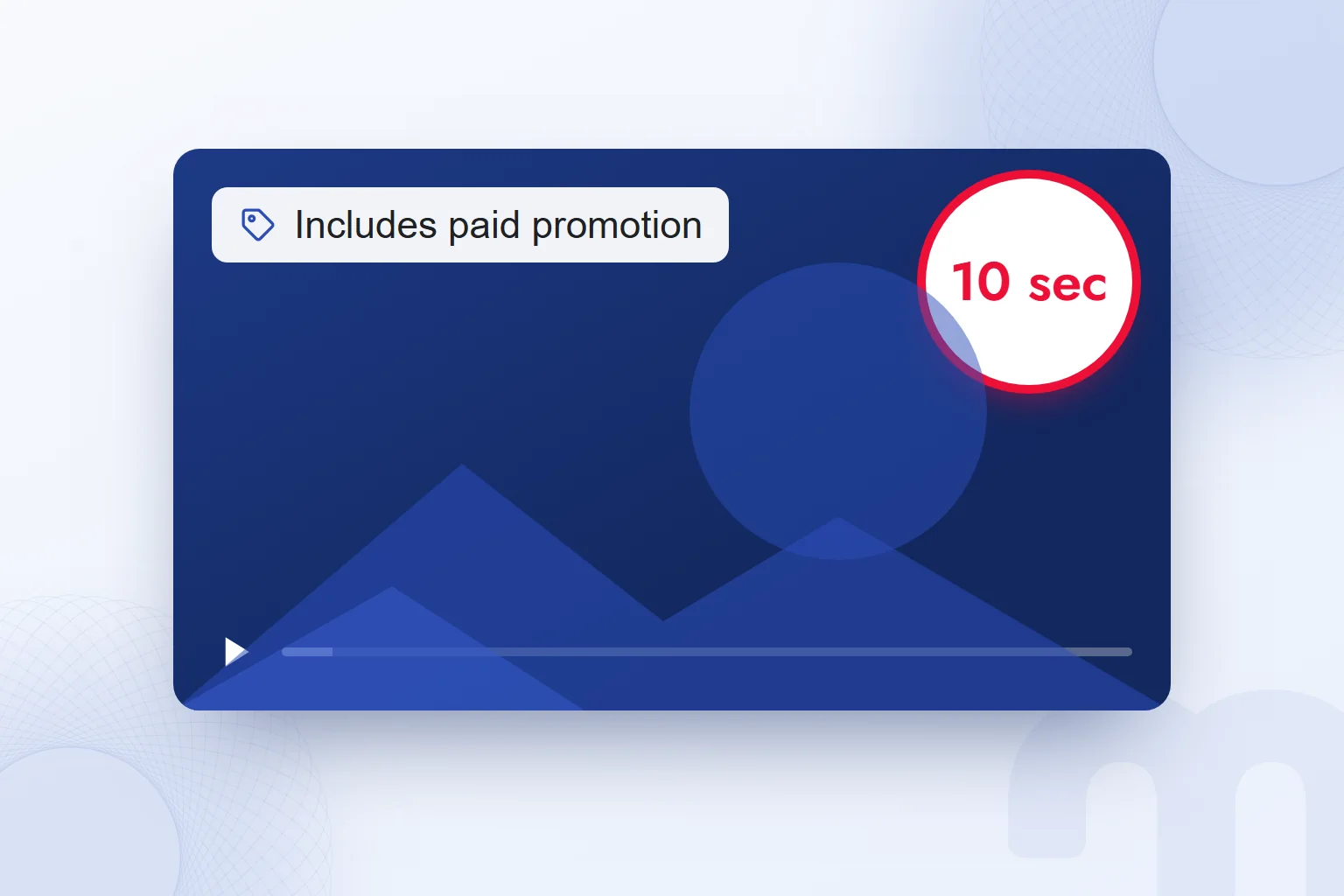
On YouTube, we tick the paid promotion box under “Paid promotion” in the video details. According to YouTube Help, a disclosure message is added automatically at the start and shown for 10 seconds. Ads keep running; the video is removed from YouTube Kids. Learning and meeting local legal disclosure obligations is the responsibility of the creator and the brand.
A platform label does not replace the guideline’s disclosure. We use it together with a disclosure such as #Ad and check that both are visible.
How do you become an influencer, and what are the obligations?
Becoming an influencer means producing regular content on a topic and building trust with an audience; commercial posts must meet advertising obligations. Instagram’s Creator Marketplace requires being 18 or older, a professional public account and at least 1,000 followers. We cover platform requirements and the tax exemption in our guide to making money on Instagram.
When starting out, we decide on the topic and whose questions we answer, separate personal experience from brand information and check wording against the product’s verified facts.
Regular production is more than posting frequency: we follow recurring questions into the next piece. When an offer arrives, we check how the product fits the account’s topic and audience, then settle format, placement and disclosure.
We never read the Creator Marketplace conditions as a general starting requirement for all influencers. For disclosure, we rely on Instagram’s rule covering personal and professional accounts alike.
Under Article 6 of the guideline, an influencer may not endorse a product they have not experienced, or post about it as if they had. They may not make health claims that breach regulations, or include research and test claims that are not based on objective, measurable, numerical data and cannot be proven. They may not promote or direct people to the goods and services of doctors, dentists, veterinarians, pharmacists or healthcare institutions.
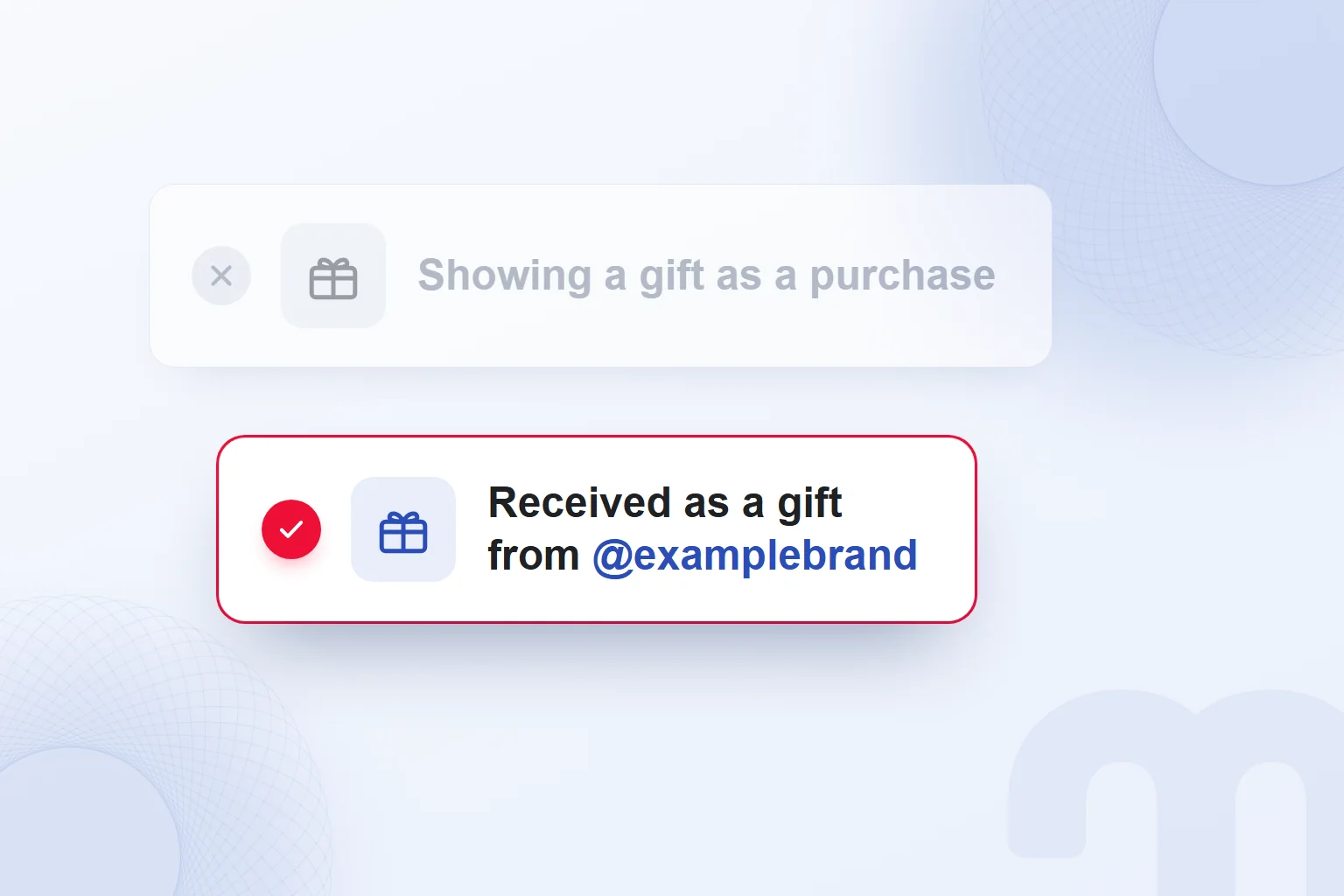
An influencer may not present a gift as a purchase, or appear to be just a consumer while benefiting from the advertiser. When a filter or effect is used in a product ad, they state clearly that the image is filtered. They may not systematically create or use fake or non-existent identities in bulk. In partnerships we run for brands, these rules are part of the pre-publication check.
The situation is usually one of these:
- The product was sent as a gift → we make sure the post says so, with wording such as “Received as a gift from @examplebrand”.
- A filter was used on the image → we ask for the post to state clearly that the image is filtered.
- The product has not been tried yet → we never approve a post that presents it as tried.
What do we look for when choosing an influencer?
When choosing an influencer, we look at audience fit, content voice, engagement quality, disclosures in earlier partnerships and brand safety. Each criterion becomes a question answered from the candidate’s posts. Follower count never replaces this review.
| Criterion | What we look at |
|---|---|
| Audience fit | Whether the account’s audience overlaps with the target audience we want to reach. |
| Content voice | Whether the messaging fits the brand’s topic and the product’s verified information. |
| Engagement quality | How relevant the comments are, what the questions ask and how the creator replies. |
| Disclosure in earlier partnerships | Whether the commercial relationship is clear at first glance, with the right labels and disclosures. |
| Brand safety | Whether product experience, health claims, unproven claims, and gift and filter disclosures comply with the guideline. |
Beyond visuals, we read how the creator describes experience, answers questions and disclosed earlier gifts, and we record which criterion each piece of content meets.
Comment count is not a sales result. We review engagement quality while selecting and assess the outcome with data from a UTM-tagged link or a code unique to the influencer.
Influencer marketing agency or direct partnership?
We choose between an agency and a direct partnership based on which team will handle selection and content checks. If the brand team will track the goal, content, disclosures and results in-house, a direct partnership is an option. Otherwise, we write down the agency’s tasks.
An agency does not remove the advertiser’s responsibility: under the guideline, advertiser, ad agency, media organization and influencer are each responsible. The proposal sets out who reviews the draft, who checks the disclosure and who follows up corrections, and which check comes before final approval.
If a partnership ad is planned on top of the creator’s post, we check the usage permission. We tie partnership ads into the ad plan as part of our Meta Ads consulting, and describe expectations for production, posting and ad usage within the same scope.
How do brands work with influencers?
Brands work with influencers by defining goal and audience, writing disclosure rules into the contract, reviewing content and measuring results. We follow this order alongside the advertiser’s responsibilities.
Under Article 11 of the guideline, the advertiser informs the influencer about the guideline and asks them to comply with the law, the regulation and the guideline. If the influencer may use third parties, the advertiser points out that they must follow the rules too. It works to ensure obligations are met and acts against breaches, and it cannot avoid these duties by calling them “the influencer’s responsibility”. In partnerships we run for brands, these steps are tied to the contract and the pre-publication check.
Under Article 12, each party is separately responsible, and correcting a non-compliant ad afterwards does not remove that responsibility.
- We write down the goal and audienceWe define the purpose of the promotion and the people we want to reach.
- We choose the influencerWe review audience fit, topical relevance and earlier disclosures.
- We write the disclosure rule into the contractWe set the wording and where it goes on each format.
- We read the content before publicationWe check product messaging, experience claims and the ad disclosure.
- We add the label and tracking linkWe use the platform label, the ad disclosure and a UTM-tagged link or code unique to the influencer.
- We assess the resultWe compare the result from the link or code with the original goal.
When measuring, we return to the original purpose, record which link or code belongs to which influencer and show which post was assessed, so results are never mixed up.
Reusing an account rests on both the content check and the measured result.
Common situations and our response:
| Situation | What we do |
|---|---|
| The influencer’s audience does not match our target | we do not start the partnership. |
| The contract has no disclosure rule | we add the disclosure wording and its placement to the contract. |
| The content is live but has no disclosure | we ask for an immediate correction, knowing a later fix does not remove responsibility. |
Our other guides on influencer partnerships, content production and ad planning are on our blog.
This term is part of our digital marketing glossary. You can reach the one-sentence definitions of the other terms there.
Frequently asked questions
What does influencer mean?
An influencer is a person who can shape their followers’ opinions and purchase decisions on social media. In Turkey, the Ministry of Trade guideline calls this person a “social media influencer”.
What does infuser mean?
According to Merriam-Webster, an infuser is a device that steeps something, especially tea leaves. The word for the person on social media is influencer.
What is a social media phenomenon?
In its first dictionary sense, a phenomenon is a person or thing that stands out and can influence large audiences. In Turkish, it is the everyday word for an influencer.
What is influencer marketing?
Influencer marketing is marketing communication in which a brand partners with an influencer to promote its product or service on the influencer’s account.
Do influencers have to write #Ad on sponsored posts?
Disclosing the partnership is mandatory; in Turkey, #Reklam (“#Ad”) is one of the listed hashtags. Photo and message posts use at least one suitable label or disclosure with the advertiser’s identifying information.
Is a brand responsible for an influencer’s mistakes?
Brand and influencer are each responsible for compliance; the brand cannot call it “the influencer’s responsibility”. Correcting an ad afterwards does not remove responsibility.
How much do influencers make?
There is no official average; earnings vary with partnership terms, platform and income stream. Brand deals, affiliate links, platform revenue sharing and own sales are the income streams.
Do influencers pay tax in Turkey?
When the Article 20/B exemption conditions are met, the bank withholds 15% income tax from revenue paid into the designated account. If the earnings threshold is exceeded or revenue goes elsewhere, the exemption does not apply. We confirm the treatment with a certified public accountant.

 What is a content creator? Meaning, creator accounts and brand dealsRead article
 What is a repost? How to repost on Instagram and TikTokRead article
 What is a vlog? How to vlog, types of vlogs and a vlog plan for brandsRead article
 What is marketing and what does it do? Tasks, 4Ps and success metricsRead article
 How to make a presentation: AI tools, PowerPoint and proposal decksRead articleMost read
 How to make money on Instagram: eligibility requirements and toolsRead article
 What is a slogan? How to write one, and how it differs from a taglineRead article
 What is Pantone? Color palettes, color codes and brand colorsRead article
Questions & answers
0 commentsNo questions yet; you can ask the first one.