





 Cihat Murat Yüksel
7 min read
Cihat Murat Yüksel
7 min read
How to do a competitor analysis: stages and an action plan
Competitor analysis compares the products, prices, messages and channels of businesses competing for the same customer, then turns the findings into our own action plan.Pro
Contents 9 sections
Competitor analysis is the work of identifying the businesses competing with us for the same customer, comparing their products, prices, messages and channels, and turning the findings into an actionable plan for our own business. We also add the distinction, assessing competition for the customer separately from competition in search results.
We start from the customer’s need: who meets it, what they promise and where they reach the customer. Next to each finding we write the decision it calls for, ending with a guide to prepare, a message to test or a service difference to explain.
In a competitor analysis, every finding is tied to a task to be done, and the response is built on the brand’s own edge.
What is competitor analysis, and what is it for?
Competitor analysis compares businesses that reach the same customer to decide where we compete and how we explain our own edge. Also called competitive analysis, it looks at product, price, message and channel decisions together.
If a competitor answers a customer question our site leaves open, we add it to our content plan. Where we cannot compete on price, we look at our edge in service, delivery or support. When a competitor is strong in an area, we state which capability our own response relies on.
We narrow the scope first, naming the customer need and the product or service we compare, so businesses serving different needs are not judged by one yardstick.
What are the stages of competitive analysis?
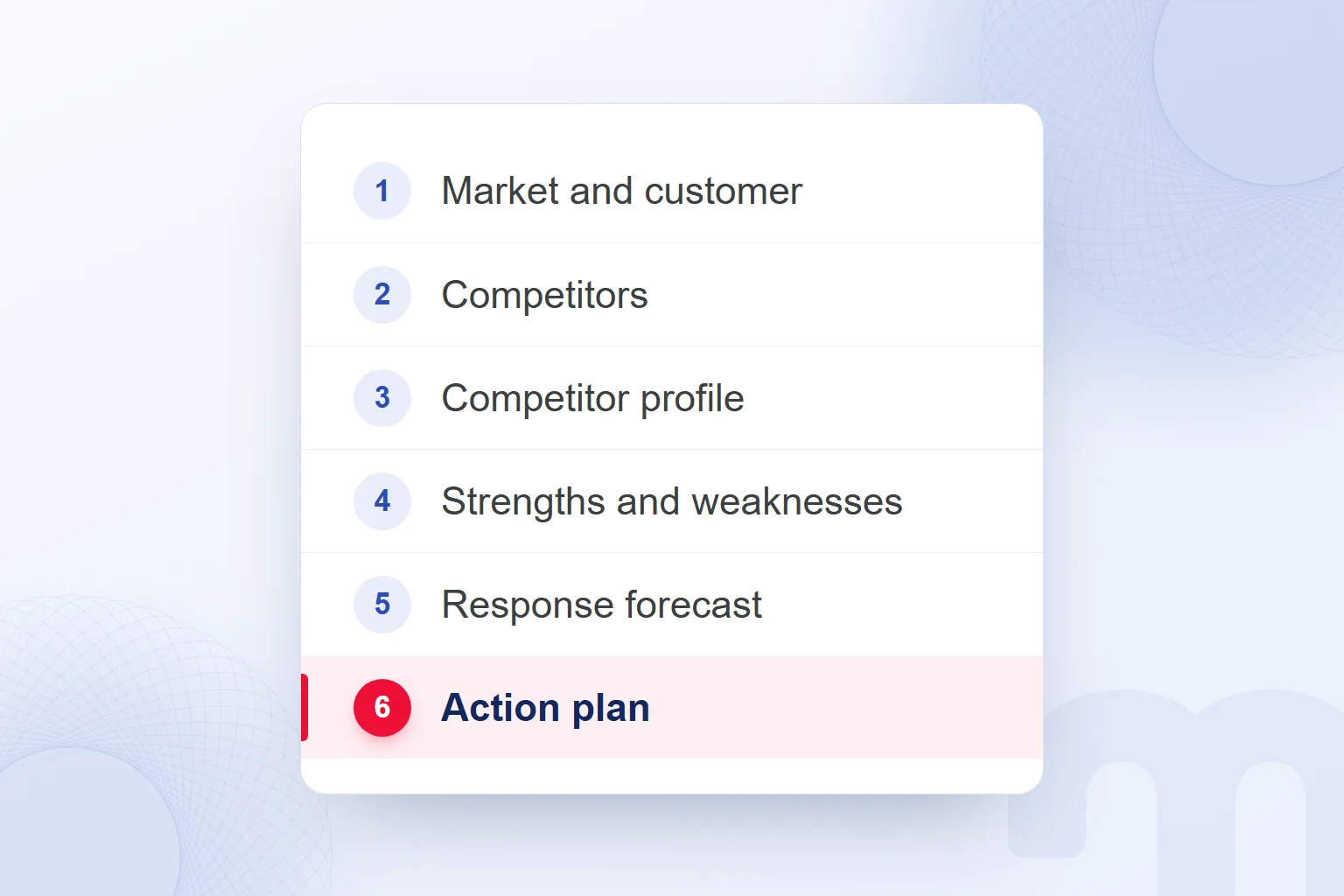
The stages of competitive analysis are defining the market and customer, choosing competitors, profiling them, comparing strengths and weaknesses, and the action plan. Each stage’s result becomes the input for the next decision.
- We define the market and customerWe write down the business, the customer’s need and the product or service that meets it.
- We identify competitorsWe separate direct and indirect competitors from search competitors visible for the target query.
- We profile each competitorWe record product and price, message, ads, search visibility, customer reviews and channels.
- We compare strengths and weaknessesWe set competitors’ strong areas next to what we offer and pinpoint the differences.
- We forecast their responsesWe review campaign periods, price changes and new products to predict how a competitor will react.
- We write the action plan and track itEach finding gets a task, an owner and a date; at the next review we check both.
A SWOT analysis looks at our own business through strengths, weaknesses, opportunities and threats. Competitor analysis mainly feeds the opportunity and threat rows. A question a competitor leaves unanswered is a content opportunity; our own strengths and weaknesses we review separately.
How do you identify competitors: direct, indirect and search?
We classify competitors as direct, indirect or search competitors, based on how they meet the customer’s need and how visible they are for the target query.
A direct competitor offers the same product or service to the same customer. An indirect competitor meets the same need with a different solution. A search competitor ranks on the first page for our target query and need not do the same business.
For a coffee shop, direct competitors are other coffee shops in the neighborhood; indirect competitors are stores selling home brewing equipment. Search competitors are the recipe sites at the top for “how to make pour-over coffee”. We look at all three, each for a different question.
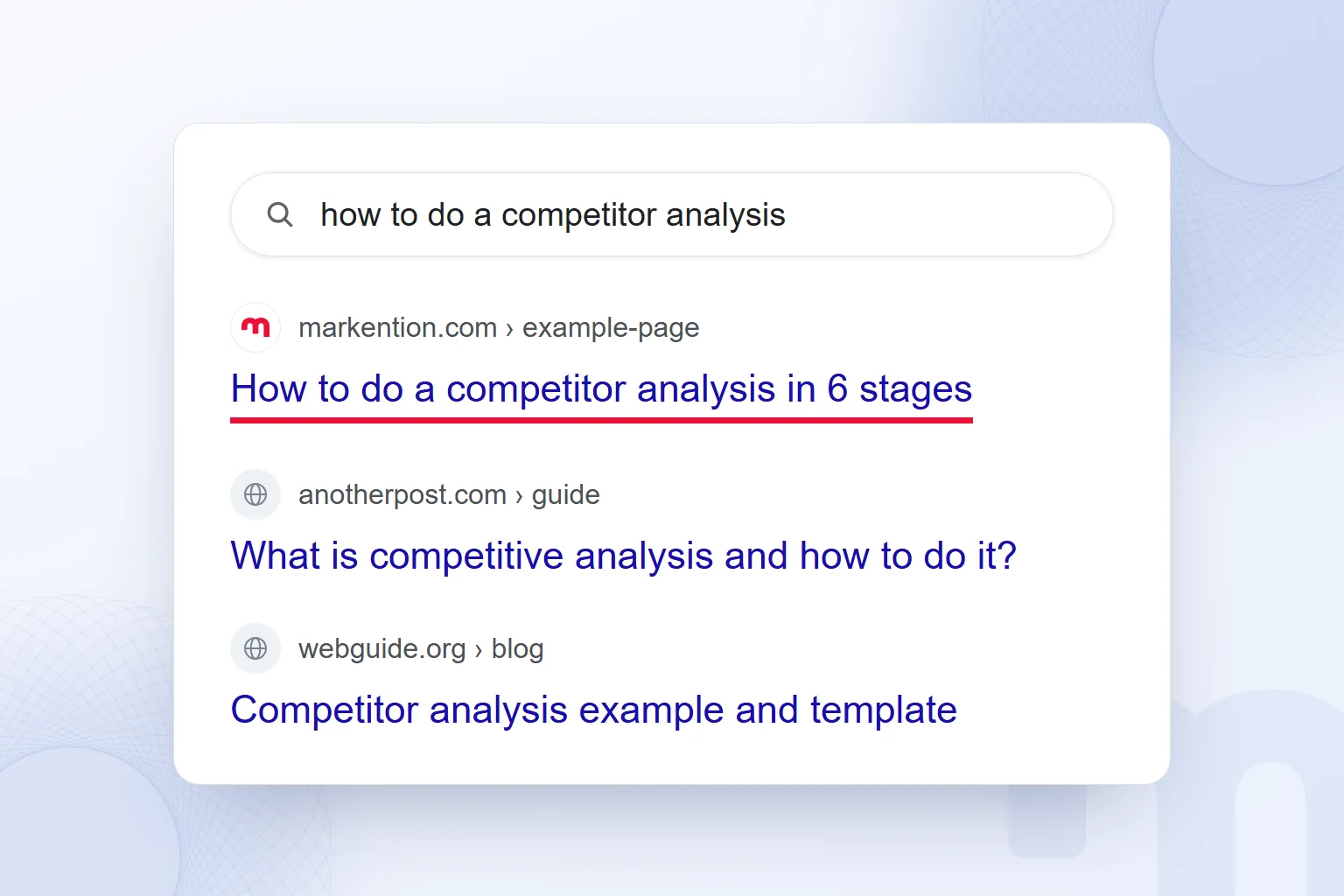
In Semrush’s Turkey database, the first page for the Turkish query meaning “stages of competitive analysis” includes an e-commerce platform, business and accounting software, a payment company, survey and form tools, and consultancy and agency blogs; the tenth result is a homework site. What makes them search competitors is that they answer the same query.
We use this mix in content research; for product and price comparison, we pick only businesses meeting the same customer’s need.
Which tools are used for digital competitor analysis?
For digital competitor analysis, we use Semrush, ad libraries, Google Trends, the competitor’s website and customer reviews.
In Semrush, we look at the queries a domain ranks for and compare domains in the report. When tying content gap questions to pages, we pick keywords using the criteria in our keyword guide. We review competitors’ ad messages in ad libraries such as the Meta Ad Library and the Google Ads Transparency Center.
In Google Trends, we compare search interest in brands. On the competitor’s site we check product, pricing, campaign and FAQ pages; for customer experience, reviews on the Google Business Profile and on marketplaces. Search Console shows only our own site’s queries, not competitor data.
For every markention blog post, we review the target query’s first page in Semrush and build the article around the unanswered question. In our SEO consulting work, we also tie search competitors and the content gap to which page to prepare.
How do you build a competitor analysis table?
We build a competitor analysis table by reviewing every business against the same criteria, with the source and the finding in separate columns.
| Criterion | Where we look | What we note |
|---|---|---|
| Product and price | Product, pricing and campaign pages | Product range, pricing model, campaign terms |
| Message | The competitor’s site and ad copy | The leading promise and stressed difference |
| Ads | Meta Ad Library, Google Ads Transparency Center | The ad message and its landing page |
| Search visibility | Semrush queries and the Keyword Gap report | Questions it ranks for that we leave unanswered |
| Customer reviews | Google Business Profile and marketplace reviews | Topics of praise and complaint |
| Channels | The competitor’s site and reviewed ads | Channels used and the message in each |
A note like “the competitor is better” is not enough; we record which question it answers or which difference it stresses, and return to the same source next time.
We then check how our own page meets the same need and move any shortfall into the action plan.
How do you turn a competitor analysis into an action plan?
We turn each finding into a concrete task with an owner and a date. The task depends on where the competitor stands out.
First, we separate the situation:
- The competitor leads in search visibility → We add the questions we leave unanswered to the content plan and prepare a guide that answers them.
- The competitor leads in advertising → We review its message and landing page, then test a headline stating our own edge.
- The competitor leads on price → We prepare a page explaining our edge in service, delivery or support instead of price.
For content we write the question to answer; for ads, the promise to test; for a service page, the difference to explain.
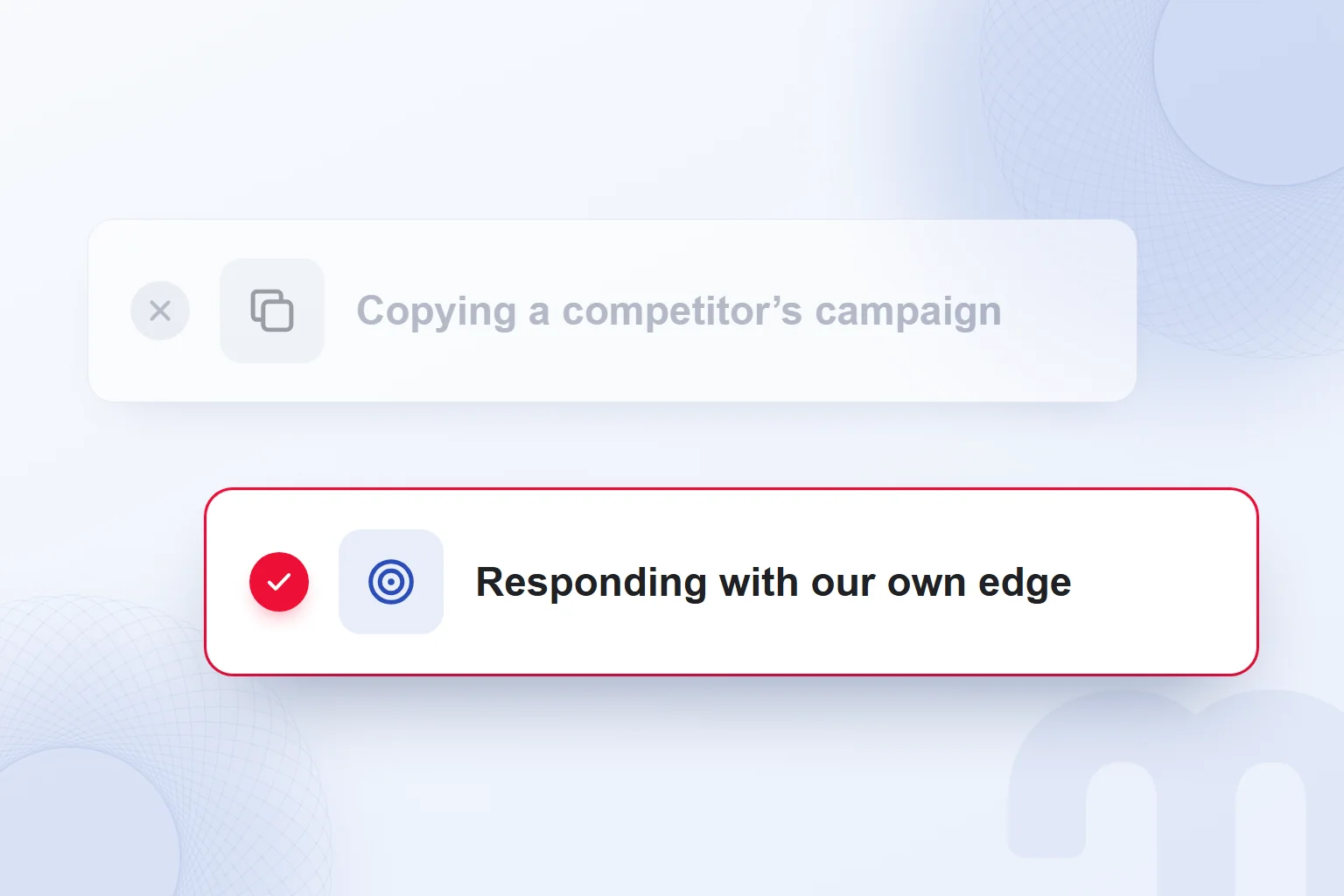
We do not copy every competitor campaign. We build a response grounded in our service and the customer’s need. Noticing a competitor’s promise is no reason to make the same one; we look for what backs our headline in our own product or service.
What do we do when a competitor makes a new move?
When a competitor makes a new move, we assess it against our campaign calendar, customer interest and our ad results. What we check first depends on the type of move.
The path splits by situation:
- The competitor launched a discount campaign → We check our calendar and respond only as far as our margin allows.
- The competitor released a new product → We watch customer reviews and search interest, then decide.
- The competitor is bidding on our brand name → We check our brand searches and ad results.
For a new product, noting the launch is not enough; we look at what reviews mention and at search interest.
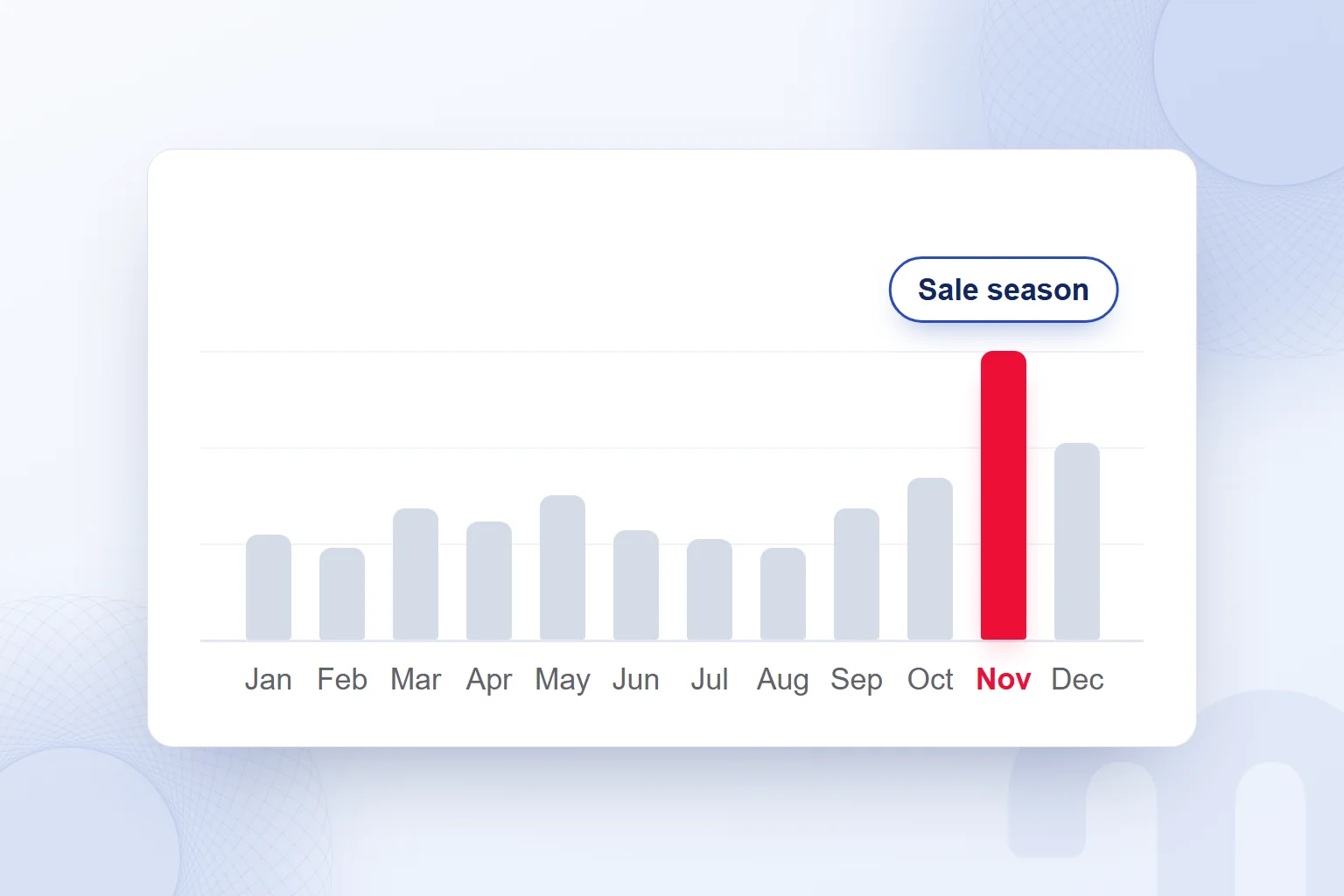
In campaign periods such as the November sales, we check more often. These records also feed our response forecasting: we add every price change or new product we see to the competitor profile.
How often should you update a competitor analysis?
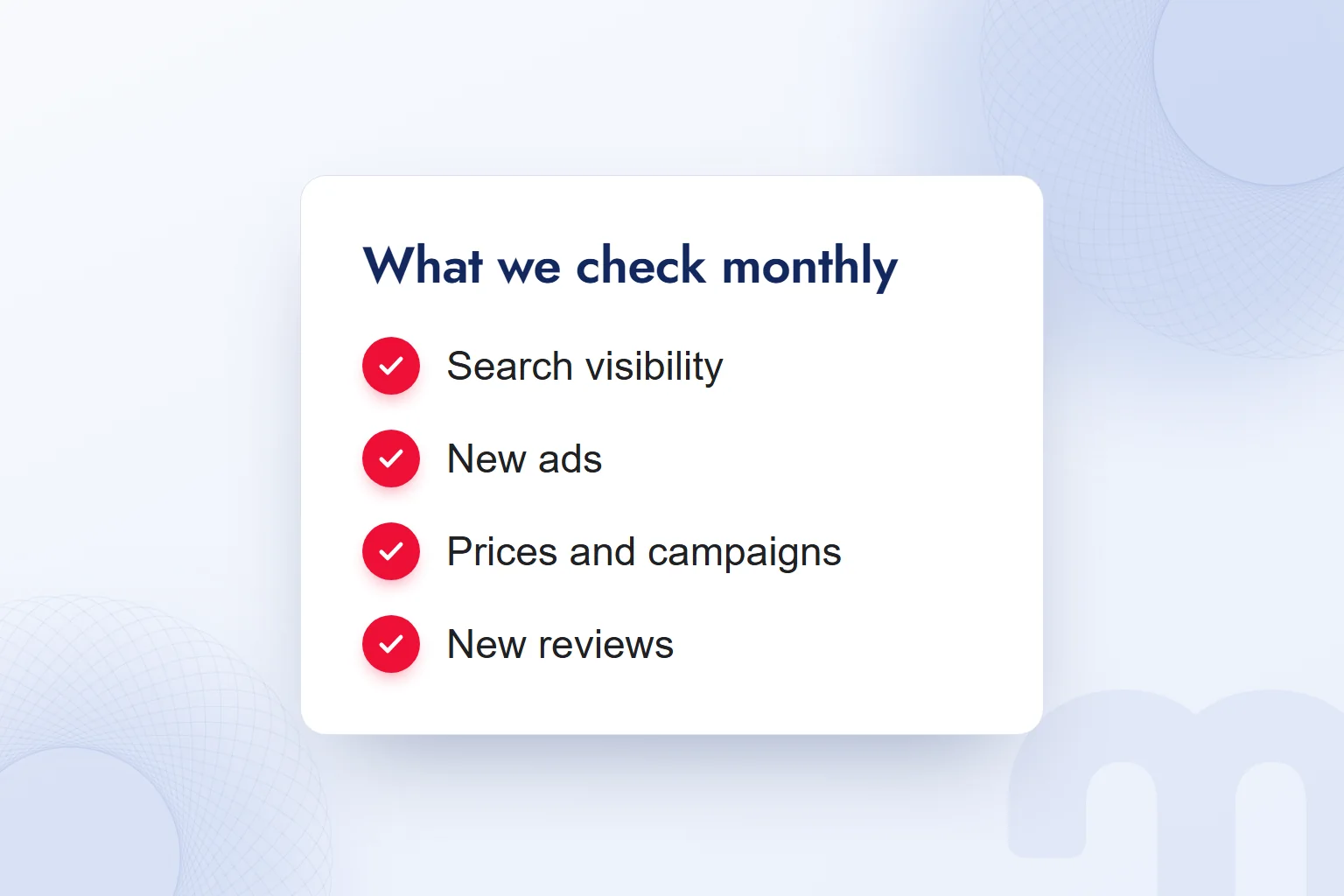
We update our competitor analysis monthly and check more often during campaign periods. Each month we look at search visibility, new ads, prices and campaigns, and new customer reviews.
Each check compares the previous note with the new finding: a new ad message sends us back to its landing page, and an unanswered question goes into the content plan.
We also reopen the action plan tasks: has the guide been prepared, the headline test run, the service difference added to the page? For unfinished tasks, we revisit the owner and date. We read which questions a competitor appears for from the People also search for box. More on measurement and reporting is on our blog.
Frequently asked questions
What is competitor analysis?
Competitor analysis examines the products, prices, messages and channels of businesses competing for the same customer to build our own action plan.
What are the stages of competitive analysis?
We define the market and customer, identify competitors, profile them, compare strengths and weaknesses, forecast responses, then write and track an action plan. Each finding feeds the next decision.
Which tools are used for competitor analysis?
Semrush, the Meta Ad Library, the Google Ads Transparency Center, Google Trends, the competitor’s website and customer reviews. Search Console shows only our own site’s queries.
Are SWOT analysis and competitor analysis the same thing?
No. SWOT assesses our own strengths, weaknesses, opportunities and threats. Competitor analysis mainly feeds the opportunity and threat rows.
What is a search competitor?
A site on the first page for our target query. It does not have to offer the same product or service.
How often should a competitor analysis be done?
We check search visibility, new ads, prices and campaigns, and new reviews every month, and more often in campaign periods such as the November sales.

 What is Microsoft Clarity? Heatmaps and session recordings explainedRead article
 What is segmentation? Market segmentation types and GA4 audiencesRead article
 What is a dashboard? Marketing dashboards, KPIs and Looker StudioRead articleMost read
 What are URL parameters? UTM, GA4 event parameters and gclidRead article
 What is MCP? Connecting AI to your data with Model Context ProtocolRead article
 What is a buyer persona? How to create one, with a templateRead article
 How to advertise on Google: account, first campaign, budget, trackingRead article
 What is a prompt? Writing requests for AI and prompt engineeringRead article
Questions & answers
0 commentsNo questions yet; you can ask the first one.