





 Cihat Murat Yüksel
8 min read
Cihat Murat Yüksel
8 min read
What is advertising? How traditional and digital advertising works
What advertising means, the main types of ads, how traditional and digital media differ, how agencies work, how success is measured and how ads are regulated in Turkey.Pro
Contents 8 sections
Advertising is the profession and industry that plans, creates, publishes in paid media and measures messages promoting a product, service, brand or idea to a target audience. Where an ad appears is set by the choice of . We treat planning, production and measurement as parts of one job.
For a business, the first decision is not which ad we like but which result we expect. Building recognition, getting onto the shortlist and collecting applications are different objectives. We set the expected result and success metric first, then the message and channel; the highest number in a report is never called success afterwards.
An ad is planned around the business objective; its result is judged against the success metric chosen before launch.
What is advertising?
Advertising is the field that runs from setting an ad’s objective through creative production and media selection to measuring results. An ad is the message this work produces in paid media; advertising is the work of preparing and evaluating it.
The three most common situations, and what each calls for:
- We are choosing a career or degree → We look at related programs in communication faculties and at the full scope: planning, creative production, media selection and measurement.
- We want the meaning of the term → We separate the ad, a message in paid media, from advertising, the field that plans it and measures its results.
- We are going to advertise for our business → We set the objective first, then choose the channel and agree on the metric that defines success.
University communication faculties offer programs in advertising, and in public relations and advertising. The field is not limited to slogans or visuals; deciding who sees an ad, why and where, and reading its results, are part of it too.
What are the objectives and types of advertising?
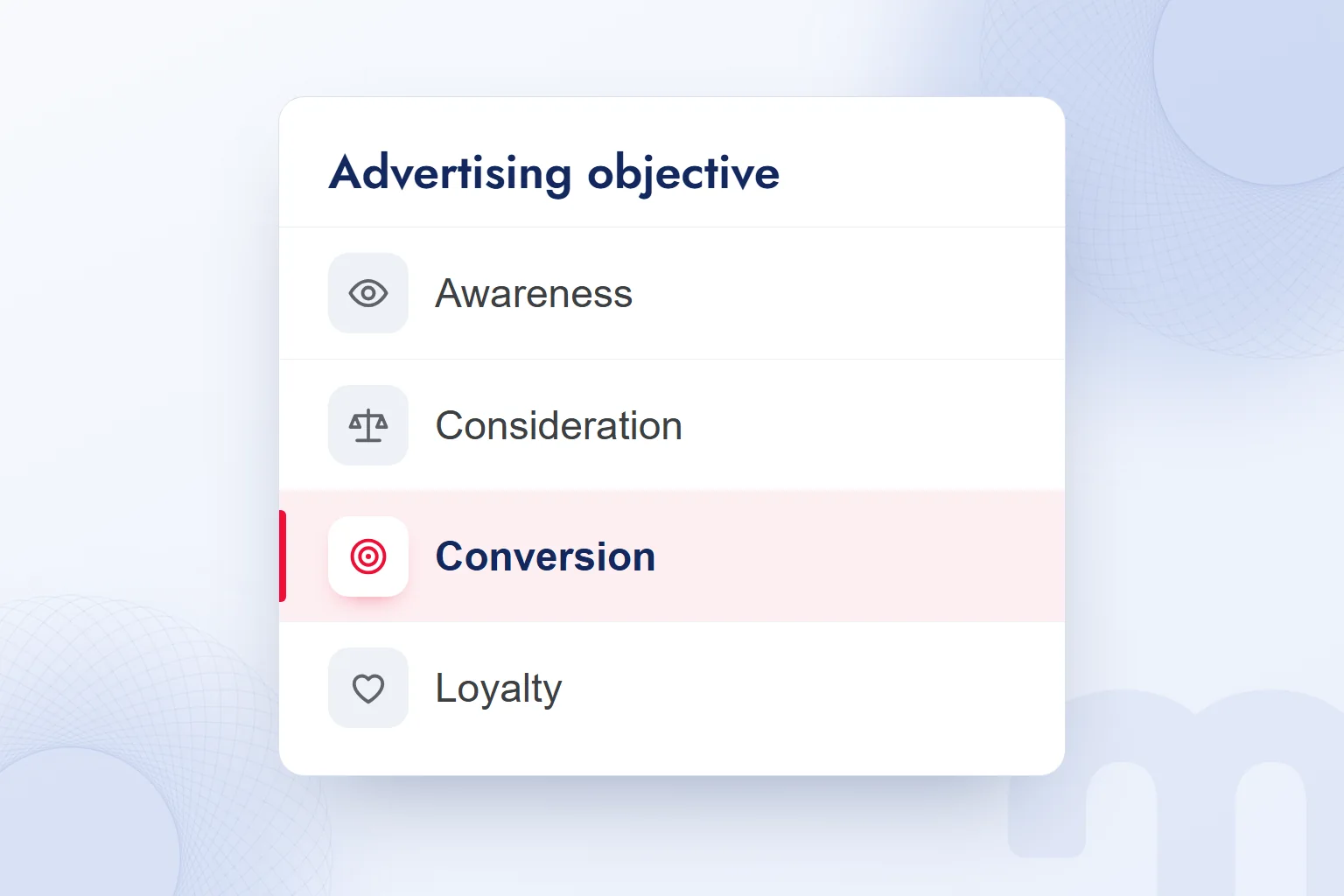
The objectives of advertising are awareness, consideration, conversion and loyalty; its types are distinguished by channel and by expected result. We never confuse where an ad runs with what it aims to change.
In awareness, we introduce the brand. In consideration, we want the brand weighed among the options. In conversion, we expect a result such as a sale or application. In loyalty, we remind people of the brand again. Every campaign gets one main objective; other expectations never replace it.
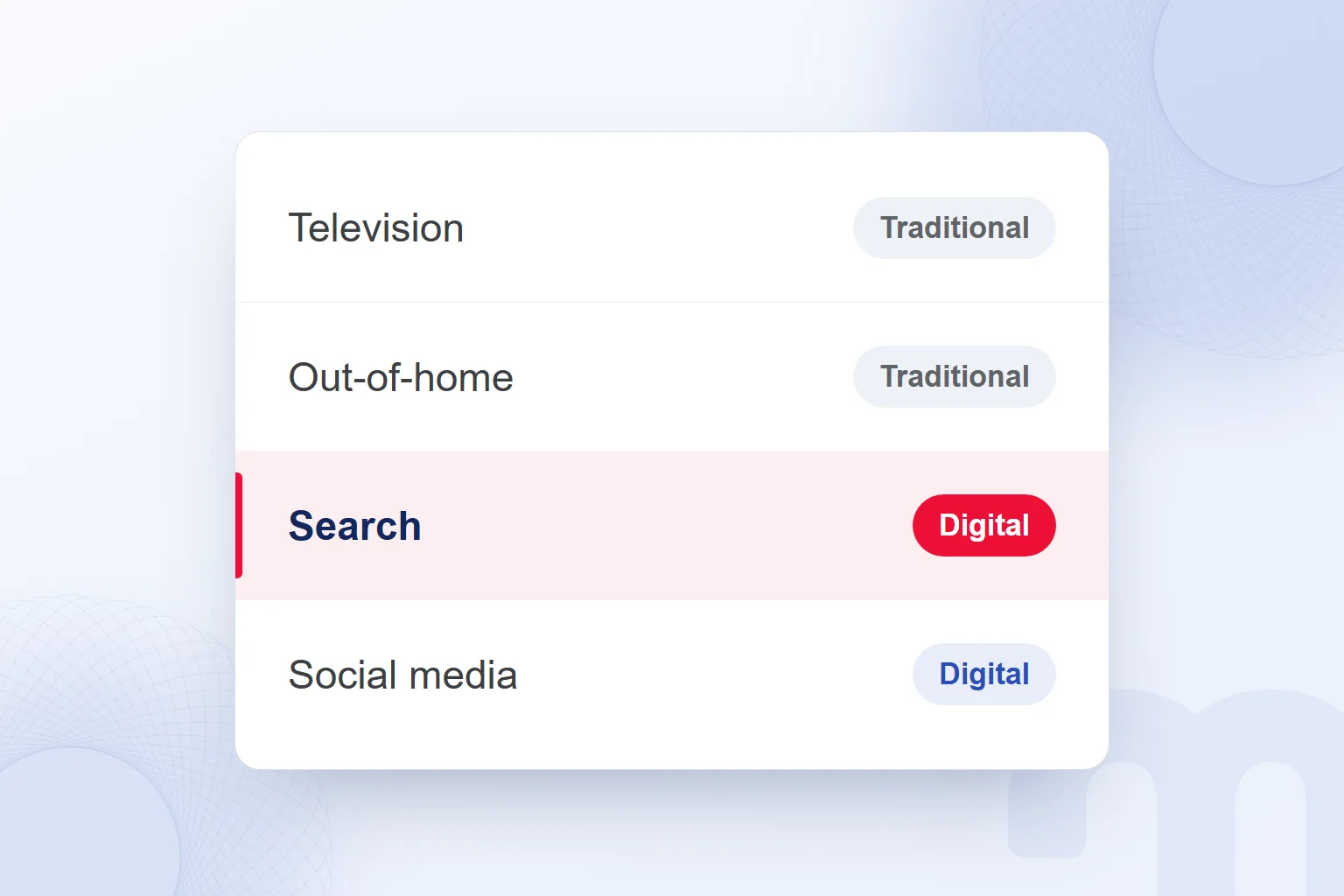
By channel, advertising is traditional or digital. Television, radio, print and out-of-home are traditional media. Search, social media, display, video and email are digital. By objective, we distinguish brand advertising, which emphasizes recognition and consideration, from performance advertising, which emphasizes the expected action.
“We want our brand to be known” and “We expect applications” are different starting sentences: the first rests on reach and impressions, the second on conversions. Naming a channel does not mean the objective is decided.
What is the difference between traditional and digital advertising?
Traditional advertising offers broad reach and research-based impact assessment; digital advertising offers detailed targeting, click and conversion tracking, and changes during the campaign. Digital advertising is paid advertising on search engines, social media and other digital channels. We compare the two by what each offers for the same objective.
| Criterion | Traditional | Digital |
|---|---|---|
| Channels | Television, radio, print, out-of-home | Search, social media, display, video, email |
| Targeting | Focus on broad reach | Detailed targeting |
| Measurement | Assessment based on research and estimates | Metrics such as clicks and conversions |
| Changes mid-campaign | We weigh changes together with the media plan | Budget and message can change while ads run |
| Reading the impact | We interpret it through research and estimates | We compare measured actions with the objective |
We never choose a channel by its reporting screen alone. In a traditional plan we decide up front which research will show the impact; in a digital plan, which action we will measure.
In digital, each change made while ads are live is tied to the chosen success metric. An ad being seen, being clicked and the expected result happening are assessed separately. For how the platforms work in common, we use the framework in What are ads?
What does an advertising agency do?
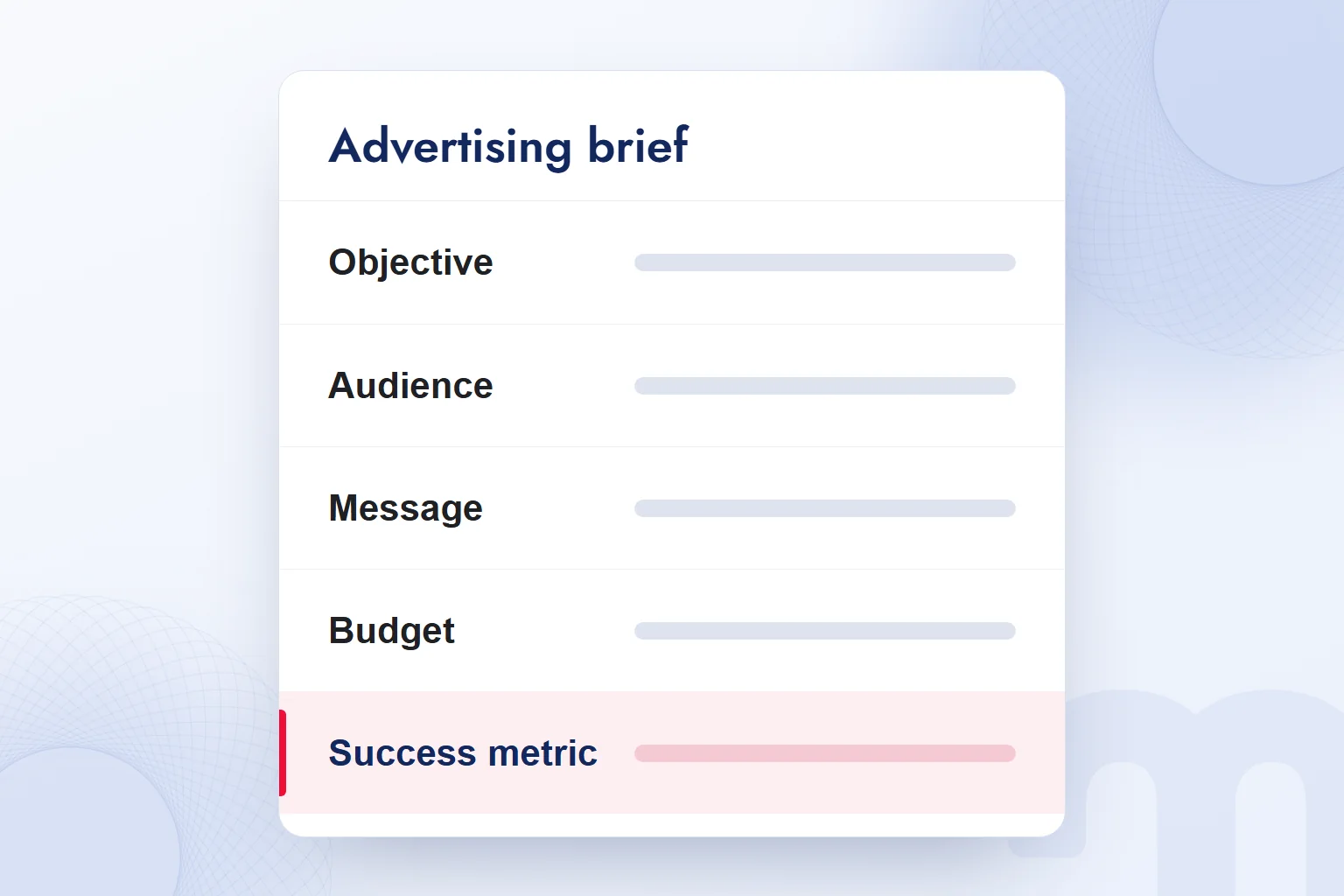
An advertising agency turns the advertiser’s objective into a strategy, a creative idea, a media plan and a measurable campaign. We start with the the advertiser provides, clarifying the objective, audience, message, budget and success metric together.
If we expect applications, that goes in the objective field and the application result in the success metric. We judge a creative idea not by its look alone but by whether it carries the chosen objective and message.
- We clarify the briefWe write the objective, target audience, message, budget and success metric with the advertiser.
- We build the strategyWe define the link between the expected result and the ad’s message.
- We develop the creativeWe produce the copy, visuals or video in line with the objective and message.
- We prepare the media planWe decide which channel, when and with what budget.
- We set up measurementBefore launch, we finalize the success metric and, in digital, prepare conversion tracking.
- We launch the adWe publish the content according to the media plan.
- We report the resultsWe compare results with the original objective and write down the next decision with its reasoning.
A report ends by returning to the brief’s question: did the expected result happen? If the aim was applications, a report on impressions alone does not close the evaluation; the objective, the ad and the report follow the same expectation.
How is advertising effectiveness measured?
We measure an ad’s effect by choosing metrics that fit the objective set before launch and comparing actual results with it. For awareness we track reach and impressions; for interest, clicks and engagement; for sales or applications, conversions and cost per acquisition.
Reach and impressions show visibility; clicks and engagement show the relationship people form with the ad. These never stand in for sales or applications. In an application campaign, clicks and completed applications stay separate in the report, and results are never grouped under one success heading without a defined action.
Branded searches and direct traffic are indirect signs of awareness; we read them alongside reach and impressions, never as a sales result.
If an ad asks people to apply, the page it opens keeps the same service and application expectation. In our ad landing pages work, we match the ad’s promise with the page content and track the expected result on that page. Clicks on the ad alone never complete the evaluation.
Our decision order is objective, metric, result; when a result falls short, this order shows which part to examine.
How is advertising regulated in Turkey?
In Turkey, commercial advertising is supervised by the Advertising Board (Reklam Kurulu) under the Ministry of Trade, within the framework of Law No. 6502 on Consumer Protection and the related regulation. Misleading and are prohibited. When reviewing an ad’s message, we also check that it is clearly recognizable as an ad.
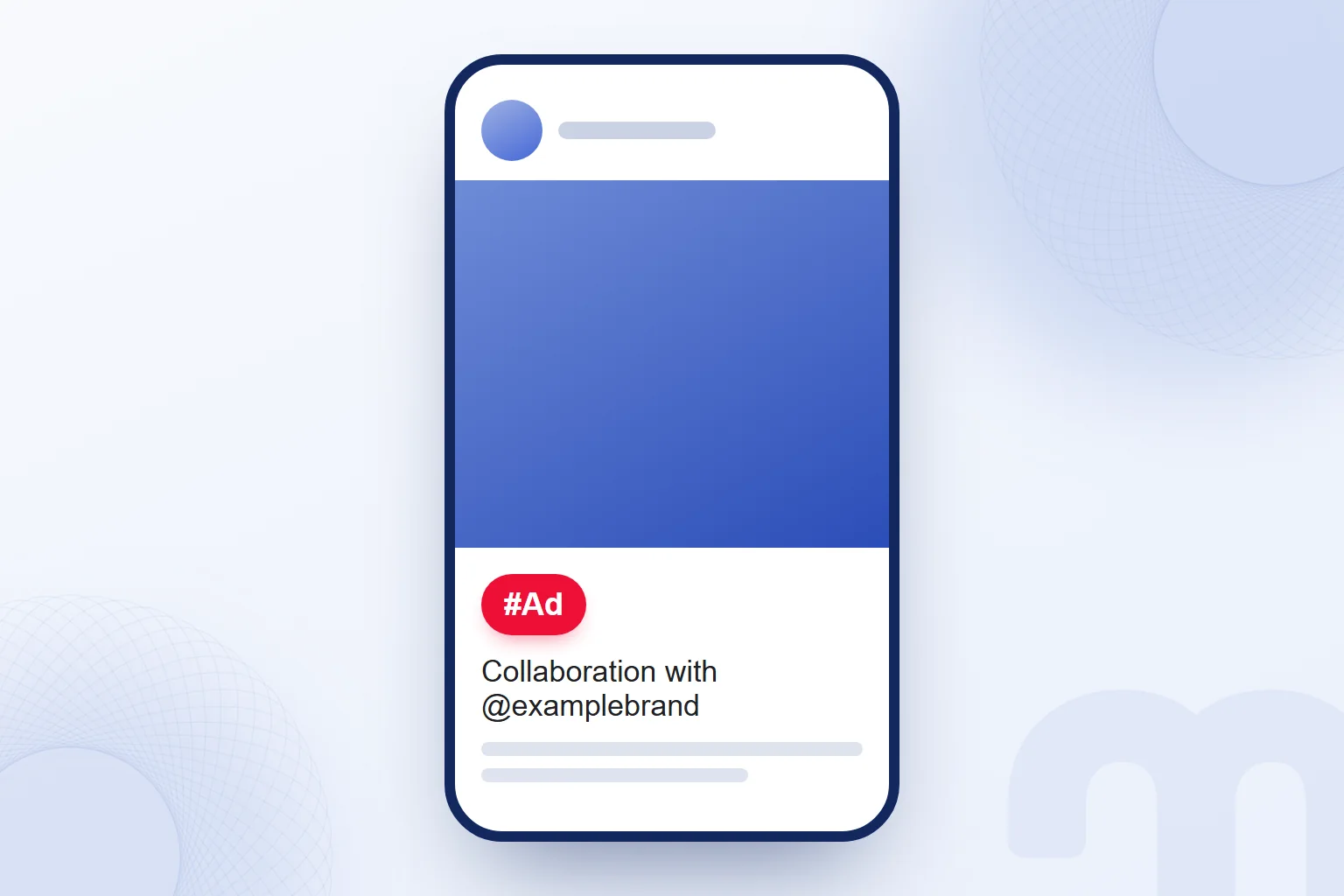
The Board’s guide for social media influencers requires ads to be clearly distinguishable. For short-lived posts, it calls for phrases such as “#Reklam” (ad), “#Reklam/Tanıtım” (ad/promotion) or “in collaboration with @[Advertiser]”. We treat these as example labels disclosing a post’s advertising nature.
With an influencer post, we check whether the advertising relationship is easy to understand; an ad hidden inside an ordinary post is not acceptable. The message itself is also assessed under the ban on misleading advertising, so we check the disclosure label and the content separately.
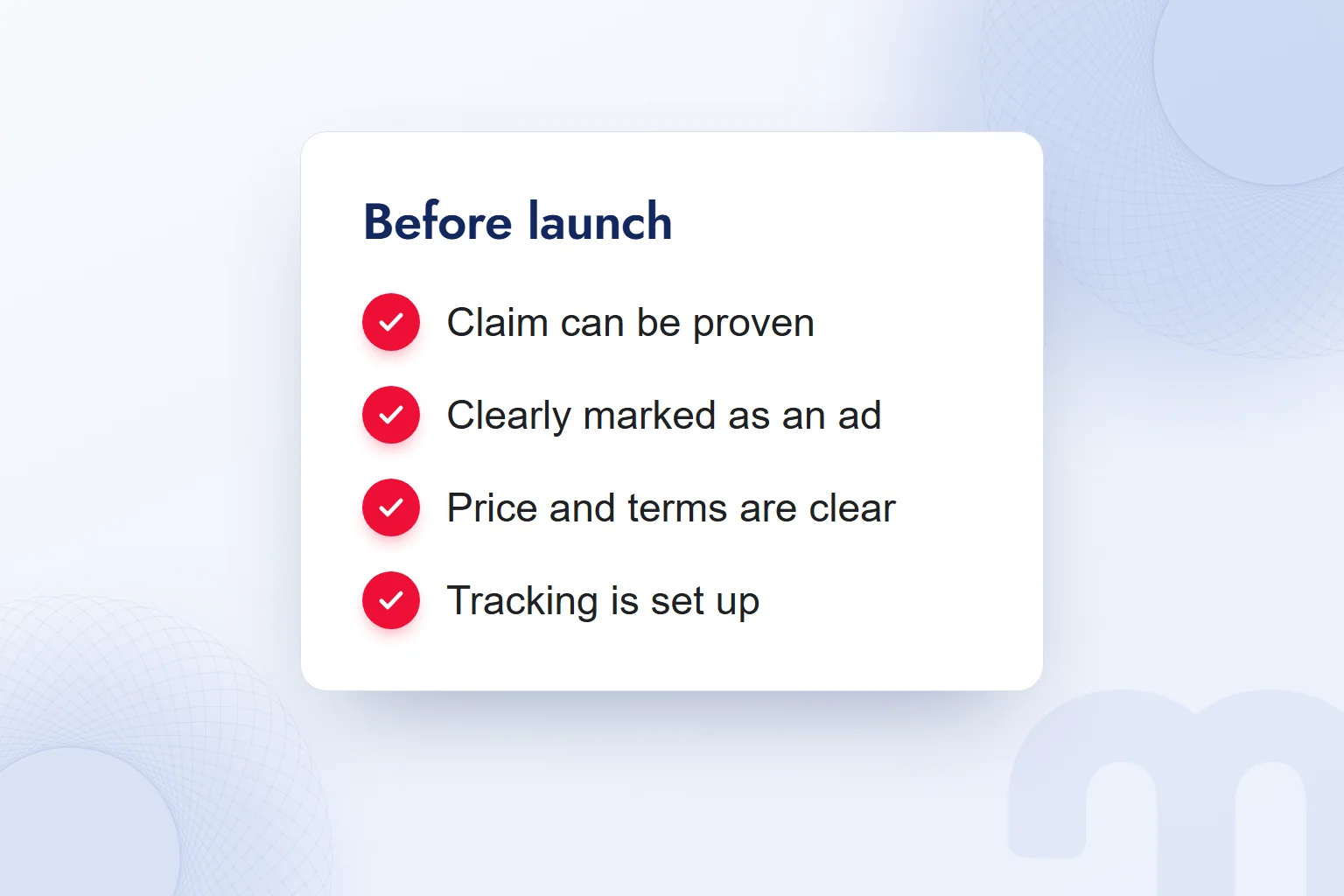
Before launch, we review the evidence behind each claim, the clarity of prices and terms, and the visibility of the ad’s commercial nature, all in the same review.
What do we do when advertising isn’t working?
When advertising isn’t working, we examine, in order, the objective, channel fit, the consistency of the landing page and whether measurement is in place. Before counting an unreported result as a failure, we check the tracking setup.
The table lists common situations and the path we follow for each.
| Situation | What we do |
|---|---|
| Unclear objective | We choose one main objective and a matching success metric, and tie the evaluation to it. |
| Channel does not fit the audience | We move to where the people we want to reach are and adjust the media plan. |
| Ad and landing page do not match | We match the ad’s promise with the page content and make the expected action consistent. |
| Measurement not set up | We set up conversion tracking and judge sales or applications on measured results. |
A target audience is the group of people we want an ad to reach; we weigh how to choose one alongside What is an audience in advertising?
A new visual is not the first fix for an unclear objective, nor a bigger budget for missing measurement. If an ad invites applications for a specific service but its page carries another message, we fix that fit first. After a change, we check the same success metric again, following the problem and the intervention together.
A campaign verdict should be clearer than “the ads didn’t work”. We write down which expectation was missed, which gap we found and what we will change. We cover video advertising in How to advertise on YouTube, types of media in What is media?, and person-to-person selling in What is network marketing? For the next campaign’s channel and measurement decisions, we compare options across our advertising articles and update the brief with the findings.
Frequently asked questions
What is advertising?
Advertising is the profession and industry that plans, creates, places, publishes and measures ads.
What is the difference between an ad and advertising?
An ad is a message published in paid media. Advertising covers preparing, publishing and evaluating it.
What are the types of advertising?
By channel, traditional and digital; by objective, brand and performance advertising. The choice follows the result the business expects.
Where do we start with an advertising agency?
With a brief covering objective, audience, message, budget and success metric. Strategy, creative and the media plan build on it.
What does the Advertising Board in Turkey do?
It supervises commercial advertising under Law No. 6502 on Consumer Protection and the related regulation, and operates under the Ministry of Trade.
Which metric judges advertising success?
Reach and impressions for awareness; conversions and cost per acquisition for sales or applications. The metric is chosen before launch.

 How to advertise on YouTube: campaign types, targeting and costRead article
 What is ROAS? Formula, ROAS vs ROI and how to set target ROASRead article
 What is an audience in advertising? Audience types and how to chooseRead article
 Advertising on ChatGPT: Ads Manager, Targeting and Your First CampaignRead article
 How to advertise on Google: account, first campaign, budget, trackingRead article
 What are ads? How Google, Meta and ChatGPT ads work alikeRead article
 What is an ad library? Competitor ads on Meta, Google and TikTokRead article
 What is Shopify? Using it in Turkey, how fees work and vs WooCommerceRead article
Questions & answers
0 commentsNo questions yet; you can ask the first one.