





 Damla Kütük
7 min read
Damla Kütük
7 min read
What is a keyword? Types of keywords and how to choose them
What a keyword is, its types and how to choose one: Semrush’s KD scale, the order of keyword research, where it goes on the page and how to resolve cannibalization.Pro
Contents 8 sections
A keyword is a single word or a multi-word phrase, such as “what is a keyword”, that a user types into a search engine and that a web page aims to answer. We choose keywords by matching with the purpose of the page.
We start keyword research from the topics the business can answer, then review search volume, difficulty and the type of first-page results together. For each keyword we decide which question it carries, which page will answer it and why that page fits.
A keyword is chosen together with its search intent, and each main keyword with the same intent is assigned to a single page.
What is a keyword, and what does it mean?
In search, a keyword is the phrase a user searches for and a page aims to answer; it is also called a key phrase or search term. When we answer “what does keyword mean”, we first separate the context.
This distinction decides the answer:
- A paragraph is analyzed in a reading lesson → We identify the word that carries the paragraph’s main idea.
- The topic is websites and search engines → We match the phrase the user searches for with the page that will answer it.
- An ad campaign is being prepared → We assess the keyword that decides which searches trigger the ad, together with its match type.
In organic search, we write down the answer the page will give whenever we choose a keyword. For “what is a keyword”, we plan a guide covering the definition, the types and the selection criteria. A keyword list alone does not show that a page answers the question; we build the content around the chosen request.
What are the types of keywords?
We classify keywords as short or , branded or non-branded, and by search intent as informational, navigational, commercial or transactional.
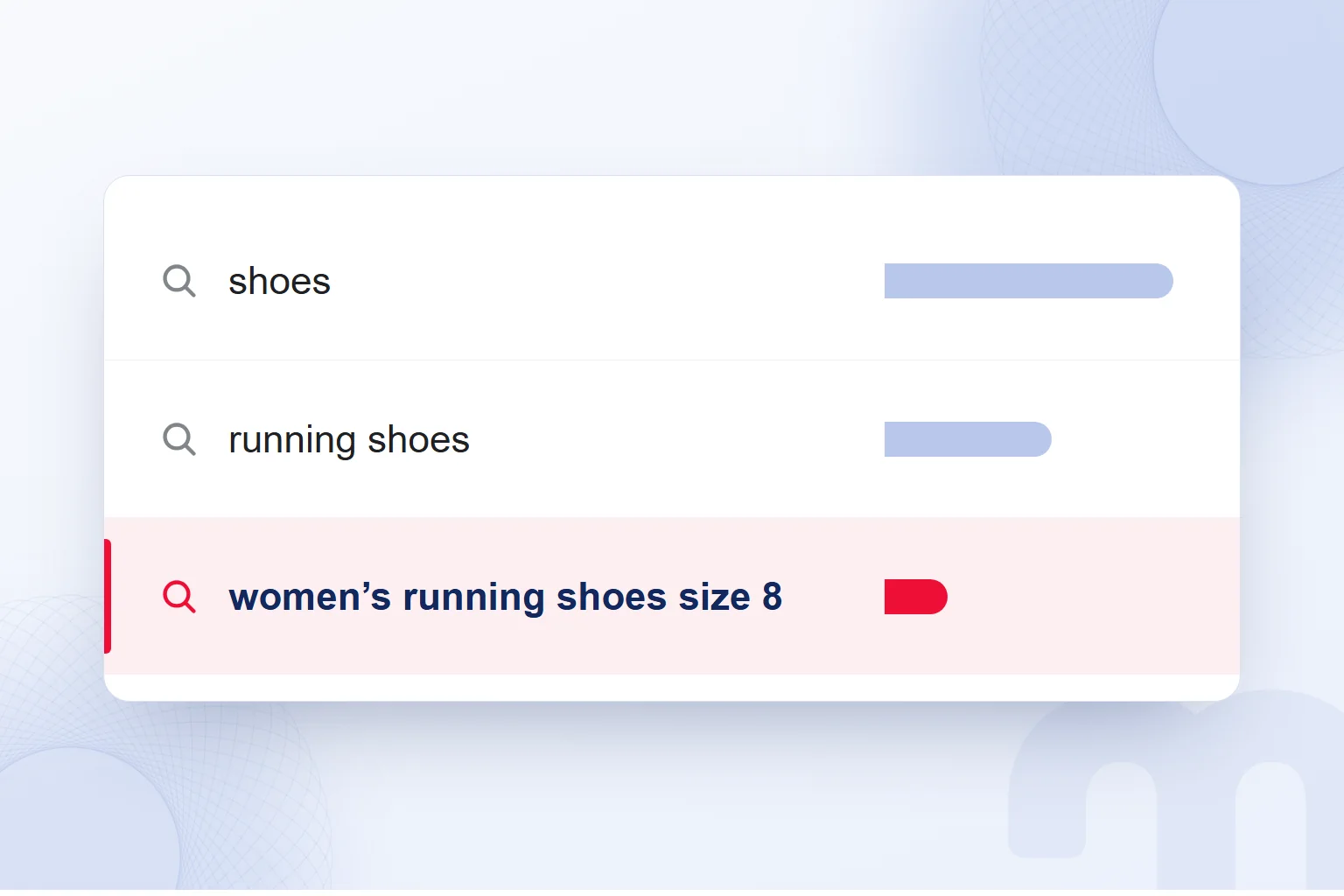
Short keywords describe a broad topic in one or two words. Long-tail keywords use more words for a more specific request. Compare “shoes”, “running shoes” and “women’s running shoes size 8”. The last phrase shows exactly which product is wanted; we set the scope of our answer by that detail.
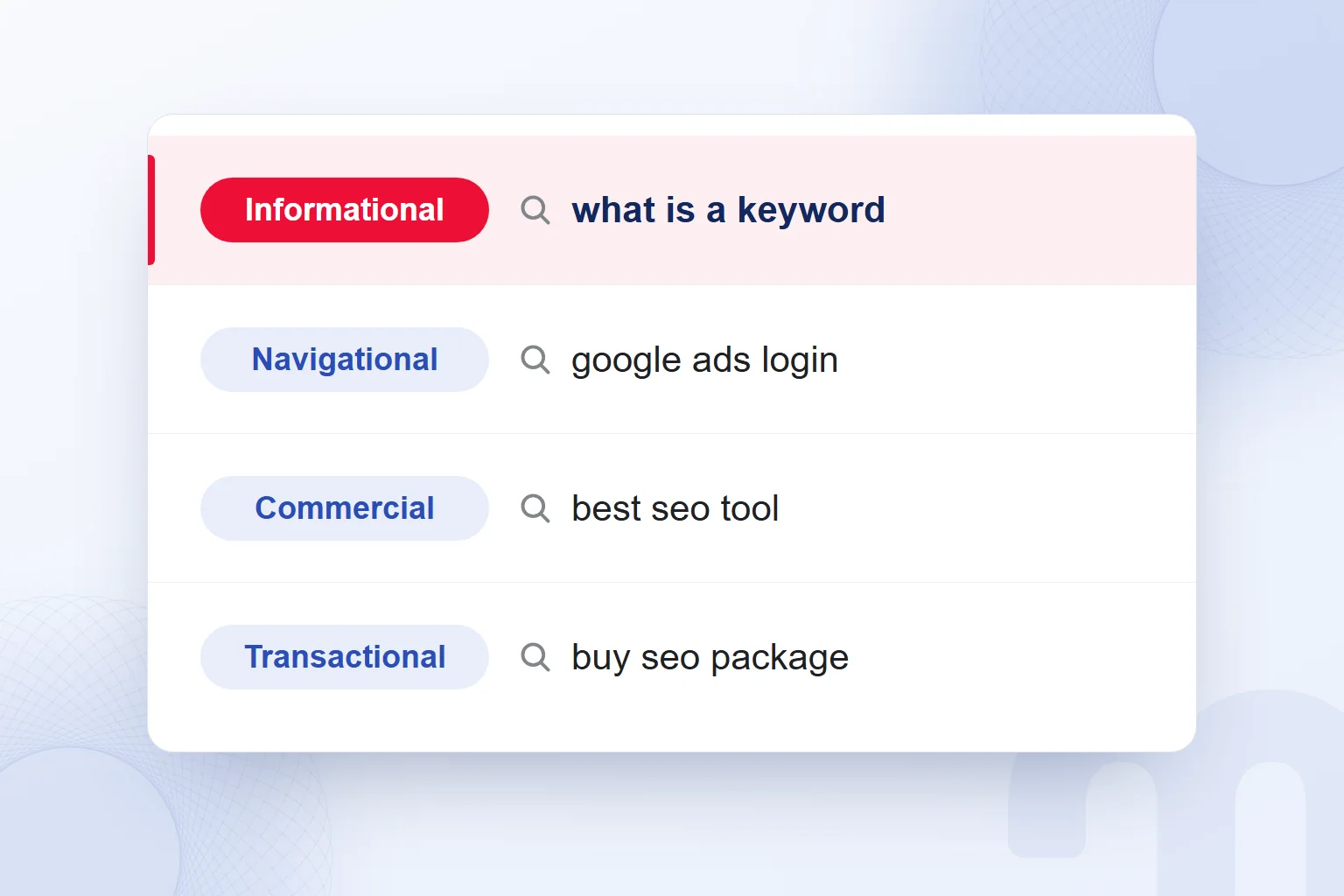
A branded keyword contains a brand name; in a non-branded keyword the topic or need comes first. After the brand split, we look at what the user wants to do. We read Semrush’s intent classification with these examples:
- Informational: “what is a keyword” seeks an explanation.
- Navigational: “google ads login” wants a specific service.
- Commercial: “best seo tool” compares options.
- Transactional: “buy seo package” intends to purchase.
How do you read keyword difficulty?
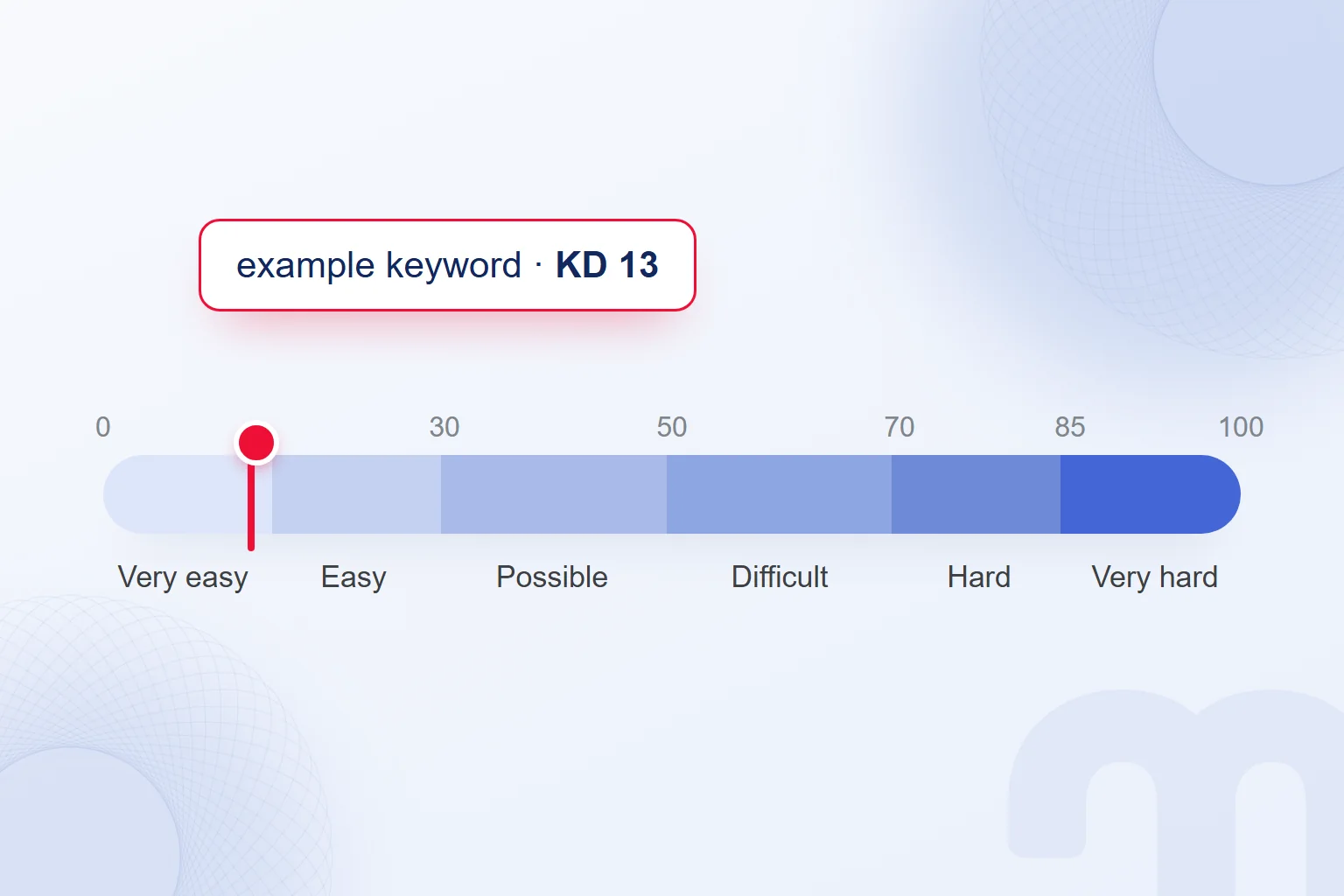
We read keyword difficulty on Semrush’s 0–100 Keyword Difficulty (KD) scale and weigh the score against search intent and page fit. Semrush calculates it from factors such as the links pointing to top-ranking pages and the strength of their domain name.
| KD range | Semrush label | Our reading |
|---|---|---|
| 0–14 | Very easy | If the intent fits, a priority candidate. |
| 15–29 | Easy | Assessed with volume and page fit. |
| 30–49 | Possible | We compare first-page types with our answer. |
| 50–69 | Difficult | We also research long-tail options. |
| 70–84 | Hard | We look for a more specific request. |
| 85–100 | Very hard | We compare it with alternative keywords. |
The labels are Semrush’s; the last column is our approach. We never use the score alone as a publishing decision. Even at a low KD, we check that the business can answer the question and that the content matches the intent.
A higher-volume query can have a lower difficulty score than a lower-volume one. We read the two metrics separately and add the page’s purpose to the decision.
How do you find keywords?
We find keywords by starting from topics the business can answer and using research tools, Google’s suggestions and Search Console queries. We review the collected phrases by volume, difficulty and intent, then assign them to pages.
- We list the topics we can answerWe write down the questions the business can meet with its knowledge, products and services, and scope the research around them.
- We pick seed keywordsWe choose starting words for each topic and use them to find more detailed queries.
- We review volume and KDWith tools such as Semrush we record each keyword’s volume and difficulty in one list.
- We read the first pageWe check whether results are dictionary, product or guide pages and identify what the user wants.
- We look for long-tail optionsWe collect phrases that narrow the topic and match them with the answer the business can give.
- We assign each main keyword to one pageWe decide which page answers keywords with the same intent and check for overlap with existing pages.
- We review queries after publishingWe read Search Console queries and compare our keywords with the questions the page answers.
We open in Google Ads via “Tools › Keyword Planner”. According to Google Ads Help, the tool is free, but it requires a Google Ads account set up with billing details. It shows average monthly searches, competition and top-of-page bids. We record the Semrush KD value separately, under its own name.
We use Google’s autocomplete and the people also search for box to find new phrases. We never turn a suggestion straight into a topic; we first review its intent, the first-page result types and whether the business can meet the request.
How do you choose a keyword?
We choose a keyword by weighing search volume, KD, search intent, the business’s ability to answer and the first-page result types together. Next to each candidate we write which page we will prepare for it.
The next step depends on the situation:
- Low KD, and the intent matches our page → We confirm the business answers the question and build the page around the keyword.
- High volume, but the first page is full of dictionary or product pages → We reread the intent and choose a long-tail keyword that fits our page.
- Two of our pages target the same keyword → We make one the main target page and rework the other for a different intent.
In the second case especially, high volume alone is never our reason. For a guide, we check whether users want an explanation or a product. If the answer the keyword asks for does not match our content, we narrow the topic.
In our SEO consulting work we connect keywords to pages by the same criteria. When we record a choice, we note not only volume and KD but also the page’s answer, the target intent and its relation to existing content.
Where should a keyword go on the page?
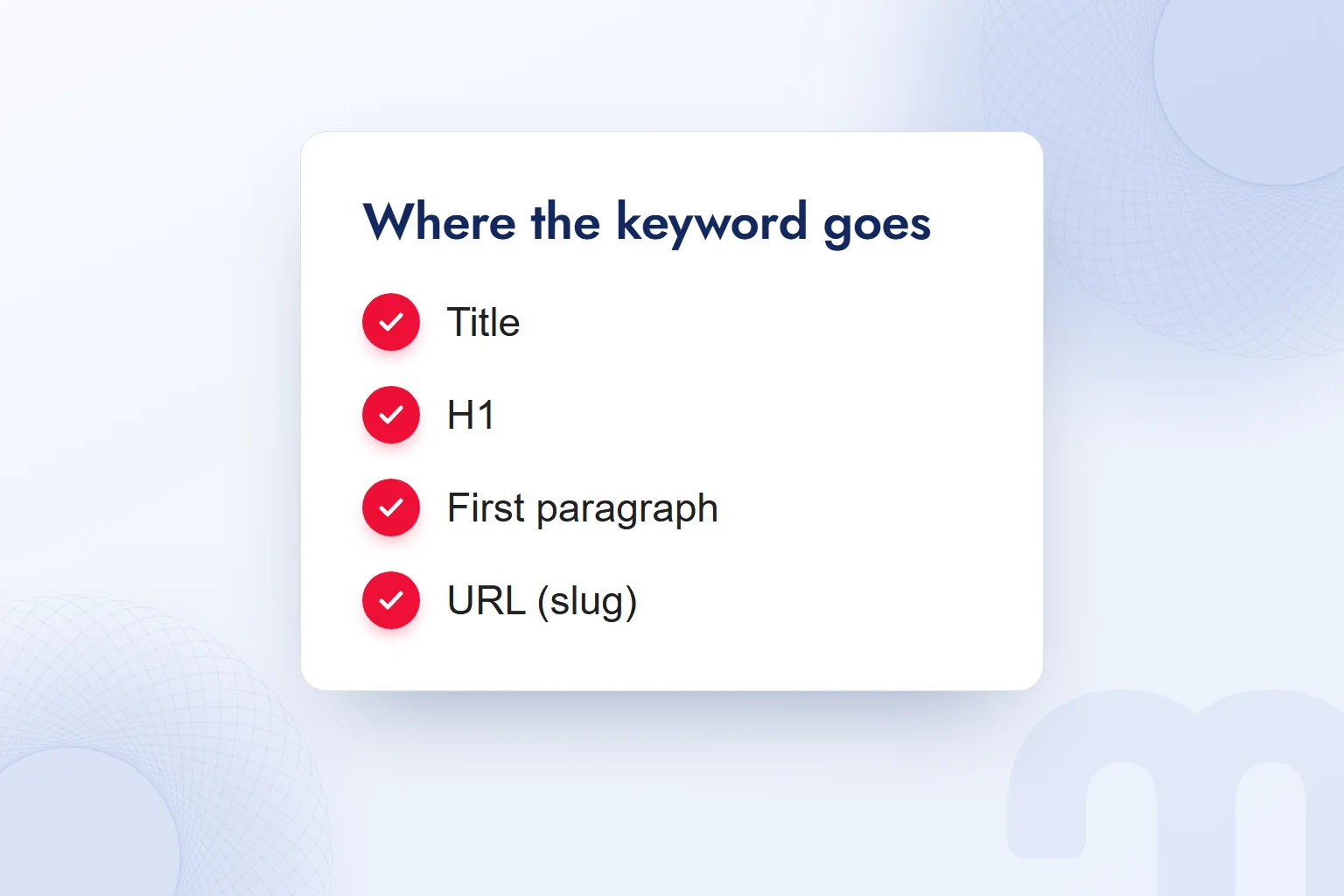
We use the keyword naturally in the title, the H1, the first paragraph, the URL slug and one subheading. These areas should describe the same topic, and the text should answer the question clearly.
We use the main keyword in the title tag as part of a phrase describing the page. The H1 states the main topic; the first paragraph gives the definition or core answer. The URL carries the topic phrase, and the relevant subheading poses that section’s question clearly.
When we review the text, we read each use in the meaning of its sentence. We never add the keyword to consecutive sentences just to raise the count.
Repeating a keyword over and over, known as keyword stuffing, violates Google’s spam policies. We never set a fixed keyword density percentage. Our check is natural use in the defined areas and a clear answer on the page.
What happens if two pages target the same keyword?
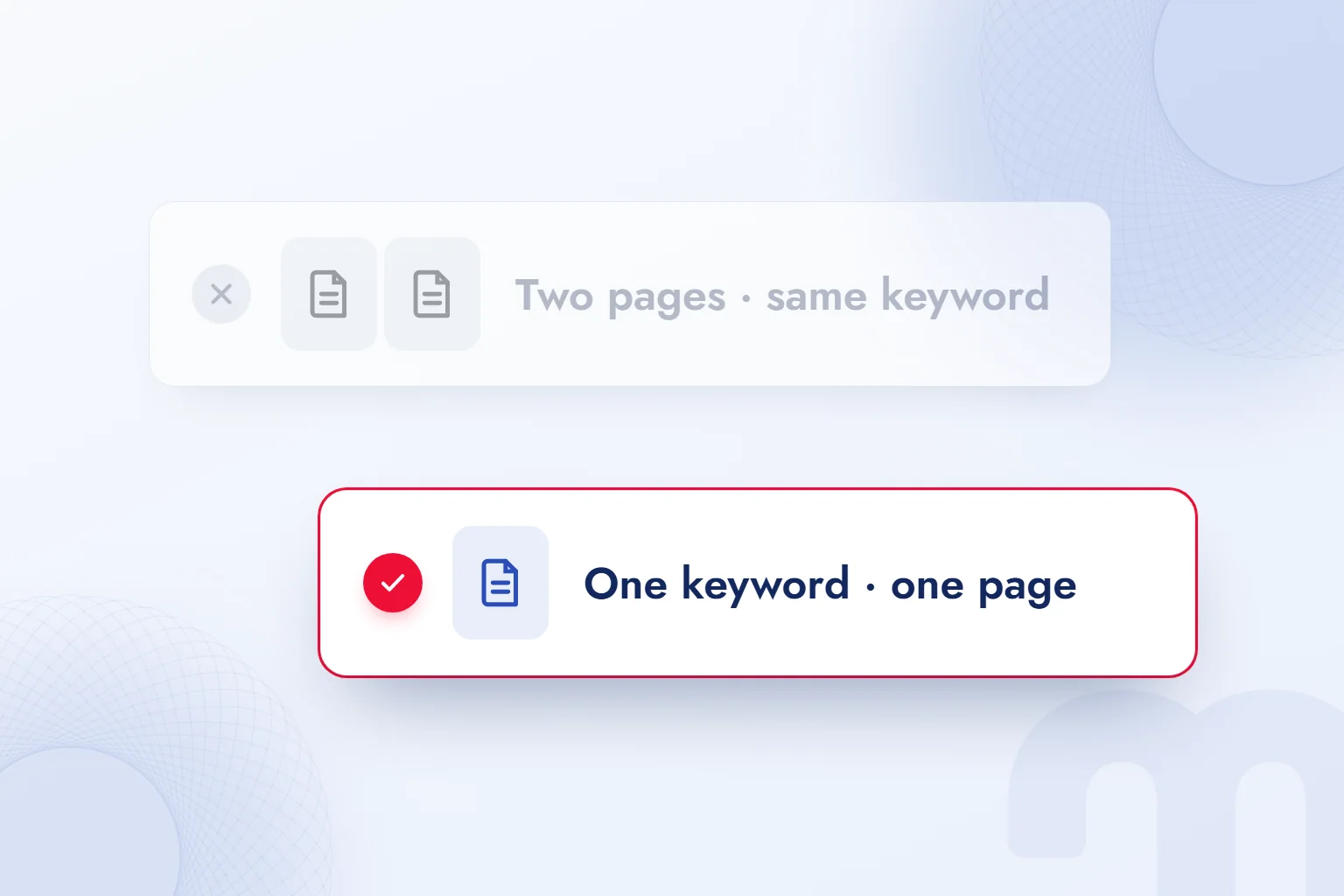
Targeting a keyword with the same intent on two pages makes them compete with each other; this is keyword cannibalization. When we assess an overlap, we look at which request each page answers before checking whether the keyword appears.
For example, if separate pages for “what is a keyword” and “keyword meaning” both covered the same definition and criteria, we would review their targets together. We would bring the shared intent onto one page and replan the other to answer a different question.
We keep a target page next to every main keyword. When choosing a new topic we check this pairing and never assign a question an existing page already answers to a new page. We cover related topics in our SEO articles while keeping this separation.
Frequently asked questions
What is a keyword?
A keyword is the word or phrase a user types into a search engine and that a page aims to answer. We assess it together with search intent.
What does keyword mean in a reading lesson?
In a reading lesson, a keyword is the word that carries a paragraph’s main idea and stands out in the text.
What is a long-tail keyword?
A long-tail keyword uses more words to express a more specific request. We use these phrases to narrow the question a page will answer.
Is Google Keyword Planner free?
Yes. Using it requires a Google Ads account set up with billing details.
What keyword difficulty should you target?
We set no single KD limit; we read difficulty with volume, intent and the business’s ability to answer. On Semrush’s scale, 0–14 is very easy and 85–100 very hard.
Can one keyword be used on two pages?
What matters is the intent each page targets. If two pages target the same keyword with the same intent, we make one the main target page and rework the other for a different intent.

 WordPress SEO plugins: Yoast vs Rank Math vs AIOSEO comparedRead article
 What is a meta description? Length, writing rules and effect on clicksRead article
 What is a title tag? How to write it and how it differs from H1Read article
 What does optimize mean? Optimization on phones, websites and adsRead article
 What are search engines? Google, Bing, Yandex and AI searchRead article
 What is “People also search for”? How to use it in SEORead article
 What is segmentation? Market segmentation types and GA4 audiencesRead article
 What is Google AI Studio? Free use, API keys and your first projectRead article
Questions & answers
0 commentsNo questions yet; you can ask the first one.