





 Cihat Murat Yüksel
8 min read
Contents 9 sections
Key takeaways
- Copywriting is preparing promotional text that leads the reader to a specific action.
- Copywriting aims to move the reader to an action, while content writing aims to inform.
- According to Google Ads Help, a responsive search ad can take 15 headlines and 4 descriptions.
- Turkey's Regulation on Commercial Advertising and Unfair Commercial Practices requires ads to be truthful and honest.
Copywriting is the work of writing ads, web pages, emails and social media posts that present a product, service or idea and move the reader to take an action; the person who does it is a .
Before we start, we decide whom we address, which need we meet and which step we expect. Then we state the promise plainly, examine what supports it and shape the sentence for where it will appear, weighing a headline’s pull against its accuracy.
Copy is written to be useful and accurate for the reader first; every claim is checked against its documentation.
What is copywriting?
Copywriting is preparing promotional text that leads the reader to a specific action. The person who does it is called a copywriter or advertising writer. Cambridge Dictionary defines a copywriter as a person whose job is to write the words for advertisements.
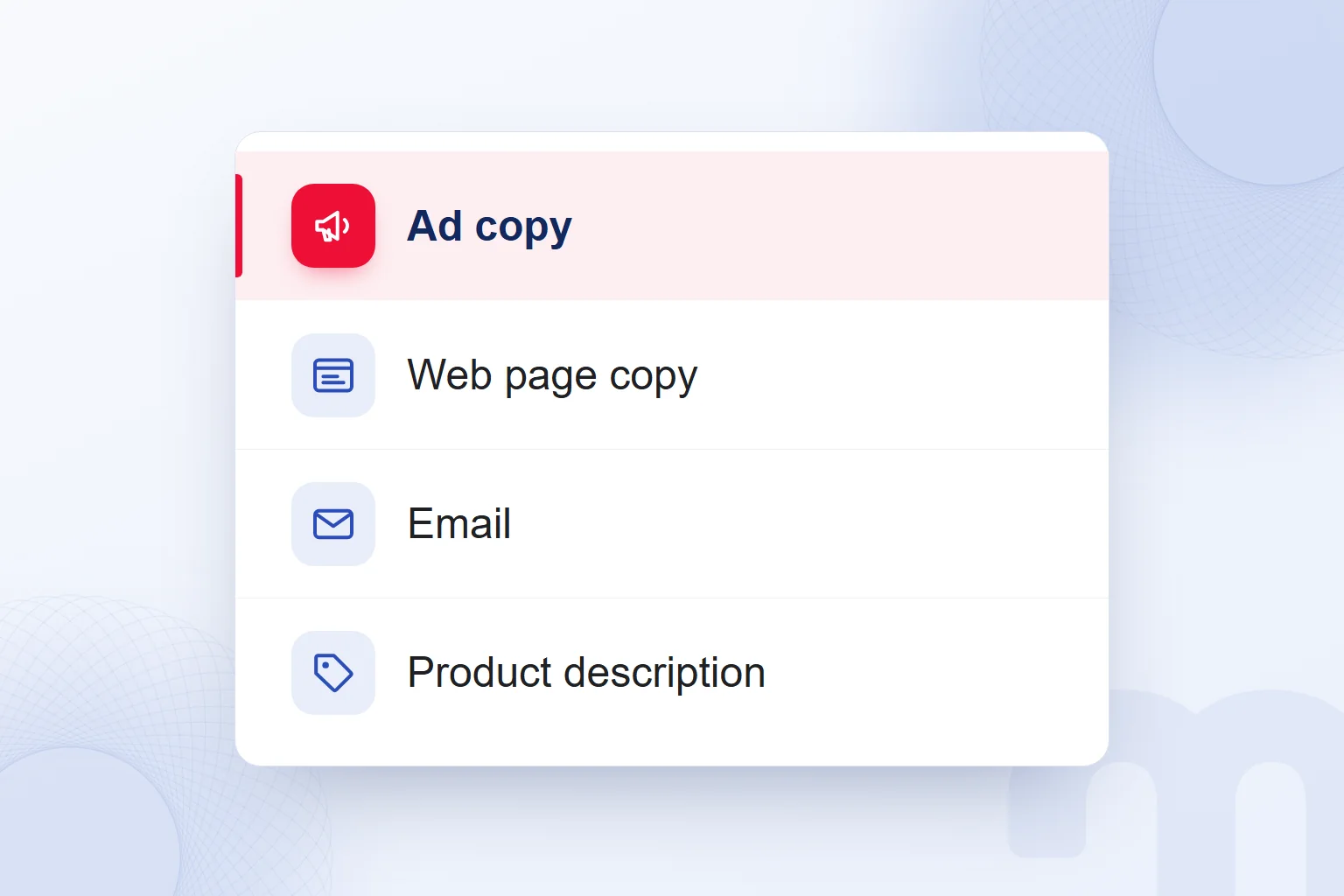
It covers ad headlines and web page, email, social media and product description copy. We set each piece’s job by where it appears: the ad’s promise ties to the product page description, and an email makes clear why the offer reaches that person.
For an example stationery shop, a headline promoting notebooks sends people to browse products, while a guide to choosing a notebook answers questions. Before choosing words, we settle what the copy should get the reader to do or know.
What does a copywriter do?
A copywriter studies the , gets to know the audience, settles on a single promise, writes headline options and checks the copy against channel limits and the accuracy of its claims. Rather than filling gaps in the brief with guesses, we name the information the copy still needs.
To understand the audience, we use the framework from our buyer persona guide and note the person’s need and language. If the example shop is speaking to a parent doing back-to-school shopping, the products that parent wants go at the center, not every feature of the business.
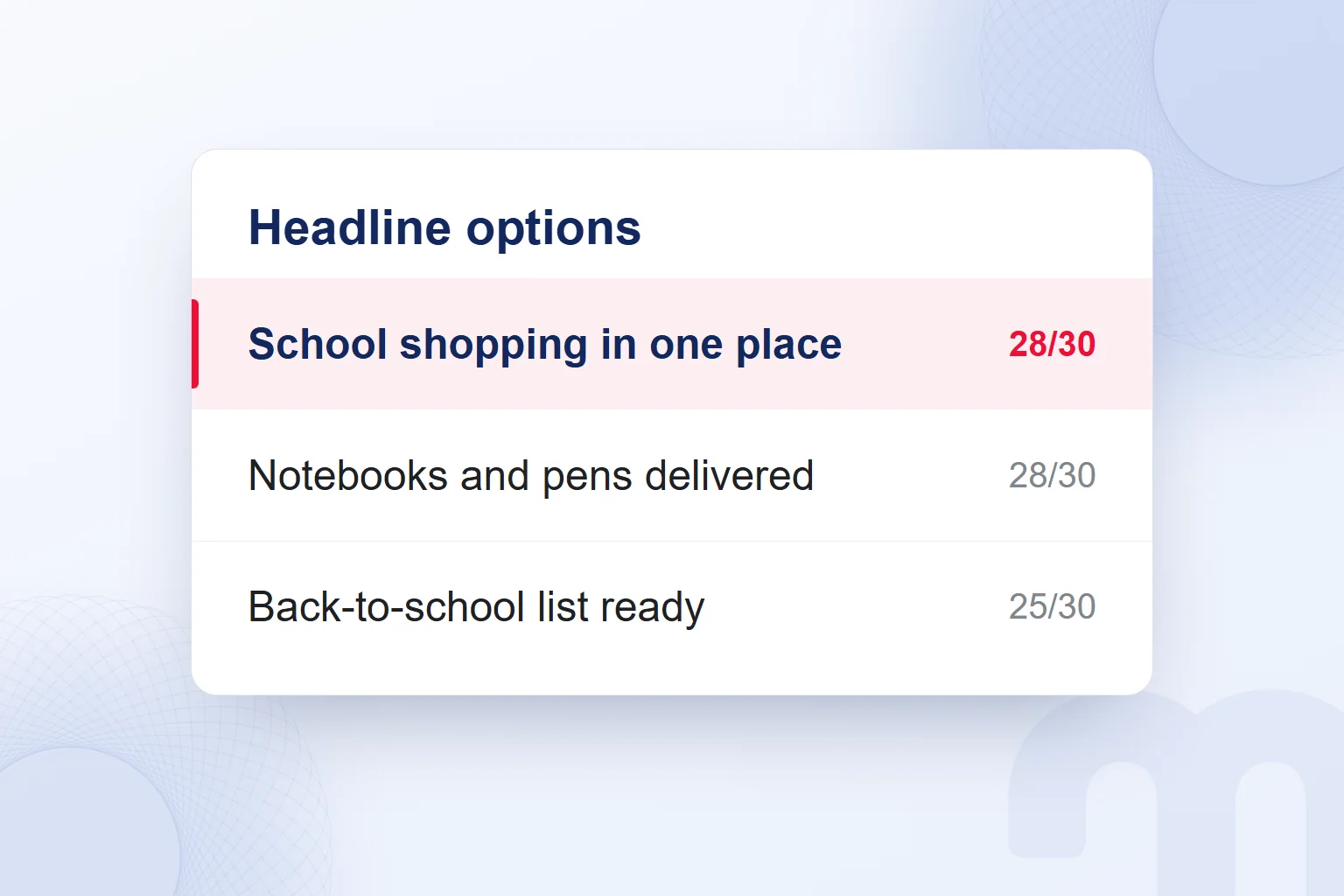
With the promise set, we try different headlines. “Notebook options for school” and “Browse our grid notebooks” are separate candidates for the same product group: the first leads with choice, the second with product type. To pick one, we weigh the product information, the character limit and the landing page.
What is the difference between copywriting and content writing?
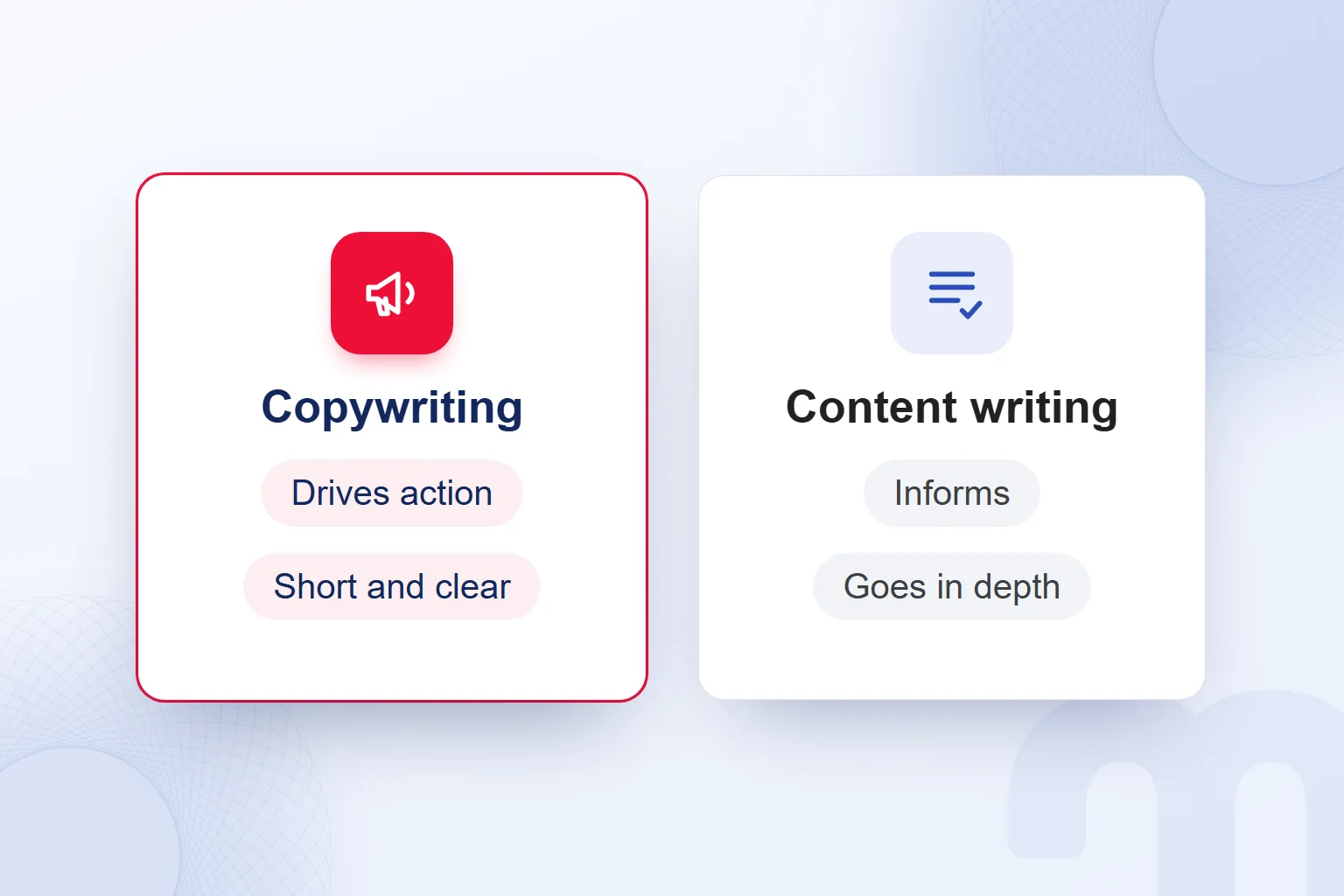
Copywriting aims to move the reader to an action; content writing aims to inform. We draw the line by the text’s job before its length. A landing page that sends people to browse products and a blog post that answers a question in depth have different purposes.
| Criterion | Copywriting | Content writing |
|---|---|---|
| Purpose | Move the reader to an action | Inform the reader |
| Length | Short and clear | As long as the topic needs |
| Example | Ad headline, landing page, email | Blog post, guide |
| Measurement | Clicks, conversions | Reads, search visibility |
The length distinction is not a word quota. On a landing page, we keep the explanation people need to decide; in a guide, we cut any paragraph that does not answer the question. Measurement follows the purpose: we assess readers seeking information separately from readers browsing products.
What makes good copy?
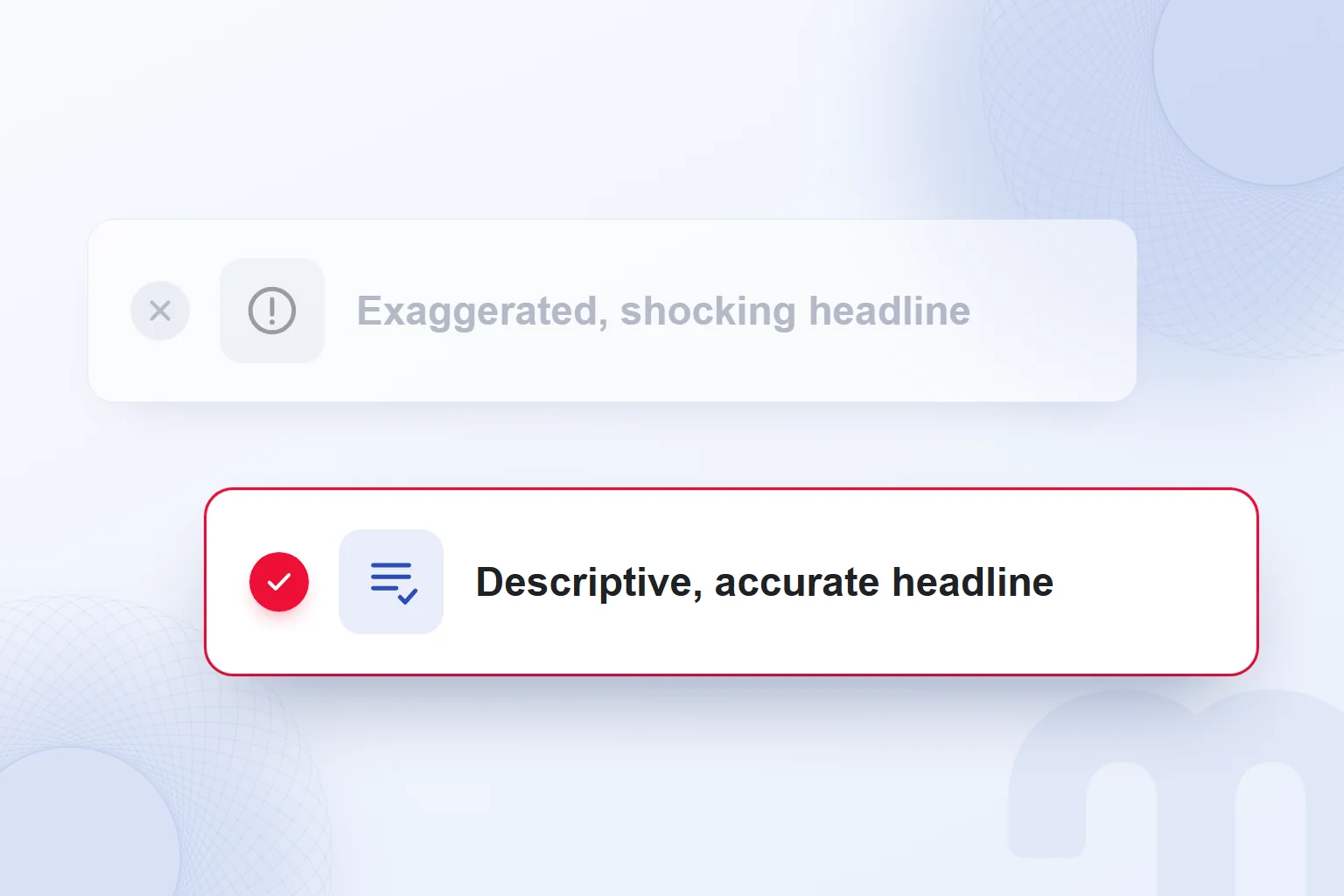
Good copy meets the reader’s need, carries a descriptive headline without exaggeration, offers original value and gives accurate information. Google Search Central’s questions on people-first content also ask whether a headline helpfully summarizes the content, avoids exaggeration and whether the content shows first-hand expertise.
We do not just copy or restate other sources; we connect the information to the reader’s decision. When passing on a headline’s length limit, we also show how to shorten a sentence that exceeds it, and keep clear which part rests on documentation and which on our preference.
Google has no preferred word count. We set length by what the question requires, remove repetition and add any missing condition.
In Turkey, the first paragraph of Article 7 of the Regulation on Commercial Advertising and Unfair Commercial Practices requires ads to be truthful and honest. For the example shop, we add no undocumented superiority claim; we compare what the headline promises with what the business offers.
How do you write ad copy?
We write ad copy by choosing a promise that answers the target person’s need, writing several headlines and checking them against channel limits and supporting documents. According to Google Ads Help, a can take 15 headlines and 4 descriptions.
We note what each headline says and assess a product range line separately from a delivery promise, which we write only after learning the service’s scope. The description explains the offer instead of repeating the headline. For short lines, we use the single-promise approach from our slogan guide.
Article 9 of the same regulation makes advertisers responsible for proving their claims, and its second paragraph requires claims about verifiable facts to be proven with scientifically valid information and documents. We add no conclusion a document does not support.
Three common situations and how we handle each:
- A headline goes over 30 characters → we write a shorter option that keeps the meaning.
- The copy contains a measurable claim → we check it against its document and remove it if there is none.
- Every headline repeats the same promise → we write options that describe different benefits.
For the example shop, we shorten “Notebook options for your school shopping” to “Notebook options for school”. We keep the product group, promise nothing extra and check that the headline works alone and matches the description.
How do you write web page copy?
We write web page copy with a headline that answers why the visitor came, explanations that meet their need and a clear next step. Google’s people-first approach rests on content created primarily for people. The headline states what the page offers; details follow the reader’s questions.
On the example shop’s notebook page, the headline defines the product group, the description gives known features and the button says plainly what it does; we then read all three together in the design.
In our blog posts, every subheading is a question answered in the first sentence below it, without exclamation marks or clichés; every fact rests on a primary source, and a person reads the copy before it goes live.
We write landing page copy together with the design in our ad landing pages work. We check that the description backs up the headline’s promise and that the page matches the offer seen in the ad.
How does the copywriting process work?
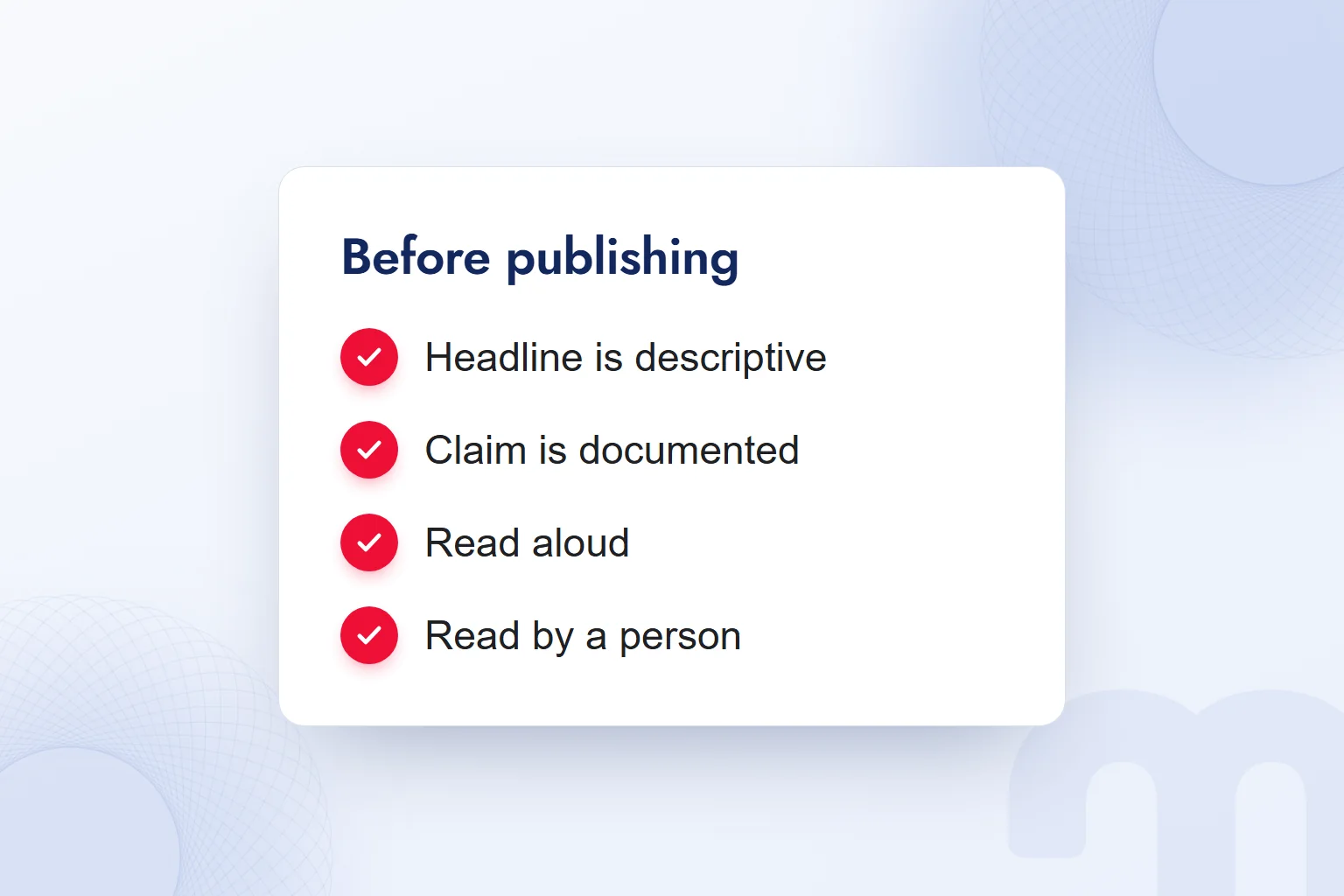
The copywriting process starts with reading the brief and moves through defining the audience and promise, writing headlines, verifying, editing and testing. In the final read, we return to the purpose.
- We read the briefWe set the purpose, audience, channel and limits, and separate the information the copy can use.
- We write down the audience and the single promiseWe sum up in one sentence whom we address and which need we answer.
- We write several headlinesWe produce options that describe different sides of the same offer and keep each one’s meaning clear.
- We check claims against documentsWe confirm each claim matches the scope of its document and remove anything we cannot verify.
- We read the copy aloud and cut itWe fix the spots where we stumble and delete words that can go without changing the meaning.
- We test before publishingWe try the headline options in the channel and check that they fit the field and read well with the description.
If reading aloud sends us back to the previous paragraph, we rebuild the sentence. We judge headlines by what they promise, not only how they sound, and compare the shortened version with the first draft to see whether a removed word carried a condition. Finally, we read the copy where it will be used.
What do we watch for when writing copy with AI?
When writing copy with AI, we check accuracy, quality, relevance and the value offered to the reader. Google Search Central’s guidance on generative AI content notes that these tools can help with research and with adding structure to original content. Producing many pages that add no value for users, however, may violate the scaled content abuse spam policy.
These criteria also cover page titles, meta descriptions, structured data and image alt text. We review these fields with the copy and correct a title that promises missing information or alt text describing a detail the image lacks.
The path splits like this, depending on the situation:
- AI wrote the draft → we verify the facts against primary sources and have a person read the copy.
- We want to produce many similar pages → we check whether each page adds separate value for the reader.
- The page title, meta description or image alt text was generated automatically → we check these for accuracy and relevance too.
Google also notes that sharing how content was created can give readers context; we describe that work in concrete terms. A fluent draft does not mean the review is finished.
A metaphor in a headline goes through the same accuracy check. Our other guides on copywriting, advertising and content planning are collected under our digital marketing articles.
Frequently asked questions
What is copywriting?
Copywriting is writing text that presents a product, service or idea and moves the reader to an action. It covers ads, web pages, emails, social media and product descriptions.
What does a copywriter do?
A copywriter reads the brief, defines the audience and promise, writes headlines and descriptions, and checks claims against their documents.
What is the difference between copywriting and content writing?
Copywriting aims to move the reader to an action; content writing aims to inform. We draw the line by the text’s purpose before its length.
How many characters should ad copy be?
In a Google Ads responsive search ad, a headline can be up to 30 characters and a description up to 90. We write copy to fit the ad field it will run in.
How does Google assess AI-written content?
Google’s guidance focuses on accuracy, quality, relevance and value for users. Producing many pages that add no value may violate the scaled content abuse spam policy.
How do you learn copywriting?
We practice reading briefs, understanding the audience, writing short and testing copy in its channel, while keeping meaning when shortening and verifying claims.

 What is a call to action (CTA)? CTA text and button examplesRead article
 What is a tweet, what does retweet mean? Posts and reposts on XRead article
 What is network marketing? How it differs from pyramid schemesRead article
 What is a buyer persona? How to create one, with a templateRead article
 What is Affiliate Marketing? Commission Models and Building a ProgramRead article
 What is WhatsApp Business? Free app, Platform (API) and how to use itRead article
 What is a podcast? How podcasts work for brands and where to publishRead article
 Best time to post on TikTok: finding it with your own account dataRead article
Questions & answers
0 commentsNo questions yet; you can ask the first one.