





 Cihat Murat Yüksel
7 min read
Cihat Murat Yüksel
7 min read
What is a meta description? Length, writing rules and effect on clicks
A meta description is a short summary of a web page; Google may use it as the description in search results, but it does not use it for ranking.Pro
Contents 9 sections
A meta description is short text in the meta tag named description, in a page’s head section, that summarises the page and can be used as the description below the title in search results. We treat the shown in results and the meta description we write as separate things; Google also shows text taken from the page there.
“Description” is a summary of the page; “meta” means it is stored as page data in the HTML. We decide which question the page answers, put the main point first and add page-specific detail, then compare our text with the result and track its effect with page and query data.
A meta description is written for each page separately, with the main point first; its effect on clicks is tracked with data for the same page and the same query.
What is a meta description?
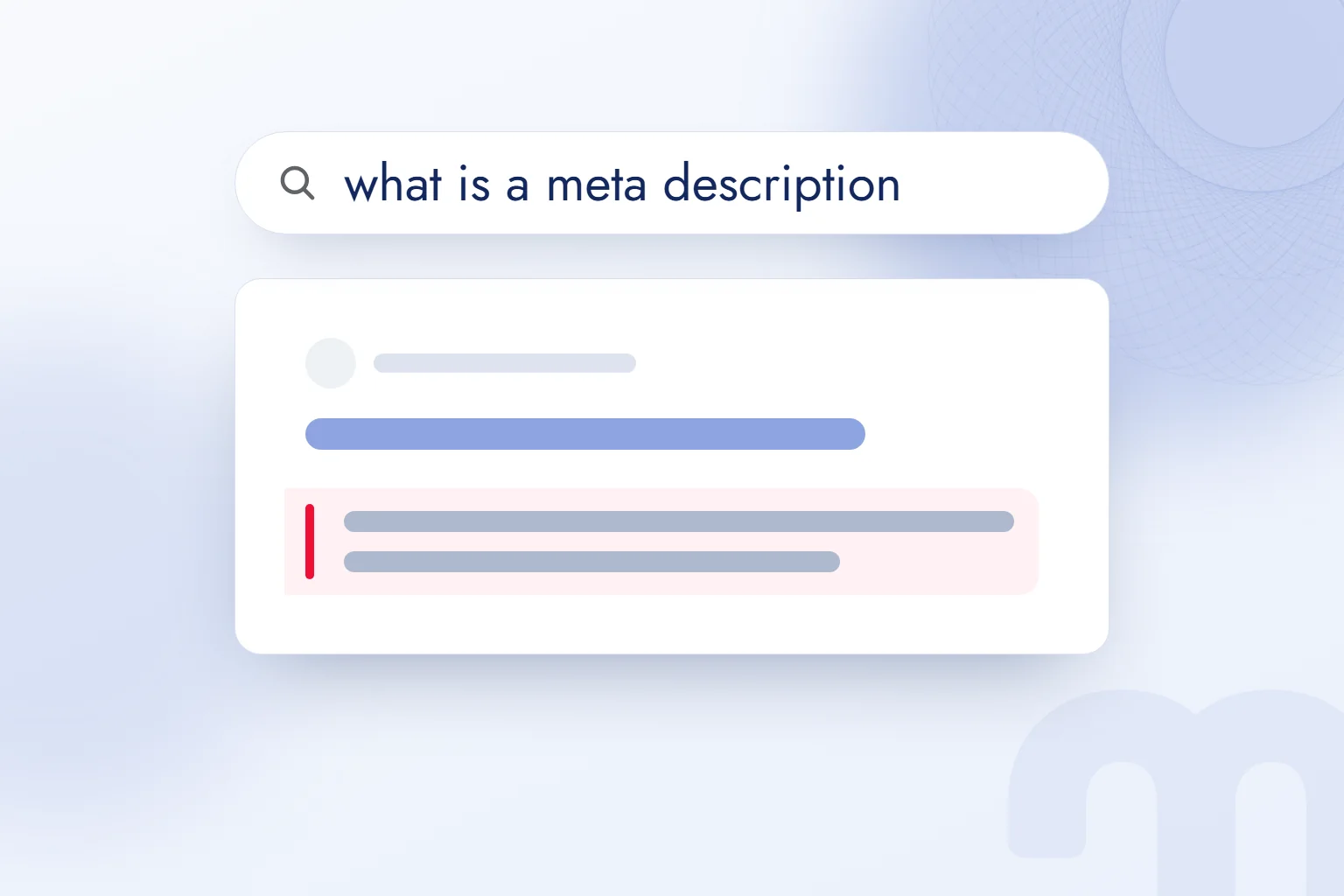
A meta description is a meta tag that briefly describes a page’s content and that Google sometimes uses for the search result description. In it we combine the page’s main answer with what sets the page apart from similar ones.
We choose what the reader needs before opening the page: the meaning of the term in a definition article, the scope of the service on a service page.
In review, the meta description is the text we write; the snippet is what Google shows. An identical text is not our measure of success; we check whether the description shown explains the page and the searched topic correctly.
What is the difference between a meta description and a title tag?
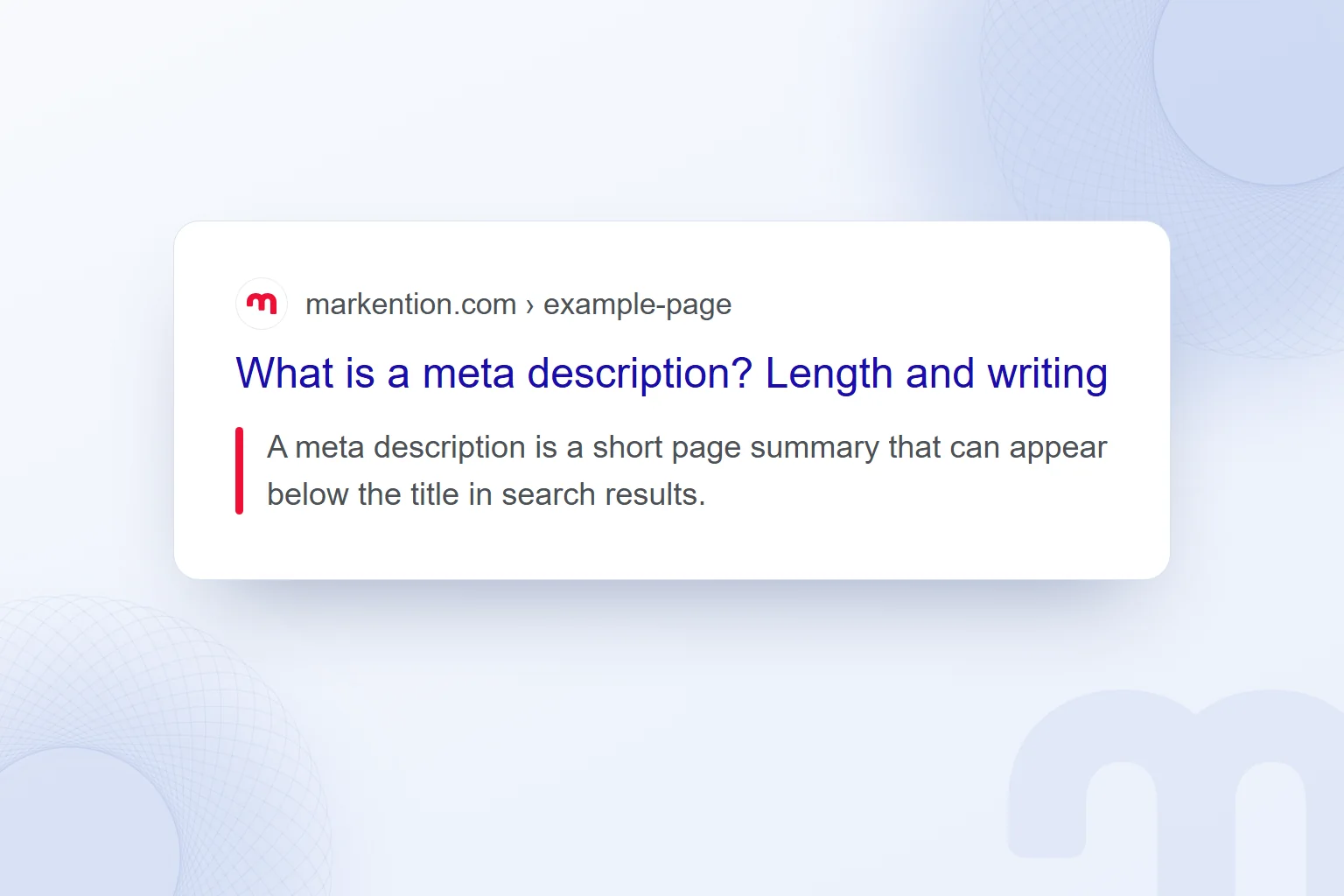
The title is the page name in the browser tab and the source of the blue clickable heading in results; the meta description is the source of the description below it. We never write the same sentence in both. The title states the topic; the description says what the page offers on it, such as the short definition rather than the title’s question rephrased. We assess the title itself against the criteria in what is a title tag.
Where does the meta description go in HTML?
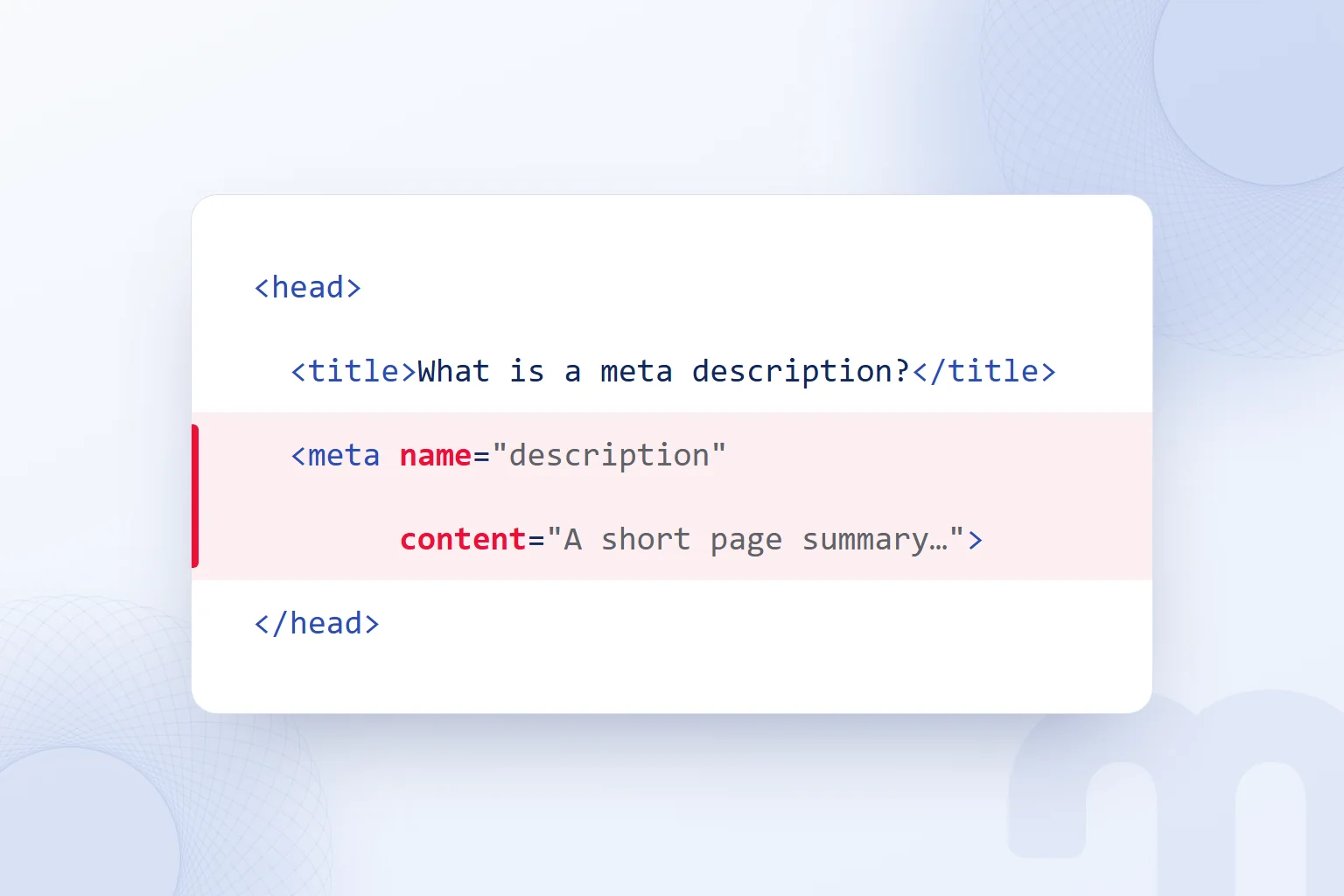
The meta description goes in the meta tag named description, inside the head section of the HTML. We compare the description entered in the admin panel with the text in the page source.
has no meta description field. In WordPress we write it in the search appearance field of an SEO plugin such as Yoast SEO or Rank Math. On Shopify and similar platforms we use the search engine listing preview. Whatever the field is called, we check what the page source actually says.
On the markention blog we write a summary for each article and use the same text as its meta description; the live page source matches the summary. So each summary opens with the definition or core answer, serving both the page and the search result.
How long should a meta description be?
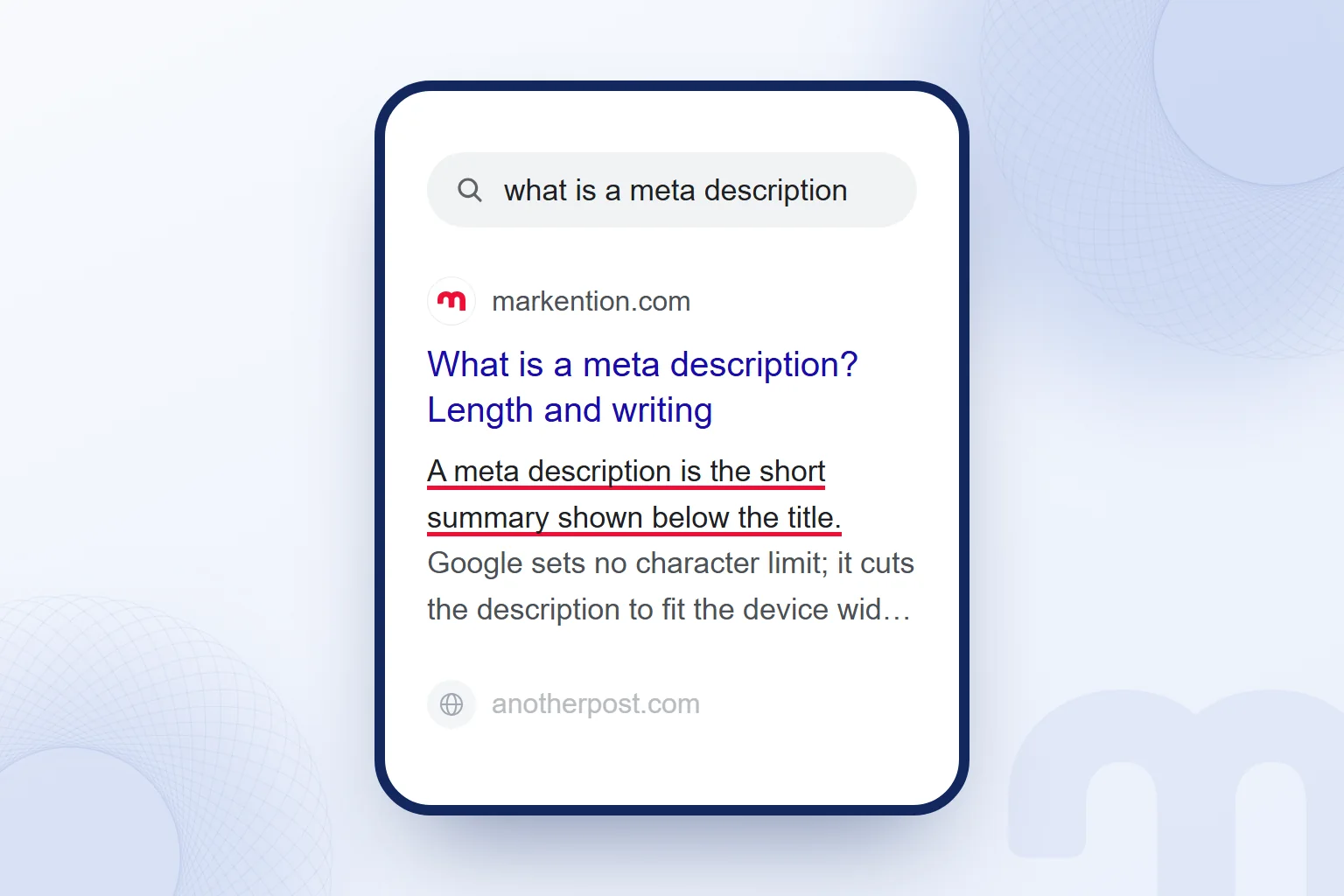
Google sets no character limit for meta descriptions; on this blog we keep the summary we use as the meta description to 160 characters or fewer. According to Google Search Central, snippets are truncated where needed to fit the device width, so a set character count does not guarantee the full text appears on every device.
We put the main point in the first half. To shorten, we remove repeated words and keep what distinguishes the page; if the definition comes last, we reorder the sentence rather than trim it.
“Everything you need to know about meta descriptions” delays the definition; “A meta description is a short summary of a web page” gives the core point first. The first sentence must make sense alone, and we never pad the end to reach a character count.
How do you write a meta description?
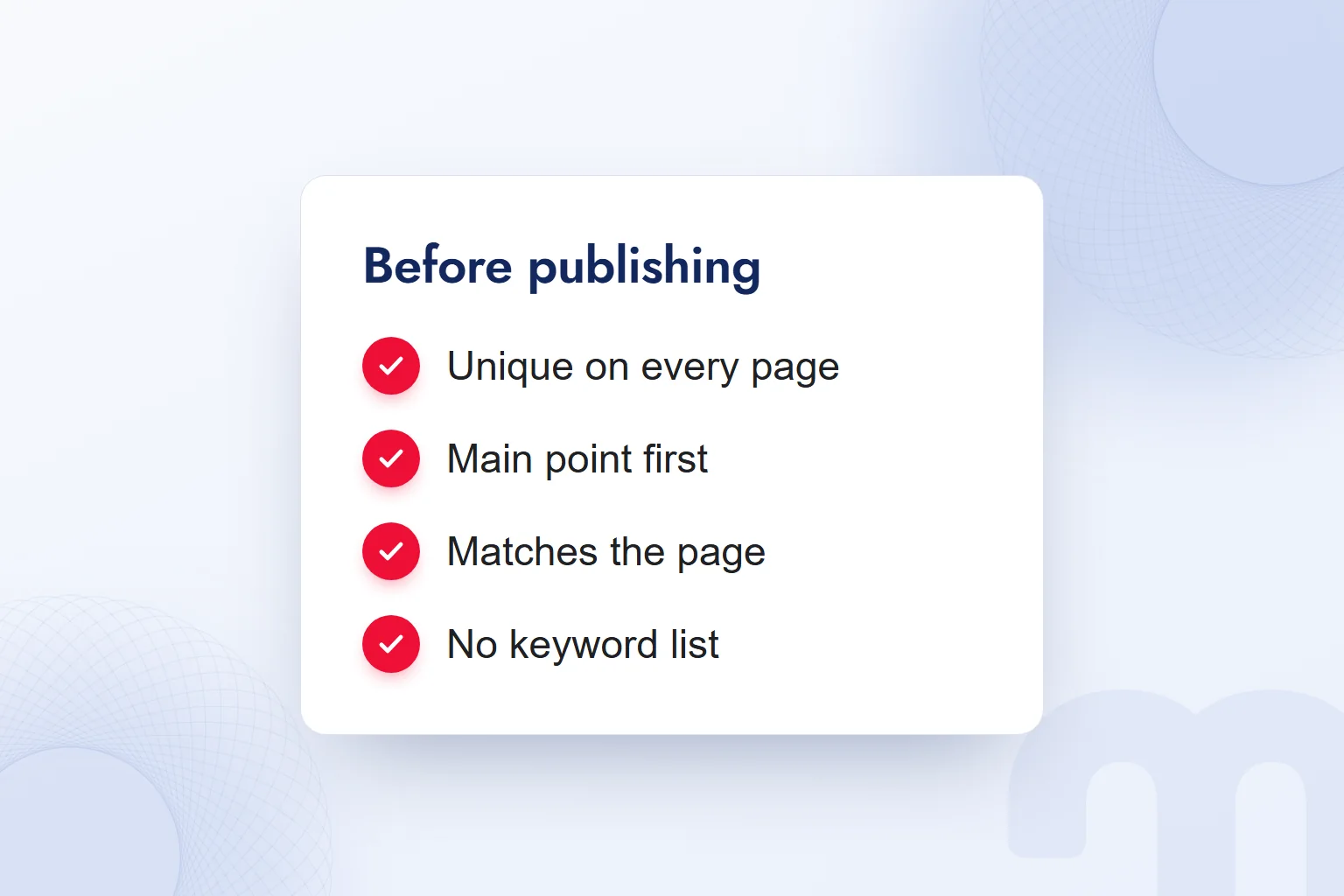
We write it as a short text that answers the page’s question, gives the main point first and carries page-specific detail. We compare the draft with the content, then track search performance.
- We define the question the page answersWe choose the core answer on the page and limit the description to it.
- We put the main point firstWe open with the definition or core answer and cut openings that delay it.
- We add page-specific informationWe use the service scope, the product’s distinguishing detail or a detail from the article’s topic.
- We use the keyword naturallyWe make it part of a meaningful sentence and do not list its variants.
- We compare it with the pageWe find each claim on the page and remove promises the content does not keep.
- We track it in Search ConsoleWe compare clicks, impressions and click-through rate for the same page and query with the previous period.
| Page type | What the description highlights | Watch out |
|---|---|---|
| Home page | What the business does and the scope of its services | We do not copy it to every page. |
| Service page | The scope of that service and the need it meets | Only what that page covers. |
| Product page | Google’s example: price, year, manufacturer | We check it against the product page. |
| Category page | The shared topic of its products or articles | We choose what sets the category apart. |
| Blog article | The main answer; author and date where relevant | The definition or core point goes first. |
We do not carry product detail into every description: in a blog article we build on the answer the reader wants, on a service page on its scope. Page specificity means deciding afresh for each page which information matters.
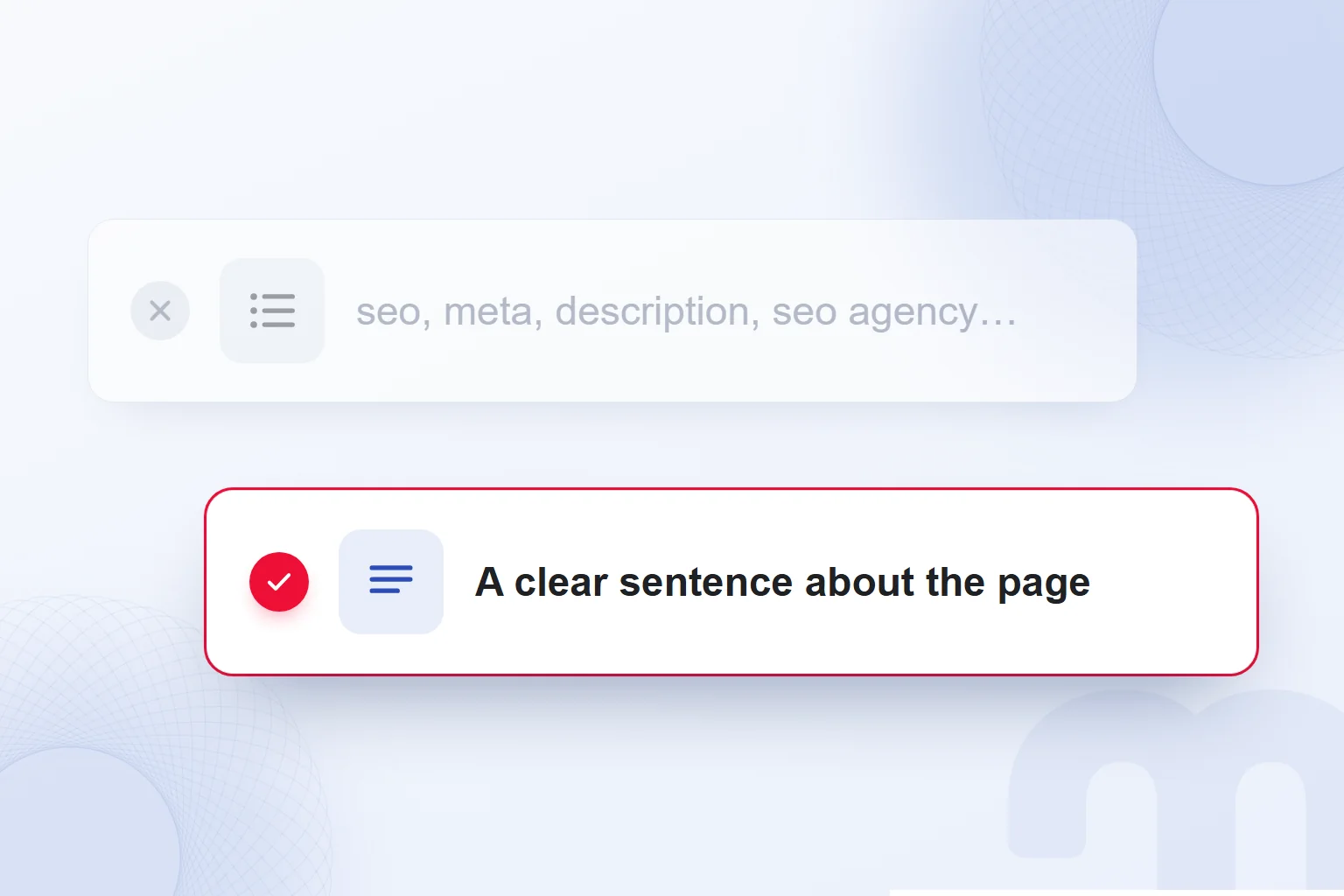
Long keyword strings do not describe the page and, according to Google, are less likely to be shown as a snippet; we use the keyword as a meaningful part of the description. Instead of “seo, meta, description, seo agency” we write the answer the page gives. Read alone, the description must make clear which page it describes.
Why does Google rewrite meta descriptions?
Google generates snippets primarily from page content and sometimes uses the meta description when it describes the page more accurately than on-page text. So the same page can show different descriptions for different queries. We read the searched phrase and the text shown together.
The case decides the response:
- The description is cut off → We move the main point into the first sentence so the visible part describes the page.
- Google shows a different text → We edit the description and the first paragraph so they answer the query directly.
- Every page has the same description → We write one per page and, on large sites, generate it from page data.
For large, database-driven sites Google accepts generated descriptions if they are readable and varied. We never just add the page name to a shared sentence; we bring in the detail that distinguishes each page.
Without assuming Google will use a given text, we keep both the description and the page’s main answer accurate and clear.
How do you limit a snippet?
We control the snippet with Google’s nosnippet, max-snippet and directives, depending on what we want to limit. First we set the goal: removing the description, capping its length or keeping one section out.
Common situations and the route for each:
| Situation | What we do |
|---|---|
| No description in results | We use nosnippet to turn off the snippet. |
| Description under a set length | We use max-snippet to set the maximum. |
| One section kept out | We use data-nosnippet on that section. |
This decision is separate from writing: to make the text clearer, we edit the sentence; to limit what enters the snippet, we choose a directive. When only one section must stay out, we do not turn off the whole description.
How does a meta description affect clicks, and how is it measured?
A meta description influences whether people click when the result appears; we track this in the Search Console Performance report by page and query. Google has stated on its Search Central blog that it sometimes uses meta descriptions for snippets but not for ranking.
We compare clicks, impressions and click-through rate (CTR) for the changed page and its query after the change with the previous period. Page and query stay the same on both sides, so other pages’ totals are not read as our result.
We never judge a description by clicks alone: we read impressions and CTR together, check which description actually appears and note it if Google shows a different snippet. We do not promise how much a single change will add.
In our SEO consulting work we audit meta descriptions for page specificity, consistency with the content, then measurement. More on titles, keywords and search visibility is in our SEO articles.
Frequently asked questions
What is a meta description?
A short page summary in a meta tag in the head section. Google sometimes uses it as the description below the title in search results.
What does meta description mean?
“Description” is a summary of the page; “meta” means it is stored as page data in the HTML. Google’s documentation calls it the meta description tag.
How many characters should a meta description be?
Google sets no limit; snippets are cut to fit the device width. On this blog we keep the summary used as the meta description to 160 characters or fewer.
Does a meta description affect rankings?
Google does not use it for ranking. We assess its effect through click decisions and Search Console data.
What is a snippet?
The description text shown below the title in a search result. Google generates it mainly from page content and sometimes uses the meta description.
Why doesn’t Google show the description we wrote?
Google builds snippets mainly from page content and varies them by query. We check that the description and the first paragraph answer the query directly.

 WordPress SEO plugins: Yoast vs Rank Math vs AIOSEO comparedRead article
 What is a keyword? Types of keywords and how to choose themRead article
 What is a title tag? How to write it and how it differs from H1Read article
 What does optimize mean? Optimization on phones, websites and adsRead article
 What are search engines? Google, Bing, Yandex and AI searchRead article
 What is “People also search for”? How to use it in SEORead article
 What is ROAS? Formula, ROAS vs ROI and how to set target ROASRead article
 What is Gemini? How to use it, the free plan, Gemini Omni and ChatGPTRead article
Questions & answers
0 commentsNo questions yet; you can ask the first one.