





 Cihat Murat Yüksel
8 min read
Cihat Murat Yüksel
8 min read
What is Shopify? Using it in Turkey, how fees work and vs WooCommerce
How Shopify works, how payments are taken in Turkey, which cost items add up and how it differs from WooCommerce; the order we follow when opening a store or fixing weak sales.Pro
Contents 9 sections
Shopify is a ready-made ecommerce platform from a Canada-based company, sold on a monthly subscription for building and running an online store, with hosting, security updates and checkout infrastructure included. This service model is called .
When deciding how to build a store, we weigh the team’s workload, payment conditions and cost items together. For a business in Turkey, the payment provider, invoicing and shipping integration are part of that decision. Before choosing a theme, we decide who runs each task and write a sales-ready store’s needs into one plan.
When Shopify is chosen for a store in Turkey, the payment provider and the total cost are assessed together; the platform decision is made according to the team’s technical responsibility.
What is Shopify and how does it work?
Shopify is a ready-made ecommerce service that provides a store’s technical infrastructure on subscription and is extended through themes and apps. Hosting, security updates and checkout infrastructure sit with Shopify. On top of this, we build the product presentation, store content and the integrations the business needs.
The Theme Store sets how the store looks; the App Store supplies extra functions. We assess every app for a specific job and note which need it covers in payments, invoicing or shipping. Paid choices go into the cost calculation; we never scope a build from a theme’s looks alone.
Every store gets a “.myshopify.com” address, and we connect our own domain as well. Domain, theme and product content are handled together so the store carries one identity. Product descriptions and sales operations still sit with the business.
Can you use Shopify in Turkey?
Yes, Shopify can be used in Turkey; stores there take payments through a third-party payment provider. is not available in Turkey. We make this distinction clear at the start of the store plan.
When choosing among payment providers in Turkey, we review the Shopify integration and the provider’s commission together. With third-party and alternative providers, a Shopify transaction fee also applies. Shopify’s checkout infrastructure and the provider that processes the payment are separate setup tasks.
For a setup in Turkey, we place e-invoicing and e-archive invoices, shipping, a Turkish-language storefront and prices in Turkish lira next to the payment integration. For selling abroad, we plan the company’s country of registration and the payment provider together; we never assume Shopify Payments is available to a store in Turkey.
How do Shopify fees add up?
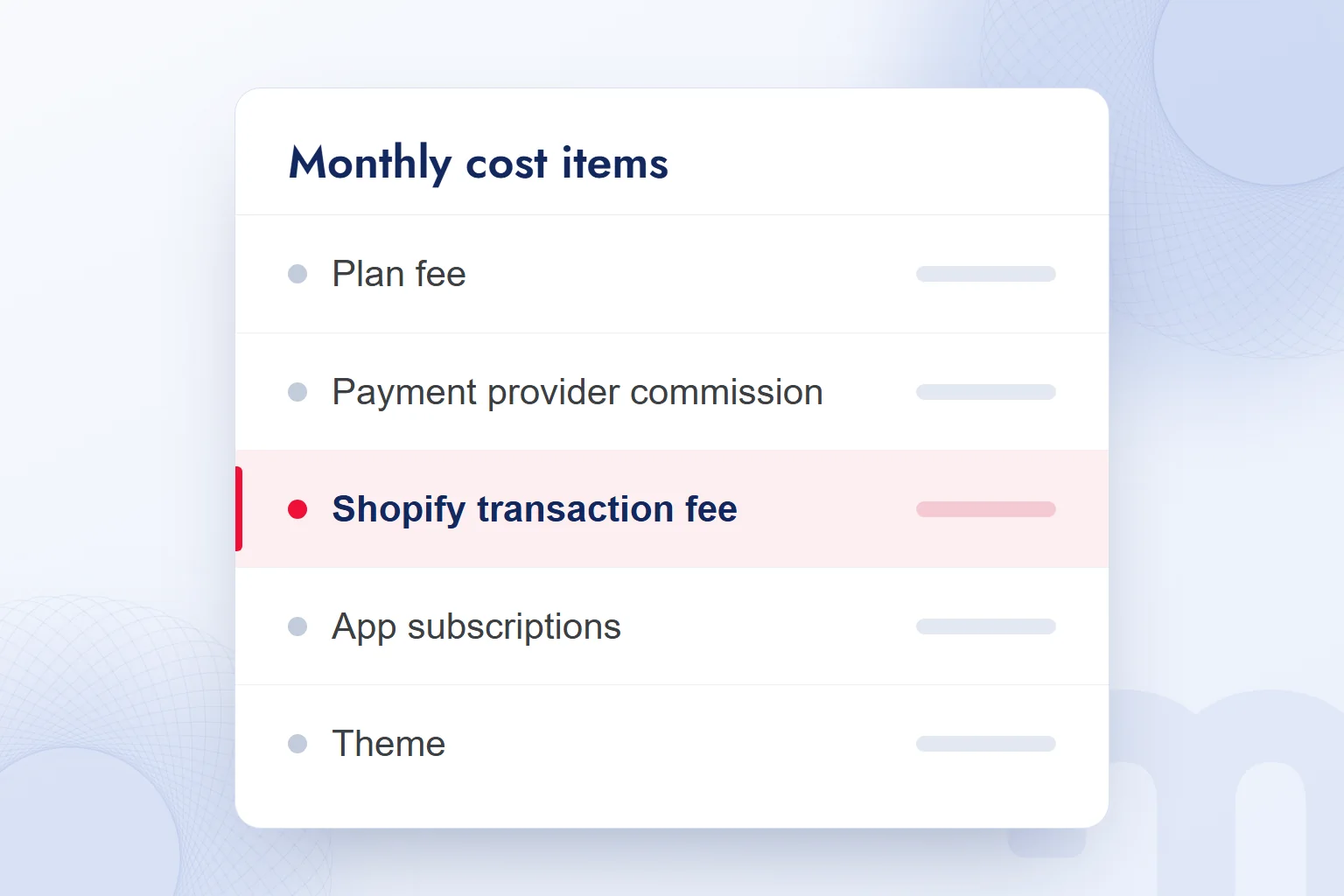
Shopify costs consist of the plan fee, the payment provider’s commission, the , paid app subscriptions and a paid theme’s price. We build the budget by listing these items separately, so it is clear from the start that the plan price is not the store’s whole cost.
We assess the plan on monthly or yearly billing. The provider’s commission and Shopify’s transaction fee stay as separate cost lines; the transaction fee rate changes by plan. Because prices vary by country and plan, we read current amounts from Shopify’s pricing page.
When choosing apps, we pin down which job needs which subscription. An invoicing or accounting app’s fee goes into the same assessment as the store plan. A paid theme is recorded separately.
When comparing quotes, we look for the same cost items in each. If one lists only the plan and another the plan plus apps, we never compare totals directly; we first match the store’s needs, then set the costs side by side.
What is the difference between Shopify and WooCommerce?
Shopify is a ready-made platform offered on subscription; WooCommerce is an open-source ecommerce plugin installed on WordPress. The core difference is who handles the technical work and how much control we want. We decide based on the team’s skills and how the business works.
| Criterion | Shopify | WooCommerce |
|---|---|---|
| Platform type | Ready-made SaaS service on subscription | Open-source plugin installed on WordPress |
| Hosting and updates | Hosting and security updates sit with Shopify | Hosting, updates, backups and security sit with the business |
| Payments | Third-party provider in Turkey; Shopify transaction fee applies | Plugins exist for payment providers in Turkey |
| URL structure | Fixed prefixes; the last part is editable | Permalink structure changed in WordPress settings |
| Extending | Theme Store and App Store | Plugins |
| Control | Within the infrastructure and editing limits Shopify provides | Full control over code and data |
With WooCommerce, the domain, hosting, updates, backups and security fall to the business; full control means planning the team that runs them.
Each situation has its own answer:
- We want a ready-made platform, a small technical team and a fast setup → We choose Shopify and add payment and app needs to the plan.
- Our site is content-heavy, we know WordPress and we need full control → We choose WooCommerce and assign responsibility for maintenance and security.
- We aim to sell abroad → We plan Shopify with the payment provider and the company’s country of registration, accounting for Shopify Payments being unavailable in Turkey.
We use these criteria in our ecommerce website work and settle the platform with the team that will run the store. The decision never rests on a theme alone; we also name who owns payments, content and maintenance.
How do you open a Shopify store?
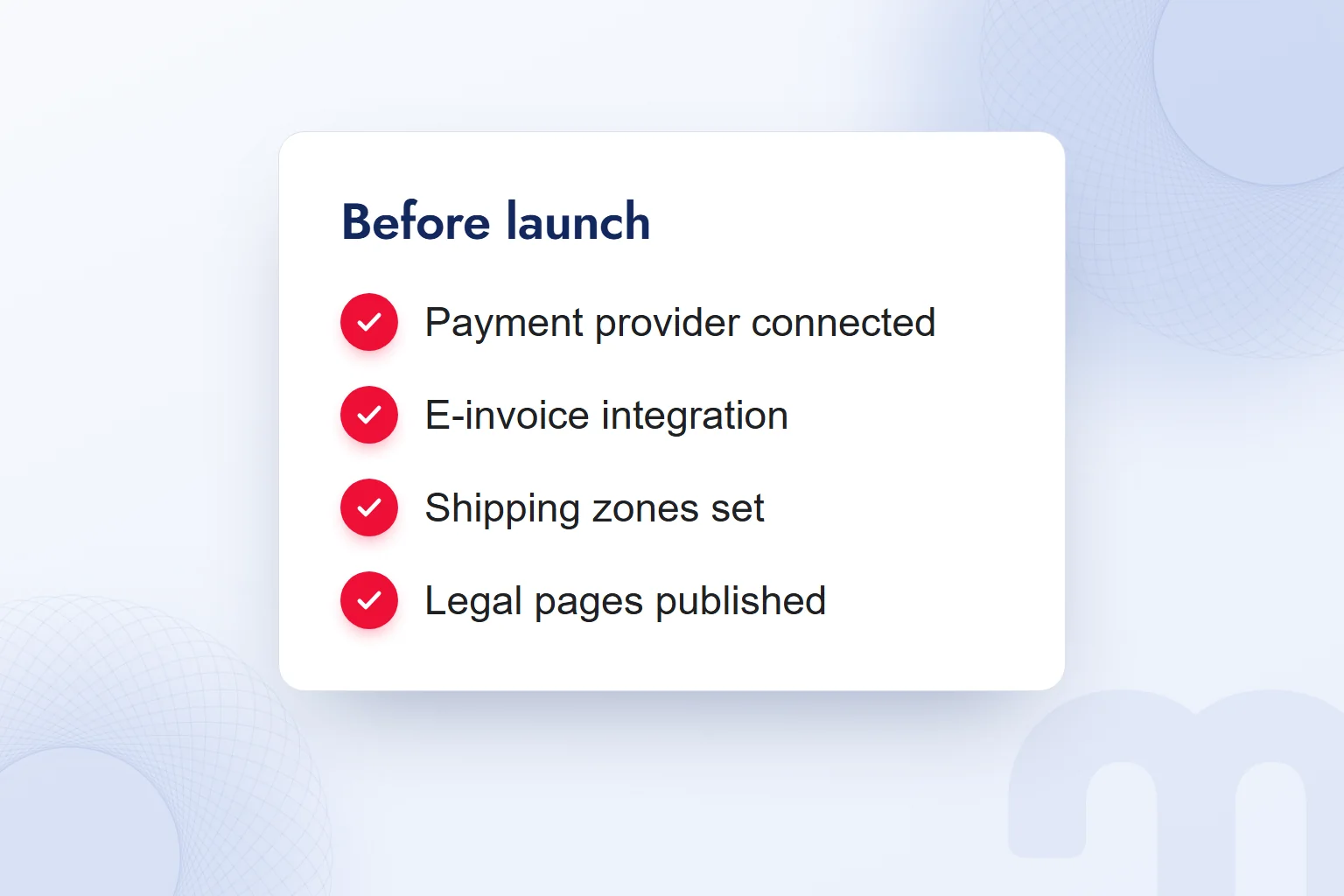
We set up a Shopify store by choosing a plan and a domain, then open it once payments, invoicing, shipping, legal pages and product content are complete. Our order for a Shopify store in Turkey:
- We choose the plan and create the storeWe define the store’s needs and assess the plan and required apps together.
- We connect the domainWe connect our own domain alongside the “.myshopify.com” address.
- We connect the payment providerWe integrate the provider chosen among those in Turkey and add its commission and the Shopify transaction fee to the costs.
- We set up e-invoicing and accountingWe bring the e-invoice and e-archive app, or the accounting integration, into scope.
- We complete the shipping integrationWe integrate the carrier and check the shipping information shown in the store.
- We prepare the legal pagesWe add the distance sales contract, the pre-contract information form, the privacy notice required under Turkey’s data protection law (KVKK) and the returns policy to the store.
- We complete product and theme contentWe set the Turkish-language storefront and lira prices, add real product photos and descriptions, and remove demo content.
At the launch check, we review these tasks together, reading the product description, shipping information and returns policy on the same product. Each missing task gets a named owner, from the payment integration to product content, and post-order work stays in the check plan alongside the store’s looks.
How do you manage SEO on Shopify?
On Shopify, we run SEO within the fixed URL structure and by refining product content, starting from the fields we can edit.
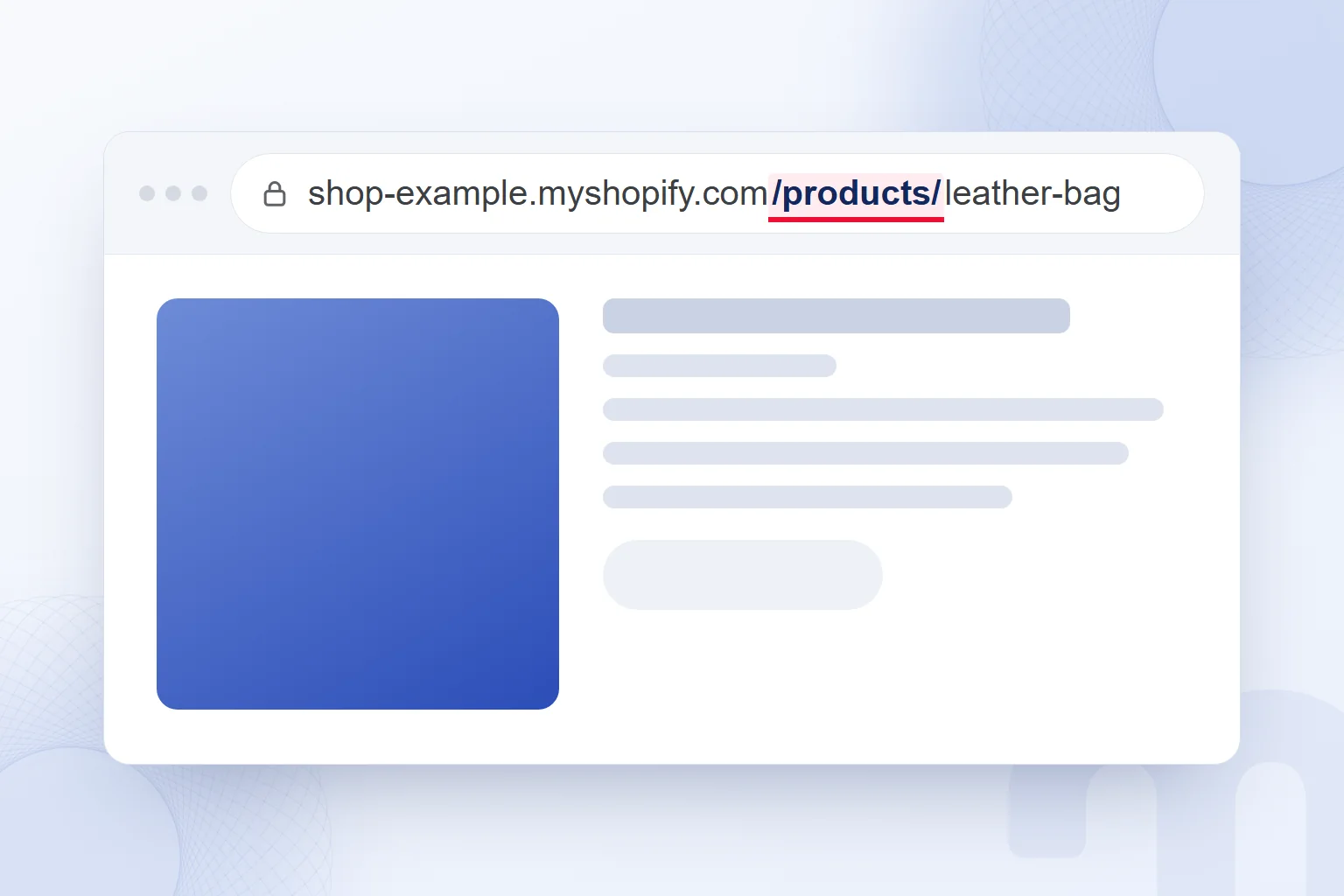
Shopify builds product, collection, page and blog URLs with the /products/, /collections/, /pages/ and /blogs/ prefixes; these cannot be changed, and only the last part is editable. We plan URLs around this limit, placing the product name in the last part. We explain the domain and the other parts of an address in our what is a URL post.
We write the product page title to define the product clearly, following the distinction in our what is a title tag post.
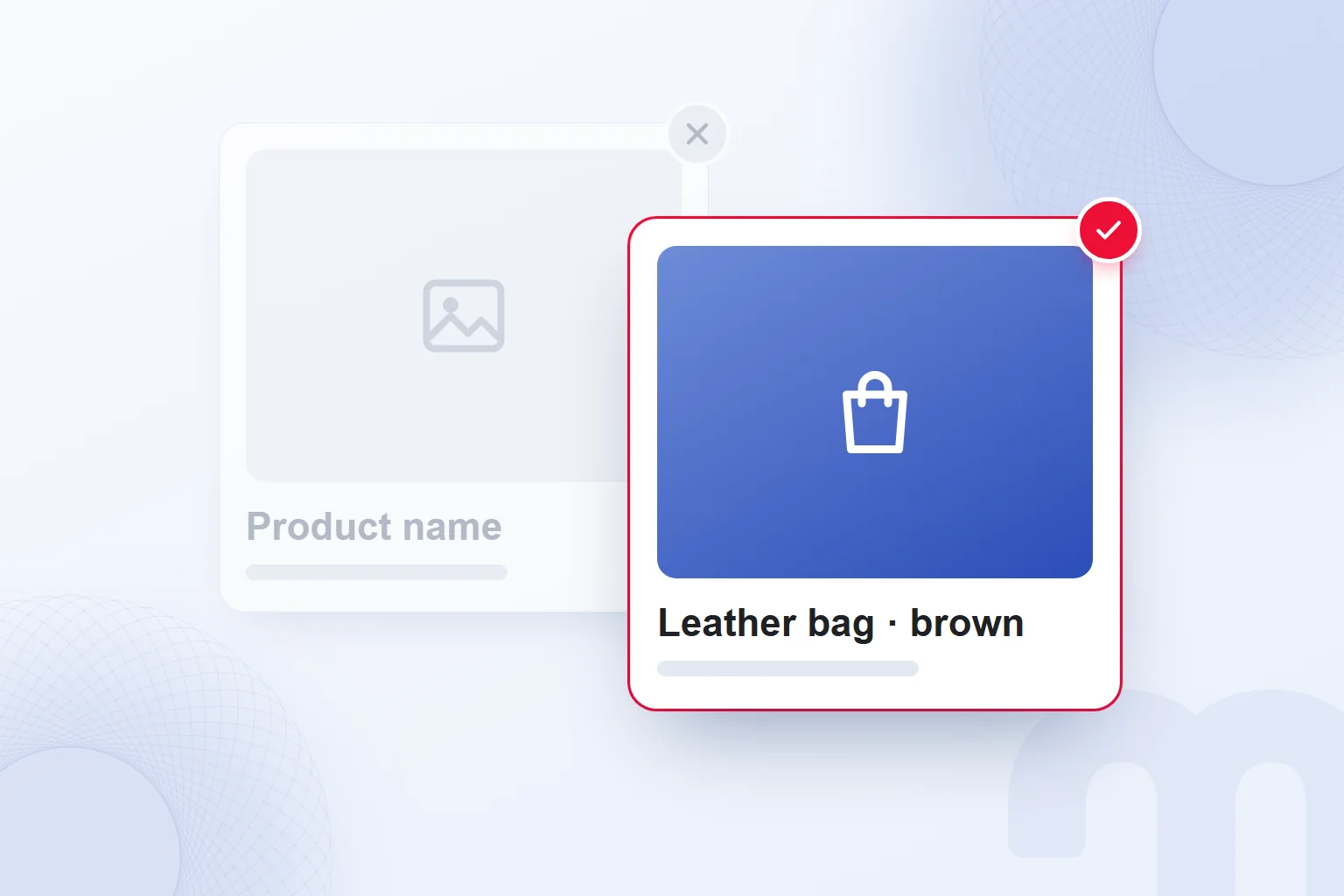
In product descriptions, we use the real product’s information and remove the theme’s demo text, checking that photo and description show the same product. If a bag page carries another product’s image or placeholder text, we fix that first.
What is Shopify dropshipping?
Shopify dropshipping is a sales model, set up through apps, in which the business holds no stock and the supplier ships straight to the customer. Delivery time, returns and quality checks remain the seller’s responsibility, so we assess the supplier’s shipping process, the delivery information shown and returns together.
Apps are chosen for this way of working, with the subscription added to costs. The product page must match the supplied product, and the launch plan names who runs shipping and returns.
What do we do when a Shopify store isn’t selling?
When a Shopify store isn’t selling, we examine traffic, the checkout step and the product page’s persuasiveness separately, and choose the fix by where the problem appears.
The path splits by situation:
- No visitors are reaching the store → We review search visibility and advertising, and plan the work that brings visitors in.
- Visitors leave at checkout → We check payment options, shipping information and trust details, and fill the gaps.
- The product page does not persuade → We place a real product photo and description, and remove the theme’s demo content.
We review a product page on a concrete product: the photo belongs to it, the description describes it, and shipping and returns information is present. At checkout, we assess payment options alongside this information and turn each gap into a task.
The fix log records which page changed and why; the next check revisits it. We cover order and support conversations in our what is WhatsApp Business post; marketplaces such as eBay are a separate option for selling abroad. We explain other topics on platforms and page layout in our blog posts.
Frequently asked questions
What is Shopify?
A ready-made ecommerce platform on subscription for building and running an online store. Hosting, security updates and checkout infrastructure sit with Shopify.
Can you use Shopify in Turkey?
Yes, it is used in Turkey with a third-party payment provider. Shopify Payments is not available in Turkey.
Is the plan fee the only Shopify cost?
No; the provider’s commission, the Shopify transaction fee, paid apps and a paid theme also count. We read current amounts from Shopify’s pricing page.
Should we choose Shopify or WooCommerce?
Shopify for a ready-made platform and a small technical team; WooCommerce for WordPress skills and full control, with maintenance, backups and security planned.
Can we change the whole product URL on Shopify?
The /products/ prefix in a product URL cannot be changed. We edit the last part of the URL.
Who is responsible for delivery and returns in Shopify dropshipping?
The seller is responsible for delivery time, returns and quality checks, even when the supplier ships.

 What is a user interface (UI)? Meaning, examples and UX differenceRead article
 What is Git? Git vs GitHub and version control for marketersRead article
 What is Flutter? When to choose it for a mobile app, and its limitsRead article
 What is a browser? Browser examples and setting a default browserRead article
 What is a URL? Parts of a web address, slugs and their role in SEORead article
 What is a PDF? Uses, and PDFs on your website: indexing and trackingRead article
 What is a keyword? Types of keywords and how to choose themRead article
 What is a buyer persona? How to create one, with a templateRead article
Questions & answers
0 commentsNo questions yet; you can ask the first one.