





 Damla Kütük
8 min read
Damla Kütük
8 min read
What are search engines? Google, Bing, Yandex and AI search
Search engines crawl pages, add them to an index and rank them for each query. How to check index status in Google, Bing, Yandex and AI search, and what to fix when a site is missing.Pro
Contents 8 sections
Search engines are software systems that crawl web pages, store their content in an , and rank the results relevant to a user’s query so they can reach the information they need.
We assess a business’s search visibility starting from its index status in Google, Bing and Yandex, then look at which sources AI search draws on. We never assume a page found in Google is also in Bing, and we never treat verifying a site in a panel as appearing in results.
Verifying a site in a webmaster panel does not mean its pages are indexed; index status is checked separately in Google, Bing and Yandex.
What is a search engine?
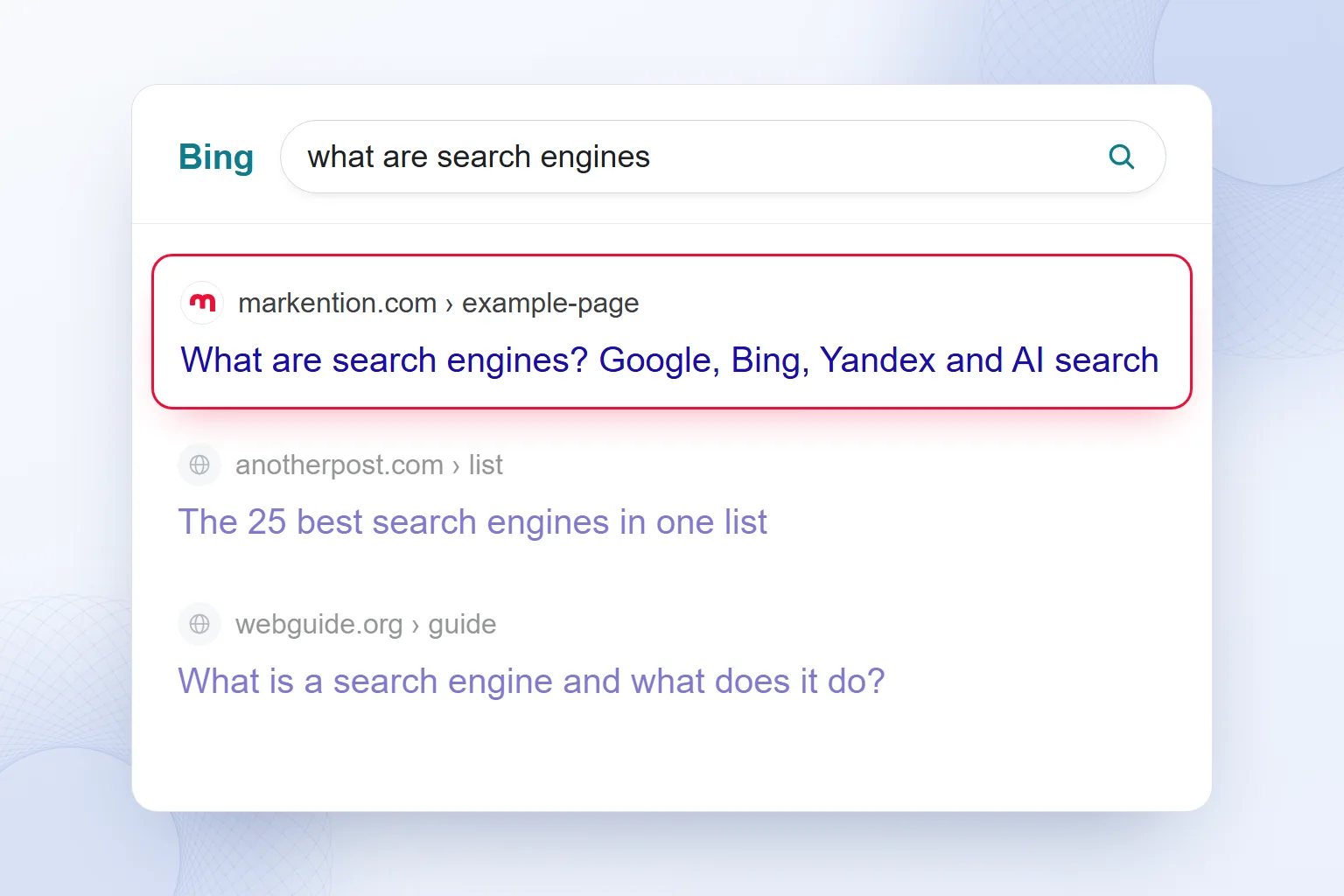
A search engine is software that finds and ranks web pages relevant to a user’s query. It works through crawling, indexing and ranking. Crawling is discovering and reading a page; indexing is accepting it into the pool of results. Ranking decides which results are shown, and in what order, for a query.
Google, Bing and Yandex are examples. Changing a browser’s search setting and making a site findable in these engines are different jobs.
The next step depends on the situation:
- You need a definition or examples for an assignment → A search engine is software that ranks results for a query; Google, Bing and Yandex are examples.
- You want to change your browser’s search engine → This is done in the browser’s search setting, not in a site verification panel.
- A business website does not show up in search → We review verification in that engine’s panel, the page’s index status and crawl access.
Which search engines are used in Turkey?
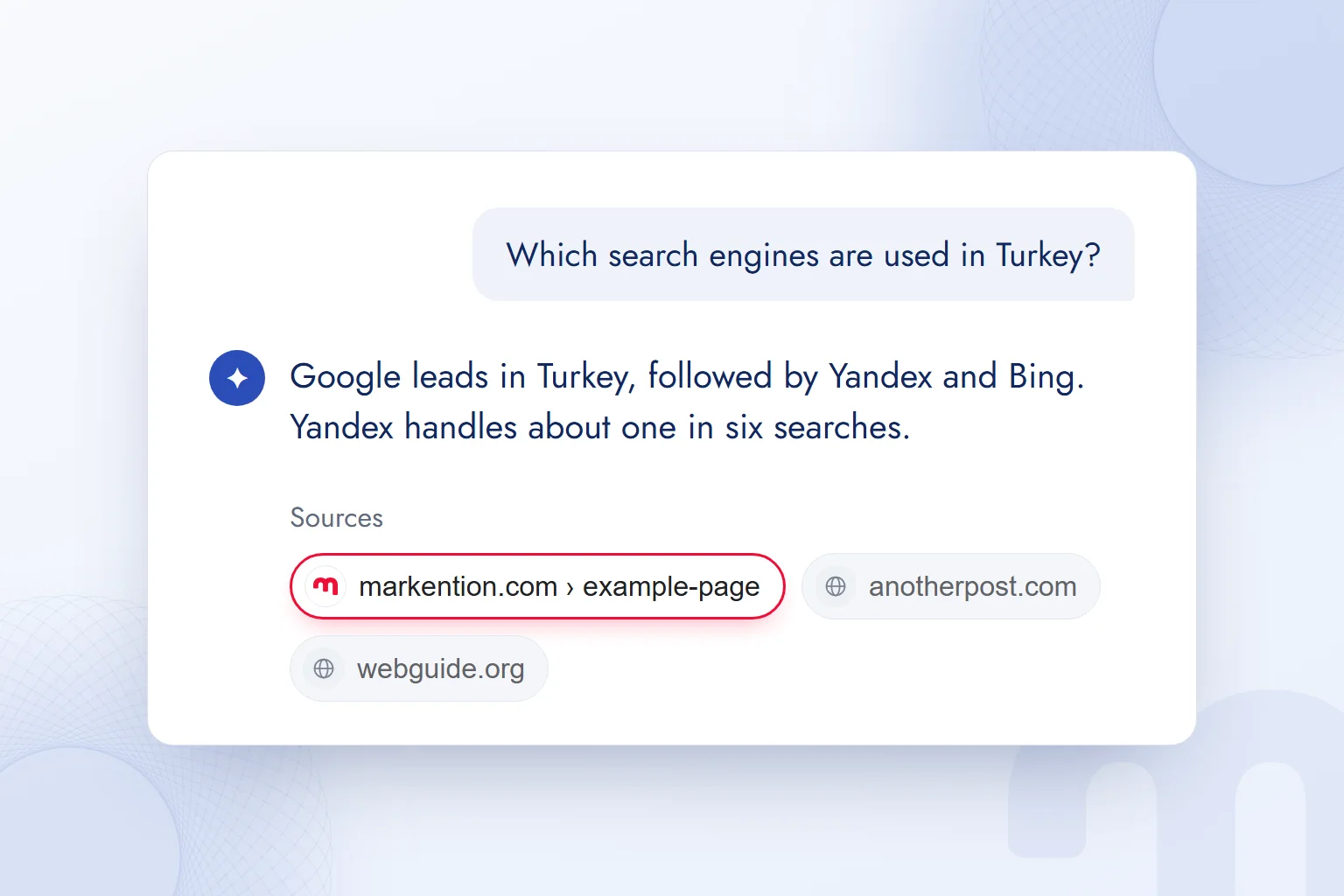
Turkey’s search engines are Google, Yandex and Bing. In ’s August measurement, Google took 80.9% of searches in Turkey, Yandex 17.5% and Bing 0.9%; roughly one in six searches happens on Yandex. Since shares shift monthly, we set priorities from the site’s own visitor mix.
Each engine uses its own index. Google’s control panel is Search Console, Bing’s is Bing Webmaster Tools and Yandex’s is Yandex Webmaster. The general web results of Yahoo and DuckDuckGo come largely from Bing.
Market share is not a traffic split. We compare organic visits in GA4 with impressions and clicks in the webmaster panels, so national usage and the business’s own visibility are assessed separately.
How does an AI search engine work?
An AI search engine processes information from web sources and presents a written answer next to, or instead of, a list of links. How it reaches sources varies by service; we never tie all AI search to one index.
Google AI Overviews and AI Mode use the Google index. Google Search Central’s “AI features and your website” documentation says no special markup is needed; the page must be indexed and eligible to show a snippet.
ChatGPT search draws on crawling and on third-party search providers, Bing among them (OpenAI’s bot documentation and the ChatGPT search help page). Microsoft Copilot’s web search runs on Bing. Perplexity crawls with PerplexityBot and builds its own index.
| Service | Source infrastructure | Where it is checked |
|---|---|---|
| Google AI Overviews / AI Mode | Google index | Search Console |
| ChatGPT search | OAI-SearchBot and third-party providers including Bing | Bot access, Bing Webmaster Tools |
| Microsoft Copilot | Bing | Bing Webmaster Tools |
| Perplexity | PerplexityBot and its own index | Bot access |
The table draws on Google Search Central, OpenAI’s bot documentation, Bing Webmaster Guidelines and Perplexity’s crawler documentation. Being indexed is not the same as being chosen as a source in an AI answer. A Bing listing does not explain every ChatGPT source path, and a Google ranking does not prove Copilot reaches the page via Bing.
How do you check whether your site is registered with search engines?
We check registration through the verification details in Google Search Console, Bing Webmaster Tools and Yandex Webmaster. Verification proves authority over the site; indexing is the engine accepting a page into its results. A verified site and the number of indexed pages are different information.
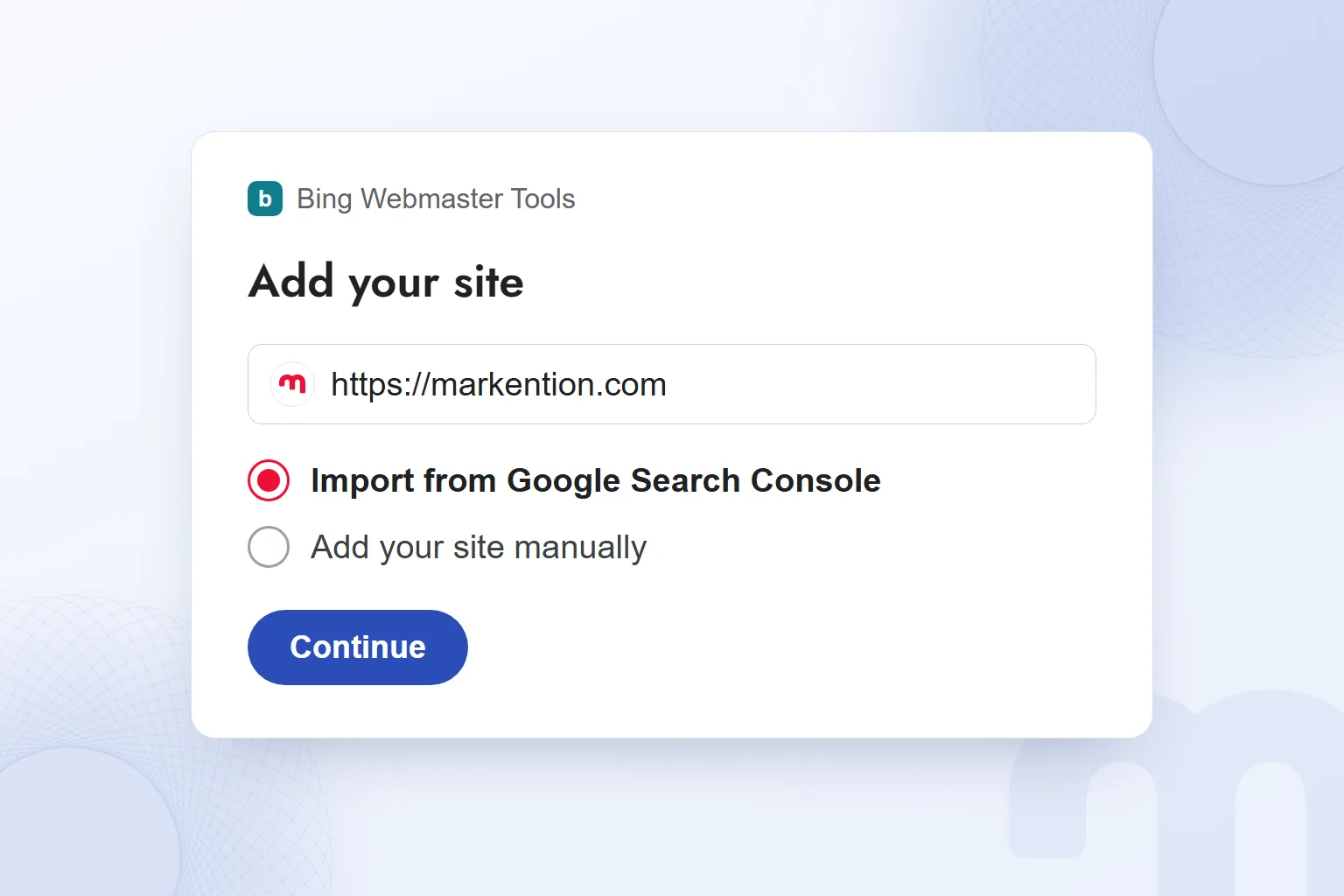
After Search Console, we move to Bing Webmaster Tools, where importing the site verified in Google simplifies verification (Bing Webmaster Tools help). We then check the sitemap and key pages’ index status in Bing’s own panel.
Our five-step method, from registration to measurement:
- Search ConsoleWe verify the domain with a DNS record, submit the sitemap and review index status in the Pages report.
- Bing Webmaster ToolsWe verify by importing from Search Console, check the sitemap and inspect key pages with URL Inspection.
- Yandex WebmasterWe add the site, verify it with a meta tag or DNS, submit the sitemap and check the region setting.
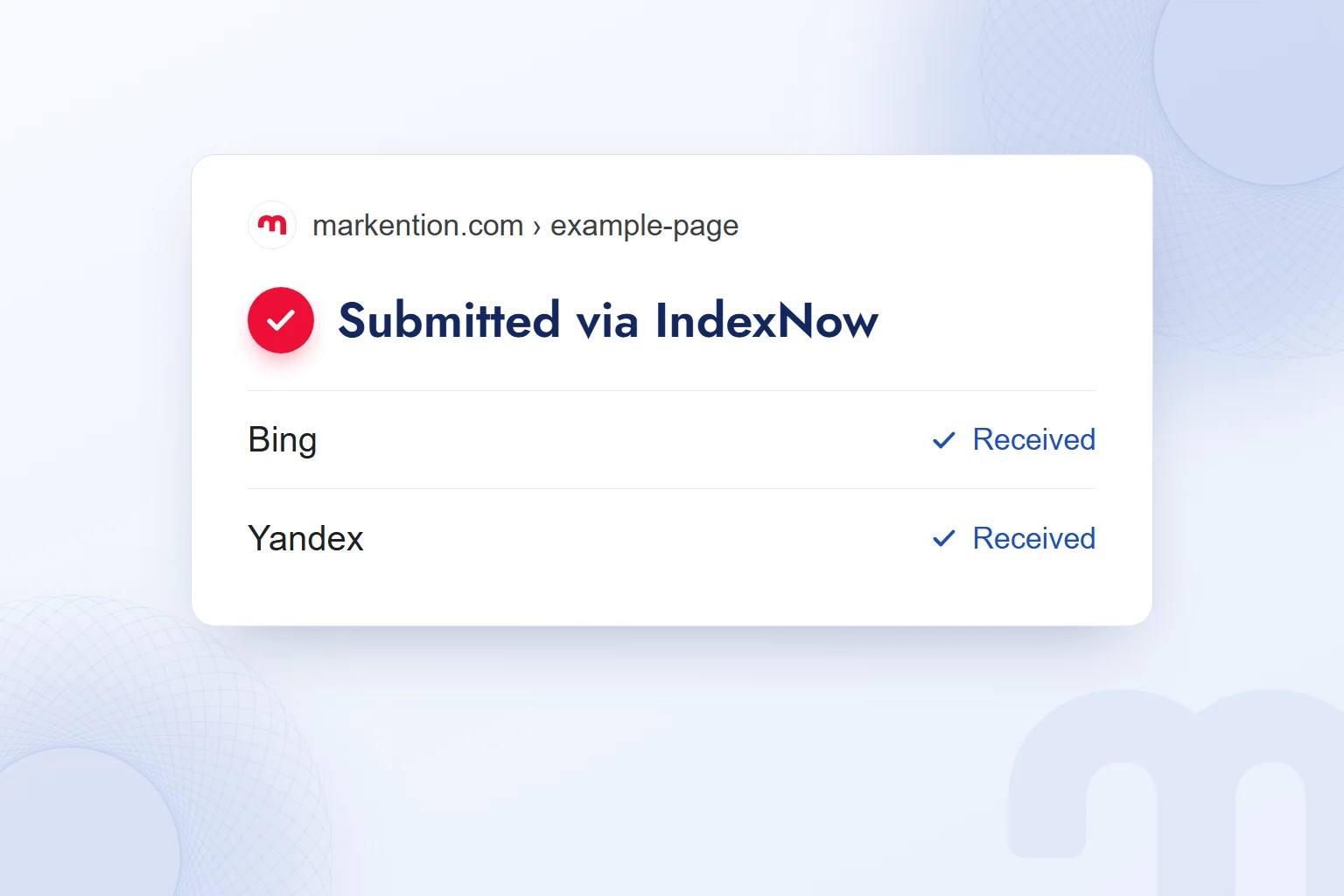
- IndexNowWe place the key file on the site and send new and updated URLs through the shared route Bing and Yandex use.
- CheckWe run site:domain.com in each engine and review the google / organic, bing / organic and yandex / organic rows in GA4 source/medium.
IndexNow is not a registration panel but a protocol for announcing URL changes; the key file verifies the right to notify. Google does not take part, so Search Console work runs separately, and a notification does not guarantee indexing (IndexNow participants and FAQ).
The “site:” query is neither a complete dump of the index nor a ranking report. We use its results as a first check and confirm with page inspection in the webmaster panels (Google Search Central, site: search operator documentation).
Visits in GA4 show a page gets traffic; no visits do not prove it is missing from the index. So we read index status from the panel and organic traffic from measurement.
What should you do when a site does not appear in search engines?
For a site missing from search engines, index status and bot access are checked first, then content and measurement. Being found in Google is not visibility in every engine; the work depends on the situation.
Three needs, three responses:
- You are in Google but not in Bing → We check Bing Webmaster Tools verification, the sitemap and URL Inspection, announce the URL with IndexNow and recheck index status; a sent notification does not close the job.
- You are in Google and Bing but missing from AI answers → We check OAI-SearchBot and PerplexityBot access in robots.txt, the page’s direct answer and brand consistency. Crawl permission opens access; it does not secure selection as a source.
- You are in Google and Bing but get no Yandex traffic → We look at Yandex Webmaster verification, the region and Turkish-language pages’ index status; if indexed, we review queries, impressions, clicks and measurement.
We assess selection as a source in AI answers separately, from content and access, in our GEO consulting work. We run the same query and inspect the source page shown, so we never diagnose access or content problems from visit counts alone.
Why does Yandex matter in Turkey?
Yandex needs its own visibility check in Turkey because it is the second engine there, with 17.5% of searches, and uses its own index. Google rankings do not carry over, so Yandex Webmaster registration and index checks are done separately (StatCounter Turkey, Yandex Webmaster documentation).
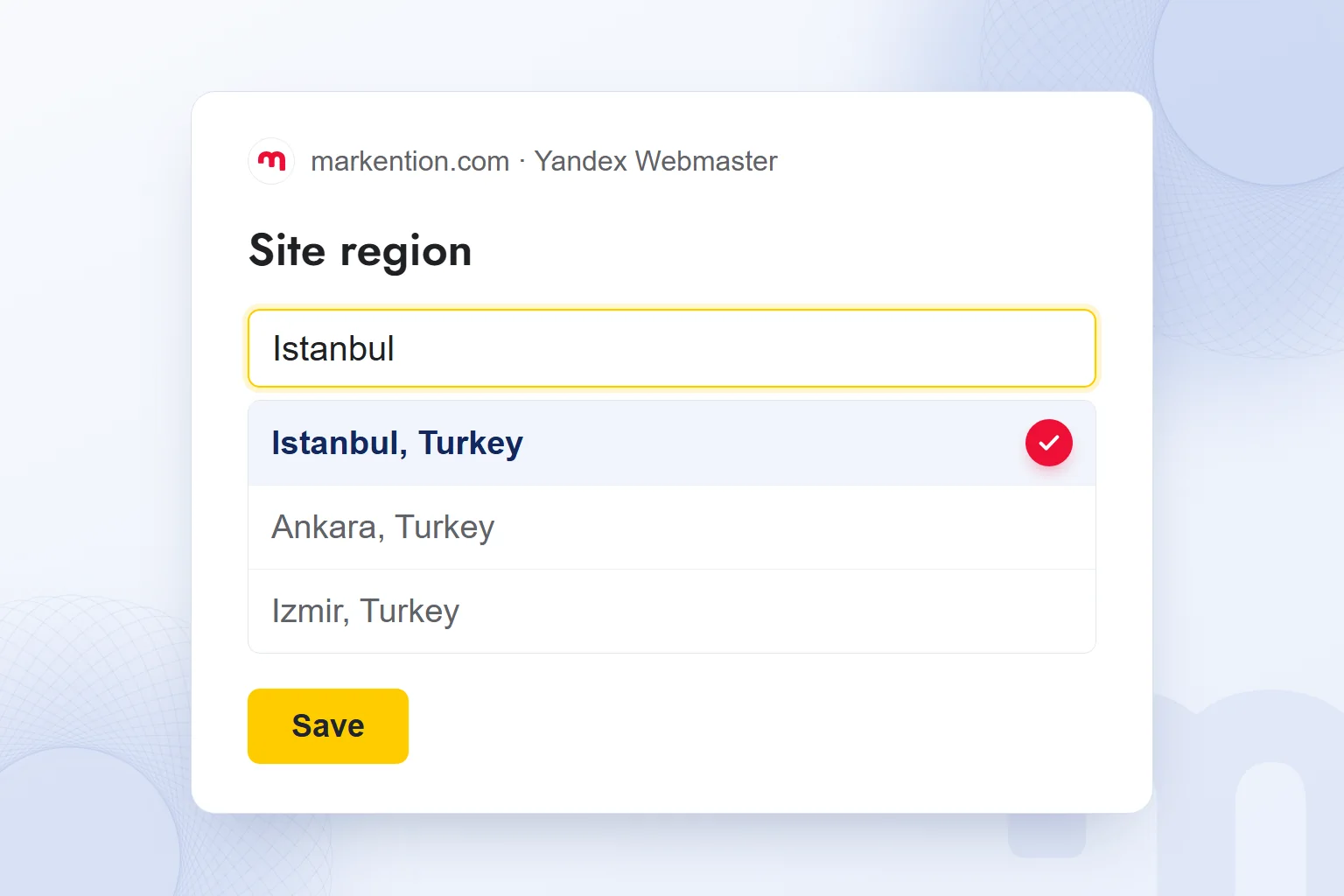
Yandex offers a Turkish interface at yandex.com.tr. In Yandex Webmaster we check the sitemap and region and whether Turkish-language pages are indexed. The region matches the business’s service area, with consistent address and contact details on the site (Yandex Webmaster, site region documentation).
Yandex supports IndexNow, but a sent notification does not mean visits are coming in. With no “yandex / organic” row in GA4, we compare Yandex Webmaster query, impression and click data with measurement. An indexed page with no traffic and an unindexed page are different problems; that distinction decides the work.
Common mistakes in search engine visibility
Treating registration as indexing, blocking bots wholesale and measuring only Google rankings leave an audit incomplete. Our distinctions:
- Looking only at Search Console: We confirm crawl and index status in Bing and Yandex from their own panels.
- Blocking search bots wholesale: We check Bingbot, OAI-SearchBot and PerplexityBot access separately in robots.txt.
- Counting an IndexNow notification as indexing: After notifying, we return to the engine’s page inspection.
- Measuring only Google rankings: We also assess Bing and Yandex visits in the GA4 source/medium breakdown.
- Not checking the Yandex region: We match it to the business’s service area and the details on the site.
- Treating sitemap submission as enough: We confirm the engine processed the sitemap and check key pages’ index status.
In our SEO consulting work we verify access and index status first, then assess which queries the page appears for, whether it gets clicks and whether AI answers cite it. More on technical checks, content and measurement is in our blog posts.
Frequently asked questions
What is a search engine, in short?
A search engine is software that crawls web pages, stores them in an index and returns results ranked for the user’s query.
Which search engines are used in Turkey?
In StatCounter’s August measurement, Google had 80.9%, Yandex 17.5% and Bing 0.9% of searches in Turkey. We check a site’s index status in each separately.
Why does Yandex matter in Turkey?
Yandex handles about one in six searches in Turkey and uses its own index (StatCounter, Yandex Webmaster). Visibility in Google does not replace an index check in Yandex.
Which search engine do ChatGPT and Copilot use?
Copilot’s web search relies on Bing; ChatGPT uses third-party providers including Bing alongside OAI-SearchBot crawling (Microsoft and OpenAI documentation). A Bing listing alone does not explain ChatGPT visibility.
How do I know if my site is registered with Bing and Yandex?
We check verification in Bing Webmaster Tools and Yandex Webmaster. Whether pages appear in search is reviewed separately through index reports and page inspection.
Do Google AI Overviews need a separate registration?
No; the page has to be in Google’s index and eligible to show a snippet (Google Search Central, “AI features and your website”). This does not guarantee selection as a source.

 WordPress SEO plugins: Yoast vs Rank Math vs AIOSEO comparedRead article
 What is a meta description? Length, writing rules and effect on clicksRead article
 What is a keyword? Types of keywords and how to choose themRead article
 What is a title tag? How to write it and how it differs from H1Read article
 What does optimize mean? Optimization on phones, websites and adsRead article
 What is “People also search for”? How to use it in SEORead article
 What is Shopify? Using it in Turkey, how fees work and vs WooCommerceRead article
 What is segmentation? Market segmentation types and GA4 audiencesRead article
Questions & answers
0 commentsNo questions yet; you can ask the first one.