





 Damla Kütük
7 min read
Damla Kütük
7 min read
What does optimize mean? Optimization on phones, websites and ads
What does it mean to optimize? How battery settings on a phone, speed and content on a website, and the optimization score and conversion goals in ads differ.Pro
Contents 9 sections
To optimize means to adjust a system so it delivers the best result under current conditions and toward a specific goal: improving a phone’s battery use, a website’s speed or an ad’s contribution to a goal. In mathematics and engineering the field is called ; in everyday language we call it improvement.
We decide on optimization by the result we want to improve. Limiting background activity on a phone, lightening an image on a site and assessing an ad recommendation are different operations; the shared word does not mean the same setting or score. We define the need first, then the metric.
In optimization, a target metric is set first; it is measured before and after the change, and the results are compared.
What does optimize mean?
Optimize means to adjust something to get the best result under the current conditions. The word comes from the Latin “optimum”, meaning “the best”. Optimization is the name for this work of adjusting and improving.
A search for “optimize” usually has one of three intentions behind it:
- The meaning of the word is wanted → We explain optimizing as improving against a goal, and optimization as the name of that work.
- A message or battery setting appears on a phone → We separate app preparation after an update from the battery setting that limits background activity.
- A site, content or ads need improving → We set the desired result first, then track the change with the metric that assesses it.
For us, “best” needs a defined goal. An app whose battery use we limit and an app whose notifications must arrive on time get different priorities; on a page, we define speed, content and conversion goals separately.
Where is optimization used?
Optimization is used in a phone’s battery use, a website’s speed, how well content answers a search, an ad’s contribution to a goal and how often visitors complete a target action. In every area we choose what we change and how we judge success together.
| Area | What we optimize | Which metric |
|---|---|---|
| Phone | The app’s background activity | Battery use and notification delays |
| Website | Loading, interactivity and layout | LCP, INP and CLS |
| Content | The answer to the search and page elements | Clarity of the answer and fit of content elements |
| Ads | Goal-aligned recommendations and bid strategy | Conversions and cost per acquisition |
| Conversion | The visitor’s progress toward the target action | Rate of completing the target action |
We do not reduce answer clarity to a single score; we check whether the title’s question is answered. In ads, we read the recommendation score and campaign results separately.
Our working order is the same in every area:
- We measureWe define the goal and record the state before the change with the relevant metric.
- We changeWe adjust the setting, content or page element aimed at the problem we identified.
- We measure againWe return to the same metric, compare the result with the earlier state and choose the next step.
What does “optimizing apps” mean on a phone?
The “optimizing apps” message means Android is preparing apps again for the new version after a system update. This preparation runs once after that update. We do not confuse it with the battery optimization setting.
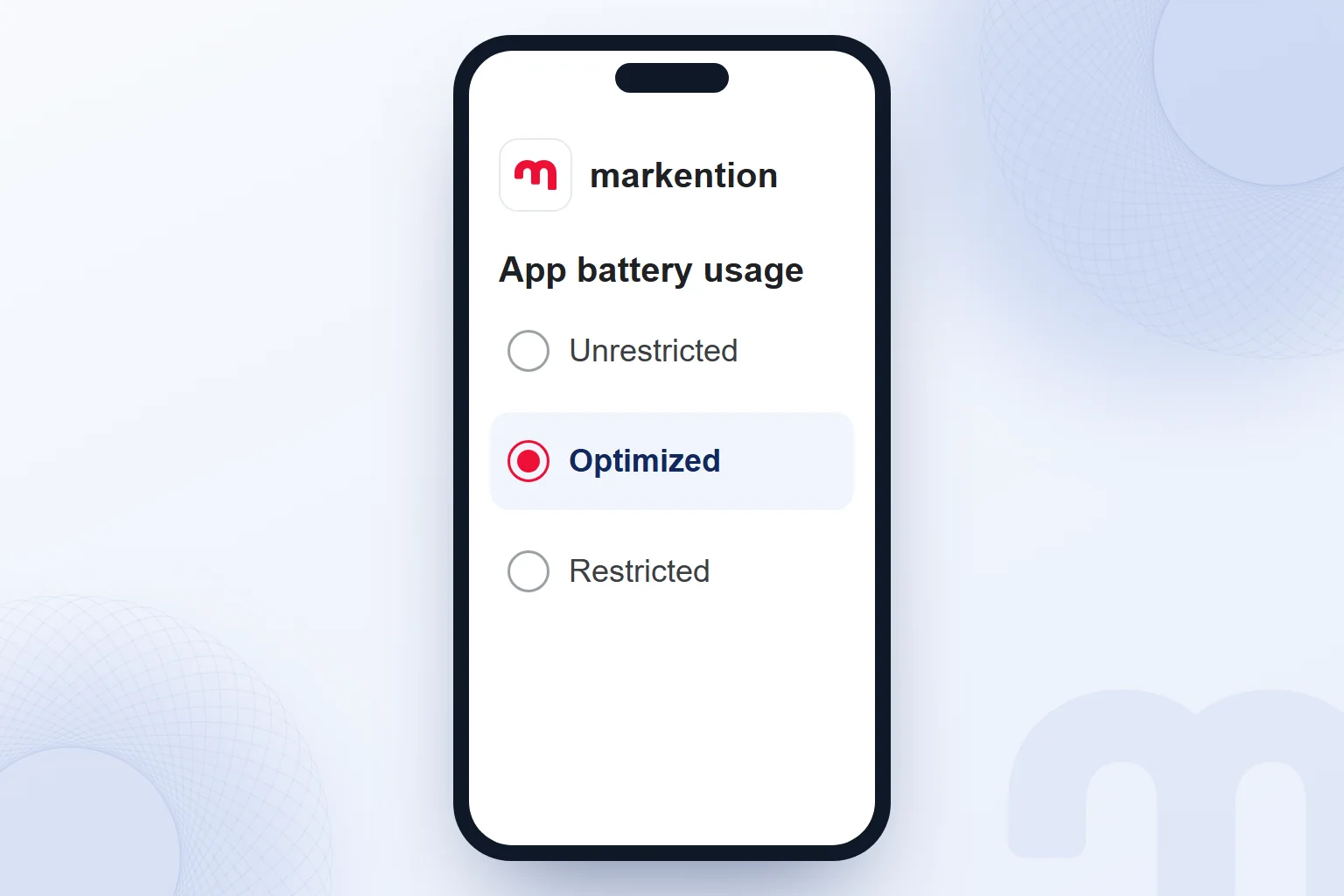
Battery optimization restricts an app’s background activity. In Android settings, each app offers “Unrestricted”, “Optimized” and “Restricted”. We weigh the app’s purpose and its need for notifications when choosing.
Notifications can be delayed for an optimized app, so late notifications lead us to the battery setting. We never count lower battery use as a success without checking notification timing.
For an app whose notifications matter, we record the selected option, change it, then monitor notifications and battery use again. The update message is a separate matter.
How do you optimize a website?
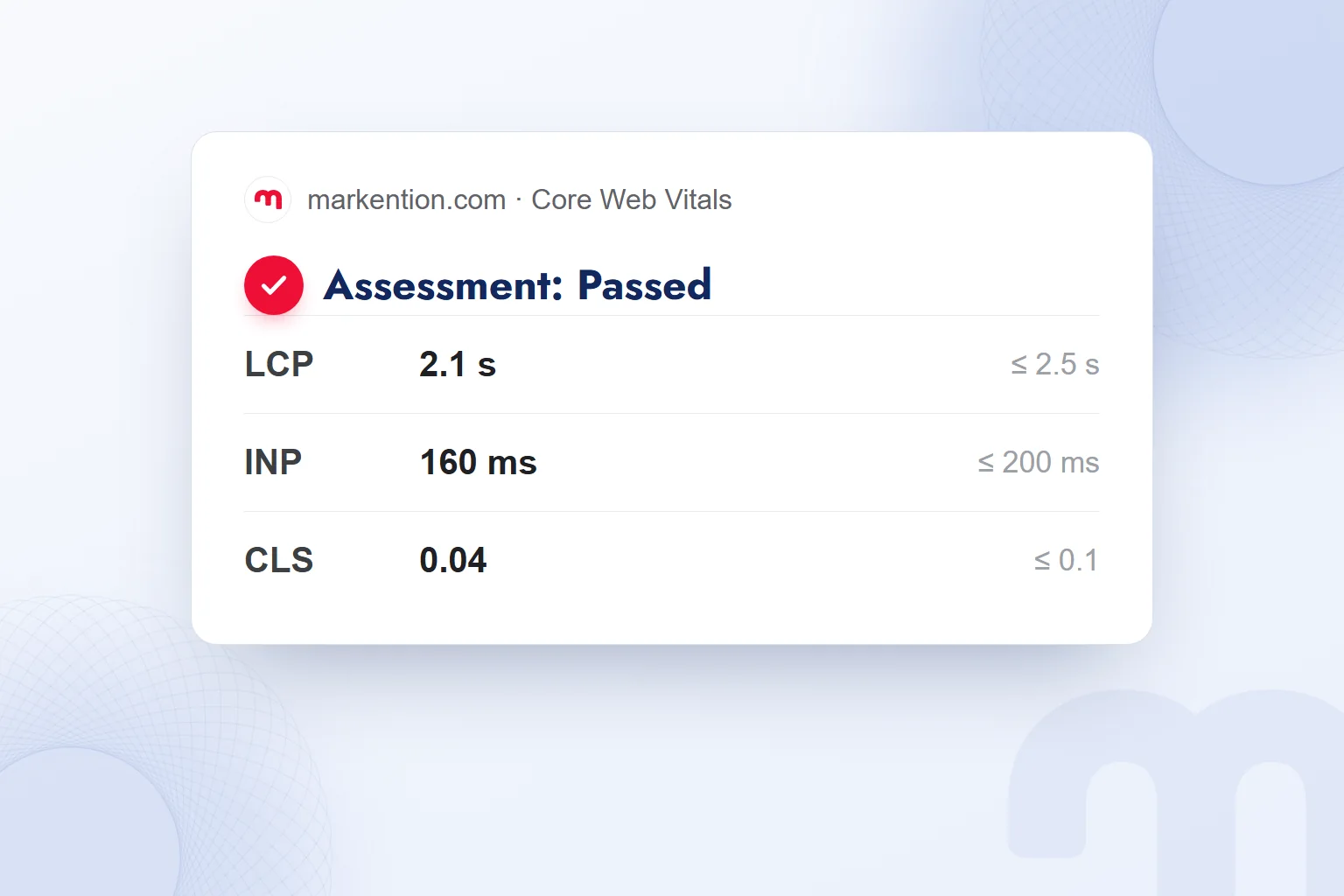
We optimize a website by measuring loading, interactivity and layout shift problems, changing the relevant elements and measuring again. We track Google’s in PageSpeed Insights and the Core Web Vitals report in Search Console.
LCP is Largest Contentful Paint, INP Interaction to Next Paint, CLS Cumulative Layout Shift; we compare each with its own threshold.
When a site is slow or hard to use, the path splits like this:
- LCP is high → We review images and server response and choose a change that speeds up the main content.
- INP is high → We review heavy scripts and reduce the load that affects interaction.
- CLS is high → We check images without dimensions and late-loading areas, and fix the source of the shift.
In image optimization, we size the file for its use, consider WebP or AVIF and compression, and use lazy loading. The gain varies by image, so we recheck the file and the page after a format change.

In our website speed optimization work, we confirm each change with the relevant metric. We look at each page’s own report; one page passing the thresholds does not mean the whole site passes.
What is content optimization?
Content optimization is making a page answer the search directly, with elements such as the title, description, links and image alt text supporting that answer. In SEO work we first examine the reader’s need, then how the page meets it.
We assess the title tag, the H1 and the description together. We check that internal links lead to related topics and that alt text describes the image. This is not placing the same word in different fields.
A reader asking about a battery setting needs more than a dictionary definition: what the setting does, its options and its link to notifications. A reader asking about site speed needs the metrics and the order of checks.
Optimized content is not content that repeats the keyword. We make sure each paragraph moves the answer forward and cut sentences that restate it. We cover content and search intent further in our SEO articles.
What is ad optimization, and what is an optimization score?
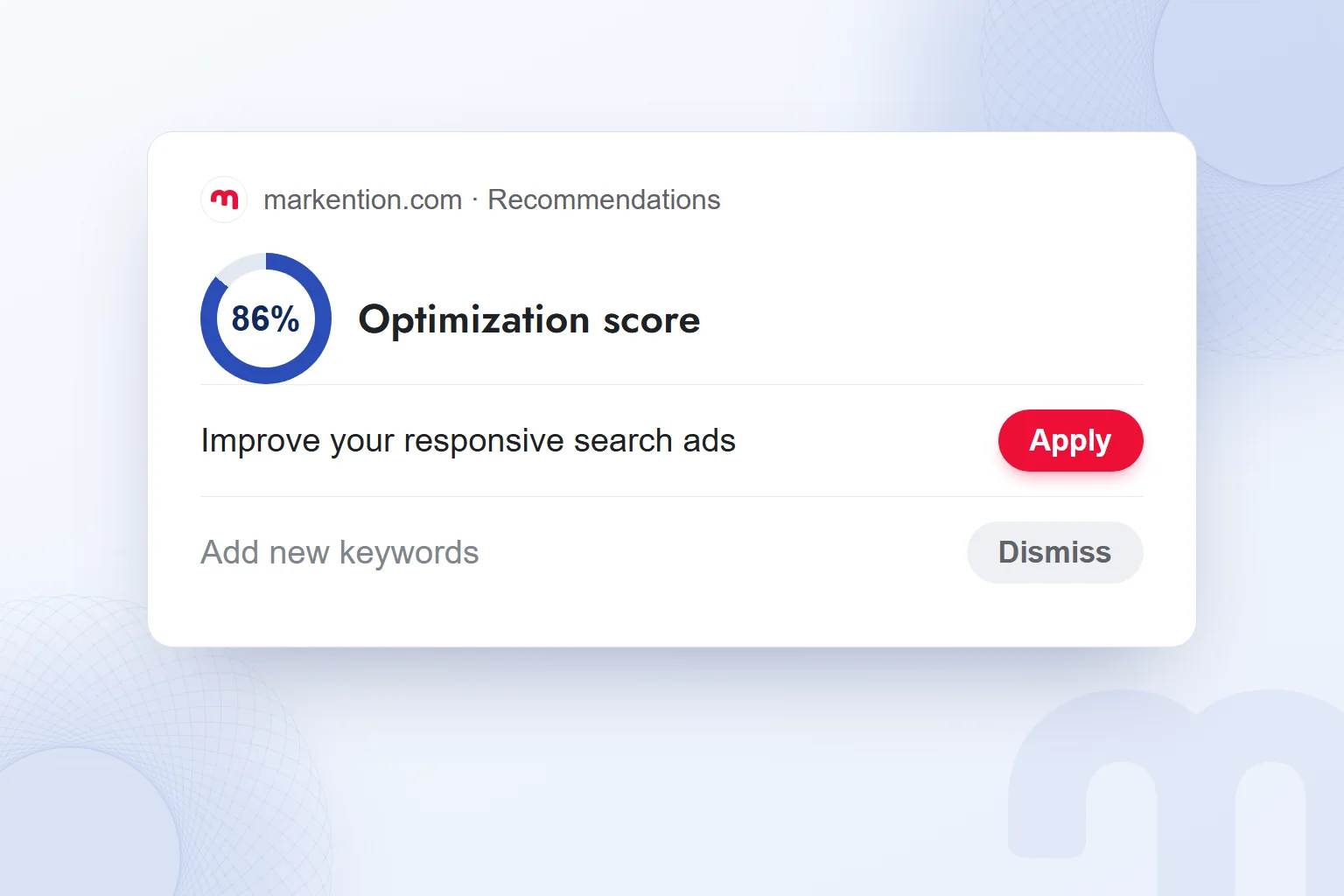
Ad optimization is improving a campaign against a goal; the Google Ads optimization score is an estimate, from 0 to 100 percent, of how the account would perform once recommendations are applied. The score is not campaign performance itself.
We assess recommendations against the business goal; one that does not match it can be dismissed. A higher score and more conversions are never reported as the same result, and we recheck the campaign after a change.
Automated bid strategies are also part of ad optimization, such as “Maximize conversions” and “Target CPA”, where CPA means cost per acquisition. We tie the strategy to the targeted result and decide which metric to track before applying it.
For each recommendation, we write down what we want to improve, judge its contribution, then apply or dismiss it.
What is conversion rate optimization (CRO)?
Conversion rate optimization is work aimed at raising the rate at which page visitors complete the targeted action. We define the target action first, then assess how a page change affects that rate.
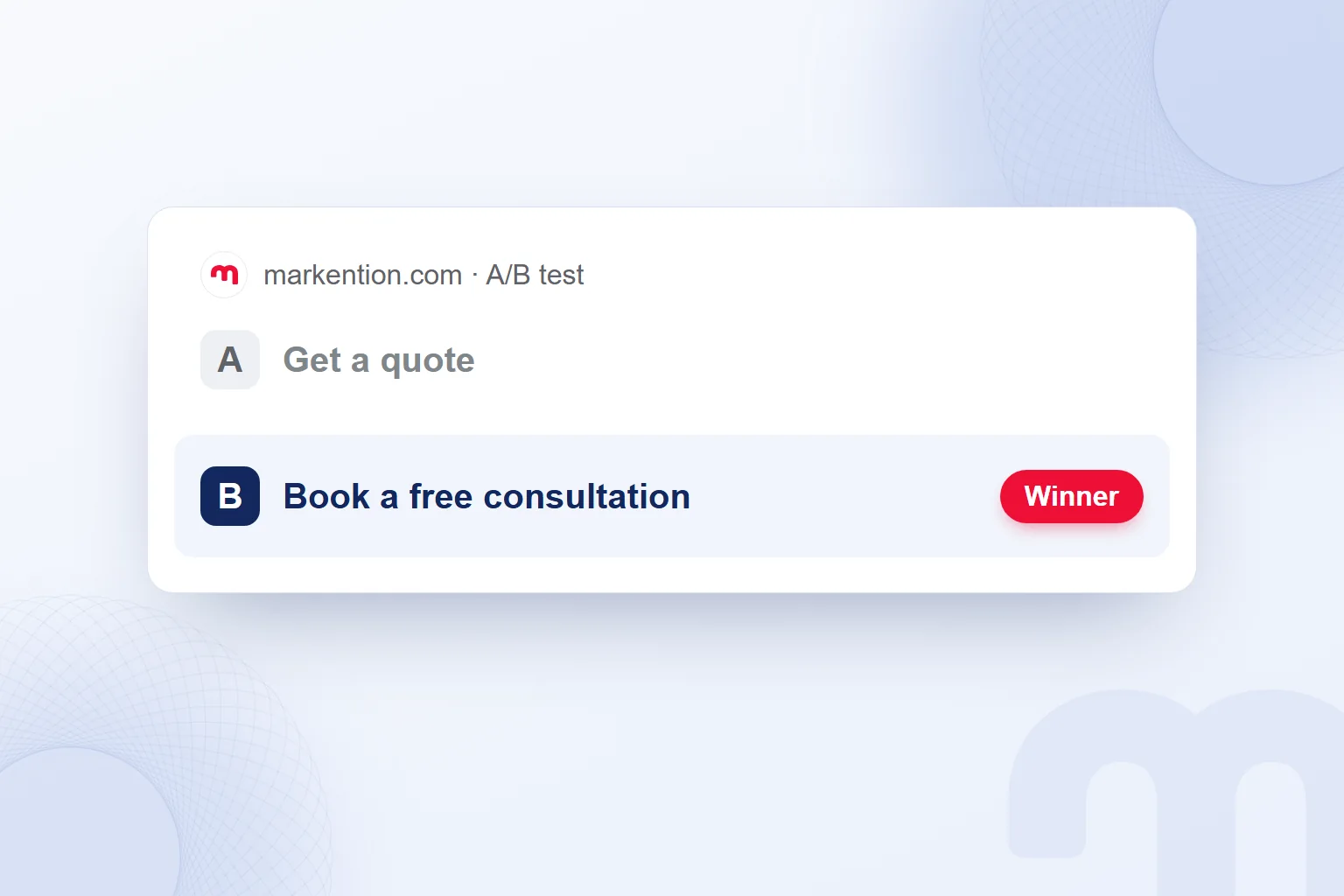
In an we compare two versions, for example the button texts “Get a quote” and “Book a free consultation” on the same page. We do not pick the text we like more; we look at the completion rate of the target action.
Text that wins on one page can lose on another, so we test each page separately. In our CRO consulting work, we read every result against the page’s purpose.
Google Optimize, Google’s A/B testing tool, has been shut down; tests are run with other tools. We keep the concept apart from this product name and, besides the tool, pin down the versions and the target action.
What are common optimization mistakes?
Common optimization mistakes are changing settings without a goal, mistaking a recommendation score for a result, repeating keywords in content and skipping measurement after a change. We assess every intervention with its starting state and target metric.
An app’s battery setting, a site’s Core Web Vitals and ad recommendations call for different decisions, even under the same word. We first write down which area we are adjusting, then which result we expect.
Our check is concrete: we record the metric before the change, the intervention and the metric after it. The next step comes from that comparison, so “optimized” always shows what changed and how it was judged.
Frequently asked questions
What does optimize mean?
Optimize means adjusting a system so it delivers the best result under current conditions. We assess the improvement against a specific goal.
What is the difference between optimize and optimization?
To optimize is the action; optimization is the name of that work. In mathematics and engineering it is also called mathematical optimization.
Why does my phone say it is optimizing apps?
After a system update, Android prepares apps again for the new version. Battery optimization is a separate setting that limits background activity.
Does battery optimization delay notifications?
Notifications can be delayed for an optimized app. We weigh the need for notifications together with battery use.
Does the Google Ads optimization score show campaign success?
The score estimates how the account would perform once recommendations are applied. We judge actual results by the conversion and cost metrics we target.
Can you still run A/B tests with Google Optimize?
Google Optimize has been shut down; A/B tests are run with other tools. We compare two versions by the completion rate of the same target action.


 WordPress SEO plugins: Yoast vs Rank Math vs AIOSEO comparedRead article
 What is a meta description? Length, writing rules and effect on clicksRead article
 What is a keyword? Types of keywords and how to choose themRead article
 What is a title tag? How to write it and how it differs from H1Read article
 What are search engines? Google, Bing, Yandex and AI searchRead article
 What is “People also search for”? How to use it in SEORead article
 What is Google AI Mode? AI Mode vs AI Overviews and your siteRead article
 What is a buyer persona? How to create one, with a templateRead article
Questions & answers
0 commentsNo questions yet; you can ask the first one.