





 Oğuzhan Altun
14 min read
Contents 20 sections
Key takeaways
- Google Ads is Google's paid advertising platform that shows business ads across Google services and partner websites.
- In most Google Ads campaigns, daily spend does not exceed twice the average daily budget.
- Quality Score rates keywords from 1 to 10 using expected click-through rate, ad relevance and landing page experience.
- Advertisers convert a monthly Google Ads budget into an average daily budget by dividing it by 30.4.
Google Ads is Google’s paid advertising platform that lets businesses show ads in Google search results, on YouTube, in Gmail, on Google Maps and on Google’s partner websites. Advertisers usually pay only for the interaction they choose, such as a click or a conversion; the platform launched as AdWords in 2000 and was renamed Google Ads in 2018.
This guide answers what a business owner or marketing team asks when first considering Google Ads: where ads appear, how the auction and Quality Score work, how costs and budgets form, which campaign type fits which goal, whether free advertising exists, how to learn it, and whether to run it in-house or with an agency. Setting up an account and a first campaign has its own guide, linked below. All rules and figures come from the Google Ads Help Center.
A Google Ads budget is managed against measured conversions; a campaign is not launched before conversion tracking is set up.
What is Google Ads?
Google Ads is an online advertising system that shows a business’s products and services across Google’s ad network to people searching for them or likely to be interested. According to Google’s help page, campaigns can show ads in search results, on websites, in videos, in mobile apps, on maps and in Shopping listings.
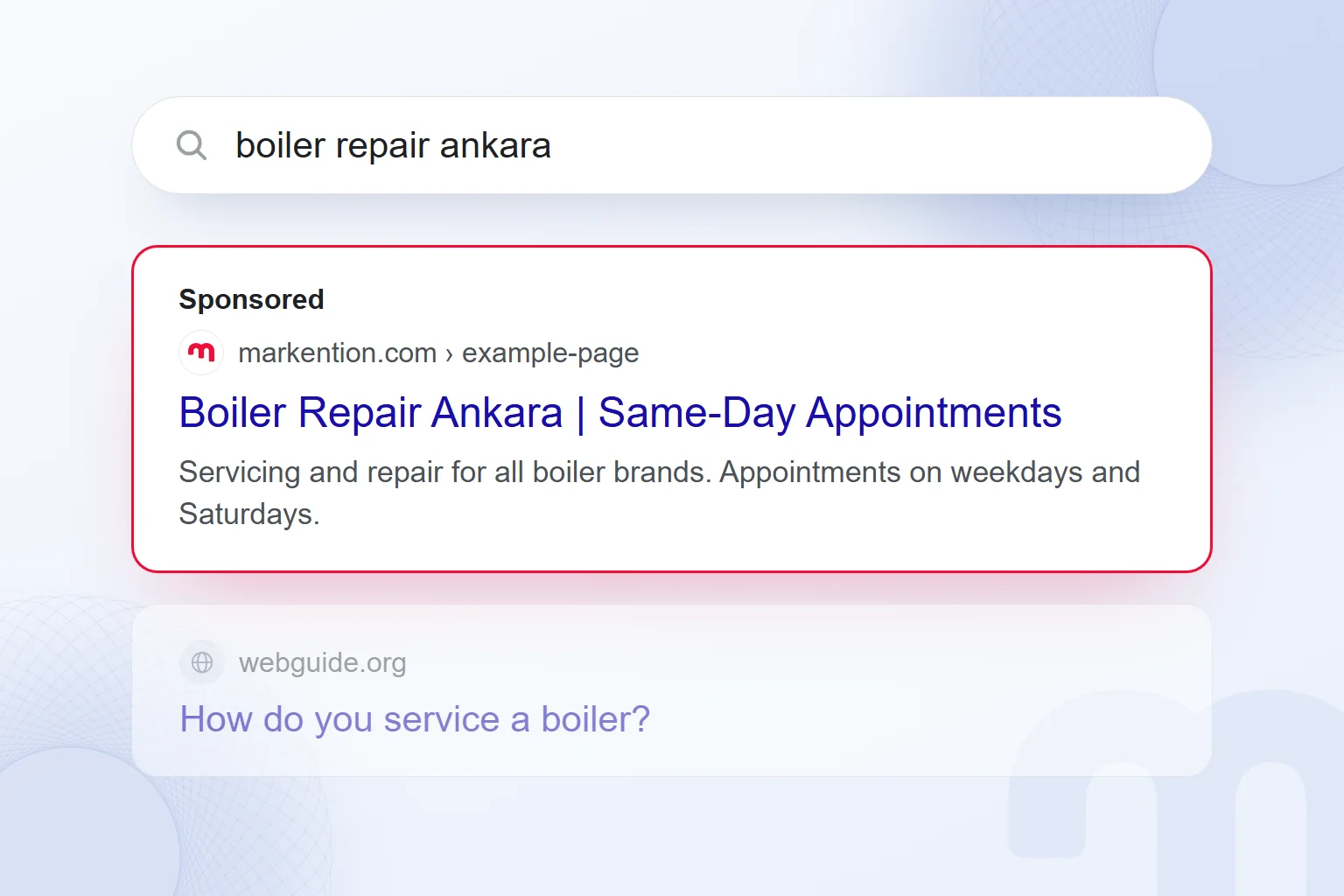
The system is built on intent. When someone types “boiler repair ankara” into Google, ads from advertisers who chose related keywords enter an auction, and the winners appear on the results page labeled “Sponsored”. The ad shows not because the advertiser wants to sell, but because the user is searching for that very thing at that moment; this is what sets Google Ads apart from traditional advertising.
Payment follows the same logic. Search ads are usually paid per click (CPC): you pay when the ad is clicked, not when it is shown. Awareness-focused Display and Video campaigns use cost per thousand impressions (CPM) or cost per view; conversion-focused campaigns use strategies such as target cost per acquisition (CPA). The campaign goal decides the model; the advertiser always chooses which interaction to pay for.
Are Google Ads and AdWords the same?
Yes; AdWords is Google Ads’ former name. Launched in October 2000, it was renamed in July 2018 to reflect that ads ran not only in search results but also on YouTube, Gmail, Maps and partner sites. “AdWords” searches today mean the same platform.
What is the difference between Google Ads and AdSense?
Google Ads is for advertisers; AdSense is for site owners who show ads and earn from them; they are two ends of the same ecosystem. A business advertises on Google Ads, some of those ads appear on a blog or news site in AdSense, and the site owner gets a share of the revenue. We cover this distinction, and how other ad platforms work, in our what are ads article.
Where do Google Ads appear?
Google Ads can appear in Google search results, on YouTube, in Gmail, on Google Maps, on Google Shopping, and on millions of sites and apps in Google’s Display Network; the campaign type decides where. Search campaigns run in search results, Video on YouTube, Display on sites and apps.
Search ads appear above and below the organic results with the “Sponsored” label. To the user, an ad looks like an organic result: a headline, a display URL and a description. The difference is that the advertiser wins the position with a bid and ad quality, while organic position depends on how good an answer the page is.
Who sees Google Ads?
Besides keywords, targeting settings decide who sees an ad: location, language, audience segments, device and ad schedule. A locksmith in Kadıköy can show the ad only on Istanbul’s Asian side, to people searching in Turkish, including at night; an ecommerce site can target all of Turkey and raise bids for past site visitors.
One location detail is often missed: by default, ads also show to people who show interest in the target area, not only to those in it. For a local business, this means irrelevant clicks from other cities; switching to people in, or regularly in, the targeted location protects the budget.
How does Google Ads work? The auction and Ad Rank
Google Ads runs a separate auction for every search: first it decides which ads are eligible to show, then in what order. According to Google’s help page, the order is calculated from a set of values based on the ad’s competitiveness, the context of the search and the ad’s quality at that moment; this set of values is called .
So the highest bidder does not always take the top spot. An advertiser with a more relevant ad and a better landing page can rank higher with a lower bid. The help page also notes that each ad location has its own auction: top-of-page ads are chosen separately from ads elsewhere.
What is Quality Score?
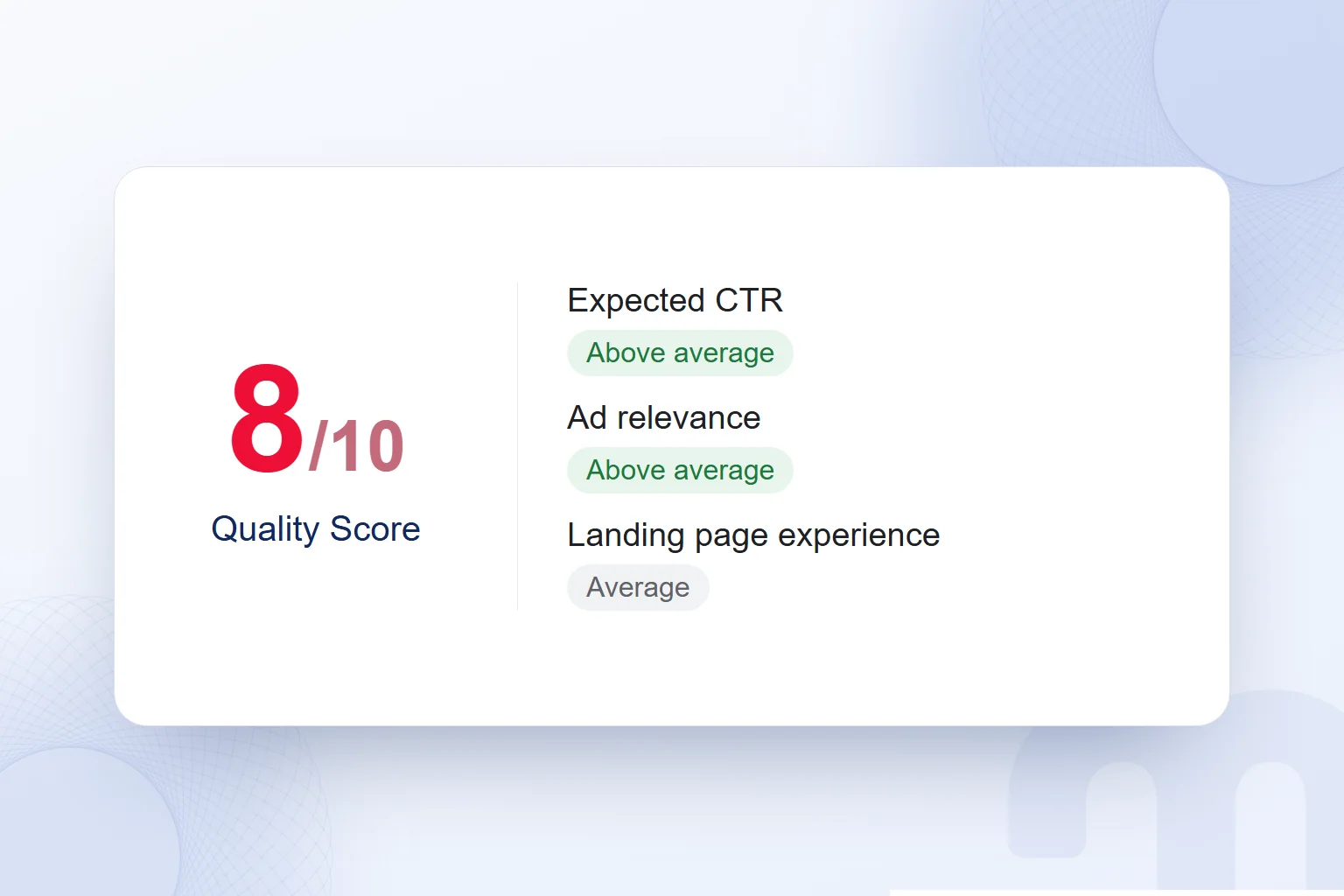
Quality Score is a diagnostic tool, measured at the keyword level on a 1–10 scale, that shows how an ad’s quality compares with other advertisers. According to Google, it is calculated from the combined performance of three components:
- Expected click-through rate → The likelihood that the ad is clicked when shown.
- Ad relevance → How closely the ad matches the intent behind the search.
- Landing page experience → How relevant and useful the landing page is for the person who clicks.
Each component is rated “Above average”, “Average” or “Below average”, compared with other ads shown for the same search over the last 90 days. Google adds an important note: Quality Score is not a direct input into the auction but a diagnostic tool that points to areas to improve. We explain how to improve landing page experience in our what is a landing page article.
How much does Google Ads cost? Costs and budget
Google Ads has no fixed fee and no minimum spend; cost depends on the daily budget, the bid strategy and the competition. Search ads are usually paid per click; in Turkey, a click can cost anywhere from a few lira to hundreds of lira, depending on the industry, the keyword and competitors’ bids.
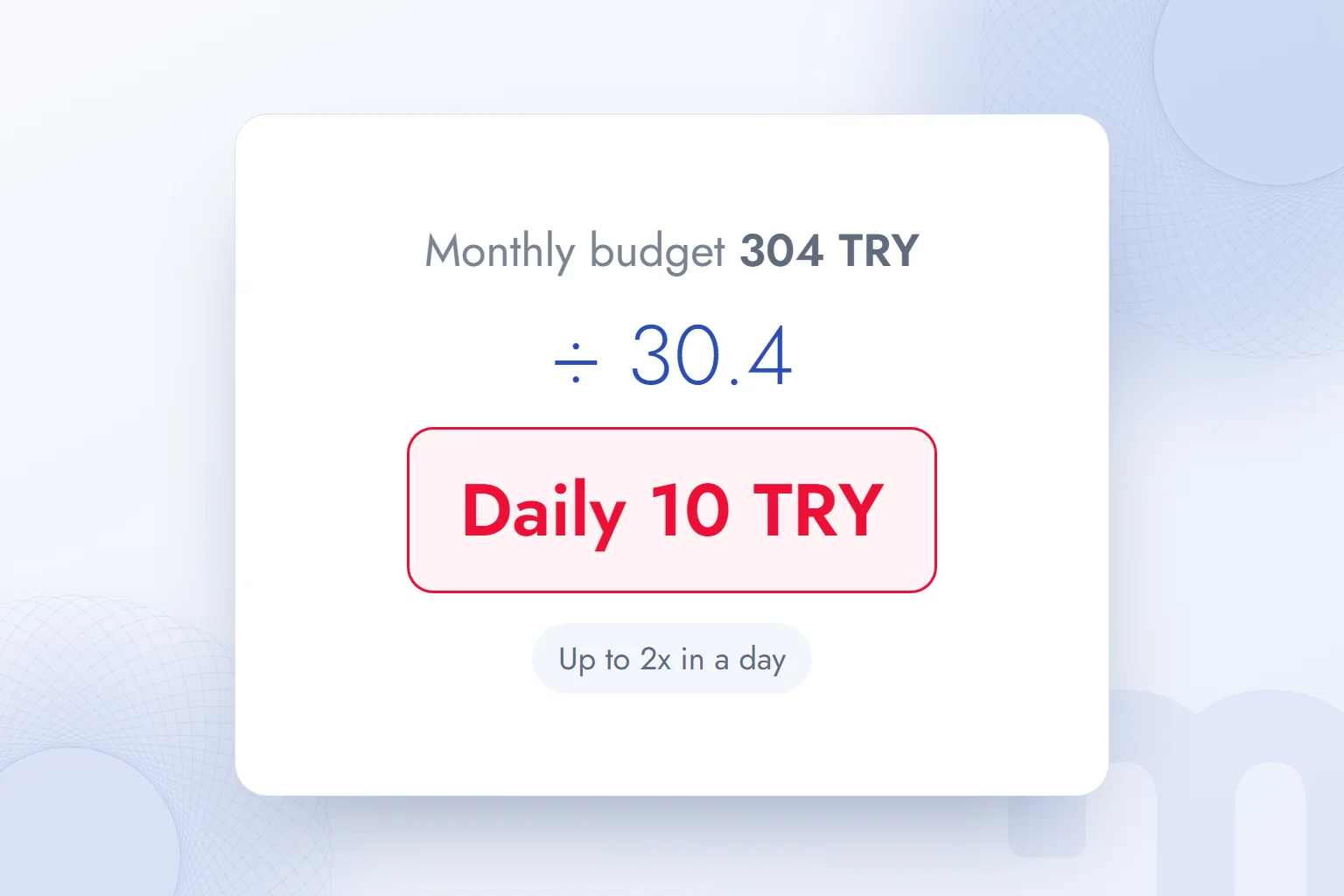
The budget is set per campaign as an “average daily budget”. Google’s help page gives clear figures: Google spends more on days when clicks or conversions are likelier, so some days fall below budget and others above. For most campaigns, however, daily spend does not exceed twice the average daily budget, and monthly spend does not exceed 30.4 times it.
To turn a monthly budget into a daily one, divide by 30.4; in the Turkish edition of Google’s example, an advertiser who wants to spend 304 Turkish lira a month enters 10 TRY a day. This keeps the month-end bill within plan.
How do you set a Google Ads budget?
A Google Ads budget starts not from “how much can we spend” but from “how much can a customer cost us”. The order we follow:
- Customer value → We calculate the average order value, or a customer’s annual value, and the profit margin.
- Acceptable cost → From that value, we work out the most we can pay for a customer or a lead.
- Click cost estimate → We take the bid range for the chosen keywords from Keyword Planner.
- Conversion rate assumption → We factor in the site’s visitor-to-customer rate, using a cautious assumption if there is no data.
- Test budget → We set a daily budget that buys enough clicks for meaningful data in the first four weeks, then raise or lower it based on results.
The most practical way to measure return on spend is return on ad spend; we explain how it is calculated in what is ROAS, and what click-through rate tells us in what is CTR.
What are the Google Ads campaign types?
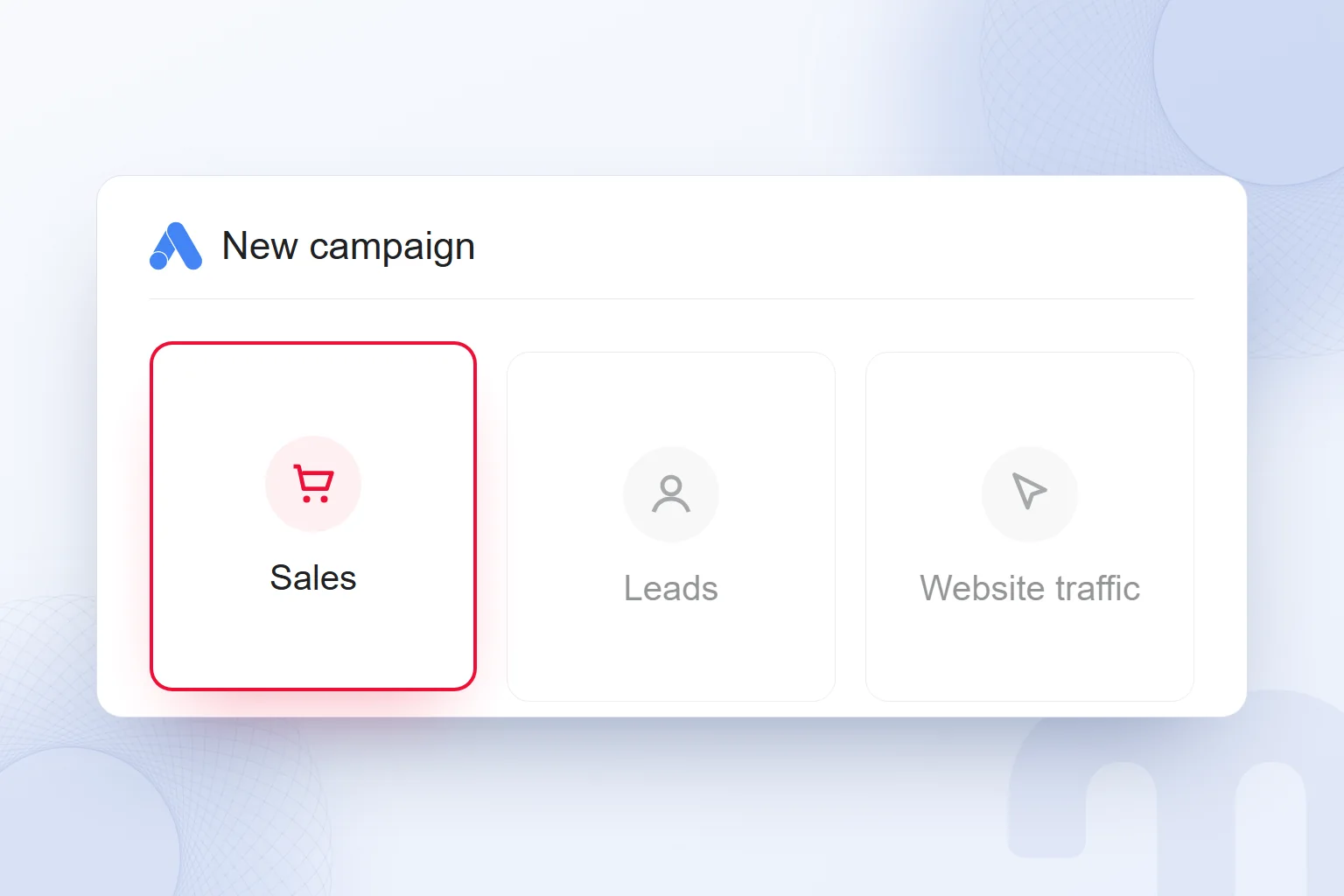
Each Google Ads campaign type serves a different ad space and goal: Search covers search results, Display sites and apps, Video YouTube, Shopping product listings, and Performance Max all of these from one campaign. Google’s help page recommends choosing by marketing goal, brand strategy and the time available.
| Campaign type | Where ads appear | When we choose it |
|---|---|---|
| Search | Google search results | Reaching people searching for the product or service; sales and form leads |
| Performance Max | Search, YouTube, Display, Gmail, Maps, Discover | Accounts with a clear conversion goal, solid measurement and enough conversion data |
| Display | Websites, apps | Awareness and reaching past site visitors |
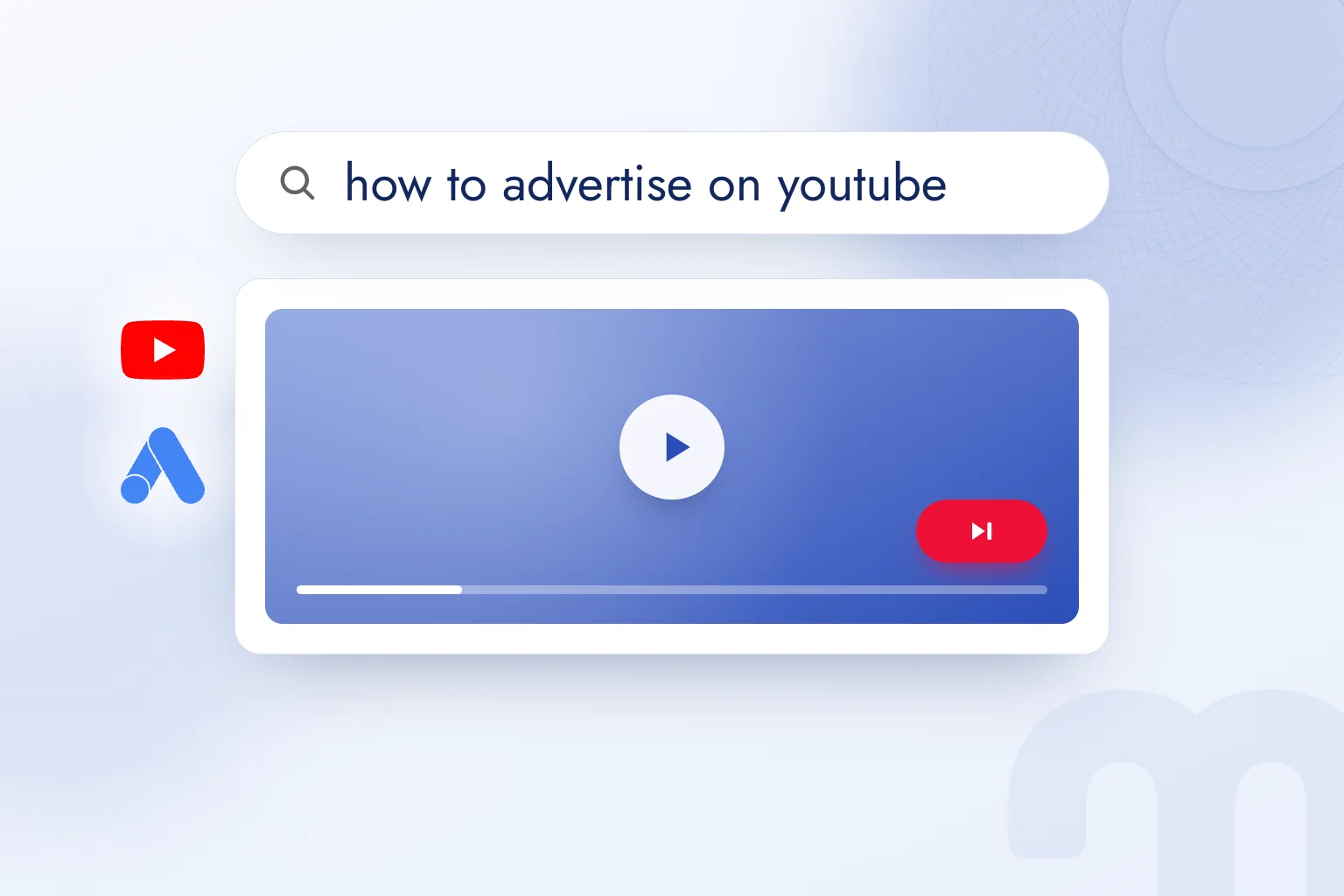
| Video | YouTube and video partners | Showing the product, awareness and video-driven conversions |
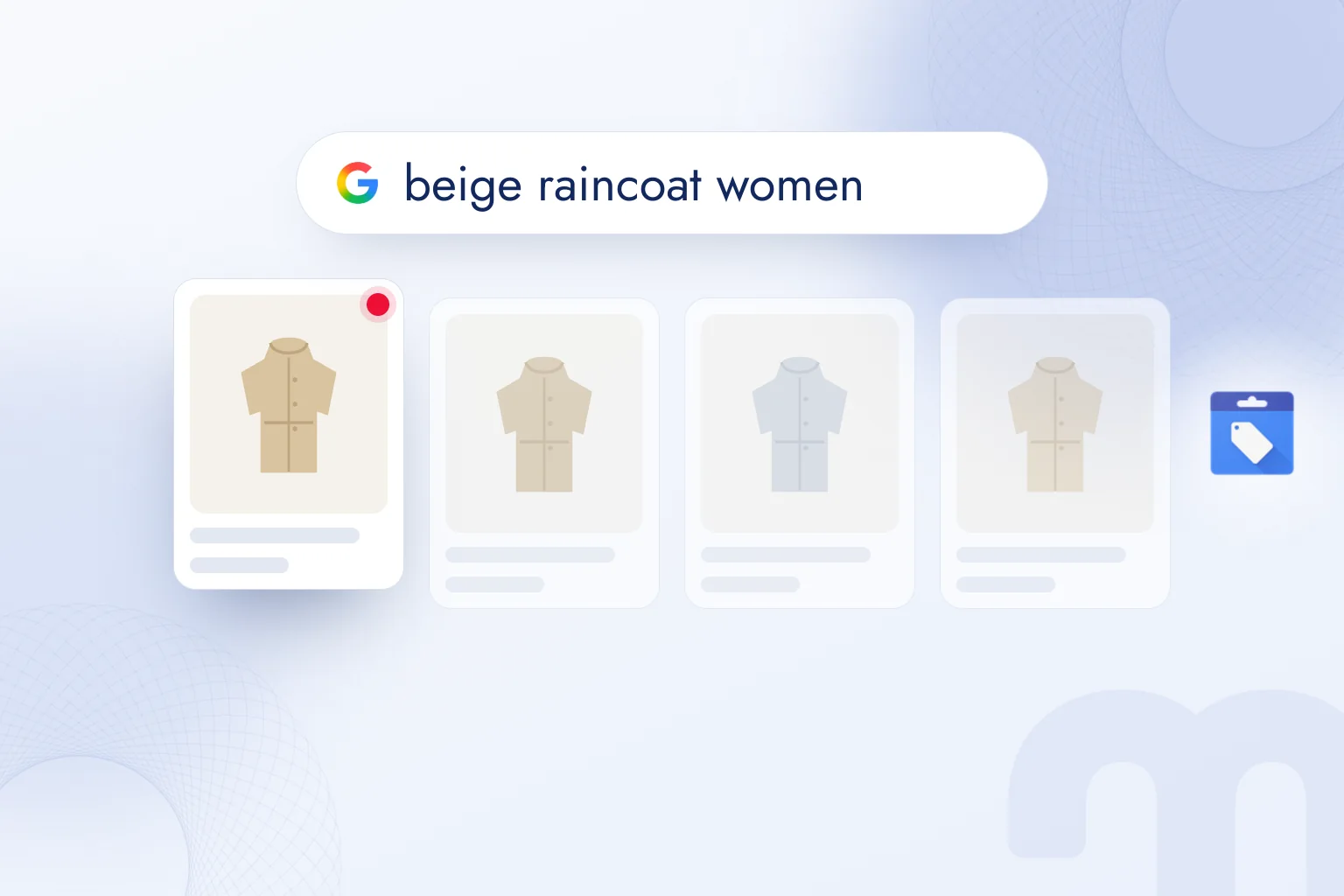
| Shopping | Google Shopping and product cards in search results | Ecommerce product sales; requires a Merchant Center product feed |
| Demand Gen | YouTube, Discover, Gmail | Creating new demand with visual-led ads |
| App | Google Play, Search, YouTube | App installs and in-app actions |
For a local business starting out, the first campaign is often Search: it reaches people searching for the service, and results are easy to read. Highly automated types such as Performance Max work well once measurement is solid and enough conversion data has built up. We cover the product feed behind Shopping campaigns in our what is Google Merchant Center guide, and YouTube ads in how to advertise on YouTube.
What is Performance Max?
Performance Max is a goal-based campaign type that reaches all Google Ads inventory from one campaign, with Google’s AI optimizing bids, targeting and asset combinations in real time. According to Google, when an advertiser’s goal is sales, leads or local store visits, it is the first type recommended during campaign setup.
Its strength and its risk both lie in automation. With the right conversion goal and quality assets it performs well; with flawed measurement it can spend the budget on worthless conversions. So we turn it on only after a measurement audit and watch whether brand searches shift into it.
What are the keyword match types?
A match type decides which searches a keyword can trigger an ad for; Google Ads has three: broad match, phrase match and exact match. They set how wide or narrow that set of searches is.
- Broad match → Shows the ad on the widest set of searches related to the keyword’s meaning; Google also captures searches related to the site’s content and other account signals. It works best with Smart Bidding.
- Phrase match → Shows on searches that include the keyword’s meaning; written in quotation marks: “boiler repair”.
- Exact match → Shows on searches with the same meaning and intent as the keyword; written in square brackets: [boiler repair ankara].
Whatever the match type, the search terms report shows the searches an ad actually appeared for. Irrelevant ones are added as a . We explain match types in detail, and which one to start a first campaign with, in our how to advertise on Google guide.
Bid strategies: What is Smart Bidding?
A bid strategy is the rule that decides how much Google Ads bids in each auction; Smart Bidding strategies set that bid for each auction separately using Google’s AI. The strategy is chosen by the campaign’s goal.
| Goal | Strategy | When we choose it |
|---|---|---|
| Most conversions | Maximize conversions | Conversion tracking is in place; the most form fills or sales are wanted within budget |
| A set cost per customer | Target CPA | Enough conversion data exists and the amount to pay per conversion is known |
| A set return | Target ROAS | Ecommerce sales values are measured and there is a return-on-spend target |
| Traffic | Maximize clicks | Short term, collecting first data on a new site before measurement is set up |
| Visibility | Target impression share | Appearing on brand searches or at the top of the page |
Every Smart Bidding strategy relies on accurate conversion data. If tracking is incomplete or wrong, the AI optimizes toward the wrong goal: an account that counts every page view as a conversion buys page views, not sales, under maximize conversions. That is why we audit conversion definitions before changing the bid strategy.
A Google Ads example: How do you write a Search ad?
A Search ad is made up of headlines, descriptions and a display URL; Google tests the headlines and descriptions in different combinations and promotes the one that performs best. This format is called a responsive search ad.
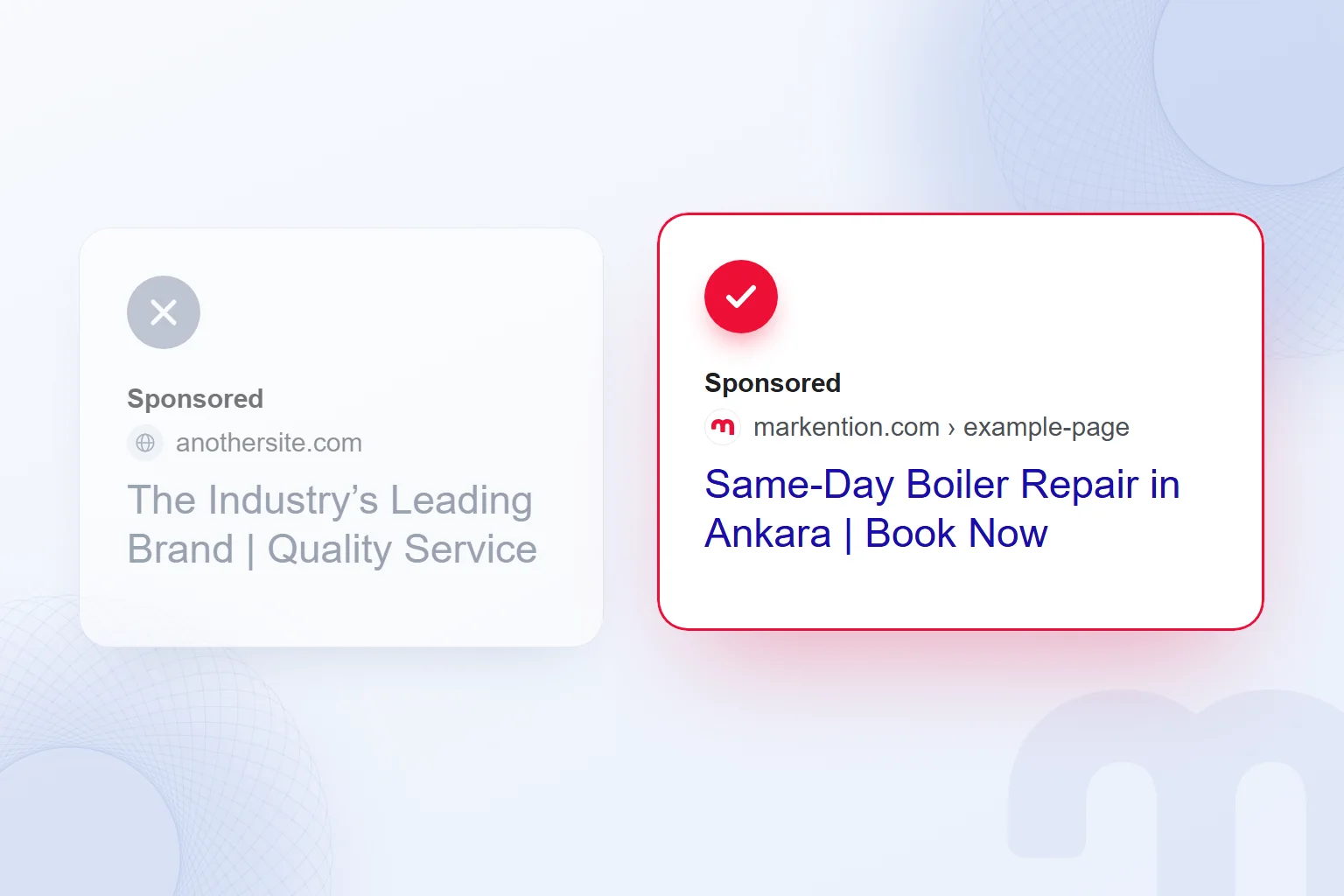
A good search ad answers the user’s query directly. For someone searching “boiler repair ankara”, the click goes not to “Turkey’s leading brand” but to “Same-day boiler repair in Ankara”. Our criteria for ad copy:
- The query’s words in the headline → The user sees the phrase they searched for and knows the ad is relevant.
- A concrete difference → A verifiable advantage, such as same-day appointments, a free site visit or delivery time; unproven adjectives such as “best” or “leading” are left out.
- A clear action → One clear call, such as “Book an appointment” or “Request a quote”.
- A consistent landing page → What the ad promises is visible on the first screen of the clicked page.
Why is conversion tracking essential?
Conversion tracking is the measurement setup that reports a valuable action after an ad click, such as a form fill, a call or a purchase, back to Google Ads; without it, a campaign spends without knowing which keyword brings customers. It is also the only data source for Smart Bidding.
It is set up with the Google Ads tag, through Google Tag Manager, or by importing Google Analytics 4 conversions. Either way, we then submit a test form and check that the conversion appears in Google Ads. Where phone customers matter, calls are counted as a separate conversion. We cover tag management on our Google Tag Manager page.
Can you advertise on Google for free?
Google Ads is paid, but Google offers two official routes to free visibility: a Google Business Profile for Maps and local results, and Merchant Center for free product listings on Google Shopping. Ranking high in organic results is also free, but takes content and technical work.
Free and paid routes work together. For a local business, completing the Business Profile, answering reviews and adding photos comes before the first lira spent on Google Ads, since people who click a Search ad often check the reviews too. We explain the Business Profile setup step by step in our Google Business Profile guide.
How do you learn Google Ads?
The official, free way to learn Google Ads is Skillshop, Google’s training platform, with courses on Search, Display, Video, Shopping and measurement, and Google Ads certifications awarded by exam. The Google Ads Help Center and the official Google Ads YouTube channel also offer step-by-step guidance.
From our own experience, the learning order works like this:
- Core concepts → Learn the auction, Quality Score, match types, conversions and budgets through Skillshop’s foundational courses.
- A small real campaign → Build a low-budget Search campaign for your own business or one run by someone you know.
- Measurement → Set up conversion tracking and link it to Google Analytics 4; Google Ads learned without measurement stays incomplete.
- Weekly reading → Read the search terms report every week and add irrelevant searches as negative keywords.
- Certification → Take the Skillshop exams after hands-on practice.
Should we manage Google Ads ourselves or with an agency?
A business with a small budget, one service and simple measurement can manage Google Ads itself; as budget, products and campaign types grow, expert management pays off. The deciding factor is less the budget than the cost of a mistake.
| Situation | What we do |
|---|---|
| One service, one city, small budget | We build our own Search campaign and read the search terms weekly |
| Measurement missing or unreliable | We first have an expert set up conversion tracking and GA4 |
| Ecommerce, hundreds of products | We get expert support for the Merchant Center feed and Shopping campaigns |
| The monthly budget has reached a meaningful amount | We work with an expert on account audits and management |
| We advertise but are unsure of the results | We ask for an independent account audit |
With an agency, account ownership always stays with the business; the agency gets admin access, but the account and billing are in the business’s name. How we work, and what we check in an account audit, is on our Google Ads consulting page.
How do you open a Google Ads account?
A Google Ads account is opened at ads.google.com with a Google account; setup asks for business details, the first campaign’s goal, payment details and the billing address. Having conversion tracking ready before the first campaign means accurate data from day one.
Account setup, the first Search campaign, match types and form and phone conversions are shown screen by screen in our how to advertise on Google guide. How Google Ads links with Google Analytics 4 is on our Google Analytics 4 page.
As part of Google’s search and ad ecosystem, Google Ads performs best when managed together with organic visibility, product data and measurement. Our guides to Google’s other advertising tools and to ad management are on our blog.
Frequently asked questions
Is Google Ads paid?
Yes. Opening an account is free, but ads are paid per chosen interaction, such as a click or a conversion; there is no minimum spend.
How much does it cost to advertise on Google Ads?
The daily budget, the bid and the competition set the cost. In a day, most campaigns spend at most twice the average daily budget.
Are Google Ads and AdWords the same?
Yes. AdWords was the name of Google Ads until 2018; it is the same platform.
What is Google Ads used for?
It shows ads on Google Search, YouTube, Maps and websites to people searching for, or likely to want, products and services.
Can you advertise on Google for free?
Google Ads is paid. For free visibility, Google Business Profile and Merchant Center free product listings are used.
How do you learn Google Ads?
Through the courses and certifications on Skillshop, Google’s free training platform, followed by a real low-budget campaign.
Does the highest bidder always rank first?
No. Ad quality and search context decide the order alongside the bid; a more relevant ad can rank higher with a lower bid.
How is Quality Score calculated?
From expected click-through rate, ad relevance and landing page experience, on a 1–10 scale at the keyword level.

 What is Google Merchant Center? Account setup, feeds and listingsRead article
 How to advertise on YouTube: campaign types, targeting and costRead articleMost read
 What is ROAS? Formula, ROAS vs ROI and how to set target ROASRead article
 What is advertising? How traditional and digital advertising worksRead article
 What is an audience in advertising? Audience types and how to chooseRead article
 Advertising on ChatGPT: Ads Manager, Targeting and Your First CampaignRead article
 How to advertise on Google: account, first campaign, budget, trackingRead article
 What are ads? How Google, Meta and ChatGPT ads work alikeRead article
Questions & answers
0 commentsNo questions yet; you can ask the first one.